

With an androgynous look, platinum-blond hair and a presence that moves between 1990s heroin chic and cool elegance, Scottish model Ivy Stewart is emerging as one of fashion’s most prominent models.
Since walking Prada’s spring-summer 2025 show, Stewart has appeared on the runways of major houses including Loewe, Miu Miu, Valentino, Schiaparelli, Mugler, Lacoste, Chanel and Dsquared2, the label founded by Canadian twin designers Dean and Dan Caten. She also stars in the brand’s new lookbook for its Resort 2027 collection.
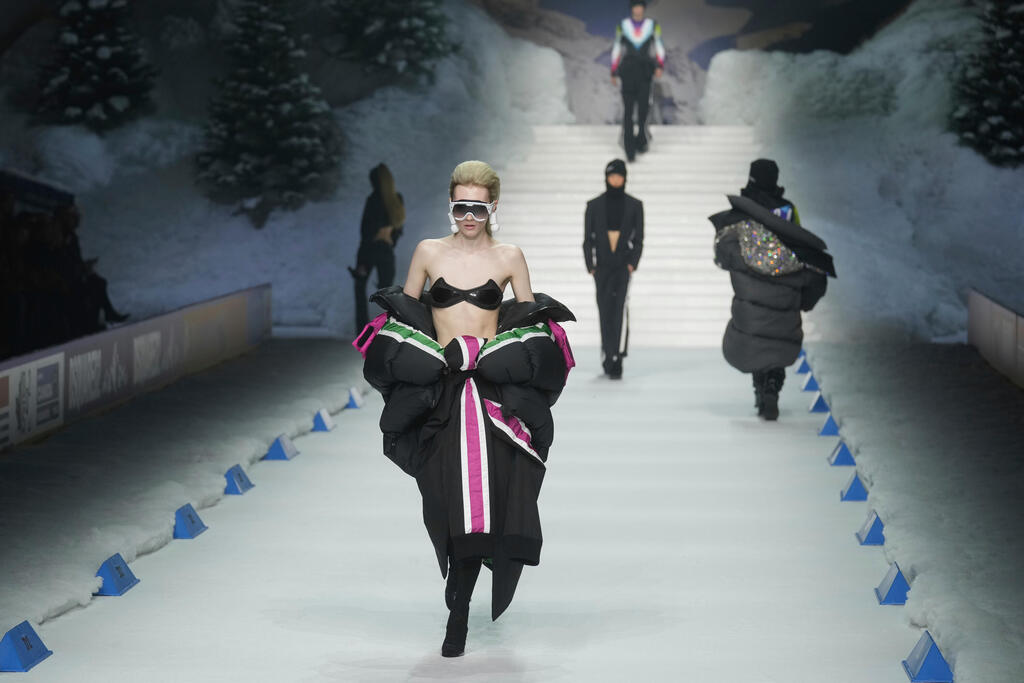
Emerging as one of fashion’s most prominent models: Ivy Stewart at Dsquared2’s fall-winter 2026-27 show
(Photo: AP Photo/Antonio Calanni)
The images, released over the past two days, show Stewart, who is signed to IMG, in a look that echoes the return of the size-zero beauty ideal. Compared with the sensuality of Dsquared2’s spring-summer 2026 campaign, the new images have renewed questions about the responsibility fashion houses bear when publishing ads and campaigns centered on models who represent an unattainable ideal of beauty.
It is a provocative statement, and one clearly designed to generate discussion around the way models are presented in 2026.
Ivy Stewart in Dsquared2’s Resort 2027 collection
The return of early-2000s Y2K aesthetics appears in nearly every frame: low-rise pants, tiny self-aware tops reminiscent of Ed Hardy’s heyday, exposed skin and models with extremely thin body types.
In online forums, many users have recently argued that the collection feels like a return to the heroin chic look of the late 1990s and early 2000s. On Reddit, some described the campaign as excessive thinness wrapped in nostalgic Y2K styling. Others wrote that heroin chic must not return.
Images from Dsquared2’s Resort 2027 collection
The criticism is not aimed at Stewart herself, and it should not become personal or focus on her being a transgender woman. In other runway appearances and magazine images, she looks thin in a way that is common among many fashion models.
The issue is the visual language chosen by Dsquared2. The camera angles, and possibly digital editing, present her with extremely long, narrow legs, a waist as thin as a menthol cigarette and protruding bones visible along the torso.
That effect is especially clear in the campaign’s lead image, in which she is photographed wearing only wide, ripped jeans, covering her chest with her hands and topped with a white baseball cap.
Dsquared2, Resort 2027 collection
Dsquared2’s new campaign is not the only recent example of fashion imagery returning to an aesthetic widely viewed as problematic and unhealthy. In recent years, the industry has seen a shift away from the language of diversity and body positivity and back toward thinner bodies, alongside the rise of Ozempic and other GLP-1 drugs in fashion circles, including among people who do not need them for medical reasons.
Ivy Stewart in images for Dsquared2
An article published this week in Business of Fashion argued that the growing use of weight-loss drugs is increasing demand for smaller sizes in stores and among fashion brands, which in turn is affecting decisions around production, inventory and collection planning.
In other words, this is not only about bodies. It is about sizing systems, market demand and the direction of the fashion industry itself.