

Israeli photographer Dalia Zelikha set out to explore a question rarely asked in public: What does intimacy between women look like in later life?
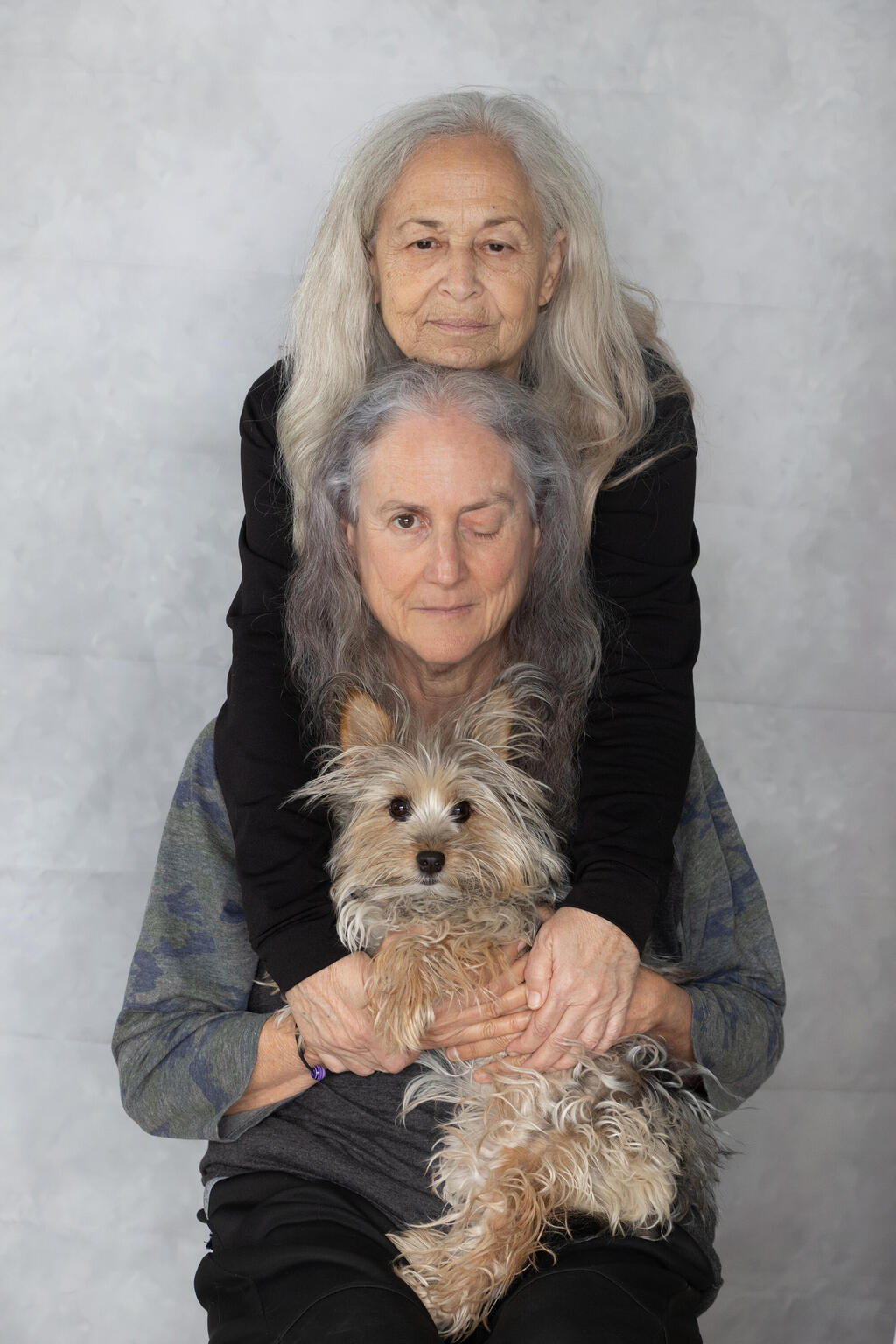
Her new exhibition, Silvered, currently on display in the lobby of the Tel Aviv Cinematheque plaza, documents older lesbian couples in portraits that place aging, love, tenderness and erotic presence at the center of the frame.
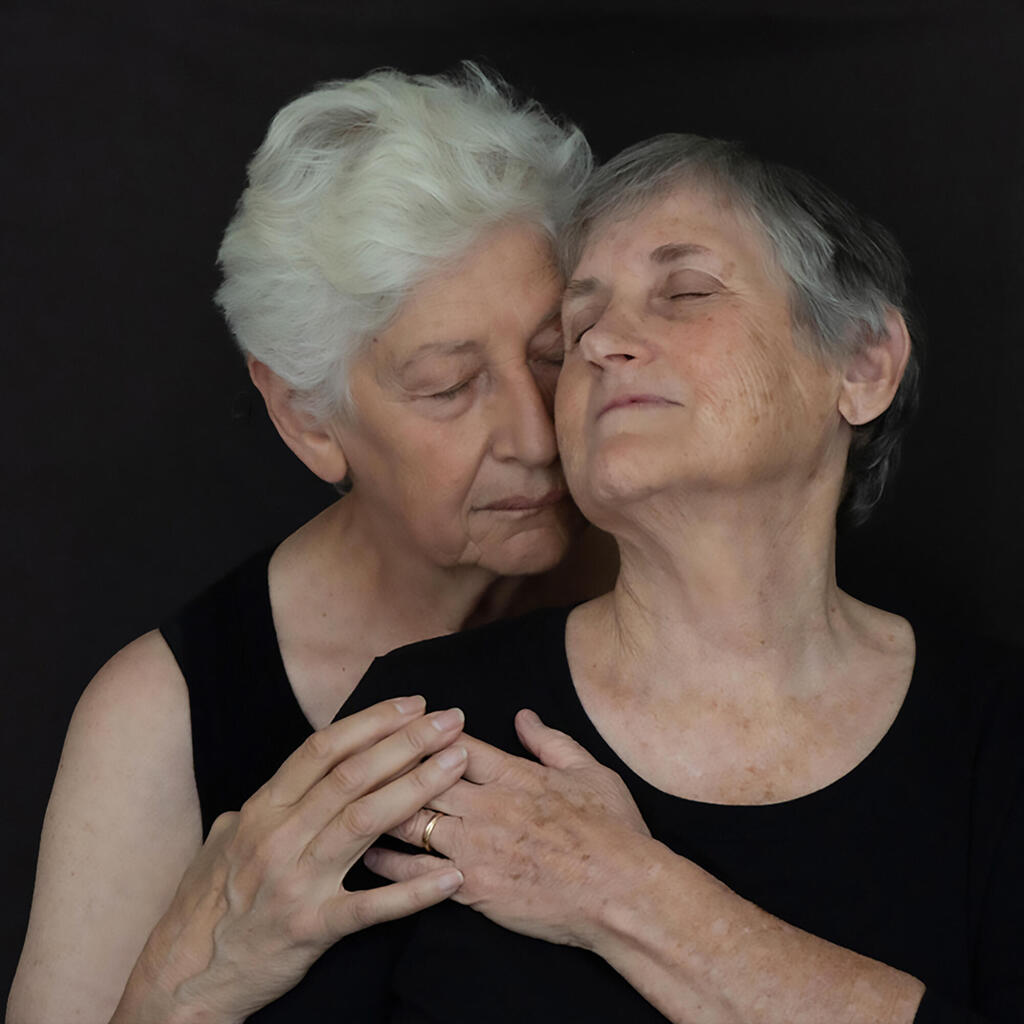
“I chose to look at the beauty of facial wrinkles, to see the depth in the gaze, the softness of touch,” Zelikha says. “My photography series shows an authentic, present, loving and vibrant existence, through which I examine questions of gender, age and love.”
“Through the photographs, I ask: Who are we when we are no longer young? I ask what tenderness, intimacy and eroticism between women look like at an age when we are expected to disappear from the public eye. This is work about visibility and making a voice heard, about the possibility of living in old age not through disappearance, but through revelation. These photographs do justice to women my age, normalize them and their beauty.”
Asked whether the exhibition challenges the popular ideal of beauty and offers an alternative to the mainstream model, Zelikha answers without hesitation.
“Absolutely, because our public space is full of Bar Refaelis of every kind, full of advertisements for Botox clinics showing women with gray hair but with the face of a 16-year-old child. It shows us a terrible picture of the beauty model. When everything around us is plastic and artificial, it engineers consciousness.
“On the other hand, I am saying something else. I am presenting the mature female body differently, saying through photography that human nature is simply so beautiful. Beauty is cultural, local and temporary. Yes, I want to see my exhibition influence the public space, influence public consciousness. Even when I began working on these photographs, I understood their power, but only at the opening of the exhibition did I understand their impact and how moving they are.”
How did she understand that impact?
“From the very powerful reactions of people,” she says. “A woman came up to me at the opening and said, ‘Now I finally love my wrinkles, I’m proud of them.’ That is wonderful. It really shows the power of art to change lives, to change reality.”
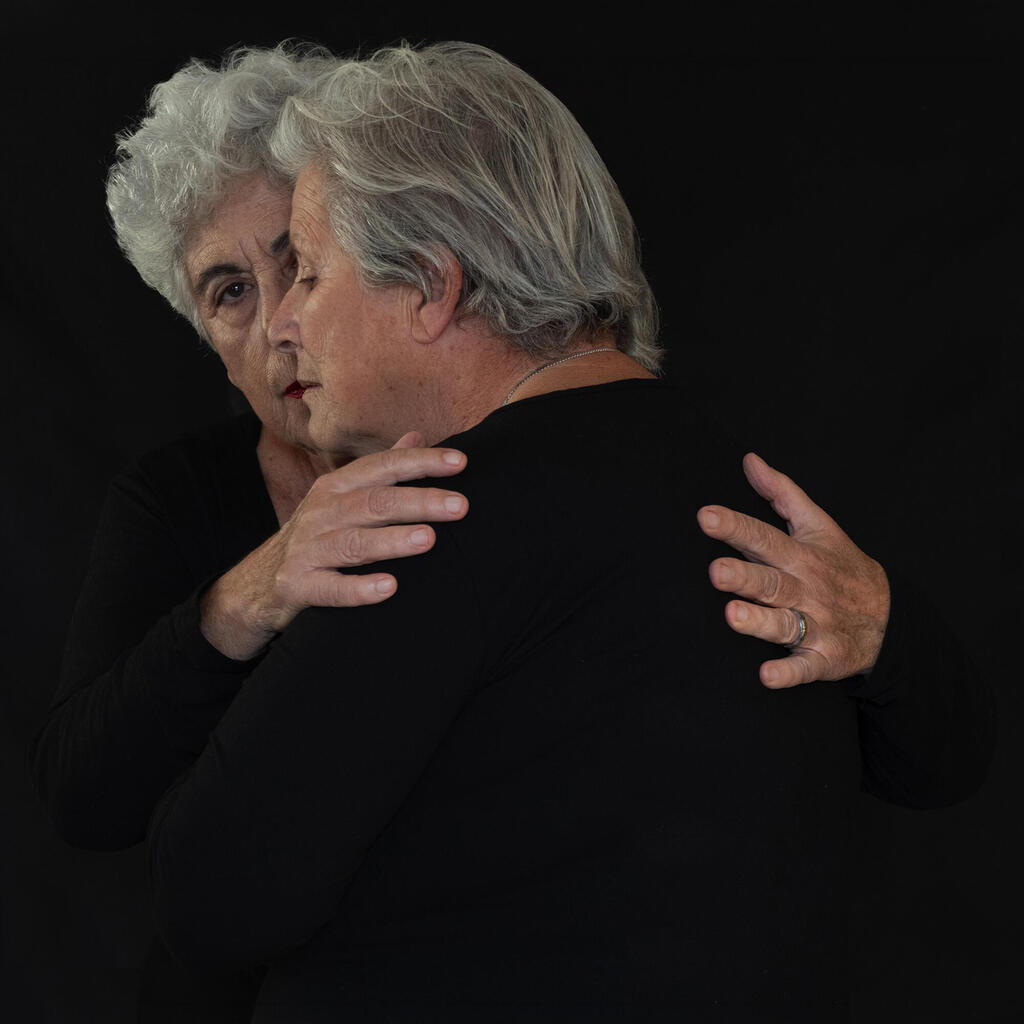
Nava and Iris
(Photo: Dalia Zalika)
Most of the women photographed are members of Beshala, a community of older lesbian women to which Zelikha herself belongs.
“All the women in the photographs are women who live their lives with confidence, visibility and determination, precisely at an age that society tends to wrap in silence and transparency, until they disappear completely from the public sphere,” she says. “They are all career women and social activists. They raised children, their own or their partners’, and they are all grandmothers.”
“These are brave women,” she adds, naming writer Tami Bezaleli, whom she photographed with her partner Sara Gross, who formerly headed Beshala, as well as couples including Corinne Shavit and Ilana Aviad, Yehudit and Aviva Evron, Iris Katz and Nava Levi, Dr. Vered Donsky and Tova Schmidt, researcher Dr. Dana Roth and artist Sherry Baruch, among others.
Zelikha was born and raised in Argentina, an only child to a single mother. She immigrated to Israel with her mother at age 10.
“My mother had me outside of marriage,” she says. “In those days, of course, that was very unacceptable, certainly not in the Jewish community, and her family distanced itself from her because of it. There was a time when she did not have the means to live and raise a child alone, so we came to Israel and moved to a kibbutz.”
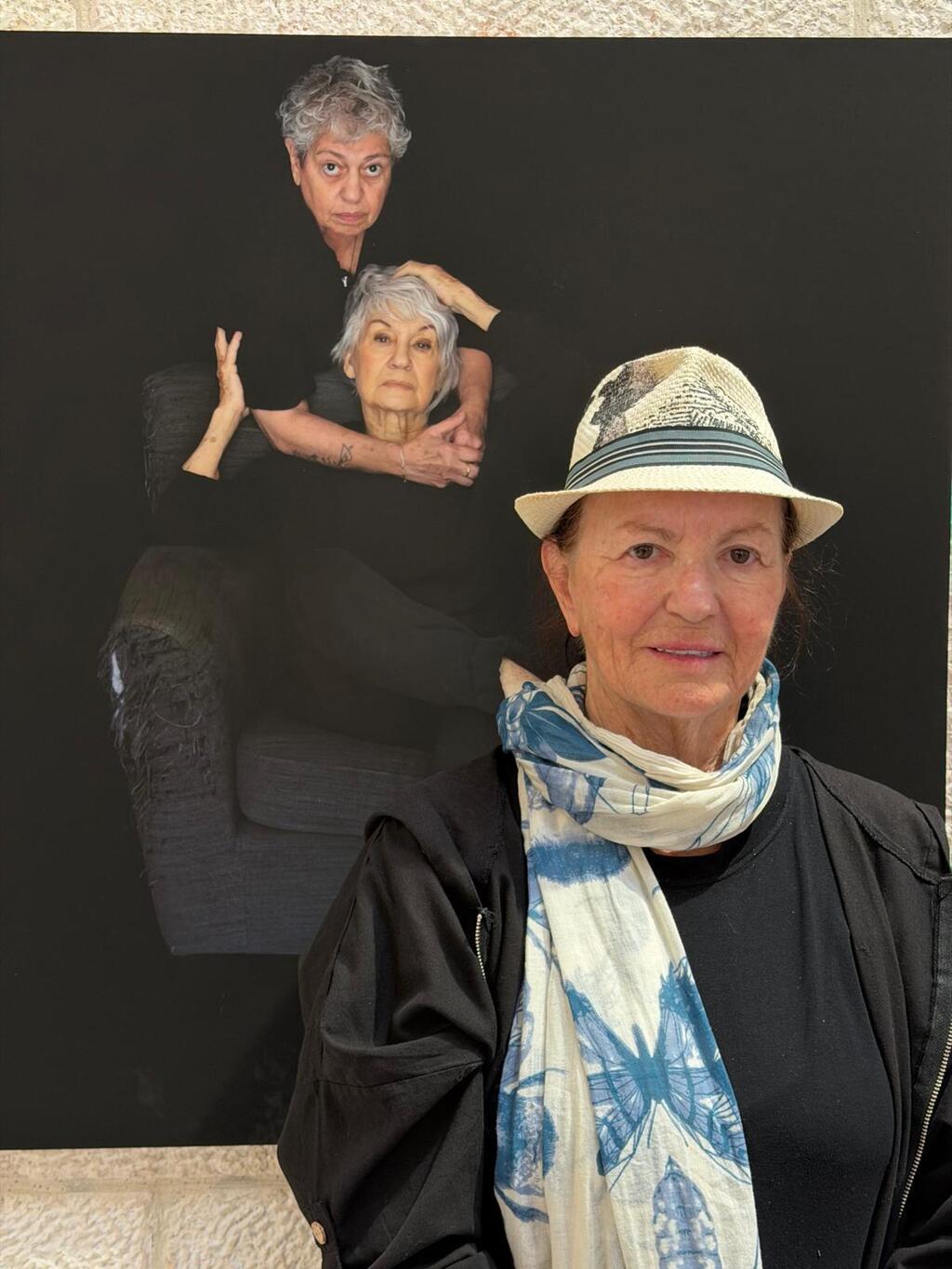
Tami, Sara, and Dalia
(Photo: Dalia Zalika)
They lived for five years at Kibbutz Gesher in the Beit She’an Valley, near the Jordan River. Zelikha says those years shaped her personality and values, but her mother struggled socially on the kibbutz. They later moved to Eilat, where Zelikha spent most of her life.
She began photography close to retirement age. Her coming out as a lesbian also came later in life, in her fifth decade, after two marriages and three long relationships with men.
“I was married three times,” she says. “The first two times we married through the rabbinate, with the third partner we did not, but I was actually with him for the longest time, until at age 45 I fell in love with a woman. I left my partner in order to live with the woman I had fallen in love with.”
Before that, she says, she had not had romantic relationships with women.
“No, I hadn’t. Until then I had a good life, a full life. I dealt with the children, with my career. That subject was not spoken about then the way it is today. It was not in public consciousness at all, and not in mine either.”
Coming out in Eilat at the time was not simple.
“Back then in Eilat, it was not accepted, so we lived in the closet,” she says. “To be close to each other, we bought two apartments, one above the other, and furnished them identically so we would feel as if we were living in the same home. She had three sons, I had two daughters, so we were two separate families, but a couple.”
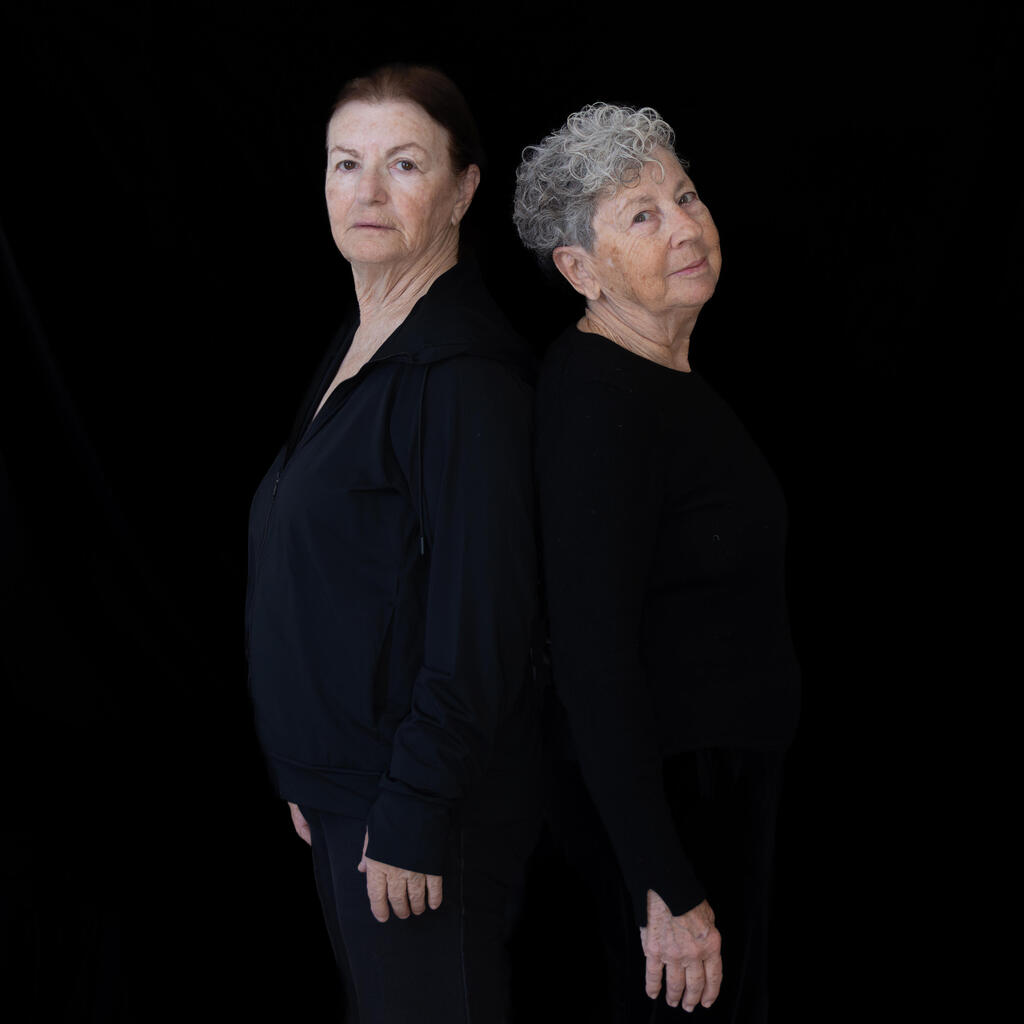
Dr. Malbina schwarzpeter and Dalia
(Photo: Dalia Zalika)
The two later opened a business together, which was well received in the city and began to succeed. But not long afterward, Zelikha’s partner became ill with cancer and died within months.
“It was a terrible illness,” Zelikha says. “I couldn’t stay in Eilat after all that. It was very hard for me and I needed a change, so I moved to Tel Aviv.”
That move introduced her for the first time to LGBTQ community life. It was also where she met Malvina, who has been her partner for the past 30 years.
“When we met, I had just moved to Tel Aviv and she was living in northern Israel,” Zelikha recalls. “So when we wanted to move in together, we took a ruler, measured the distance between the places on the map and looked for a city or town exactly in the middle. That is how we moved to Netanya, where we still live today.”
Dana Roth and artist Sherry Baruch
(Photo: Dalia Zalika)
Zelikha worked for many years at the shipping company ZIM, both while living in Eilat and after moving to central Israel. As retirement approached, she decided to study something new.
“At age 60, I decided I wanted to learn new things, and I enrolled in journalism studies,” she says. “As part of the studies there was a photojournalism course, and there I understood that I was leaving journalistic writing and focusing on photography.”
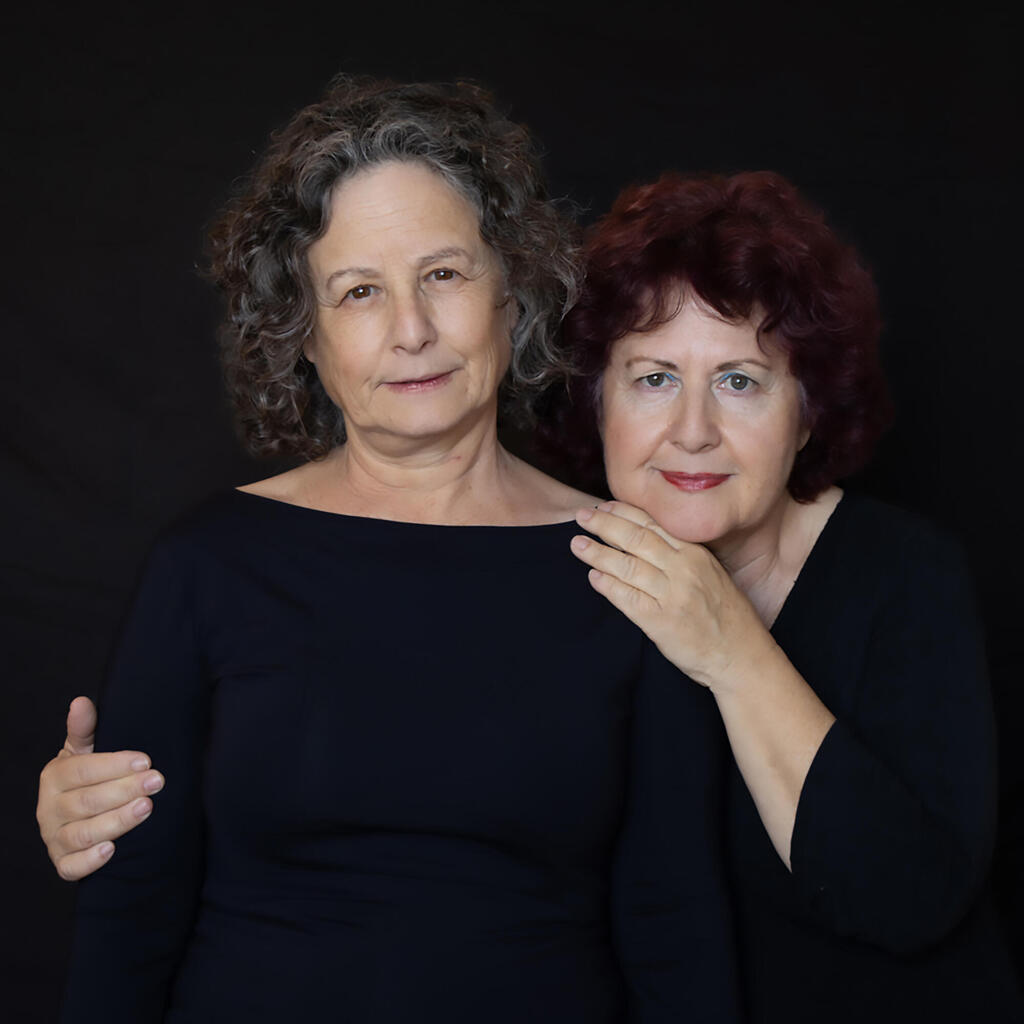
Vered and Tova
(Photo: Dalia Zalika)
She later took additional courses, photographed in various settings, worked within Netanya’s artists’ community and participated in several group exhibitions before arriving at the current project.
The idea to focus specifically on portraits of older lesbian couples began in a photography workshop.
“There was a woman who saw the pictures and said to me, ‘Dalia, I am no longer the old woman from the corridor, because thanks to these pictures, now I am seen,’” Zelikha says. “Another woman said, ‘I see this picture enlarged, hanging on a wall and having an impact.’ So after the workshop, I continued working on the project and photographed more and more women. Of course I’m continuing. I don’t stop photographing.”