

About a minute and a half into the video work "The Swimmers|’ by stylist and photographer Shay Lee Nissim, three teenage girls sit on a plastic bench wearing black swimsuits, repeating choreographed movements. They stare straight into the camera, extending their arms in voguing-style gestures, almost like they are rehearsing a TikTok dance, just like other girls their age.
Gallery
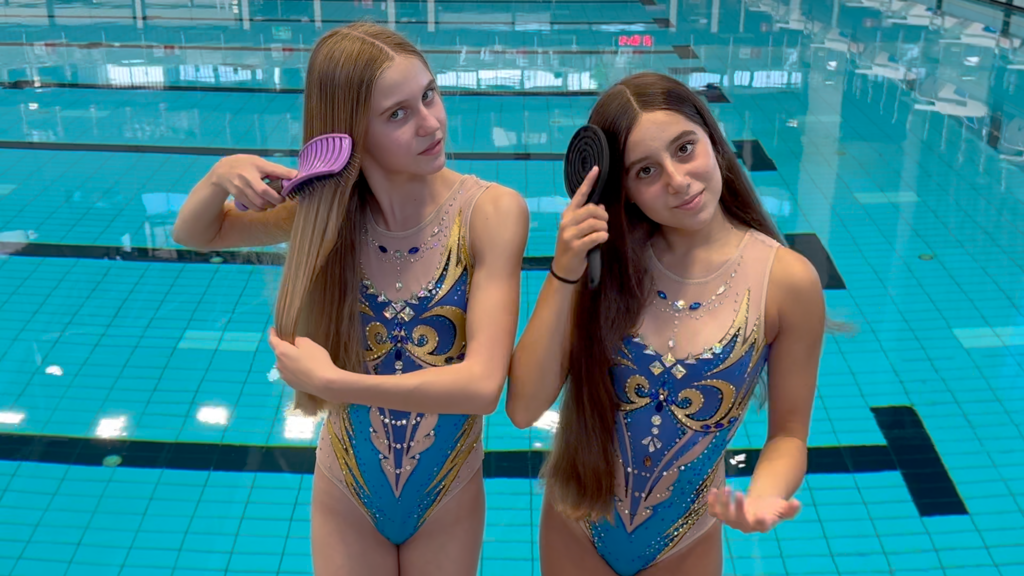
'Garment can be both practical and aesthetic, with cultural statement.' From The Swimmers
(Photo: Shay Lee Nissim)
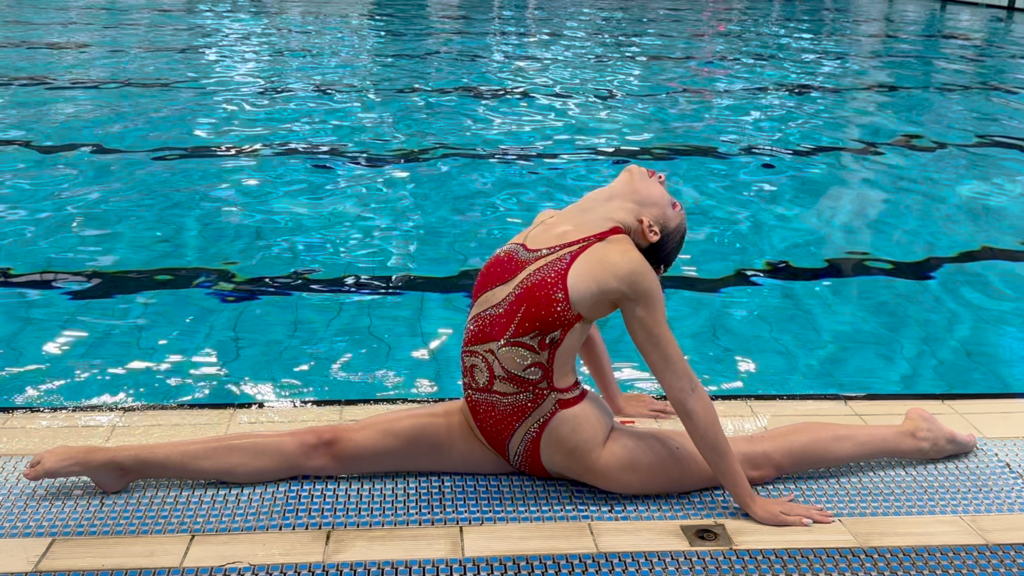
'I look for fashion not only in the clothing itself, but also in the context in which it exists.' From The Swimmers
(Photo: Shay Lee Nissim)
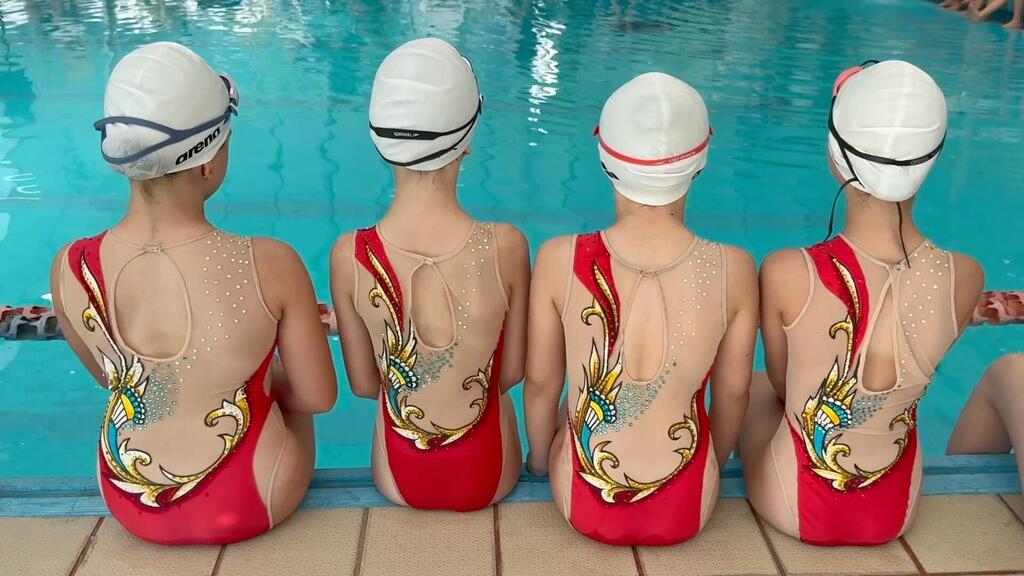
'Naturally, I am drawn to the quieter in-between moments.' From The Swimmers
(Photo: Shay Lee Nissim)
This dual point of view accompanies viewers throughout the five-minute video, which was on display last week as part of the "Local Testimony" photography exhibition at the Eretz Israel Museum in Tel Aviv, curated by Ilya Yefimovich.
'The Swimmers'
(Shay Lee Nissim)


"The Swimmers" is part of a series of video works by Nissim that in recent years has focused on sports considered relatively marginal, including artistic swimming, ballroom dancing and acrobatics. What unites them is an uncompromising aesthetic, from bodily movement and the formal shapes created in performance, whether synchronized formations in the pool or human towers in acrobatics, to the elaborate handmade costumes. As a veteran stylist, Nissim directs both her gaze and her camera toward these details.
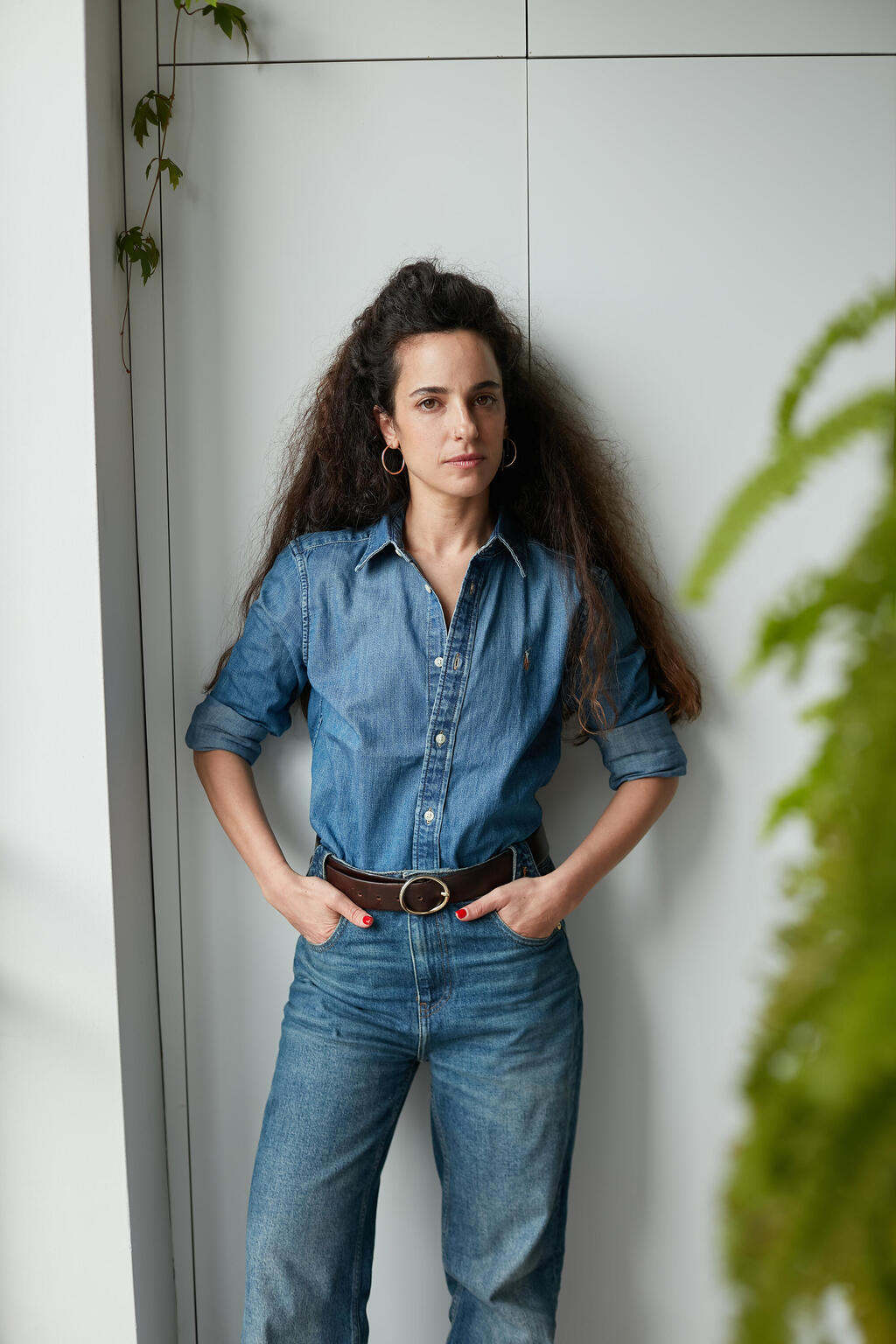
'Everyone has sensitivities around the body'
(Photo: Asaf Einy)
"The project grew out of an ongoing search for aesthetics in these spaces, and above all from a desire to trace passion, theirs and mine, as a driving force," Nissim explains in an interview. "For several years I've been conducting continuous research around fashion. Clothing is always the point of departure and the initial attraction in every project. I look for fashion not only in the garment itself, but also in the context in which it exists. I am interested in the tension between fashion and functionality, the place where a garment can be both practical and charged with aesthetic and cultural meaning."
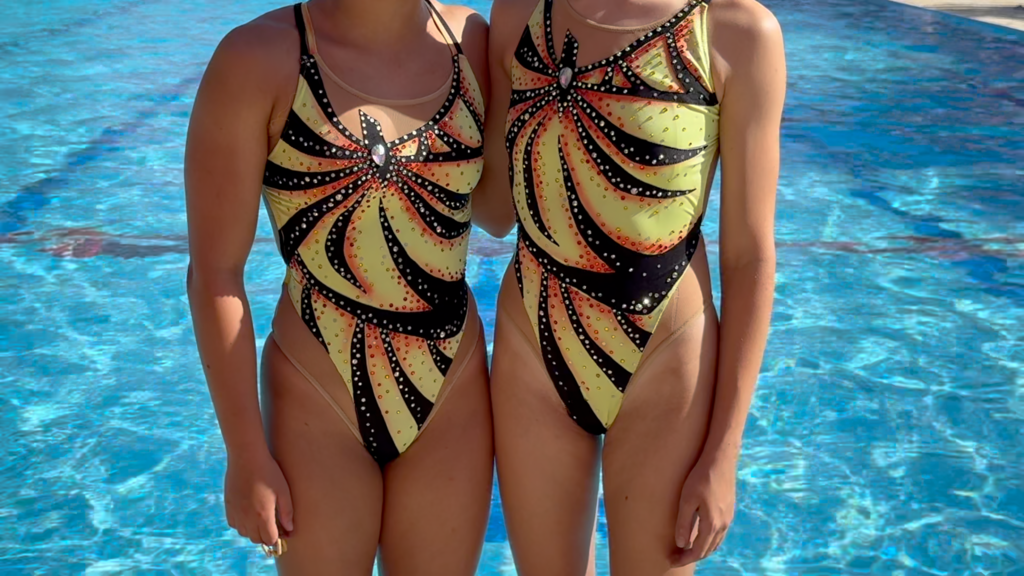
'Clothing is always the initial attraction in every project'. From The Swimmers
(Photo: Shay Lee Nissim)
Every weekend, Nissim went out to document competitions and training sessions, gradually forming personal and intimate relationships with the swimmers, who come from 19 clubs across the country, from Synchro Eilat in the south to Hapoel Upper Galilee. She became a familiar presence at swimming venues, helped in no small part by her long, distinctive curls.
Only after earning the swimmers’ trust and closely observing the space did she begin filming. The footage was shot both on a mobile phone and with a professional camera. In the exhibition, it was presented in rhythmic editing across a three-column split screen, resembling a digital triptych.
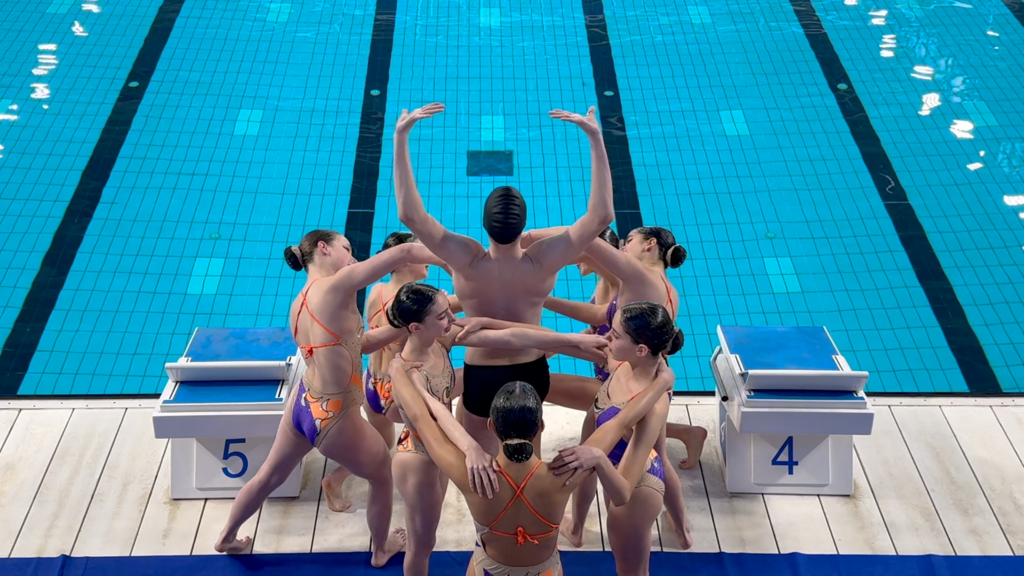
From The Swimmers
(Photo: Shay Lee Nissim)
"All the films are made using the same working method," Nissim says. "They are a collection of moments, some staged and some documenting competitions. Naturally, I am drawn to the quieter in-between moments: preparations, getting dressed, warming up behind the scenes. In the staged parts, I recreate moments I identified in real time, but under optimal filming conditions, with an emphasis on clothing and aesthetics. That is how a connection forms between documentation and staging. Unlike styling, where I create a character and weave a story around them, in video I locate the character and try to convey the emotion that drew me to film them in the first place."
"Today, models are more attentive to their bodies"
Nissim, 37, lives and works in Jaffa. For 15 years she has worked as a stylist on fashion productions, advertising campaigns and television commercials. "The Swimmers" is her fourth video project and the second presented to a broad audience. Last year, she showed "The Dance Floor" at "Local Testimony," a project following ballroom dance competitions for children and teenagers.
A clear aesthetic line connects the two works: mostly slender body types, colorful and glittering custom-made outfits, and a sense of diasporic aesthetics detached from Israeli roughness. Set against war photographs elsewhere in the museum, Nissim’s work offers a visual and colorful pause.
The Dance Floor
(Shay Lee Nissim)
The focus on ballroom dancing and artistic swimming first exposes their physicality: movement, discipline, repetition, the body. In familiar halls, competitions unfold that appear like standard sporting events, yet are populated by figures that sometimes feel out of place in the local landscape. Many participants are second- and third-generation immigrants from the former Soviet Union. The artistic swimming teams are more diverse, and as seen in the video, even include a boy tracing movements with his hands to the sound of Netta Barzilai’s "Bassa Sababa."
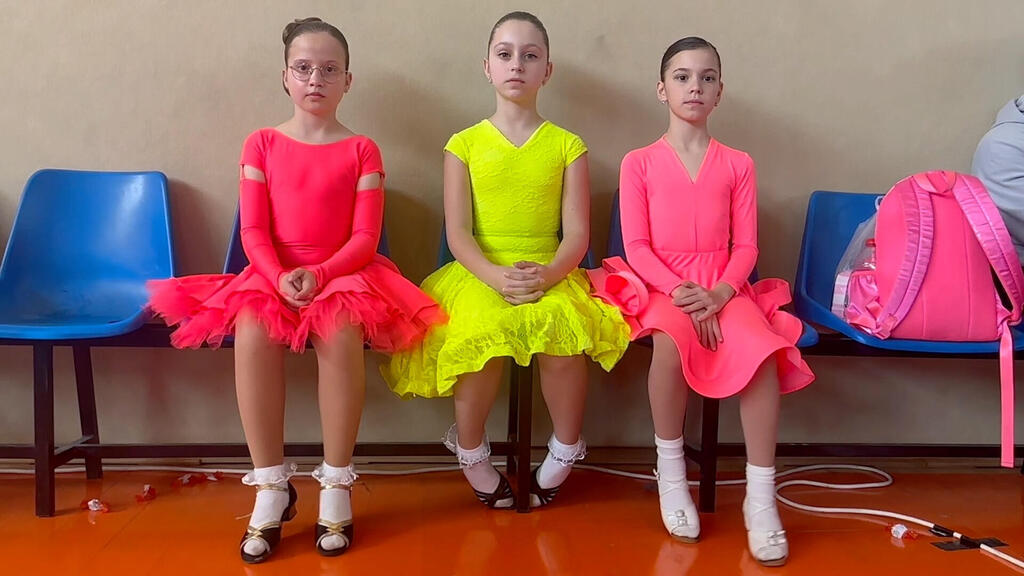
From The Dance Floor
(Photo: Shay Lee Nissim)
Nissim, whether intentionally or as a faithful reflection of reality, made an effort to present diverse body types, particularly within a broader conversation about diversity in fashion. Still, the combination of carnivalesque aesthetics and young participants inevitably recalls documentation of child beauty pageants in the U.S., which have drawn sharp criticism. Beyond the aesthetic discourse, does Nissim seek to make a statement about the female body?
"I find something very healthy in these girls," she says. "Healthy competition, healthy social connections. There may be things I don't see, of course, but both in terms of who I chose to film and the discipline I encountered, it was the reverse of what I had anticipated before I started documenting."
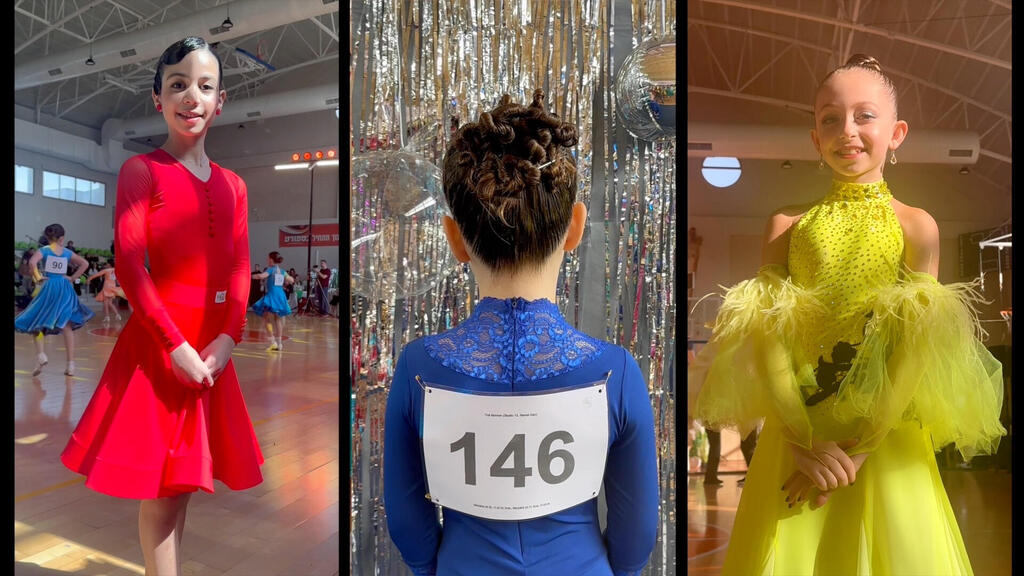
'These kids spend their summer vacation sewing their own clothes.' From The Dance Floor
(Photo: Shay Lee Nissim)
Artistic sports carry a very specific body image. Olympic gymnast Linoy Ashram spoke openly about gaining 17 kilograms after ending her rigorous training regimen. Implicitly, the message is that thinness is a requirement for success in these fields. Did questions of body image arise during filming?
"I was very careful in that respect, both so they would feel comfortable and so I would feel comfortable filming and presenting it," Nissim says. "I chose to shoot with sensitivity in terms of framing, camera placement and similar decisions. Everyone has sensitivities around their body."
There are clear parallels to modeling, where the body is also a working tool. As someone who works closely with models, do you see similarities?
"In both fields there is greater awareness and attentiveness to the body," she says. "Compared to when I started 15 years ago, models today are much more attuned to their bodies."
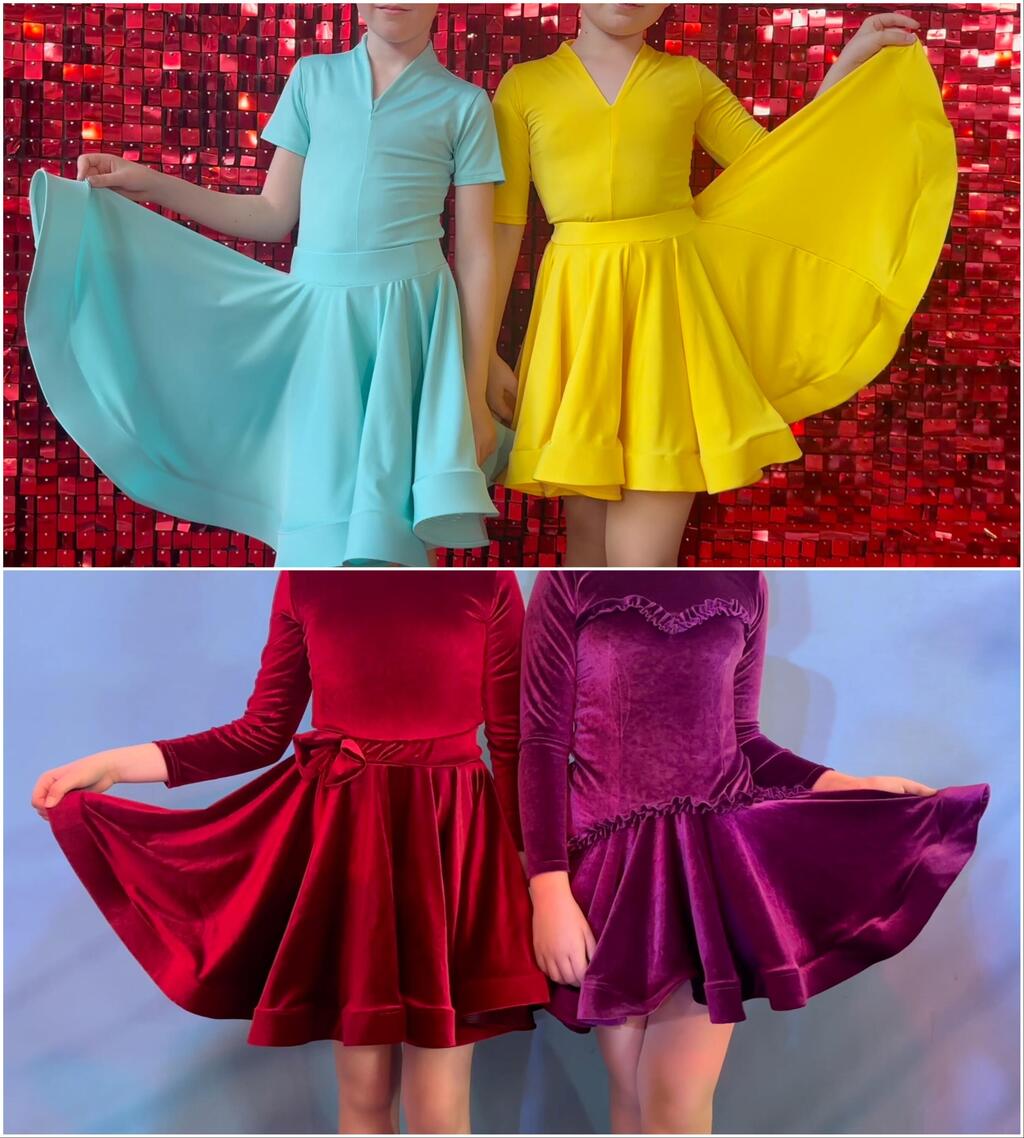
From The Dance Floor
(Photo: Shay Lee Nissim)
Nissim adds that Many of the girls and boys who take up ballroom dancing are drawn to it out of personal interest. At an age when many teenagers turn to screens, social media and dreams of becoming influencers, ballroom dancing is the opposite - a return to something physical, non-virtual, communal and relatively closed. It is a world that exists within itself, with its own rules, hierarchies and grueling training routines. Precisely for that reason, it appears to attract young people, especially girls, who are seeking structure and passion that do not depend on likes.
"These kids spend their summer vacation sewing their own costumes, gluing stones onto them, sometimes together with the coach or the team’s seamstress," Nissim says. "In what other world does that happen? It all takes place in a very closed environment, and as I'm coming from styling and fashion, the process itself fascinates me. All of these garments are custom-made. It's not like walking into Adidas and buying a soccer shirt."