


When couples decide to separate, it usually begins with a private conversation behind closed doors, continues with quiet updates to family and close friends, and only weeks later, once the wound has begun to heal, do wider circles discover that it is over.
The Israeli couple Ortalia and Asaf Elyashiv, parents of three from the city of Harish, chose a different route. In one public moment, they told everyone who knew them that they were divorcing. They did so in a video posted recently on social media, showing a tearful phone call to Asaf’s mother, moments of the two embracing and crying, and a promise that they would continue to love each other, all set to somber music. Alongside the video, they published a detailed text explaining why they had decided to separate.
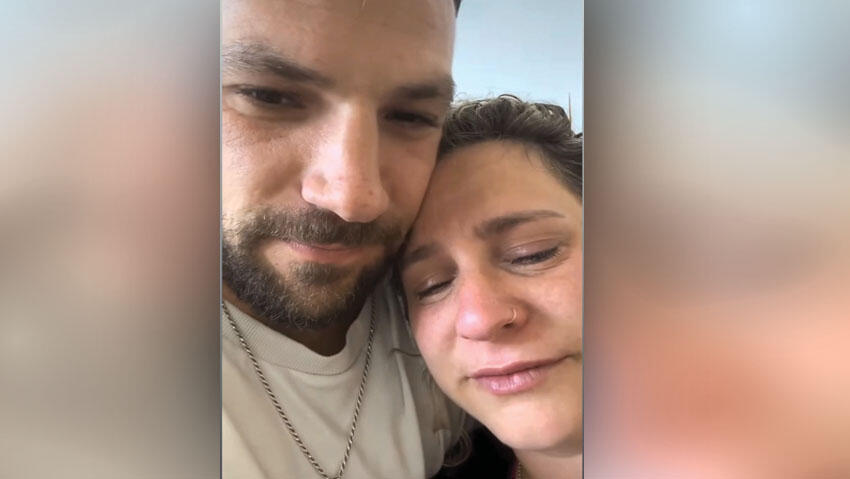
The video may still be unusual in Israel, but it points to a trend that has already become familiar abroad, known as the Public Breakup Video. The format turns the end of a relationship from a private update into an emotional scene staged for public viewing.
Former partners usually appear together or separately, often in a quiet, intimate setting, and speak directly to the camera about why the relationship ended. For followers, it creates the feeling of being invited into one of the most delicate and painful moments between two people.
The trend emerged on YouTube in the United States less than a decade ago. Its turning point came in 2018, when internet stars Liza Koshy and David Dobrik uploaded a video announcing their breakup. The six-minute clip, which mixed laughter with uncontrollable crying, has drawn more than 70 million views. It proved that heartbreak could be record-breaking content and that audiences not only want to know that it happened, but also want to see how it happened.
Ortalia, 35, a sexuality facilitator and personal development consultant, owner of the Oneg Center and founder of the Geshem Institute that offers counseling, workshops, and courses on intimacy and self-fulfillment, is also a content creator who often shares posts and videos about her personal life. She says one reason she decided to upload the video was the feeling that her followers deserved to know.
“There was a period when Asaf and I also worked together,” she says. “We led workshops on sexuality together, and we truly were a loving couple. It was important to us that our followers knew we were separating, but also that we had never tried to present a false version of ourselves to the world.”
So why did they separate? After years of trying to hide the truth, even from herself, Ortalia decided to come out. “I am attracted to women, and I only fall in love with women,” she says. “More than anything, it was important to me that people understand the breakup was not because Asaf was somehow lacking as a man. He is every bit a man.”
She met Asaf, 35, a wedding DJ, when they were both religious 17-year-olds. “We got married at 19 and very quickly had children,” she says. They have a 16-year-old daughter, a 13-year-old son and a 9-year-old daughter. “I always dreamed of a relationship with a woman, but I was a religious girl who had studied in an ulpana, and back then it seemed to me like a sure recipe for a miserable life. I resisted that part of myself, and then I met Asaf and it was perfect. I felt he was my soulmate. I loved him very much and discovered that I was also attracted to him.”
So where was the problem?
“I never fell in love with him. All my life, I have only fallen in love with women, and that repeatedly led to crises between us. At some point I started therapy, but over the years I continued falling in love with women. Eventually, I understood that the way I look at a woman is not the way I look at a man, and that I will never be able to fix that.”
She says one reason they struggled to make the decision was fear of “what people would say” and how it might affect her career. There was also the financial challenge of separating households.
“Asaf is a wedding DJ, the best there is,” she says. “He is the kind of person who gets emotional at every wedding ceremony. But since October 7, he has been serving in the military reserves almost nonstop, and during the war there were hardly any weddings, so he had very little work. We knew separating during that period would be complicated.”
Recently, however, during another couples therapy session, both realized there was no point in dragging it out. “The therapist asked Asaf: ‘What do you need from your wife?’ and he said, ‘For her to love and want only me.’ Then she asked him to look into my eyes and ask me whether that was something I could ever give him. I was all tears. I told him, ‘I’m sorry, my love. I cannot give you that.’ And the moment I saw his pain, the pain of my best friend, whom I love so much, I understood that the fairest thing for both of us was to separate.”
Asaf says: “Eventually, we understood that we both deserved more, and that we were not dismantling the family, only changing its structure.”
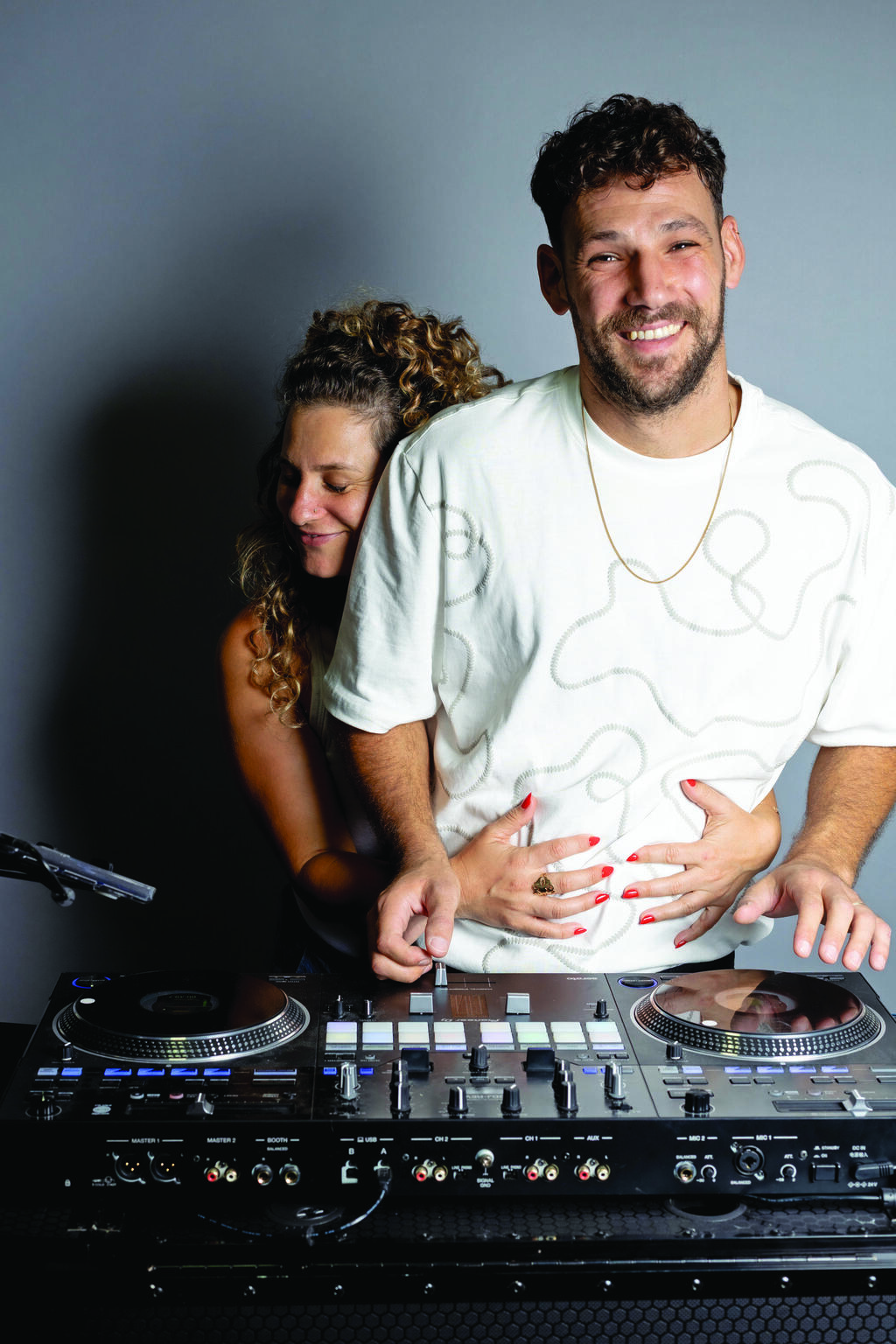
Ortalia and Asaf Elyashiv. ‘We understood that we both deserved more’
(Photo: Keren Shalev)
So why make the separation so public?
“A lot of people saw us as a model couple and viewed our relationship as something strong and intimate,” Asaf says. “It was important for us to show that it had all been real, that the deep love between us still exists, and that even our separation is being done in the most loving, honest and respectful way possible. We also both felt we were carrying a kind of secret, and we wanted to release it all at once. Putting it out there was part of accepting the decision.”
Ortalia says the post was about more than the divorce. “In the breakup post, I did not only write that we were divorcing. I also explained why: my dream of being with a woman. At first, I was deeply ashamed, and then the therapist told me, ‘Why would you do twice the work of first telling people you are divorcing, and only later tell them you are attracted to women?’
“That was when I understood that I wanted to release the video and tell the whole story. The greater the shame, concealment, fear and darkness I had lived with, the stronger the urge became to scream it to the world.”
What responses did you receive?
“On the one hand, there was a lot of love and support,” Ortalia says. “On the other hand, some people were angry with me. Unfortunately, some of the things I had feared did happen: lectures were canceled, couples left my clinic, and some of my religious relatives do not embrace that.
“Still, I am happy, and I do not regret it for a moment. The video was meant to show the world that neither of us has anything to be ashamed of, and that this separation is actually a gift of love we gave each other.”
A kind of emotional therapy
In August 2024, British Cosmopolitan dedicated an article to the public breakup trend, arguing that it is not entirely new. After all, the magazine noted, what was changing one’s Facebook status from “in a relationship” to “single,” if not a public announcement?
Still, detailed breakup posts were once mostly reserved for celebrities who understood that the best way to prevent rumors was to take ownership of the narrative. Over time, the trend moved from celebrities to influencers, and more recently to “ordinary people,” including those who do not have a fan base.
For some, a public breakup is mainly efficient: it saves them from having to update each person separately. One doctoral student from Edinburgh, who announced the end of her engagement on Facebook in a joint question-and-answer post with her ex, told the magazine that they wanted to spare themselves the need to send personal messages to everyone.
The shift also reflects a broader social change. Breakups and divorces are no longer necessarily viewed as failures that must be hidden, but as another chapter in life that may be marked, or even celebrated, with heads held high. In an era when divorce parties have become a trend in their own right, even the end of a relationship now seems to deserve its own Instagram frame.
Yuli Ganon, 24, a social media manager and content creator from Ashkelon, also posted breakup videos after canceling her wedding three months before the date, sharing her pain and crying openly in front of the camera. “Today we talk about everything and show everything on social media,” she says. “There are almost no subjects left that are taboo.”
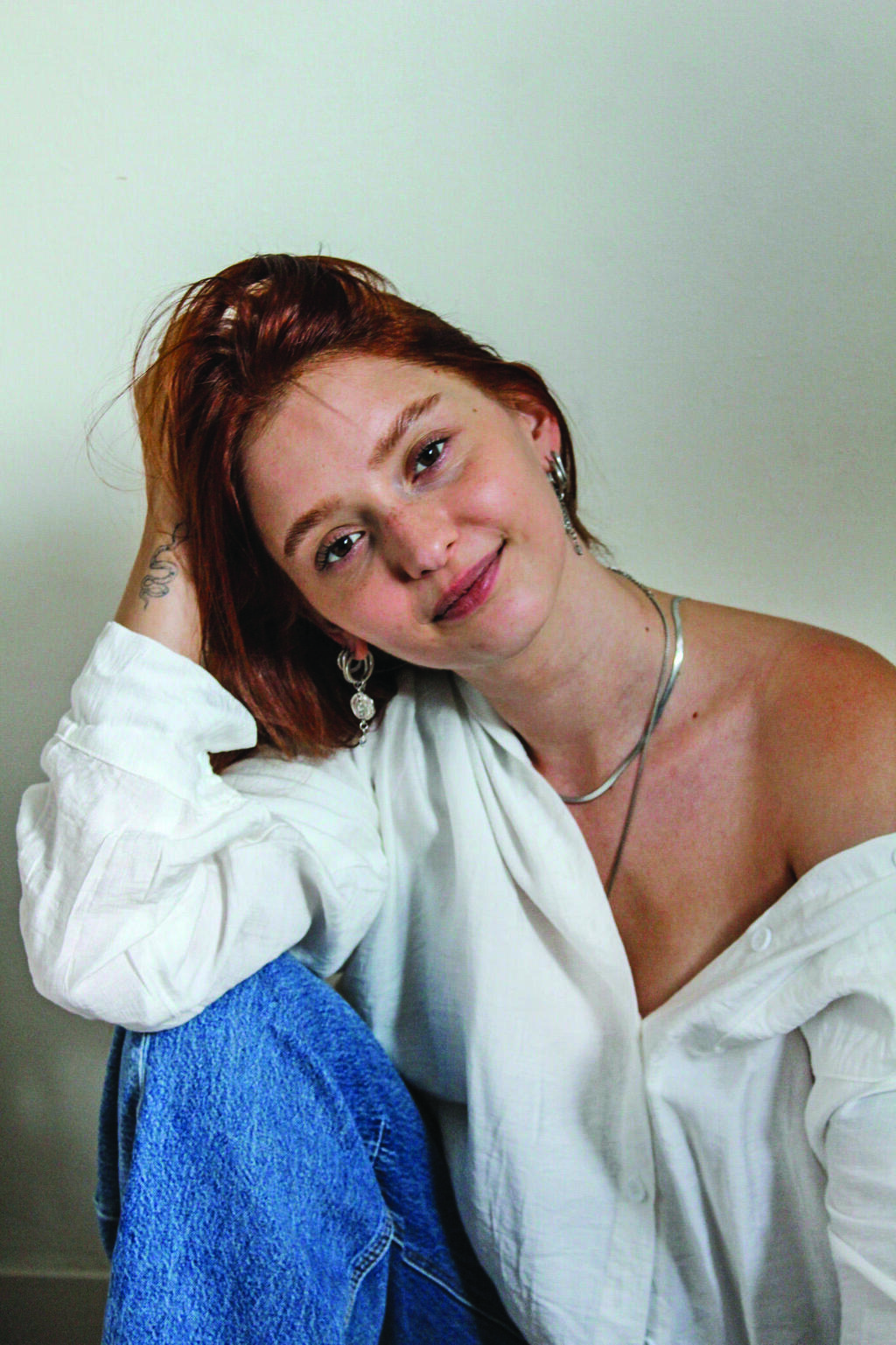
Yuli Ganon
(Photo: Private album)
Ganon separated from her partner after a three-year relationship, two of which they spent living together. “There was already a date, a hall, a dress, everything,” she says. “But as the date got closer, we understood that maybe this simply was not it. I believe October 7 changed both of us and made us realize we wanted different things in life.”
At first, she says, she had no intention of sharing the breakup publicly. “I told only my parents. I went back to their house, and for a week I was completely cut off from the world. Because of my work, I am usually on social media all the time, but I did not open it even once. I did not want to do anything. I was full of shame about what people would say. I got into bed and did not get out.”
Eventually, Ganon realized she had no choice but to confront her new reality. “I had to tell everyone the wedding was canceled, go back to our apartment and collect my things. Then suddenly I thought: Why not document it? Why not film myself going through this process and post it on social media?
“I felt it would spare me the pain of having to tell the story again and again, and that the documentation itself would help me cope, almost like a form of emotional therapy. When I film myself and say what I feel, it is a bit like sitting across from a therapist. The camera has always felt like a safe place for me.”
What responses did you receive?
“I uploaded a series of videos, and from the very first one it exploded,” she says. “I received many responses from people who said they had been in my situation and that the feeling improves with time. Some women said the videos gave them the courage to break up before a wedding they were not sure about. In the end, I felt the process really empowered me.”
The tears may live forever
In an interview with the American lifestyle site Refinery29, Anthony T. Pinter, a doctoral researcher at the University of Colorado who led a study on social media and breakups, said there is a deep human need to share our experiences, whether in therapy, through writing or on TikTok. But he also warned that sharing intimate moments online has consequences.
“The internet doesn't forget,” Pinter said. “The technological lifespan of your tears could theoretically go on forever.” Such videos, he added, "could impede your healing process. “What happens if you become a meme and you can’t escape your own breakup anymore?” he asks.
That may be one reason the phenomenon is less present in Israel, a small country, than in the United States and Europe. Even those who do upload a post or video during a breakup sometimes regret the exposure once the emotional storm passes. As time goes on, many no longer want to be identified with one of the most vulnerable moments of their lives.
During work on this article, it emerged that some people who had publicly shared their breakups had already deleted the videos, while others declined to be interviewed about them.
One woman who had gone through a public breakup explained that she is now in a new relationship and has no desire to return to that period. She said the request for an interview itself reminded her that she wanted to delete the old breakup video.
Another content creator, who once posted a breakup video that drew major exposure, said that for him, it was a chapter he had already left behind. “It bothers me a little that this video became the thing that defines me,” he said, adding that he had not imagined how widely the video would spread and that he certainly did not want to become “the breakup guy.”
Still, it is doubtful that regret or embarrassment will be enough to stop the trend. Mental health expert Tracey Horton told news.com.au that emotions are generally healthier when people can talk about and share them, and that social platforms have created a real outlet for people to see and be seen. Horton said she does not necessarily view the trend as negative, but rather as a natural evolution that is likely to keep growing.