


For decades, getting ready for a first date followed a fairly predictable routine: take a shower, put on deodorant, wear a clean shirt and perhaps add a little perfume or cologne. Now the internet has another suggestion: Maybe all of that is exactly what is ruining your chances of getting a second date.
A social-media trend known as “pheromone maxxing” has been gaining attention in recent weeks. The premise is simple. Some men are giving up deodorant and perfume, showering less frequently and even repeatedly wearing clothes that have absorbed their body odor, in the belief that preserving their natural scent allows chemical signals called pheromones to make them more attractive to women.
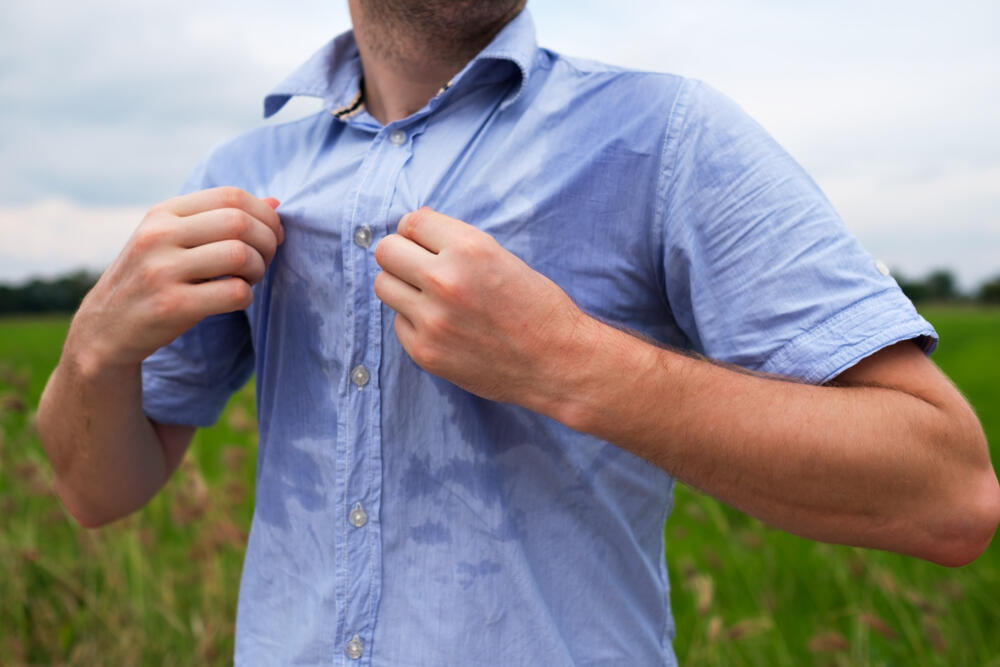
The trend is the latest branch of the online “maxxing” universe, built around the idea that almost any aspect of the body or appearance can somehow be optimized. Looksmaxxing promises a more attractive face and body, gymmaxxing focuses on muscle, spermmaxxing on male fertility, and now, inevitably, the armpit is getting its turn.
Users on TikTok and Instagram say they have stopped using perfume, washing their hair as frequently or applying deodorant. Some claim they subsequently received more compliments on their natural scent. Others take the experiment further by intentionally stretching the time between showers.
It is easy to dismiss the entire thing as another dubious idea born in the stranger corners of social media. But underneath the layer of sweat is a genuinely interesting scientific question: Can humans actually smell attraction?
We are not animals
“The trend in which men give up deodorant in order to expose their natural pheromones is based on an appealing evolutionary myth, but there is a significant scientific gap,” says Dr. Marina Landau, a dermatologist with Maccabi Healthcare Services.
“The idea is based on the existence of pheromones in the animal kingdom. In animals, a pheromone is defined as a specific chemical compound secreted by one individual that triggers an innate, predetermined behavioral or endocrine response in another member of the same species, such as courtship behavior, immediate mating, aggression or territorial marking.”
In humans, however, things are considerably less straightforward. “Despite many attempts, not a single human pheromone molecule has been scientifically established as having a direct and immediate effect on sexual attraction,” Landau says.
A major scientific review published in 2015 concluded that there was no robust evidence supporting several steroids that had long been described as possible human pheromones.
A review published in 2025 reached a similarly cautious conclusion about androstadienone, a steroid found in male secretions and long regarded as one of the strongest candidates for a human sex pheromone. The authors found that inconsistent results and methodological differences meant the evidence remained insufficient to classify it as one.
Deodorant is for the weak?
(Photo: Shutterstock)
That does not mean smell is irrelevant to human attraction. The human body releases a complex mixture of volatile chemicals, and research suggests our scent may carry information associated with factors including emotional state, health, sex and sexual arousal.
“Every person has an individual odor signature influenced by their genetic makeup,” Landau says. “Unlike the idea of pheromones, this signature is very subtle and actually comes through when the skin is clean and does not smell strongly of sweat.”
That distinction captures one of social media’s favorite tricks: start with a kernel of genuine science, attach a much larger conclusion that the evidence does not support and let it circulate until the whole thing sounds established.
 Dr. Marina Landau
Human body odor is far more complicated than any single supposed pheromone. It is affected by genetics, hormones, health, skin bacteria and even diet.
Yes, what you eat can alter how you smell. In a small study, men followed diets containing red meat or no meat for two weeks at a time. Women later rated the men’s body odor as more pleasant and attractive during the meat-free period.
Another series of experiments found that consuming relatively large amounts of garlic could also change male underarm odor. In two of the experiments, women rated the odor after higher garlic consumption as more attractive. The studies were small and do not offer a dating formula, but they illustrate how variable and complex what we call our “natural smell” really is.
The sweaty T-shirt test
So there is still no confirmed human sex pheromone. But that does not mean our noses have nothing to do with attraction.
Research reviews suggest that smell and body odor may play some role in romantic bonding, mate preferences and feelings of closeness. The difficulty, as with almost everything involving attraction, is isolating one factor and declaring it responsible.
A 2020 study, for example, found that men rated sweat collected from women during sexual arousal as more attractive than samples collected from the same women in a neutral state. Researchers also found that exposure to the scent affected how the men subsequently responded to sexual stimuli.
One of the best-known experiments in the field dates back to 1995 and became known as the “sweaty T-shirt study.”
Men were asked to wear the same T-shirt for two nights. Women were then asked to smell the shirts and rate the odors.
Researchers found that women tended to prefer the scent of men whose major histocompatibility complex, or MHC, genes differed more from their own. The MHC is a group of genes with an important role in the immune system.
One hypothesis was that attraction to partners with different immune-system profiles could potentially offer an evolutionary advantage to offspring. But subsequent research complicated that tidy explanation. Later studies did not consistently reproduce the original result, and findings on whether humans can effectively “smell” genetic compatibility have remained mixed.
Does it pass the smell test?
(Photo: Shutterstock/Andrey_Popov)
There is another problem for pheromone maxxing: the smell most people recognize as sweaty body odor does not come from sweat alone.
“The odor emitted from the armpits is not some purified attraction compound,” Landau says. “It comes from secretions of eccrine glands, which produce sweat, and apocrine glands, whose secretions contain proteins and fats. These are then broken down enzymatically by the skin’s natural flora, the bacteria living on the skin.”
“The breakdown products include volatile short-chain fatty acids and sulfur compounds, which are responsible for the sharp smell of sweat, not an attractive aroma.”
Studies have indeed linked the type and amount of bacteria in the armpit to the character and strength of body odor. One study found substantially higher bacterial levels and stronger odor among people who did not use antiperspirant.
In other words, after several days without a shower, you may not be pheromone maxxing at all. You may simply be bacteria maxxing.
Go easy on the shower, too
Before rushing off for a third shower of the day, however, there is another complication. From a dermatological standpoint, Landau says that going without a shower for a period of time, as some followers of the trend do, is not in itself likely to cause illness in an otherwise healthy person with healthy skin.
But excessively frequent washing is not necessarily good for the skin either. “Basically, humans weren’t designed to shower three times a day. The skin can’t handle that kind of burden. Water dries it out,” she says.
Healthy skin can generally tolerate one or two showers a day, she says, but for people with dry skin or certain dermatological conditions, frequent washing, particularly with heavy soap use and scrubbing, can damage the skin barrier. “If you ask a dermatologist, the less frequently you shower, the healthier it generally is for the skin,” Landau says. “Within reason, of course.”
(Photo: Shutterstock/Volodymyr TVERDOKHLIB)
So there is no need to swing from one extreme to the other. A few days without showering are not necessarily a medical event for a healthy person, but that still does not turn avoiding the shower into a scientifically supported seduction strategy. As Landau puts it simply: “Nobody wants to sit next to someone who smells bad.”
“In practice, giving up deodorant or antiperspirant in favor of supposed biological attraction usually ends not in some mysterious evolutionary aura, but simply in social discomfort for the people around you,” Landau says.
Our noses may well play a larger role in choosing and bonding with partners than we consciously realize. But researchers have yet to identify a human sex pheromone capable of turning natural body odor into a chemical shortcut to attraction.
And for now, there is no evidence that three days without a shower will improve your chances of a second date.