

The Hayli Gubbi volcano, in Ethiopia’s Afar region, erupted on Sunday morning, marking what is believed to be its first known eruption in about 12,000 years. The volcano is located roughly 800 kilometers (500 miles) northeast of the capital of Addis Ababa and near the border with Eritrea.
The Hayli Gubbi volcano eruption


The eruption left the neighboring village of Afdera covered in ash. A local administrator, Mohammed Seid, said there were no casualties, but he warned that the event could have serious economic consequences for the local community of livestock herders. “While no human lives and livestock have been lost so far, many villages have been covered in ash and as a result, their animals have little to eat,” he said.
The ash plume rose to an estimated height of 14 kilometers (8.5 miles) and drifted over Yemen, Oman, India and Pakistan. The Toulouse Volcanic Ash Advisory Center observed the eruption on satellite imagery.
The Afar region sits at a junction of tectonic plates and experiences frequent seismic activity. A resident, Ahmed Abdela, said he heard a loud explosion and felt a shock wave. “It felt like a bomb had suddenly gone off with smoke and ash,” he said.
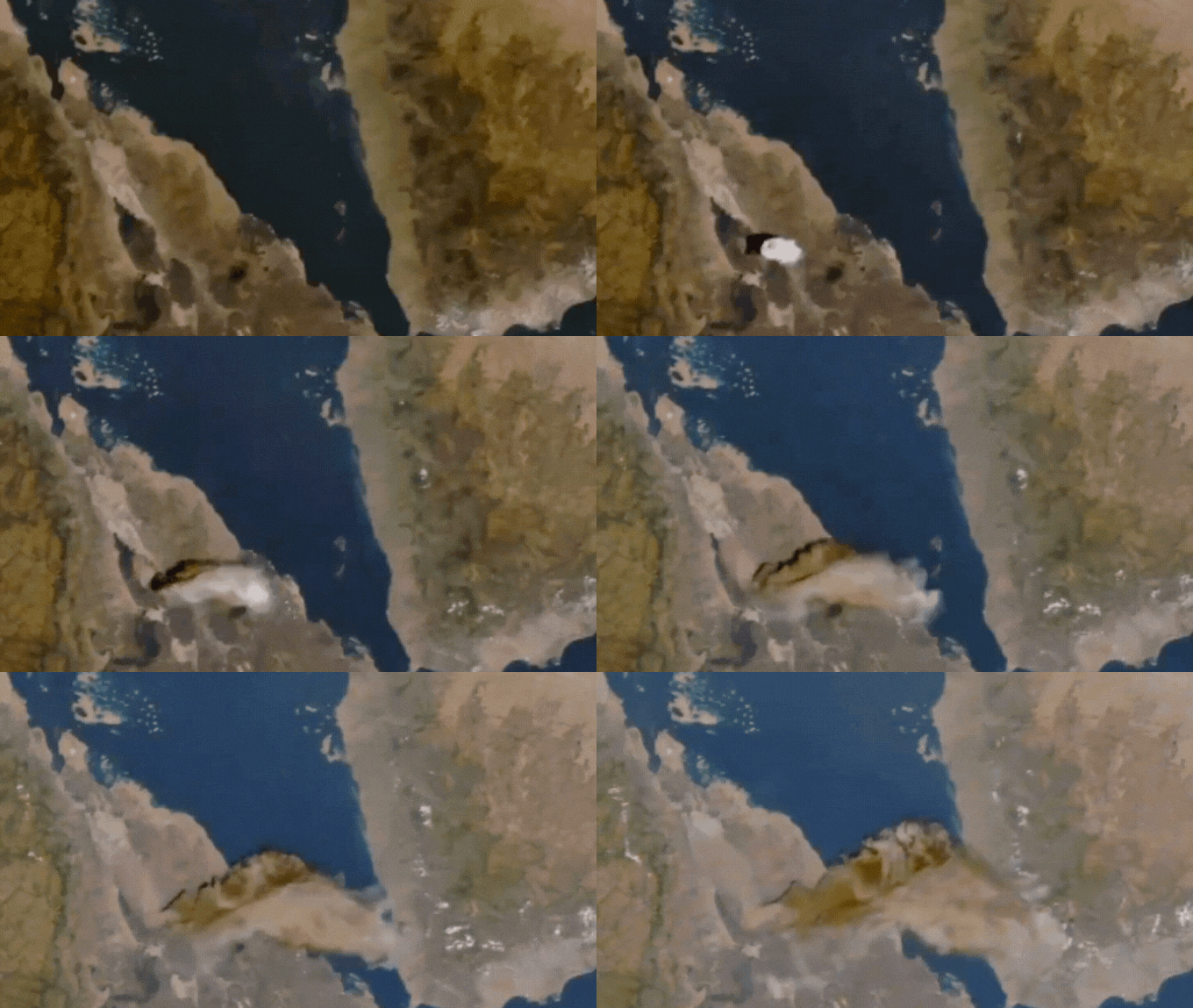
Hayli Gubbi eruption
The village near the Danakil Desert, a major tourist destination, was still covered in ash on Monday. Tourists and guides heading to the desert were stranded in the village, according to Abdela. Local authorities released photos and videos showing a towering ash column rising from the volcano.
Hayli Gubbi, a shield volcano rising about 500 meters above the surrounding plain, sits within the geologically active Rift Valley. Geological records indicate no confirmed eruptions during the Holocene, the current geological epoch that began around 12,000 years ago, making this event highly unusual.
The eruption, which lasted several hours, has raised concerns about long-term effects on herders, tourism and regional stability, given the limited monitoring of volcanic activity in the remote area.