

When Tiberius came to power, Egypt had already been a province — an administrative unit under foreign rule — of the Roman Empire for 44 years. As a result, the Roman emperor from A.D. 14 to 37 was responsible for upholding the laws of maat, an abstract concept in ancient Egyptian religion referring to cosmic order and justice, personified as a goddess representing truth, balance and law.
“To fulfill this role, the ruler had to be shown performing traditional rituals in a way the gods would recognize — that is, as a pharaoh,” Egyptologist Dr. Abdelghaffar Wagdy, director-general of Luxor Antiquities and co-director of the Egyptian-French Archaeological Center, told Live Science.
Gallery
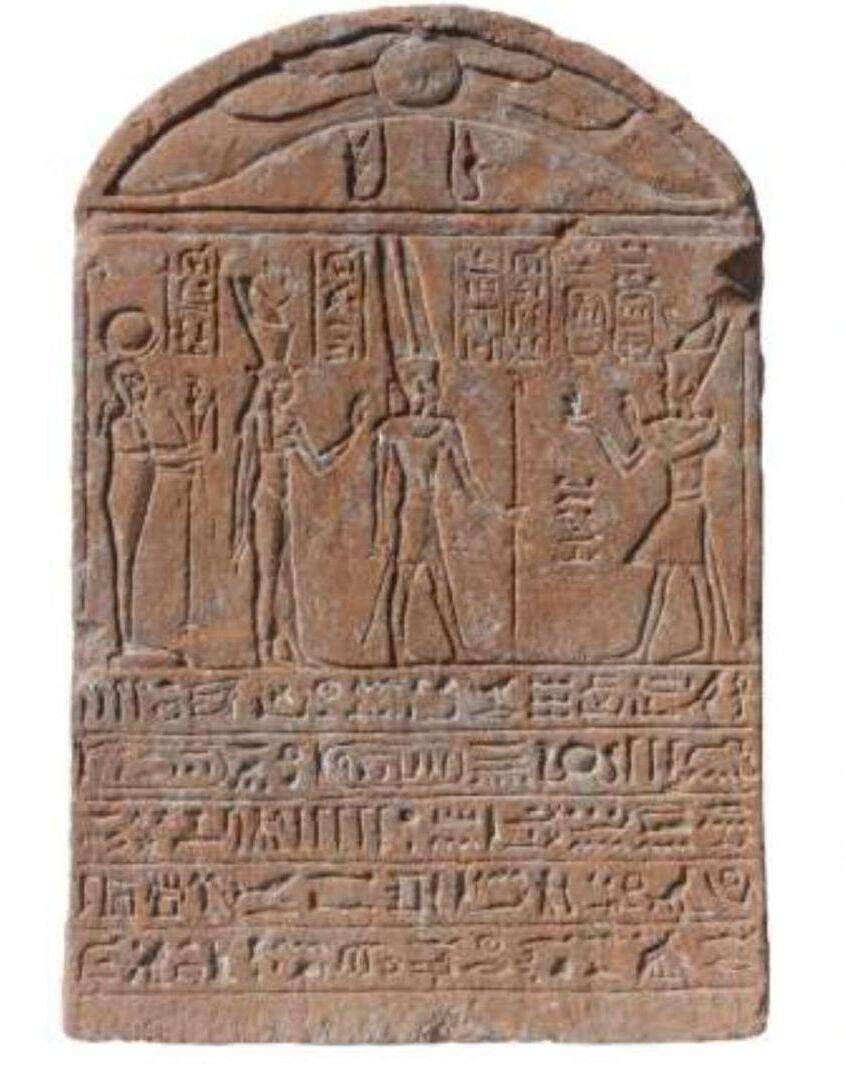
An ancient Egyptian stela depicting the Roman emperor Tiberius (right) alongside the Egyptian gods Amun, Mut and Khonsu
(Photo: Egyptian Ministry of Tourism and Antiquities)
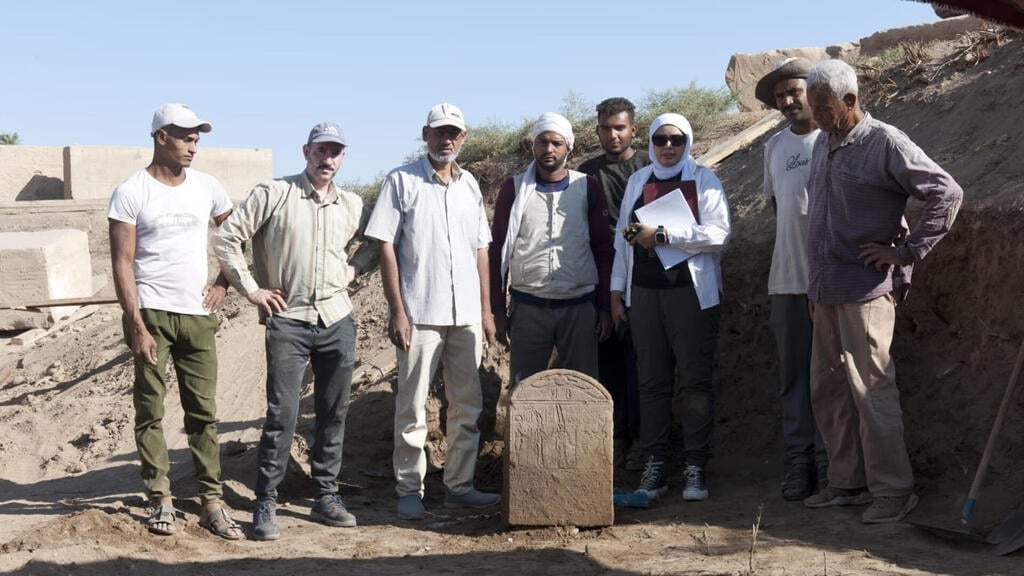
Archaeologists present the 2,000-year-old stone slab discovered in Luxor, the site of ancient Thebes
(Photo: Egyptian Ministry of Tourism and Antiquities)
A 2,000-year-old sandstone slab was discovered during restoration work at the Karnak Temple complex in Luxor, the site of ancient Thebes. Karnak is one of the largest religious building complexes in the world, constructed beginning about 4,000 years ago and continuing into the Roman period.
The small rectangular memorial slab, with a rounded top and measuring about 60 by 40 centimeters, is known as a stela. It bears the image of Tiberius depicted as a pharaoh — the title of ancient Egyptian kings, who were considered divine. This identification is based on dating carried out by the archaeological team that uncovered the slab, which determined it dates to Tiberius’ reign, according to a statement by Egypt’s Ministry of Tourism and Antiquities.
The scene carved on the newly uncovered stone shows Tiberius standing before Amun, Mut and Khonsu — deities worshipped in Luxor — whose presence alongside the Roman emperor is significant.
“The emperor is shown fulfilling his duty to the local divine order,” Wagdy said. “The triad also represents a divine family — father, mother and son — reflecting the structure of kingship itself and reinforcing the emperor’s legitimacy.”
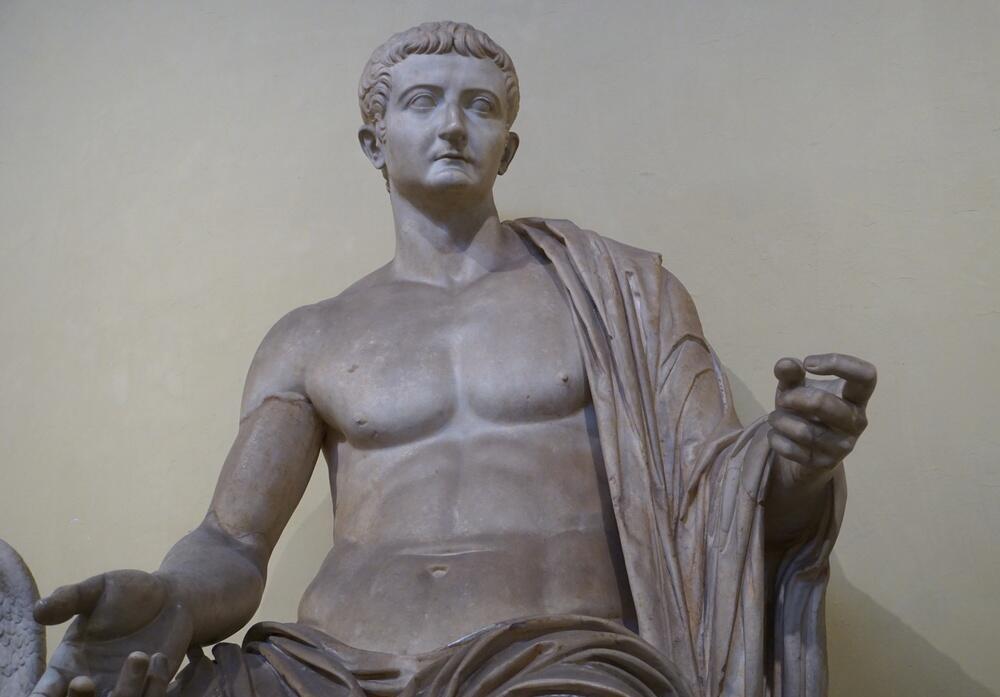
A statue of the Roman emperor Tiberius
(Photo: Alexander Ruszczynski/Shutterstock)
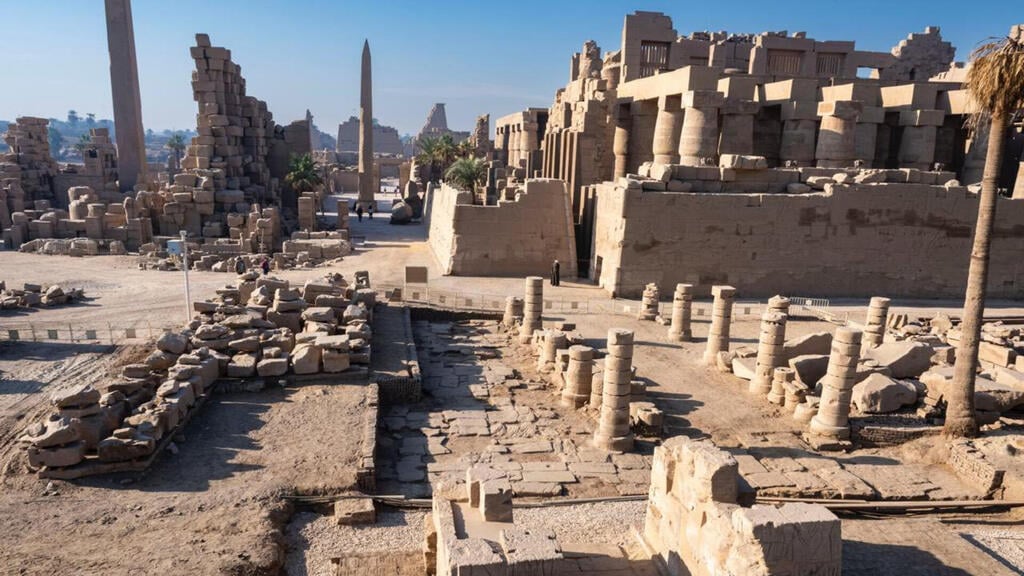
The site at the Karnak Temple complex in Luxor where archaeologists found the 2,000-year-old stone slab
(Photo Egyptian Ministry of Tourism and Antiquities)
By depicting Tiberius as a pharaoh, the Egyptians enabled his integration into their religious system. Egyptian-style representations of Roman emperors were common in religious contexts, though emperors retained a distinctly Roman style on coins and in sculpture.
Egypt officially became a Roman province in 30 B.C., following the defeat of Mark Antony and Queen Cleopatra VII by Octavian — later Emperor Augustus — at the Battle of Actium in 31 B.C. The battle was the decisive confrontation of the Roman Republic’s final war. After the defeat, Antony was unable to rebuild his forces, leading to his downfall and the suicides of both him and Cleopatra, the last ruler of the Ptolemaic dynasty in Egypt.
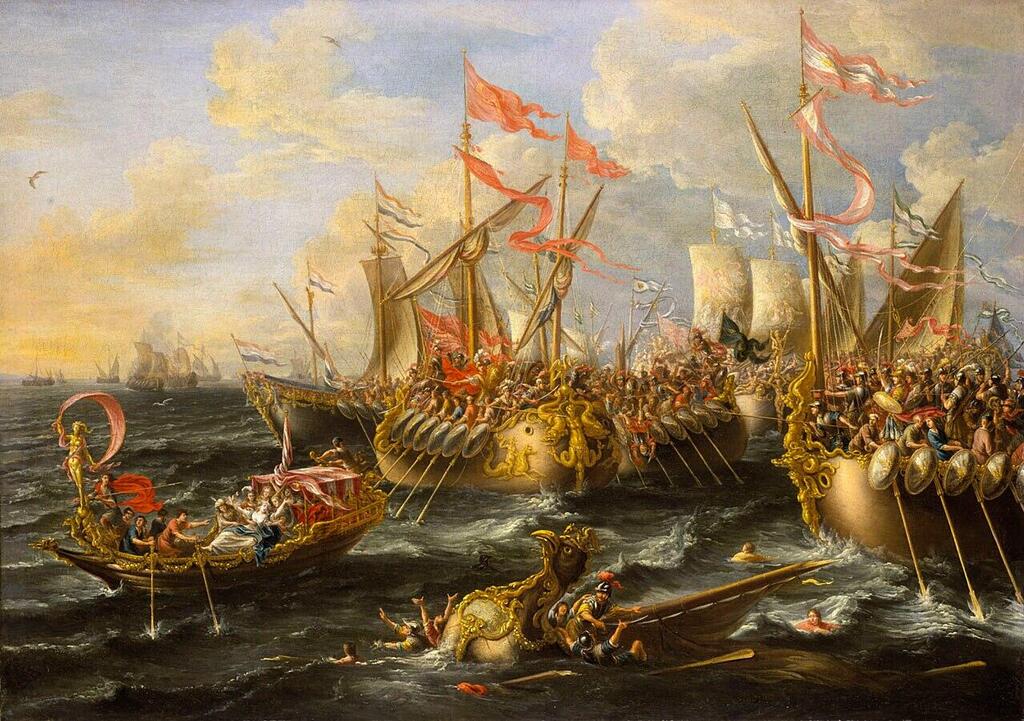
The Battle of Actium that led to Egypt becoming a Roman province
(Painting: Laureys a Castro/ National Maritime Museum/Wikipeida)
Augustus was succeeded by his stepson Tiberius, who exercised authority over Egypt through appointed officials. In fact, he never set foot there — a common practice among Roman emperors.
Tiberius’ name appears on Egyptian temple stelae as part of a broader effort to preserve local religious institutions.
“The stone reflects a standard ideological and administrative system in which emperors were portrayed as pious builders and protectors of temples, regardless of their actual level of involvement,” Wagdy said. “As such, the ancient slab expresses what a king ought to be in Egyptian terms, rather than documenting his personal achievements.”