

Horses have held deep symbolic meaning across a wide range of ancient cultures and mythologies, representing power, speed, mobility, warfare and, at times, elemental forces of nature.
From Greek and Roman traditions to Norse, Celtic and Hindu mythologies, the horse appears not merely as an animal but as a central figure tied to divine forces and cosmic order.
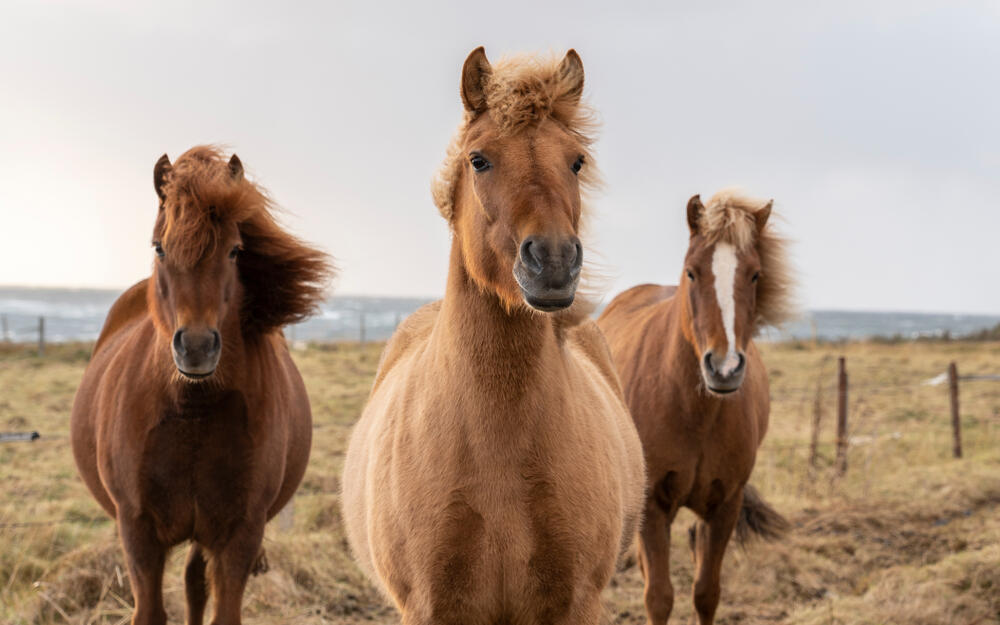
Prof. Amos Bouskila of Ben-Gurion University’s Department of Life Sciences said the deep admiration ancient societies held for horses contrasts sharply with the way many modern horses are kept today.
“When observing horses living freely in nature, it becomes clear why ancient cultures admired these remarkable animals,” Bouskila said. “Humans can form a deep connection with horses based on mutual respect and cooperation.” He noted that horses kept in stables often lack the freedom of movement that once defined their symbolic power.
In Greek mythology, one of the most prominent figures associated with horses is Poseidon, the god of the sea, earthquakes and horses, and one of the 12 Olympian gods. According to myth, Poseidon created horses either from sea foam or by striking the ground with his trident. He is also linked to the hippocampus, a mythological sea creature with the upper body of a horse and the lower body of a fish.
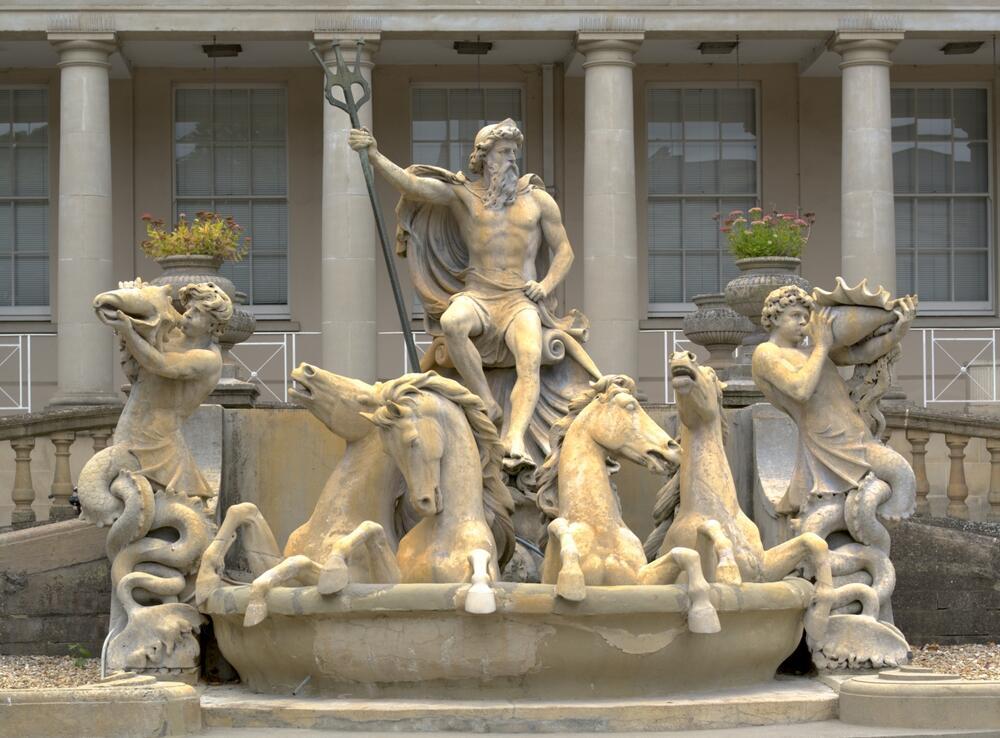
(Photo: KrankyPandas/Shutterstock)
Poseidon’s dual connection to the sea and horses reflects themes of uncontrolled power and dramatic movement. As the “earth-shaker,” he was associated with violent and unpredictable earthquakes, while the thunderous gallop of horses was seen as echoing such forces.
Poseidon was also said to be the father of several famous mythological horses, including Pegasus, the winged horse born from his union with the Gorgon Medusa, and Arion, a golden horse capable of speech and extraordinary speed.
Dr. Bar Leshem of the University of Haifa’s Department of Art History noted evolving interpretations of these myths. “Today, Medusa is often viewed as a victim of sexual assault,” she said, explaining that Poseidon raped her in Athena’s temple, leading Athena to transform her into a monster. “When Perseus beheaded Medusa, Pegasus and Chrysaor emerged from her severed head.”
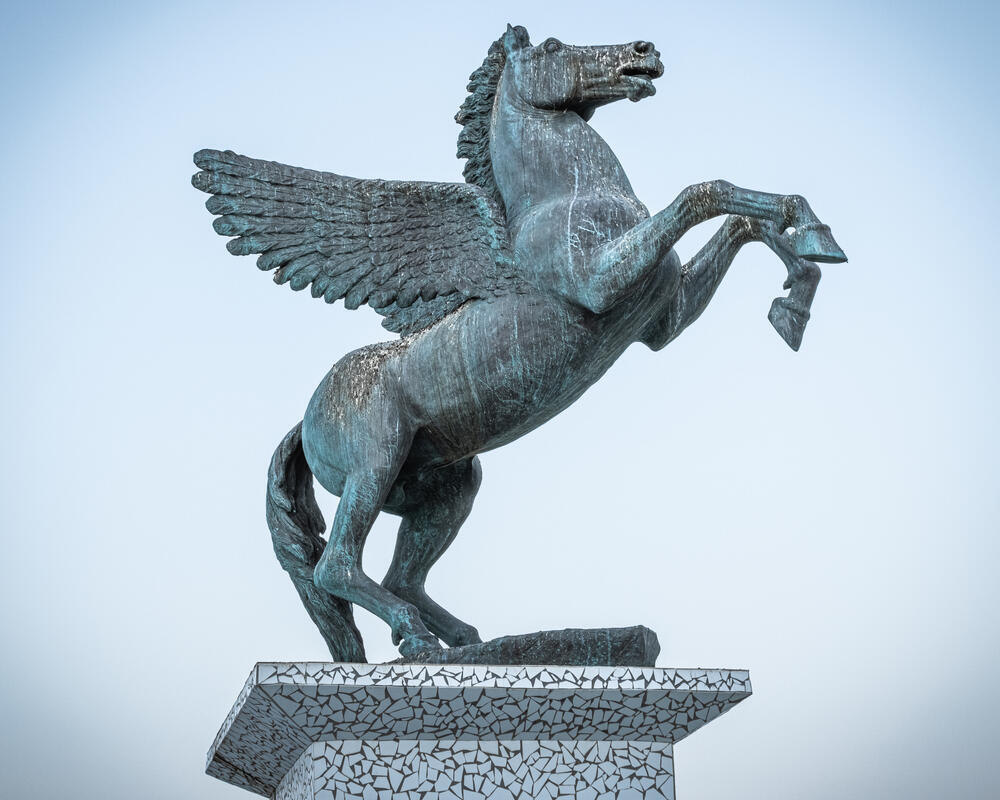
(Photo: Giorgos Ntentis/Shutterstock)
Arion, she added, was born after Poseidon transformed himself into a stallion to pursue Demeter, who had taken the form of a mare to escape him — a story that underscores the god’s deep mythological association with horses.
Together with Athena, who was credited with inventing the chariot, Poseidon became a foundational figure in the mythology of horsemanship. In ancient Greece, sailors and seafarers often offered bulls and horses to Poseidon in hopes of safe voyages, and equestrian competitions were frequently held in his honor.
Another important Greek figure tied to horses is Helios, the ancient sun god, who was said to ride a fiery chariot drawn by four blazing horses across the sky each day.
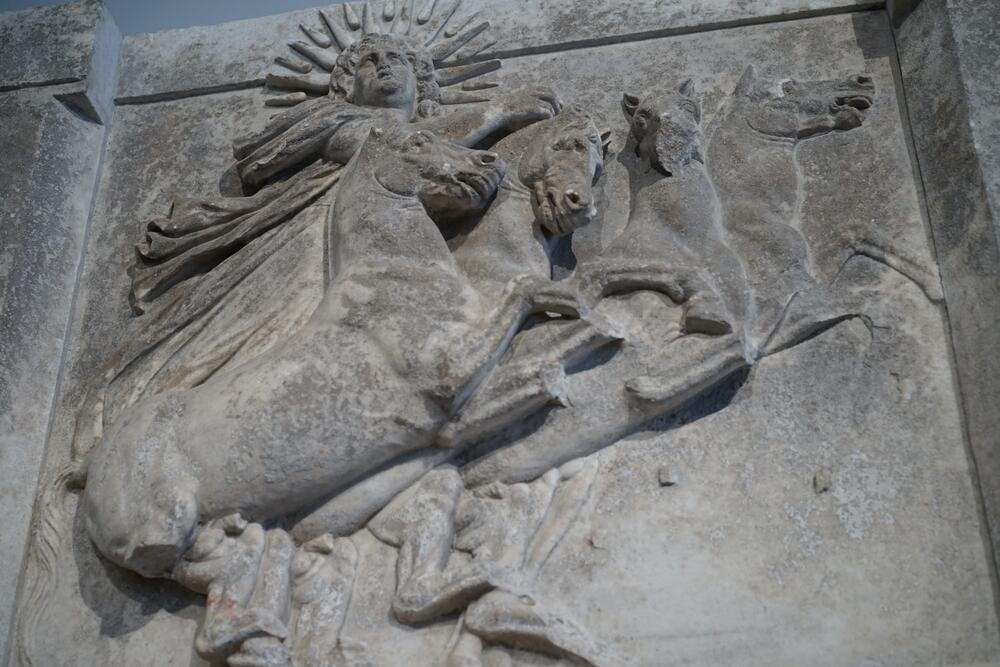
(Photo: Achim Wagner/Shutterstock)
A well-known myth involving Helios centers on his son Phaethon, who asked to drive the sun chariot for a day. Lacking the skill to control the powerful horses, Phaethon lost control, threatening to destroy the world. Zeus ultimately killed him with a lightning bolt to prevent catastrophe, highlighting the immense and uncontrollable power of the sun’s horses.
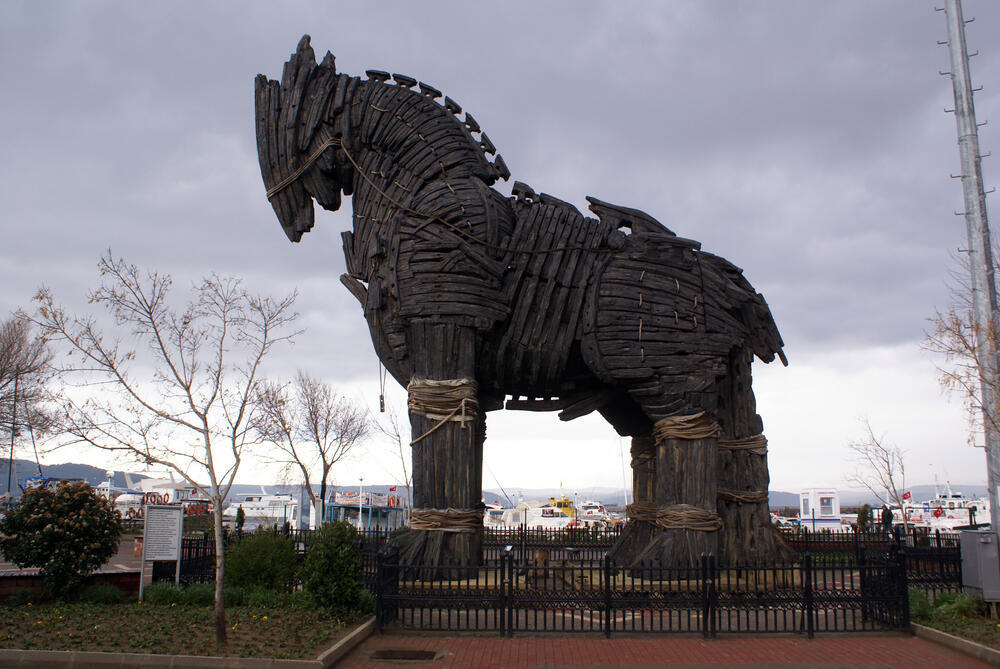
Although not a mythological creature in itself, the Trojan Horse remains one of the most famous symbols associated with horses in antiquity. Used by the Greeks as a deceptive war tactic to infiltrate Troy, it became a lasting symbol of cunning and deception.
“In the context of Troy, the horse carried deep symbolic meaning,” Leshem said. “The Trojans took pride in their horses, so the gift represented submission. It was not just a large object — it held cultural significance.”
She added that horses in the Trojan War were portrayed almost like human soldiers, sharing the hardships of battle, obeying commands and sometimes dying alongside warriors.
(Photo: Sergii Figurnyi/Shutterstock)
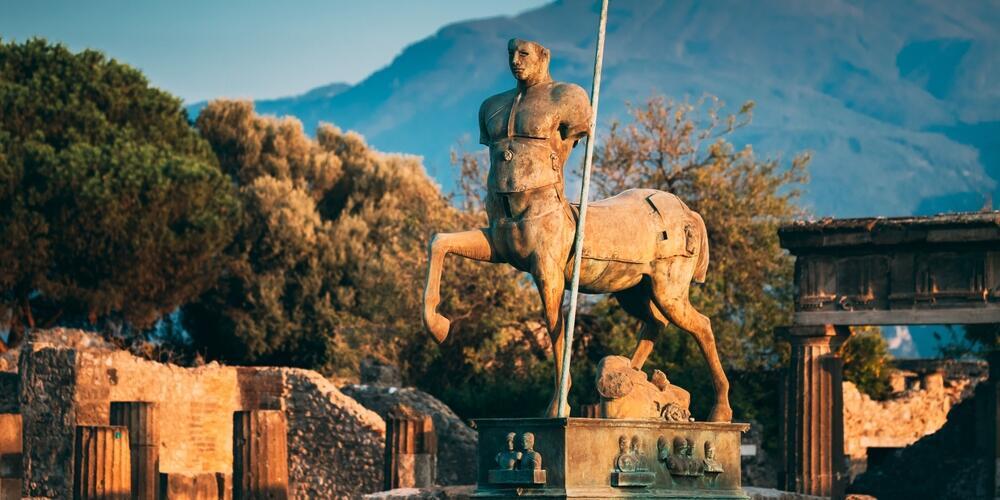
Greek mythology also features centaurs, creatures with the upper body of a human and the lower body of a horse. Chiron, the wisest and most benevolent of them, served as a teacher to several Greek heroes and symbolized the ideal balance between physical strength and human wisdom.
Horses were also associated in Greek belief with transitions between life and death. “Horses are linked to crossing boundaries, both physical and metaphysical,” Leshem said. “In some sources, they are seen as guiding souls to the afterlife, capable of traversing realms that living humans cannot.”
In Roman history, the horse Incitatus, owned by Emperor Caligula, became legendary as a symbol of excess and tyranny. While not a mythological creature, stories about Incitatus — including claims that he was given lavish accommodations, fed from golden vessels and even considered for political office — were used by Roman historians to portray Caligula as a cruel and irrational ruler.
(Photo: George Trumpeter/Shutterstock)
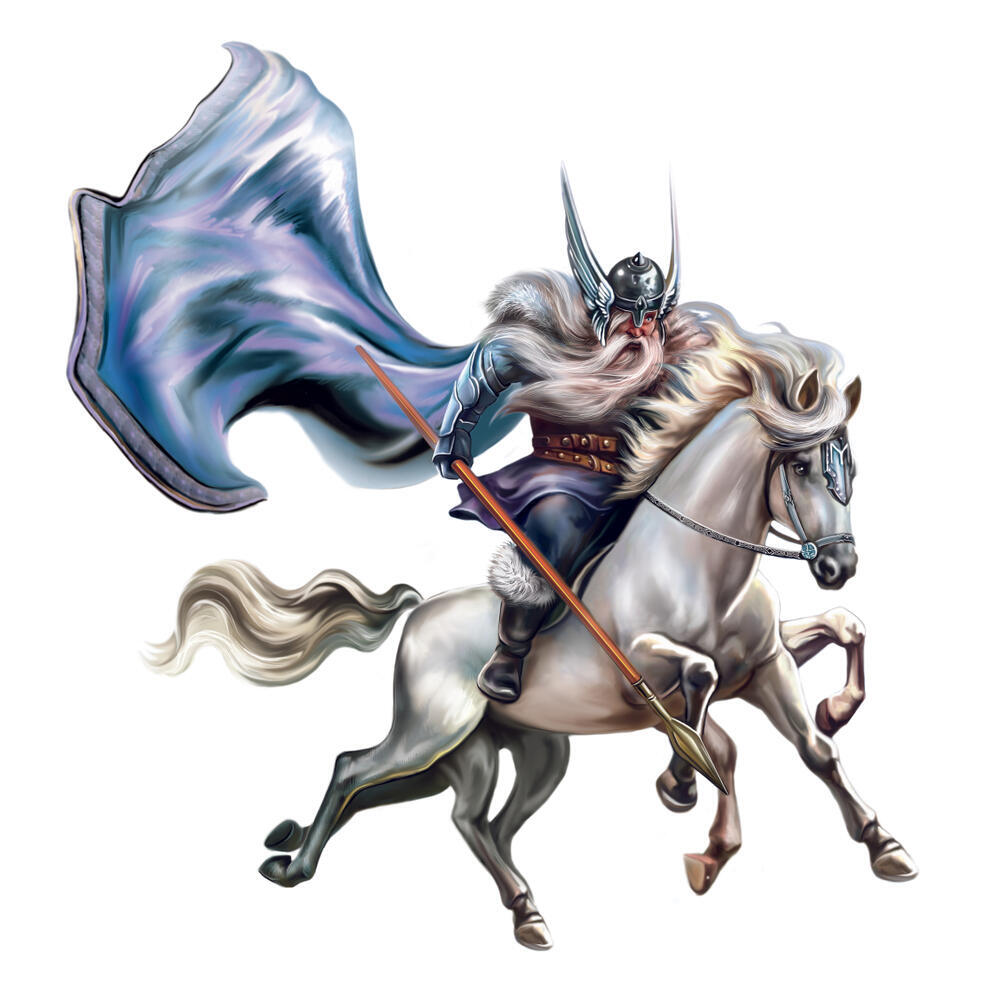
Norse mythology also assigns horses a central role, particularly in a harsh and isolated environment where they were vital for transportation and survival. Horses in Norse stories are often depicted as magical beings capable of traveling between the nine worlds of the Norse cosmos.
The most famous of these is Sleipnir, the eight-legged horse ridden by Odin, king of the gods. According to legend, Sleipnir’s hoof once struck the ground in Iceland, forming the horseshoe-shaped Asbyrgi canyon.
Other horses in Norse mythology were tied to cosmic cycles. Hrímfaxi, the horse of the god Dagr (Day), and Skinfaxi, associated with Nótt (Night), were believed to create dew from their manes as they moved across the sky, linking them directly to natural daily phenomena.
(Photo: Liliya Butenko/Shutterstock)
In Celtic mythology, horses were primarily associated with fertility, sovereignty and warfare. The goddess Epona, whose name derives from the Celtic word for horse, was considered a protector of horses and, in some traditions, a guide of souls to the afterlife. Her depiction riding a horse symbolized the transition between life and death.
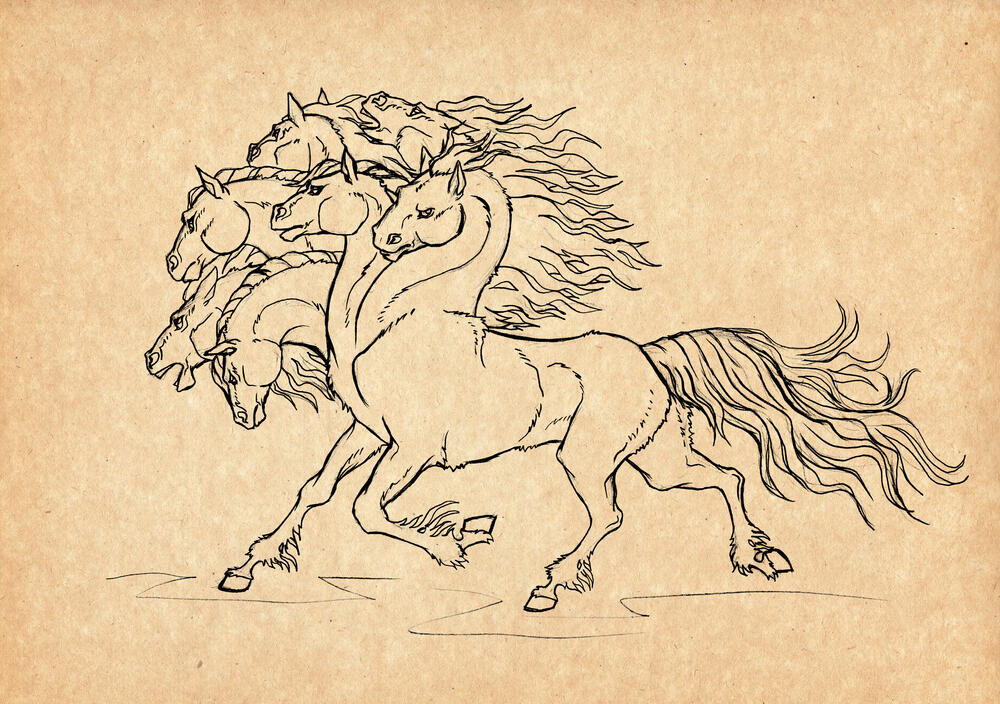
Horses also play a role in Hindu mythology. Uchchaihshravas, a white horse with seven heads, is said to have emerged from the churning of the ocean by gods and demons and is regarded as the king of horses, symbolizing divine beauty and power. The sun god Surya is also depicted riding a chariot drawn by horses, representing the sun’s journey across the sky.
(Photo: BlueLotusArt/Shutterstock)
Color symbolism further highlights the horse’s role in religious imagery. In the Christian New Testament’s Book of Revelation, the Four Horsemen of the Apocalypse ride horses of different colors, each representing a force associated with the end times: the white horse symbolizes conquest, the red horse war, the black horse famine and the pale horse disease and death.
Across cultures and centuries, the horse has remained a powerful symbol — not only of physical strength and speed, but also of humanity’s attempts to understand nature, the divine and the boundaries between worlds.