

Tens of millions of people watched the total solar eclipse Wednesday evening, which could be seen in northern Spain, parts of Iceland and Greenland. It was the first total solar eclipse visible in Europe in 27 years. Alongside the excitement and enthusiasm surrounding the event, authorities warned the public to avoid areas where the heat wave sweeping Western Europe in recent days had increased the risk of wildfires. The eclipse was not visible from Israel, but there will be another opportunity in just under a year.
Spanish authorities estimate that up to 6 million visitors are flocking to viewing sites, mainly in rural areas along the eclipse's path in northern and central Spain and the Balearic Islands. Immediately after the eclipse, the sun will set in Spain, making the event particularly appealing.
Solar eclipse in Spain
(Credit: Reuters)


The strange sensation — when day briefly turns to twilight and some animals fall silent as the moon passes directly between Earth and the sun — was once viewed, before the scientific understanding of the phenomenon, as something supernatural, a cosmic threat or a bad omen from the heavens. Now, Spain sees it as an opportunity to showcase areas that receive relatively few tourists, far from its crowded resort destinations.
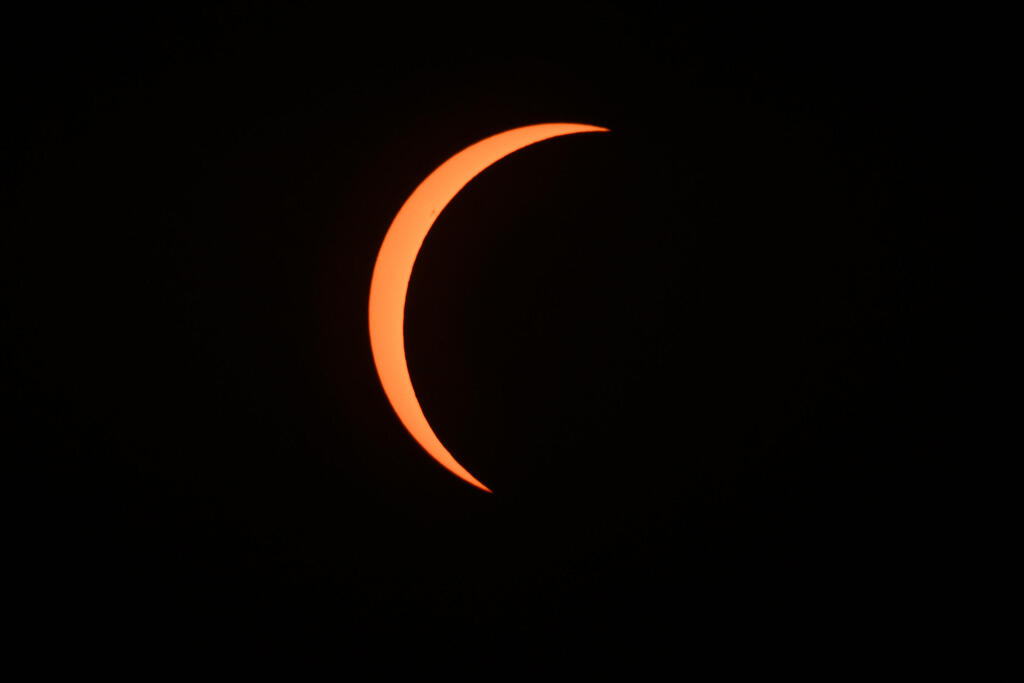
(Photo: Leon Neal/Getty Images)
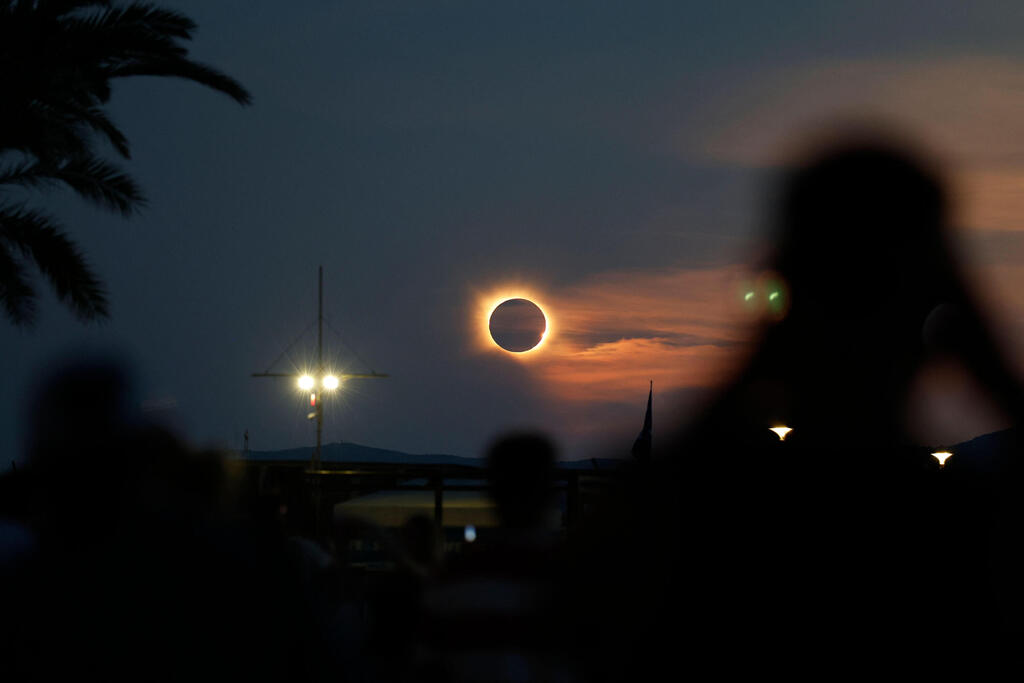
(Photo: Jaime Reina/AFP)
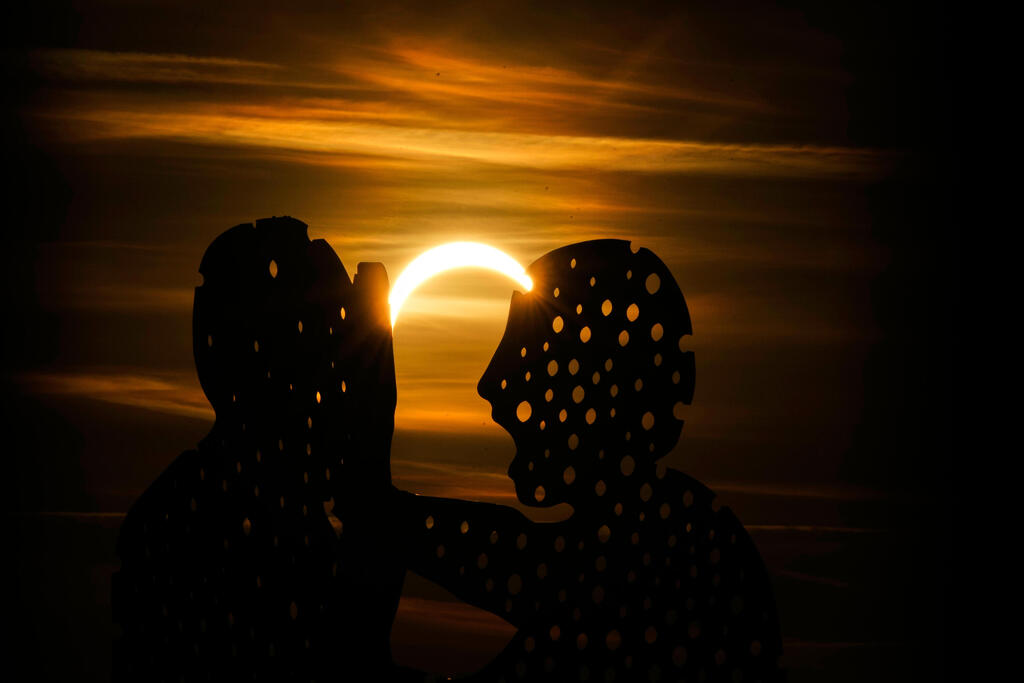
Partial solar eclipse in Berlin
(Photo: Markus Schreiber/AP)
Solar eclipse in Spain
(Photo: Leon Neal/Getty Images)
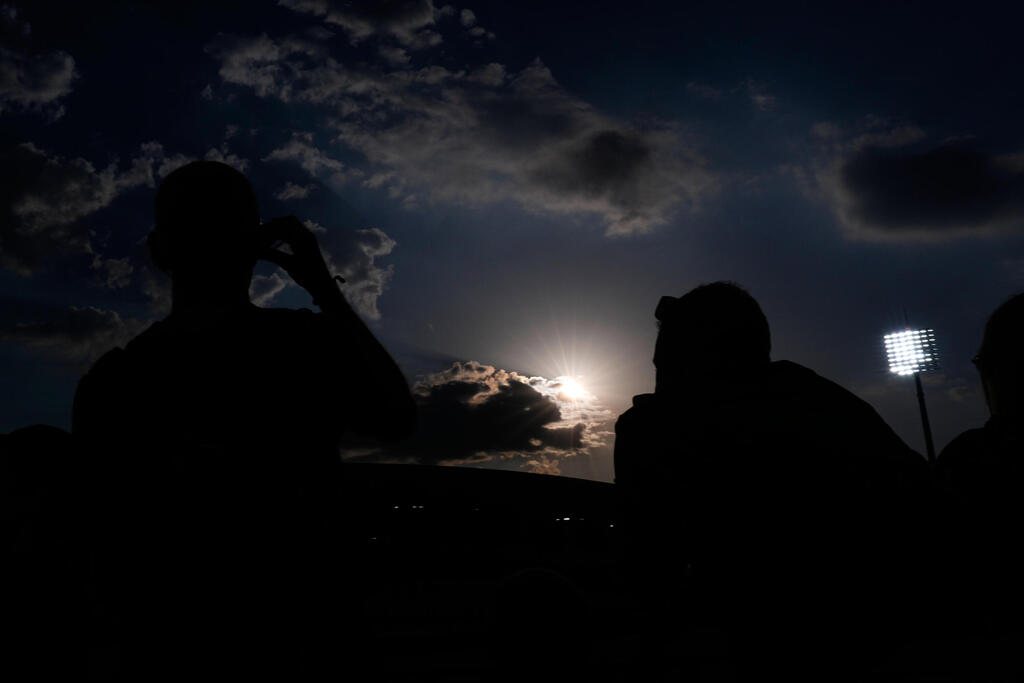
Darkened skies during the European solar eclipse
(Photo: Petr David Josek/AP)
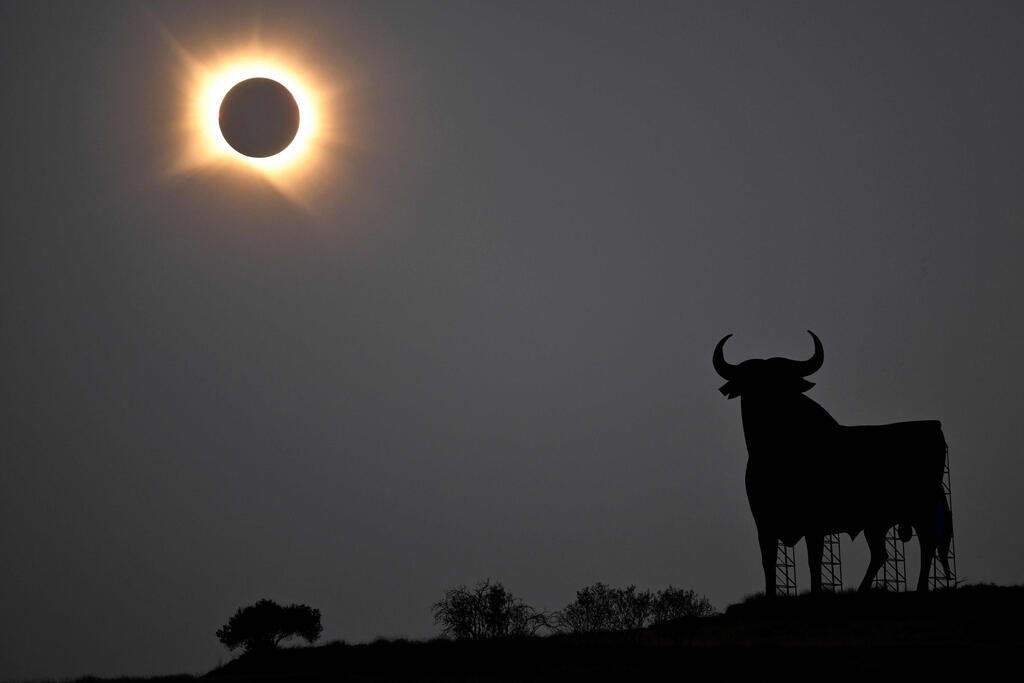
Total solar eclipse over Spain
(Photo: Ander Gillenea/AFP)
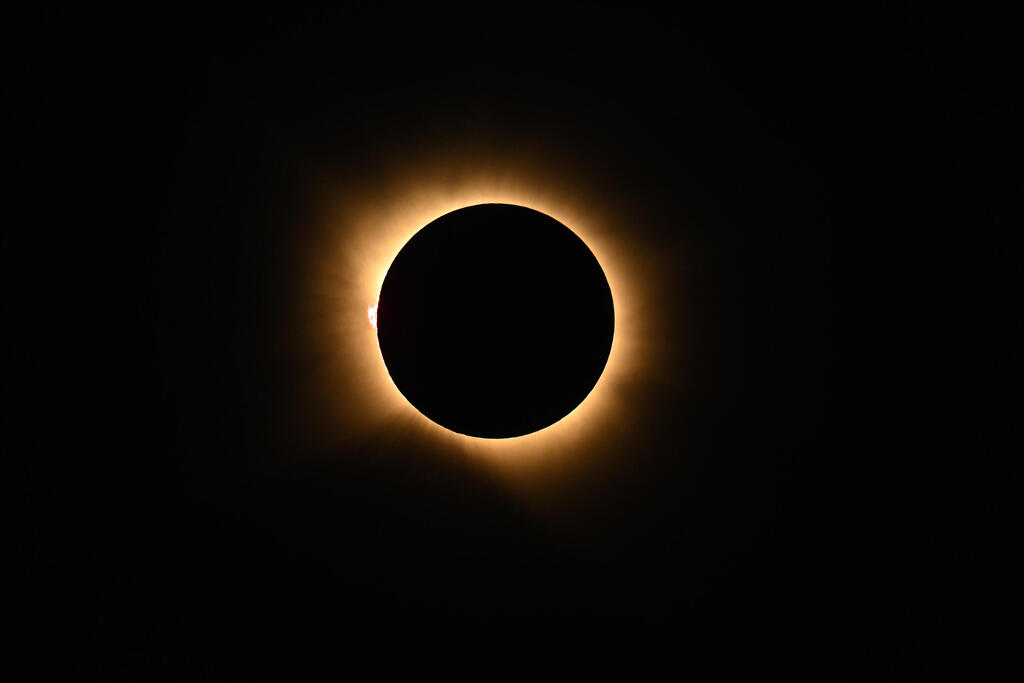
(Photo: Leon Neal/Getty Images)
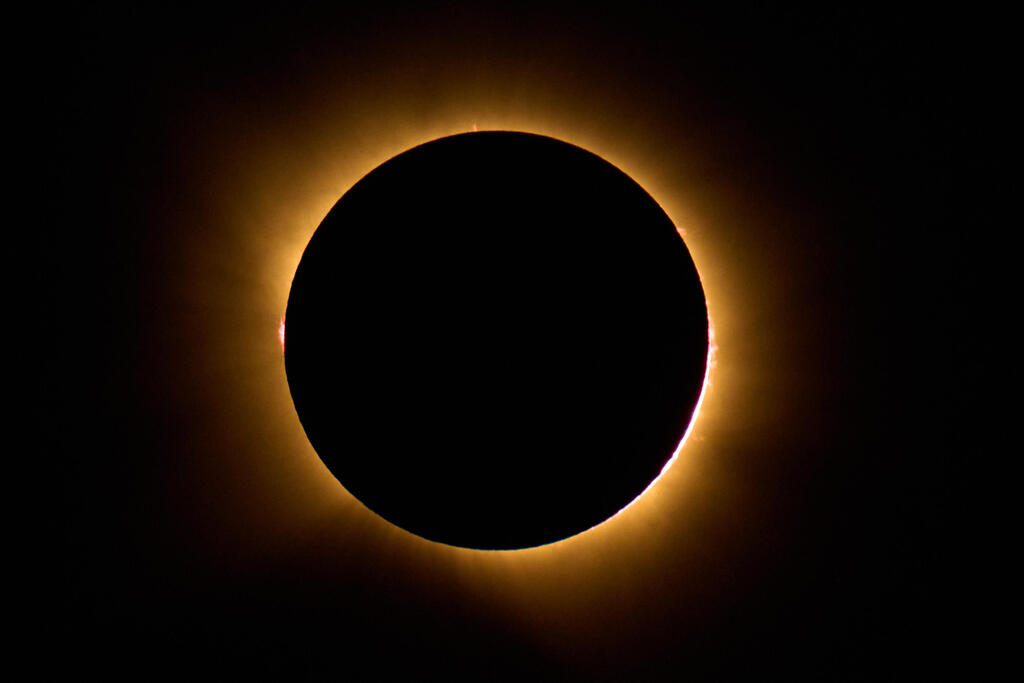
(Photo: Bernat Armangue/AP)
Spanish Interior Minister Fernando Grande-Marlaska said about 30,000 police officers had been deployed to secure the various events being held for the eclipse, while nearly 100 aircraft and helicopters had also been assigned to the event. He urged residents and visitors to watch the eclipse from hundreds of viewing points set up by authorities and to follow restrictions imposed around some parks.
"Let's not forget that the risk of wildfires is very high — it is extreme because of the high temperatures," Grande-Marlaska said. He has served as interior minister since June 2018 under Prime Minister Pedro Sánchez's government.
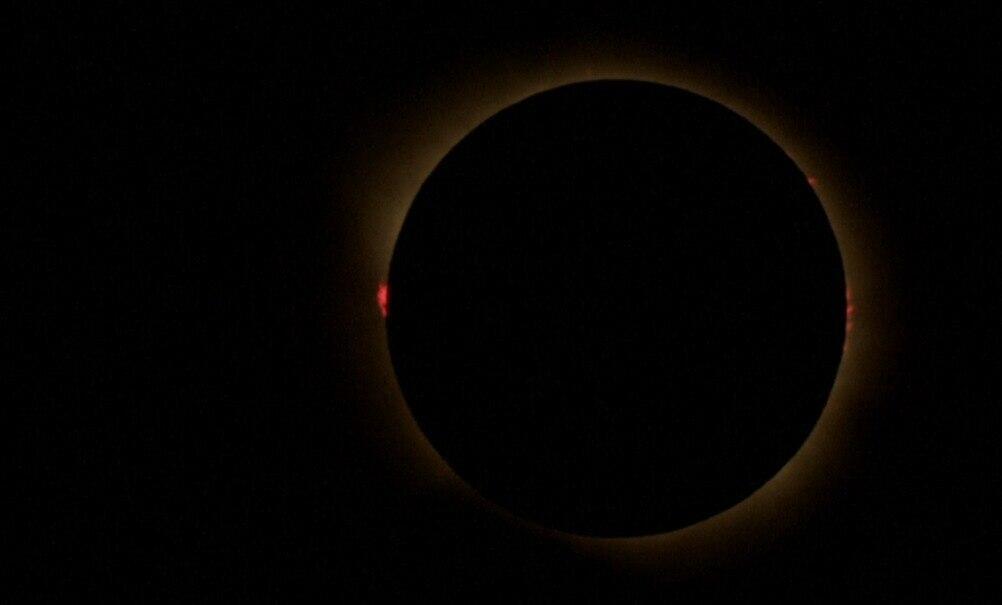
Total solar eclipse
(Photo: Reuters)
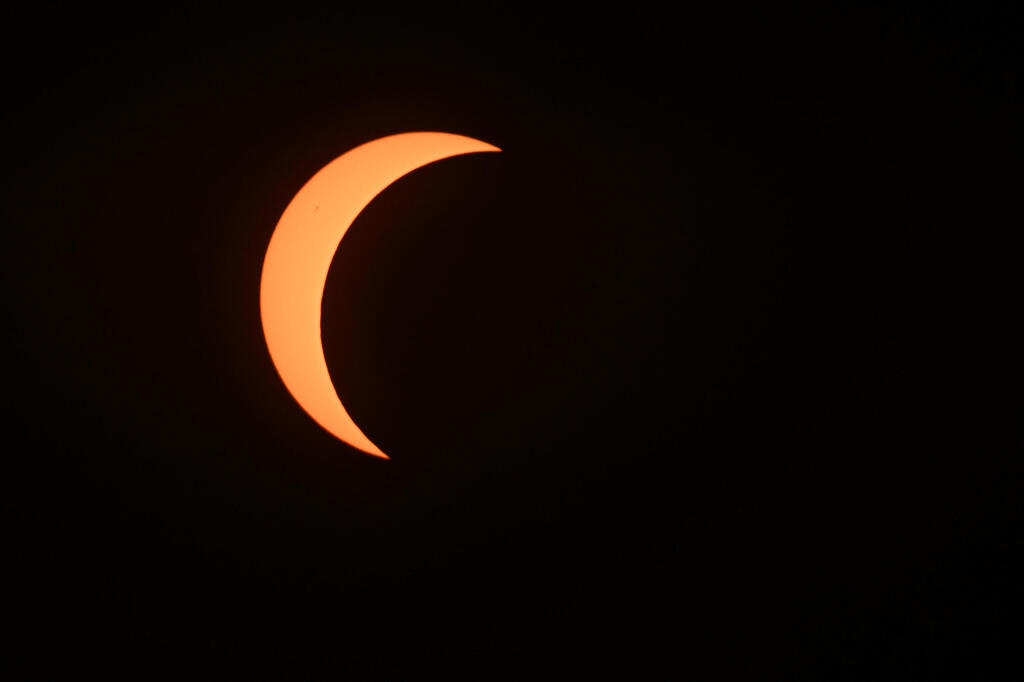
Near-total solar eclipse over Spain
(Photo: Leon Neal/Getty Images)
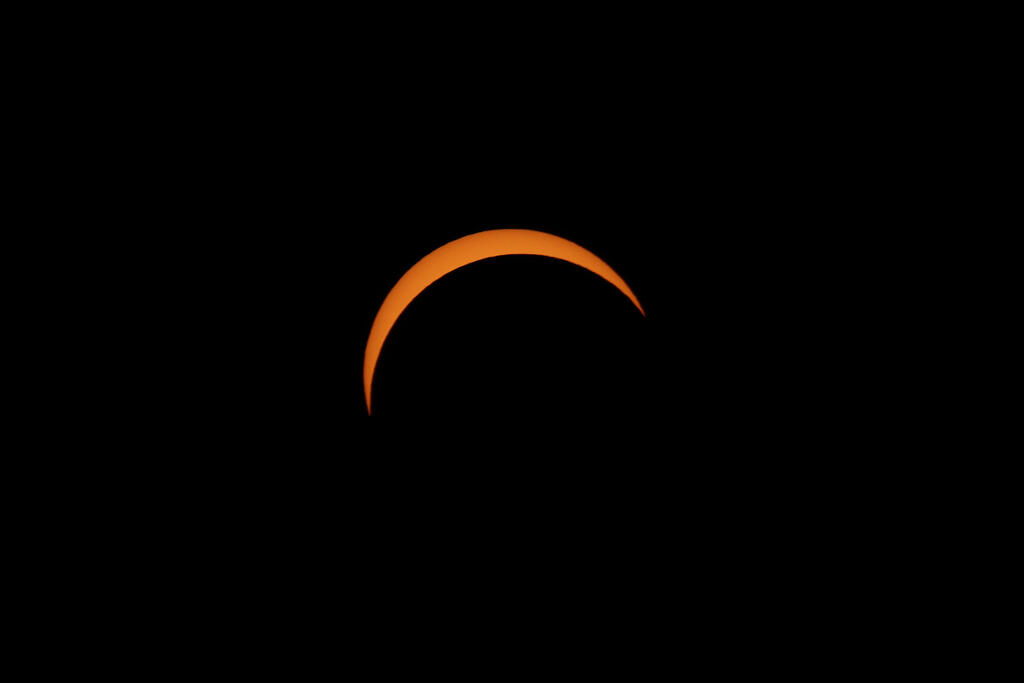
Near-total solar eclipse
(Photo: Dan Kitwood/Getty Images)
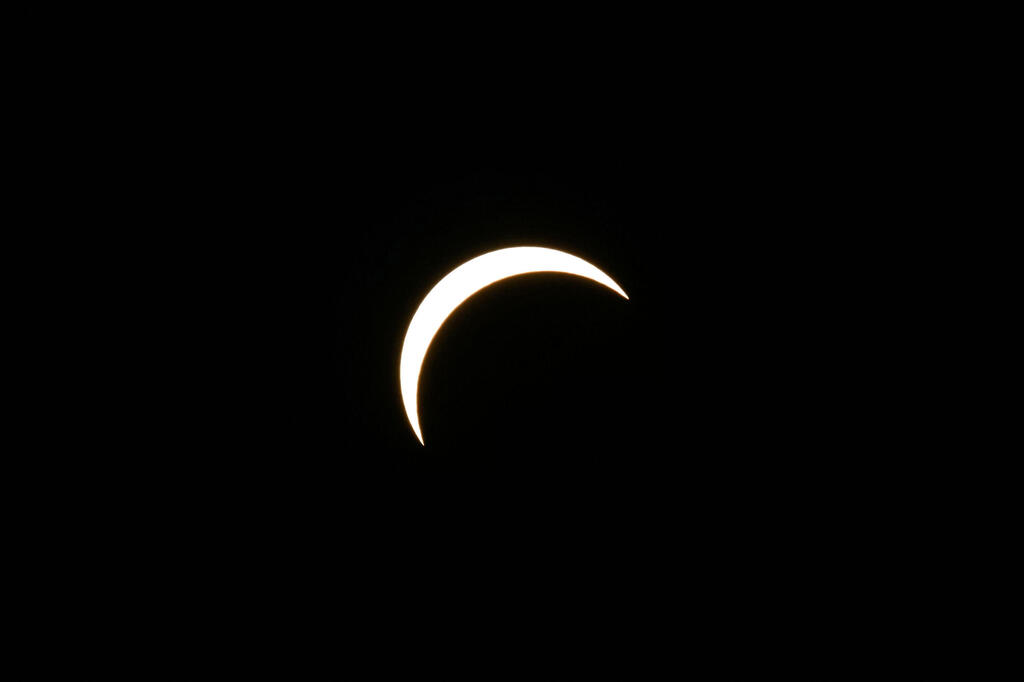
Near-total solar eclipse
(Photo: Paul Ellis/AFP)
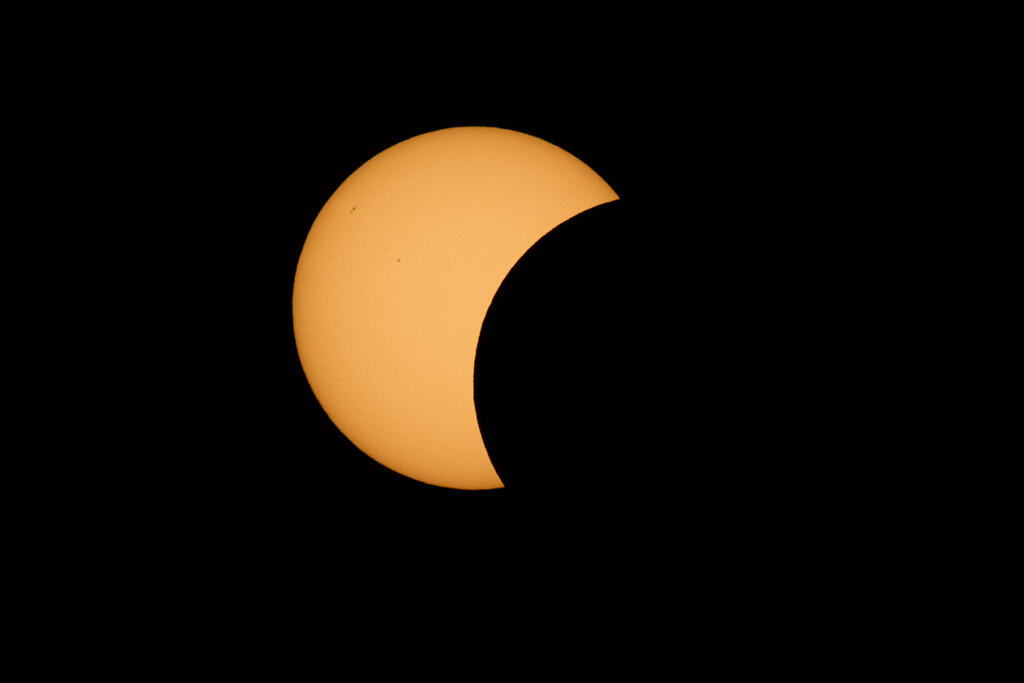
Solar eclipse in central Spain
(Photo: Bernat Armangue/AP)
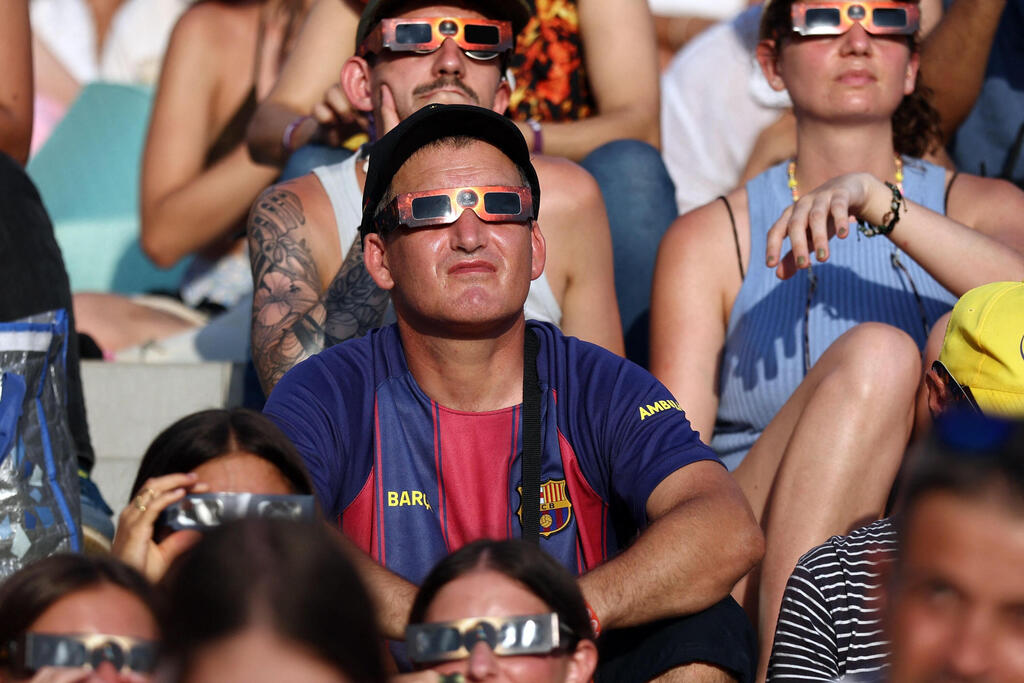
Barcelona fans also came to watch the solar eclipse in Spain
(Photo: Josep Lago/AFP)
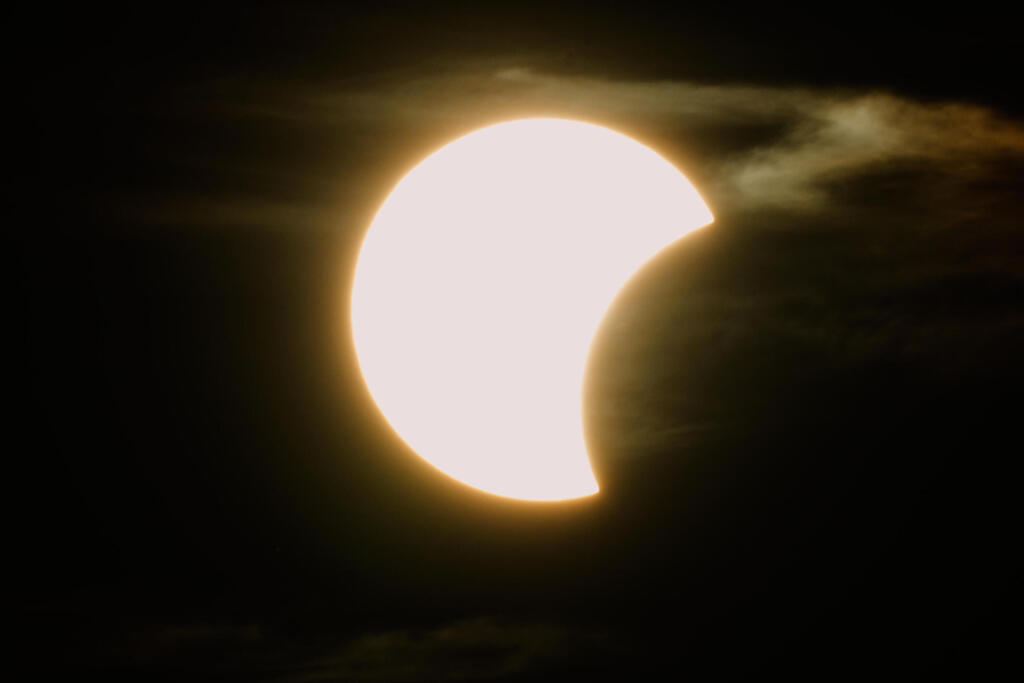
Partial solar eclipse in Germany
(Photo: Markus Schreiber/AP)
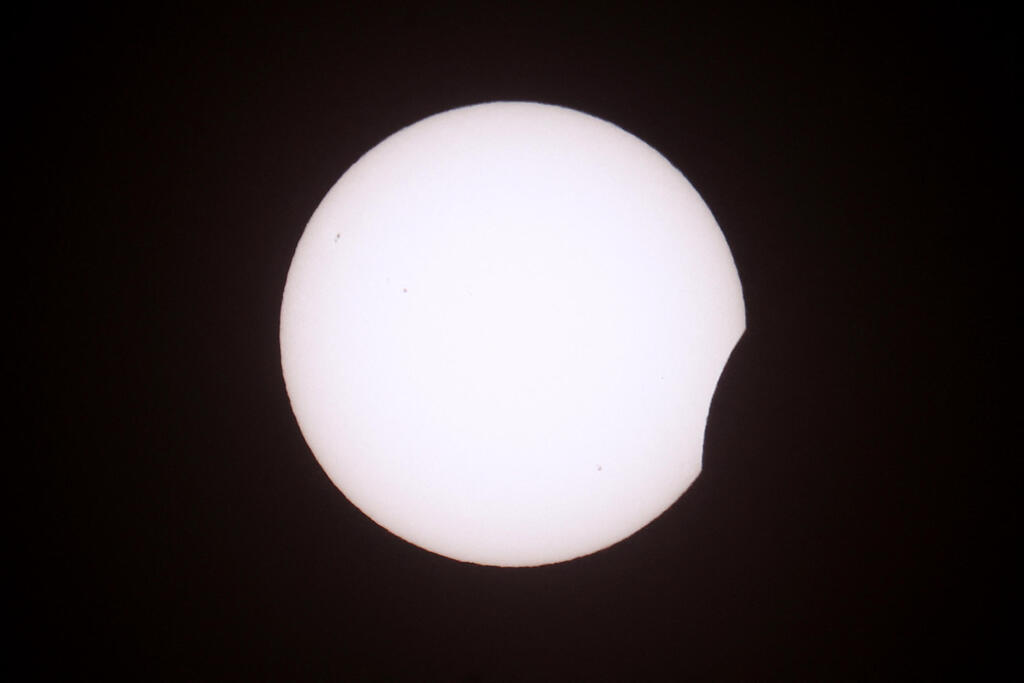
The beginning of the solar eclipse
(Photo: Toby Shepheard/AFP)
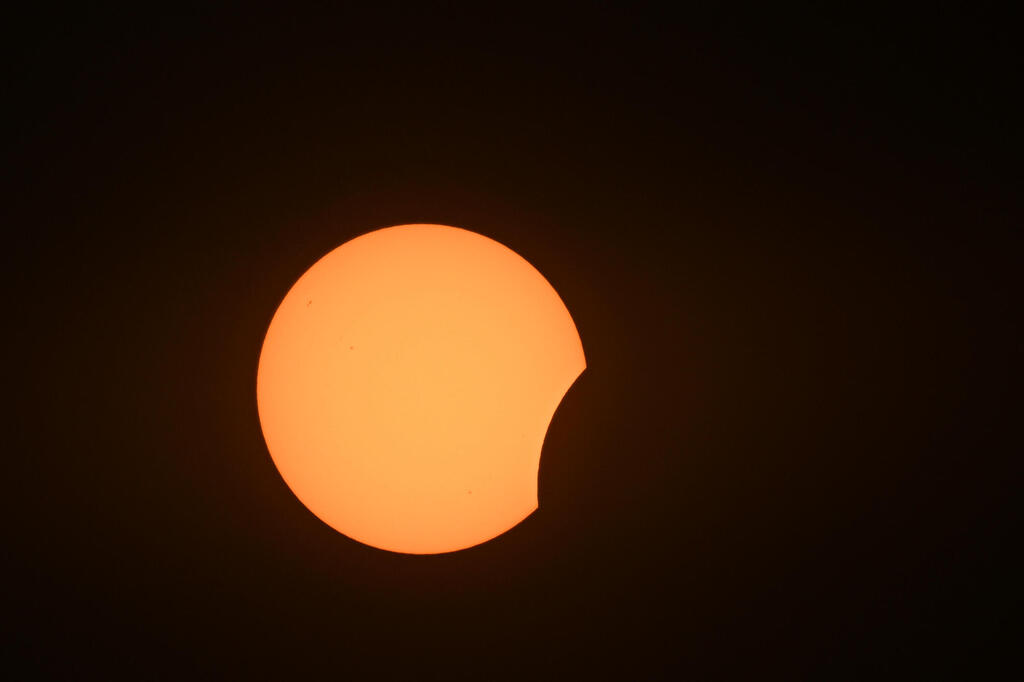
The beginning of the solar eclipse in Spain
(Photo: Leon Neal/Getty Images)
Lola Guerrero spent the night in the Javalambre Mountains, at the foot of which lies the village of Arcos de las Salinas in eastern Spain. The area is home to Galactica, Europe's largest educational astronomy center, as well as the Javalambre Observatory. Guerrero traveled all the way from Extremadura, an autonomous community in western Spain on the Portuguese border, to watch the eclipse.
"Watching a total solar eclipse has been my dream for many years, and I didn't want to miss the opportunity to experience it, even though it meant a seven-hour journey," Guerrero said.
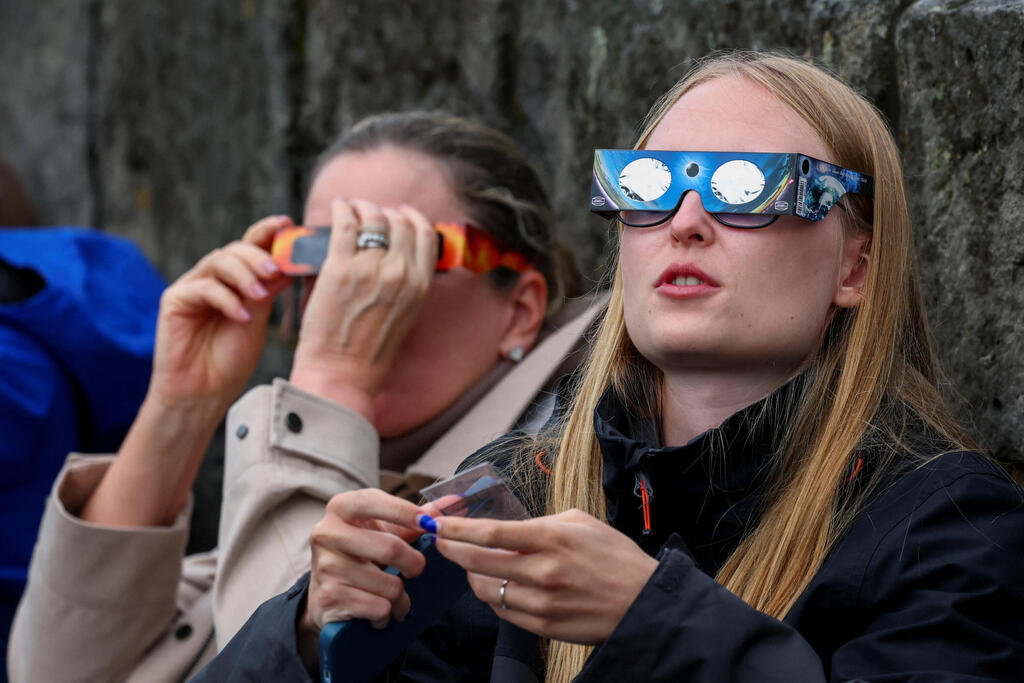
Residents of Reykjavik watch the solar eclipse
(Photo: Denis Balibouse/Reuters)
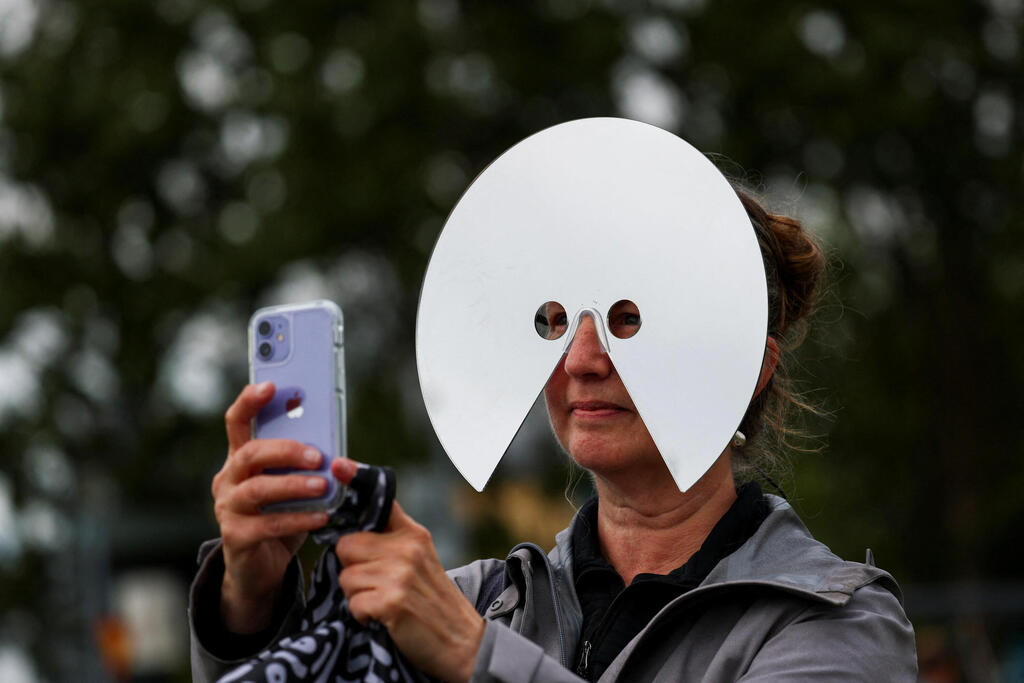
A woman watches the solar eclipse in Reykjavik
(Photo: Denis Balibouse/Reuters)
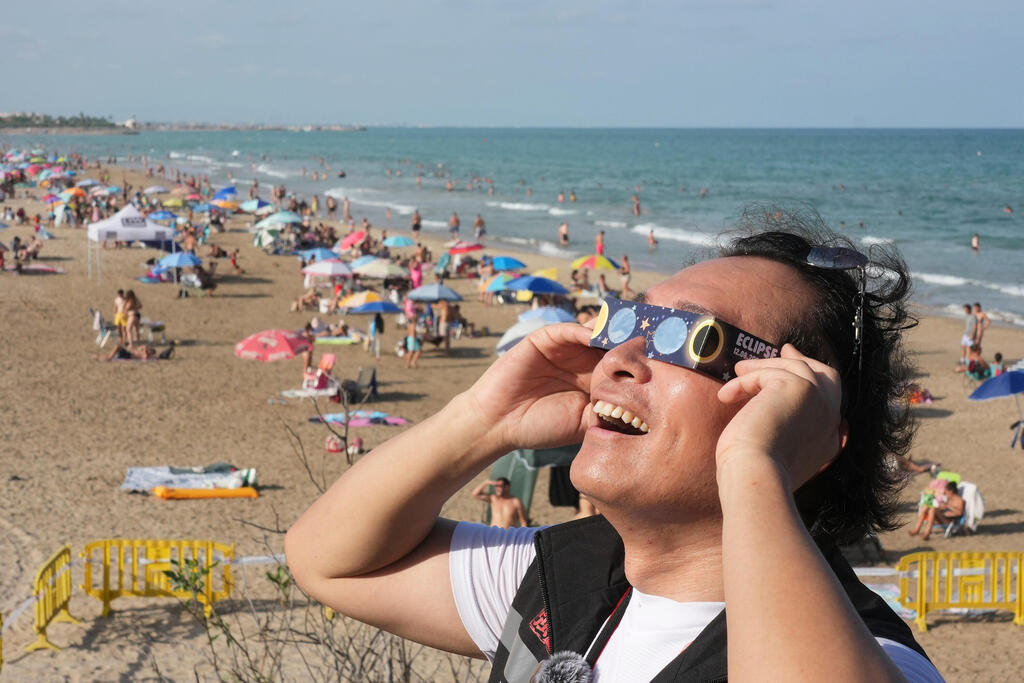
A man tries out special eclipse glasses as visitors gather ahead of a total solar eclipse expected to begin around sunset on a beach near Valencia
(Photo: Alberto Saiz/AP)
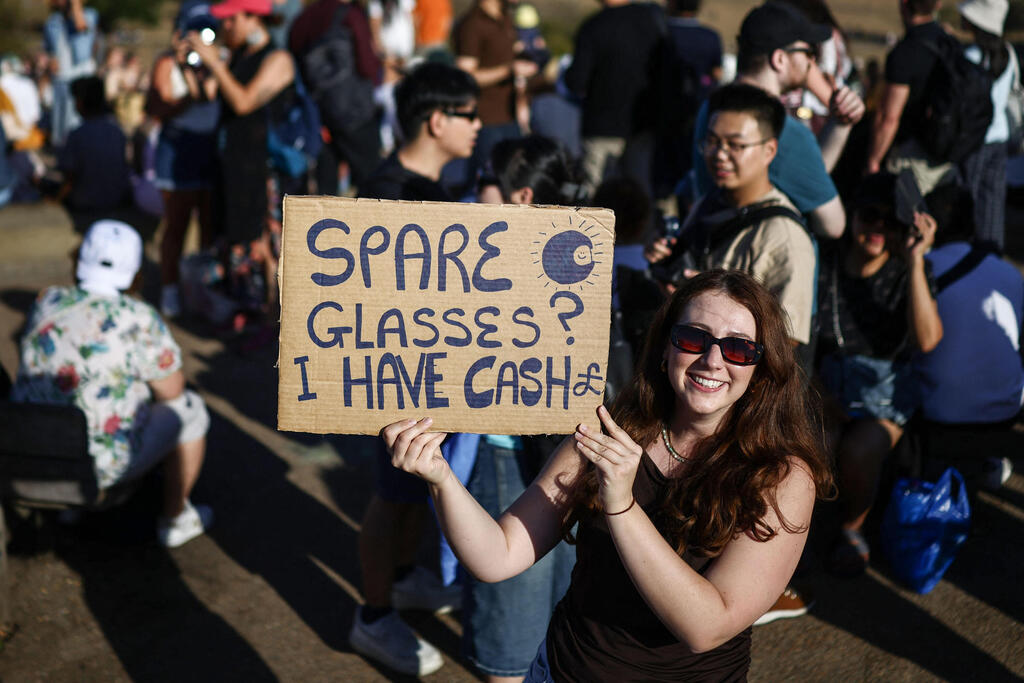
A desperate attempt to get eclipse glasses
(Photo: Henry Nicholls/AFP)
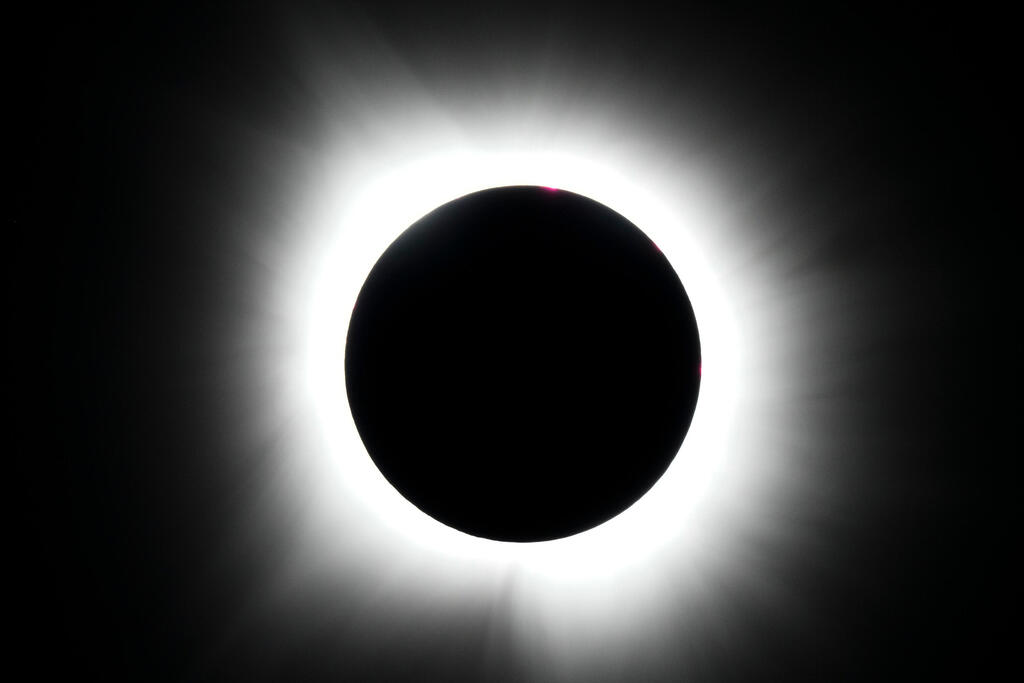
A total solar eclipse viewed from Texas in 2024
(Photo: Julio Cortez/AP)
The last total solar eclipse over the Iberian Peninsula occurred in 1912. Another total solar eclipse is expected on Aug. 2, 2027, while an annular solar eclipse will occur in January 2028, completing what is known as three consecutive celestial events over Spain.
As in Spain, glasses allowing people to look at the phenomenon without damaging their eyes had been sold out for several days in Iceland's capital, Reykjavik. The Nordic country, home to about 400,000 people, expects to welcome up to 80,000 visitors, who will also be able to enjoy a performance by Icelandic singer Björk.
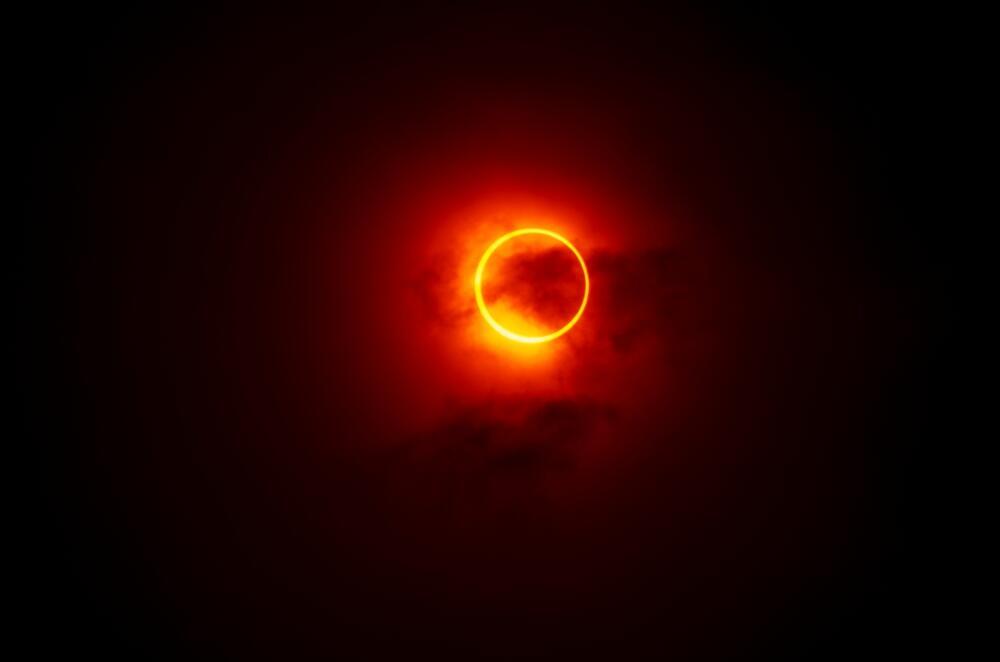
The moon does not completely cover the sun, leaving a ring of light around it. An annular solar eclipse photographed in Tokyo in 2012
(Photo: unitaro/Shutterstock)
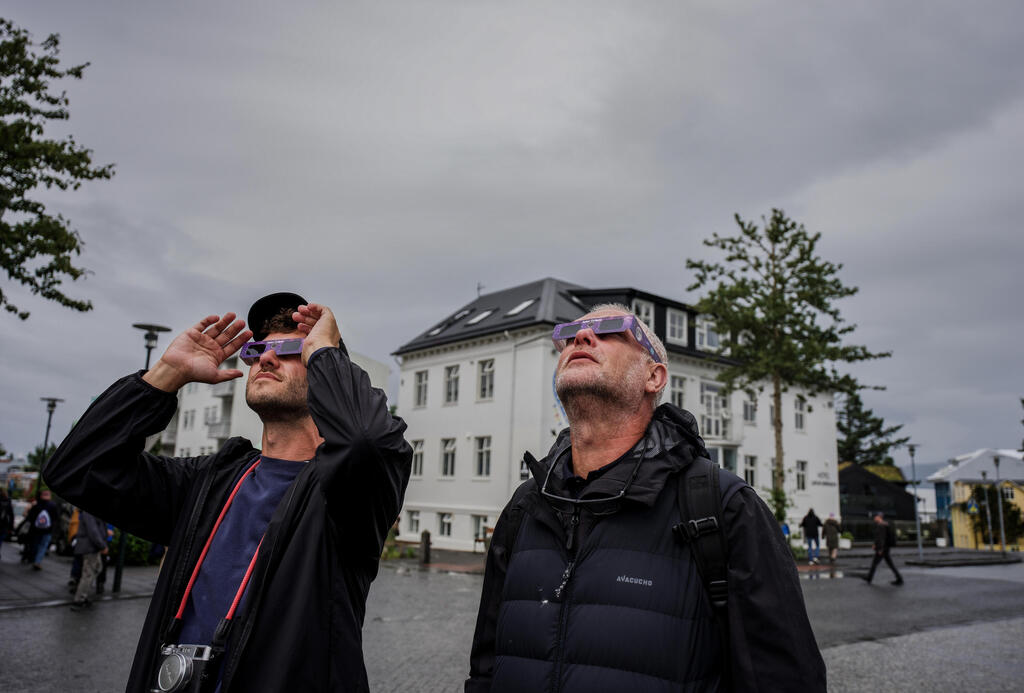
People use special glasses to watch the solar eclipse in Iceland
(Photo: Marco di Marco/AP)
The solar eclipse could be seen on Iceland's westernmost coast before the phenomenon moved eastward and occurred about two hours later in the area of Spain. The event would last up to 2 minutes and 13 seconds, although periods of darkness would be shorter in most of the relevant cities. Authorities warned of traffic congestion and urged viewers to arrive early.
Room prices in Reykjavik also rose to an average of more than $1,000 on Wednesday night, as Icelanders prepared for the country's first total solar eclipse since 1954 and the first visible from the capital since 1433.
NASA plans to fly a WB-57 aircraft to high altitude from Iceland to track the moon's shadow, while NASA-funded teams will launch research balloons to examine how the sudden darkness and accompanying cooling affect Earth's lower atmosphere.
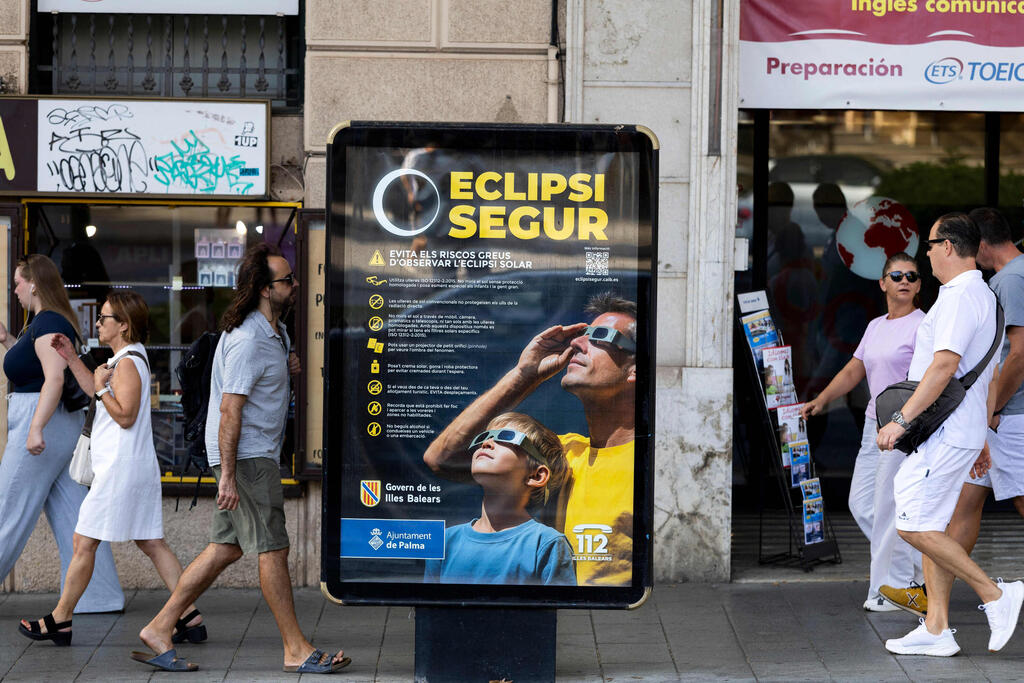
A sign with information on safely viewing the total solar eclipse in Spain
(Photo: Jaime Reina/AFP)
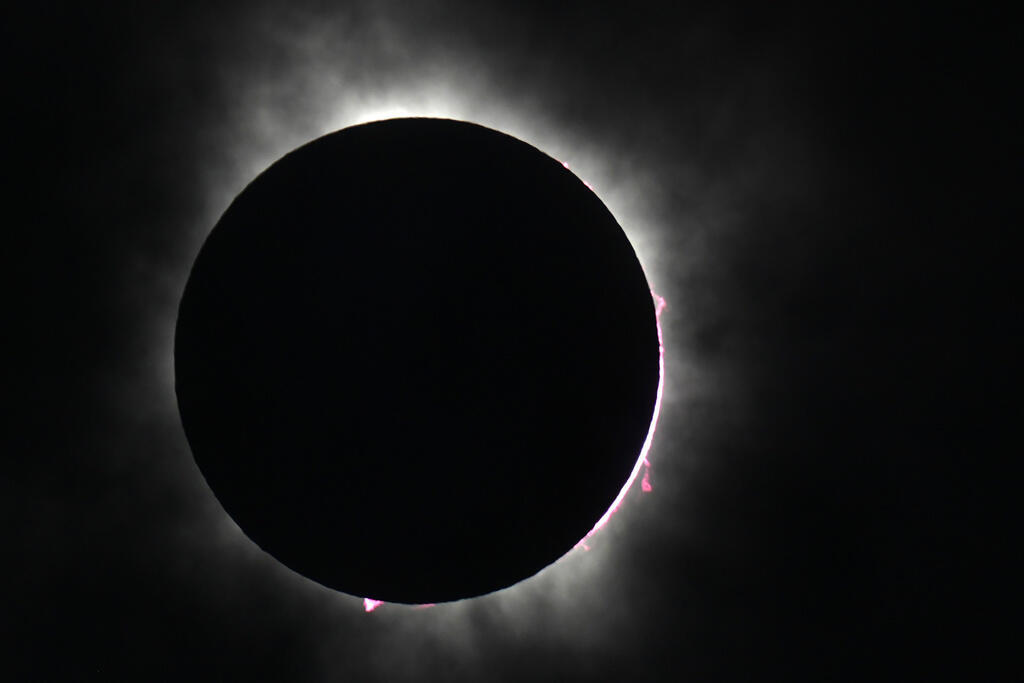
The moon covers the sun during the 2024 total solar eclipse
(Photo: LM Otero/AP)
"This is a once-in-a-lifetime experience," said Karen Williams, 51, who was visiting from Britain. "I love the outdoors, and so I wanted to come and see the eclipse and just experience it."
The skies over Iceland were cloudy Wednesday, with the Icelandic Meteorological Office forecasting clouds and rain along most of the eclipse's path. It said the best chances for breaks in the clouds and rain were expected in the northwest of the country.
In addition to casual viewers, the event attracted "eclipse chasers," enthusiasts who travel around the world to be in the right place at the right time whenever a solar eclipse occurs. One of them, Dr. Gordon Telepun, a retired plastic surgeon and amateur astronomer from the United States who has photographed six total solar eclipses, said he would watch the current eclipse from the island of Mallorca because Spain is a perfect destination for eclipse chasers.