

Shaking a lulav, young closed fronds cut from the date-palm, is customary on Sukkot. While the lulavim are arriving as usual in sukkot across the country this year, a new study reveals a worrying reality: the population of wild date palms in Israel is dwindling. Many date palms have been found dead and dried out, and some of the remnant populations show signs of terminal decline. What is killing the palms, why are they so important to us, and how can we protect them?
A historic alliance
Today most lulavim come from the Beit She’an Valley and the Arava, where groves are specifically cultivated for lulav production, alongside imports from countries such as Egypt and Jordan. A study published last July in the journal Ya’ar of the Jewish National Fund-Keren Kayemet LeIsrael (KKL) surveyed the status of date-palm populations in the Negev and the Arava.
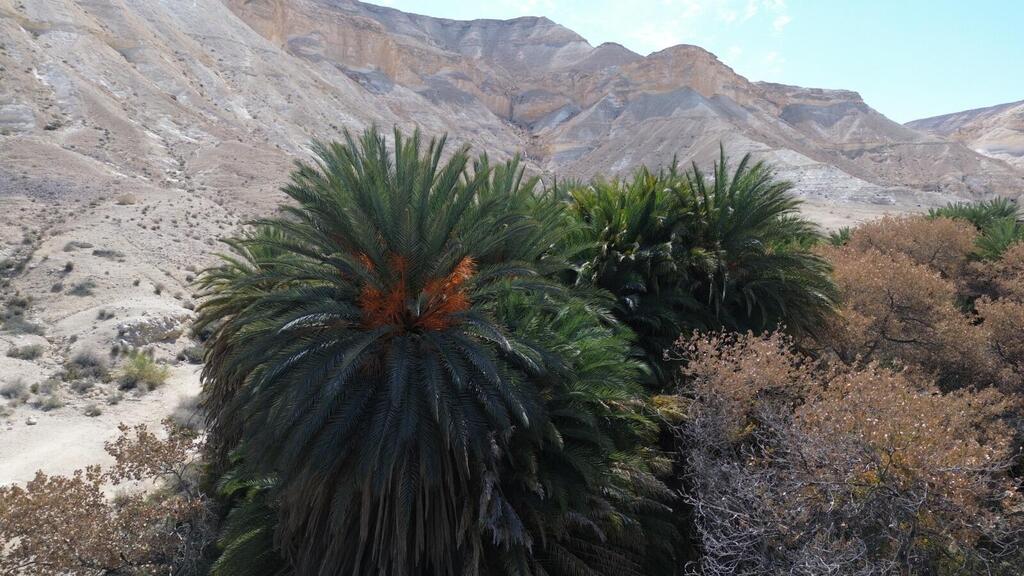
“Dates and humans have walked hand in hand for thousands of years,” says Dr. Roi Galili, an archaeologist and farmer from Moshav Idan who grows dates and led the research together with Professor Guy Bar-Oz of the University of Haifa; Dr. Yuval Cohen of the Volcani Institute, an expert in date cultivation; and Dr. Ariel Maruz of the Desert & Dead Sea R&D Station, a GIS (geographic information systems) expert.
“The beginning of this historic alliance is at the dawn of the agricultural era when humans began to domesticate plants, and the plants traveled with the people. The alliance with the date-palm is especially deep because date palms provide food and shade, and their trunks and wood can be used for many purposes. There is a well-known passage in the sources that speaks of how in the date-palm there is no waste,” Galili explains, referring to the midrashic passage: “From this palm there is no waste, but dates for eating, lulavim for rejoicing, branches for coverings, fibers for ropes, …” (Bereishit Rabbah 41:1).
According to the study, the condition of many date palms is deteriorating because of falling groundwater levels and industrial pollution. In addition, the once-large date populations in Ein Zin and Ein Akrabim have almost entirely disappeared. During the research — conducted in cooperation with the Nature and Parks Authority and as part of the University of Haifa’s Bostan-tree program studying the ancient Israeli orchard from multiple angles — hundreds of palm groves, individual trees and large clusters were surveyed at 30 different sites in the south of the country.
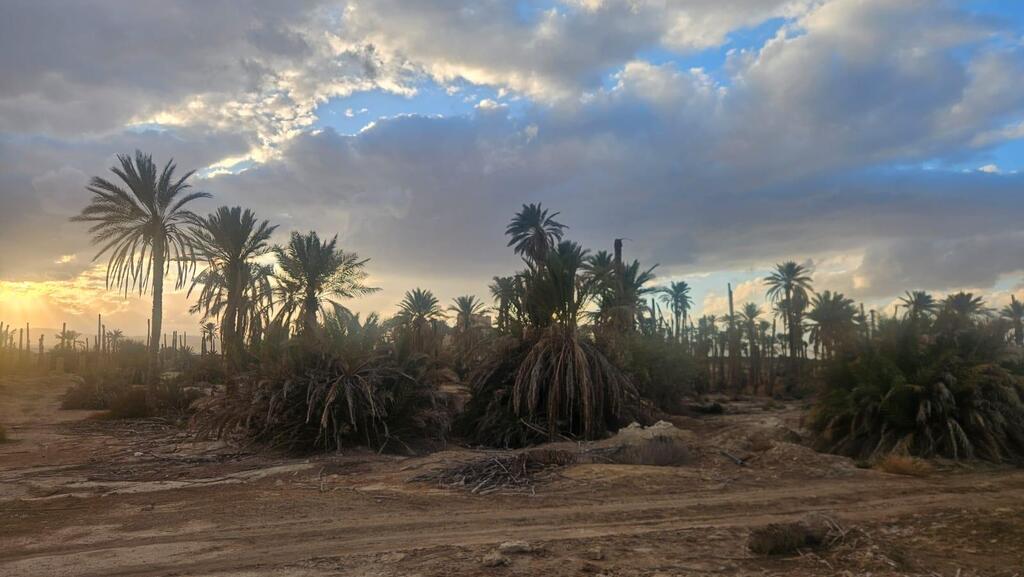
Many of the date trees in the Arava are drying out
(Photo: Dr. Roi Galili)
The study combined fieldwork, database analysis and aerial imagery. “A survey of this kind has never been done in the country. For the first time we have a fairly accurate indication of the number of date palms across the landscape and their condition,” says Galili. “We see the deterioration. The fact that there is a large population of trees with no regeneration indicates that the situation used to be much better,” he explains.
What is causing the decline?
Date palms have a high survival capacity, but they are sensitive to changes in groundwater level and to water quality around their root zones. “The date-palm is passive and tolerant of many stress conditions such as salinity, heat and cold,” Galili explains. “To ‘hurt’ a date palm you have to create a very strong stress — you have to ‘work hard’ — and that is unfortunately what is happening in several places where there is industrial contamination,” he says, noting a large area in the south of the country.
Another principal threat stems from agricultural activity expressed, among other ways, in groundwater pumping. “A large portion of the date-palm groves in the Arava were dramatically harmed as a result of groundwater pumping. Today we are trying to correct that through artificial irrigation or by correcting the pumping locations so they are not right next to the springs,” Galili explains, stressing that groundwater pumping does not necessarily have to deplete spring water.
Reproductive potential
As part of the research, the team made site-specific estimates of trees’ reproductive potential. Date palms are dioecious — male and female trees — and differ in their flowering types. “We want to understand how many male and how many female trees are at each site. Some plantations have undergone human manipulation and therefore contain far more females because they produce fruit. In natural groves you find about a 50/50 ratio,” he explains.
At Ein Zin and Ein Akrabim researchers found 28 male trees and one female tree. “It’s better to do the study in the season when females bear fruit and the males produce pollen so it’s easy to identify the two sexes,” Galili says.
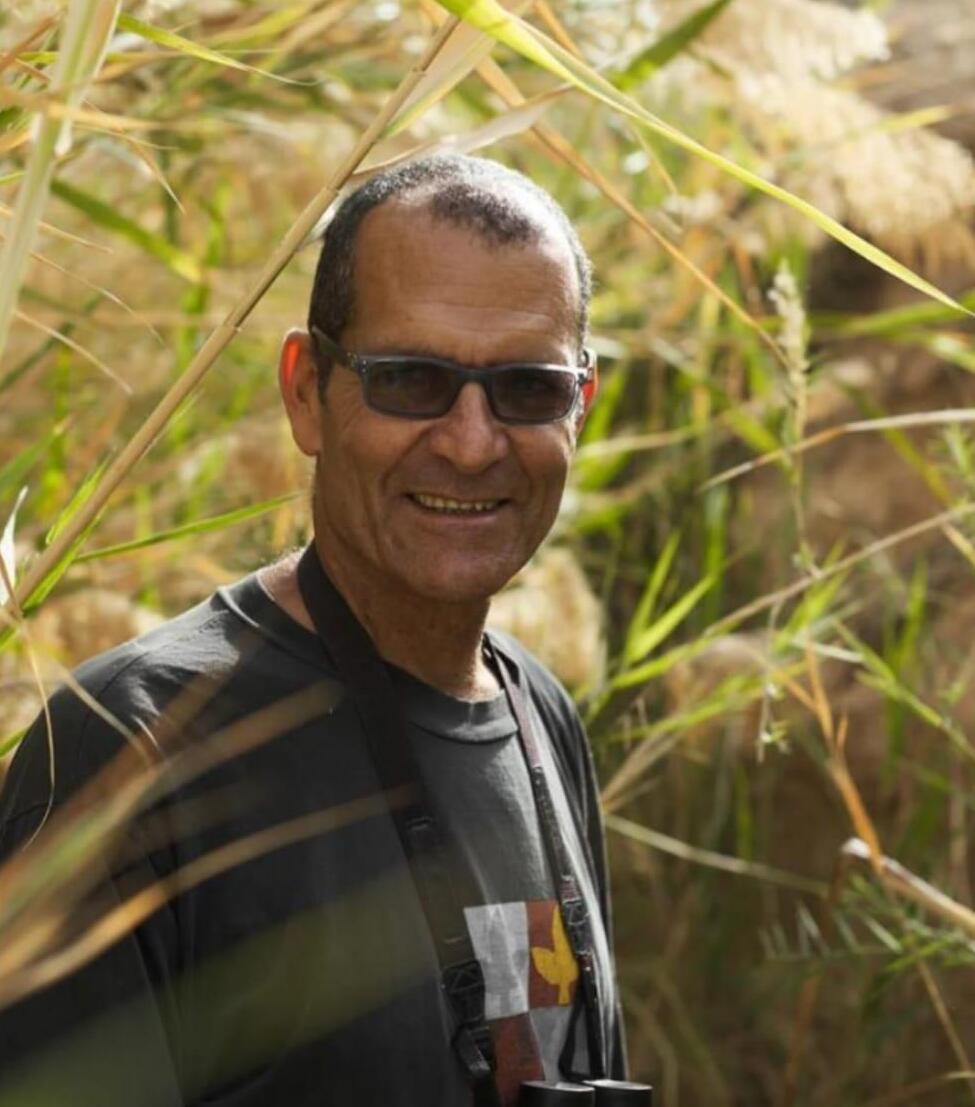
Dr. Roi Galili
(Photo: Courtesy of Dr. Roi Galili)
Another important component is the ratio of old to young trees. “In healthy groves we see higher percentages of young trees, which indicates high fertility. If 70–80 percent are young trees we know the population is growing. In cases where we find many more old trees, we understand there is a problem. In extreme cases like those we saw in Ein Zin and Ein Akrabim, it is really the ‘swan song,’ a very sad sight of a palm grove at the end of its days,” he relates.
Devastation of the date-palm 'jungle'
The research highlights the severe damage to what was once the country’s great date-palm “jungle” at Ein Zin and Ein Akrabim. Today only a few mature living trees remain in those areas, almost all lacking ‘shoots’ — thin long branches that indicate active growth — and most are dead or at various stages of desiccation.
“Since I was a child I have followed what has been happening there,” says Galili, who in recent years has led a public campaign to save them. “In the past there were some of the largest date-palm groves in the Middle East there, and over the last 50 years they became increasingly saline and polluted until they withered away completely. From hundreds of palm groves, today there are about 30 living trees left. As part of the struggle we managed to obtain funding from ICL for a genetic study of the palms growing there to understand whether these are a special variety or ordinary trees,” he recounts.
Nevertheless, Galili believes the situation is reversible, at least in most cases. “The situation is reversible and it depends on us. The pendulum swing that humans created with their depleting power is so dramatic that the only way to correct it is through human activity. That requires decision-making, it requires financial resources and it requires us to acknowledge the environmental disasters we created and to take responsibility for our surroundings,” he concludes.
The article was prepared by Zu’avit — the news agency of the Israeli Society for Ecology and Environmental Sciences