

For centuries, historians have drawn the boundaries of ancient societies from the evidence they left behind. Human remains, burial customs and archaeological finds can reveal how communities lived and interacted with neighboring groups. But new discoveries can force researchers to rethink those maps.
In 2018, Dr. Corina Kellner, a biological anthropologist and bioarchaeologist at Northern Arizona University, took part in excavations at Huaca del Loro, a major archaeological site on Peru’s southern coast associated with the Nazca culture, which flourished between roughly 1 and 750 CE.
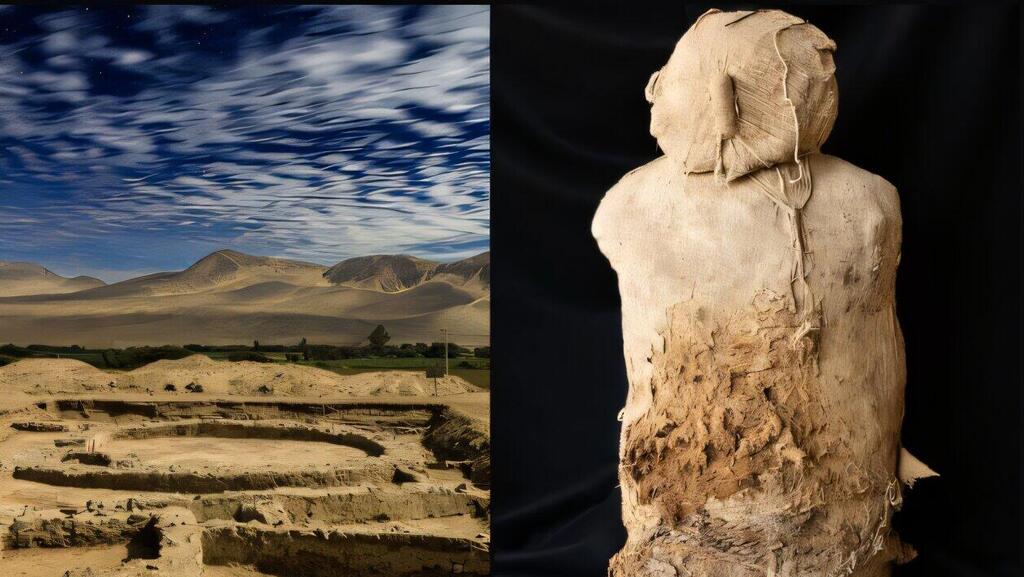
Four years later, she returned with a research team and encountered a discovery that may offer a new account of a pivotal period in the region’s history.
“During our second field season, we came across four individuals who had been mummified and wrapped, buried in a flexed position, with their knees drawn to their chests and their hands around their faces,” Kellner said.
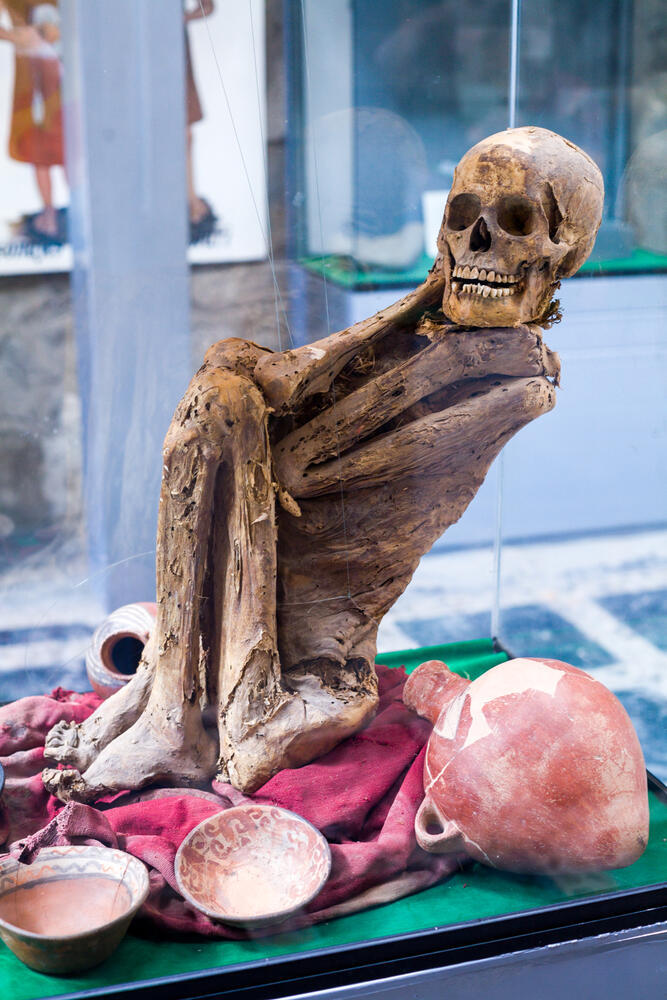
Example of burial practices during Peru’s Wari Empire
(Photo: Christian Vinces/Shutterstock)
“That is a typical burial position in many parts of Peru, but what makes these individuals so interesting is that we found them buried beneath a temple of the Wari Empire, rather than in the cemetery like the other burials. In addition, they remained undisturbed for more than 1,000 years, which is unusual in Peru.”
The Wari Empire, which flourished from about 600 to 1200 CE, has traditionally been understood as having conquered the Nazca culture. The newly discovered mummies, however, raise another possibility: the Wari takeover of the region may have involved cooperation between the two cultures rather than violent conquest.
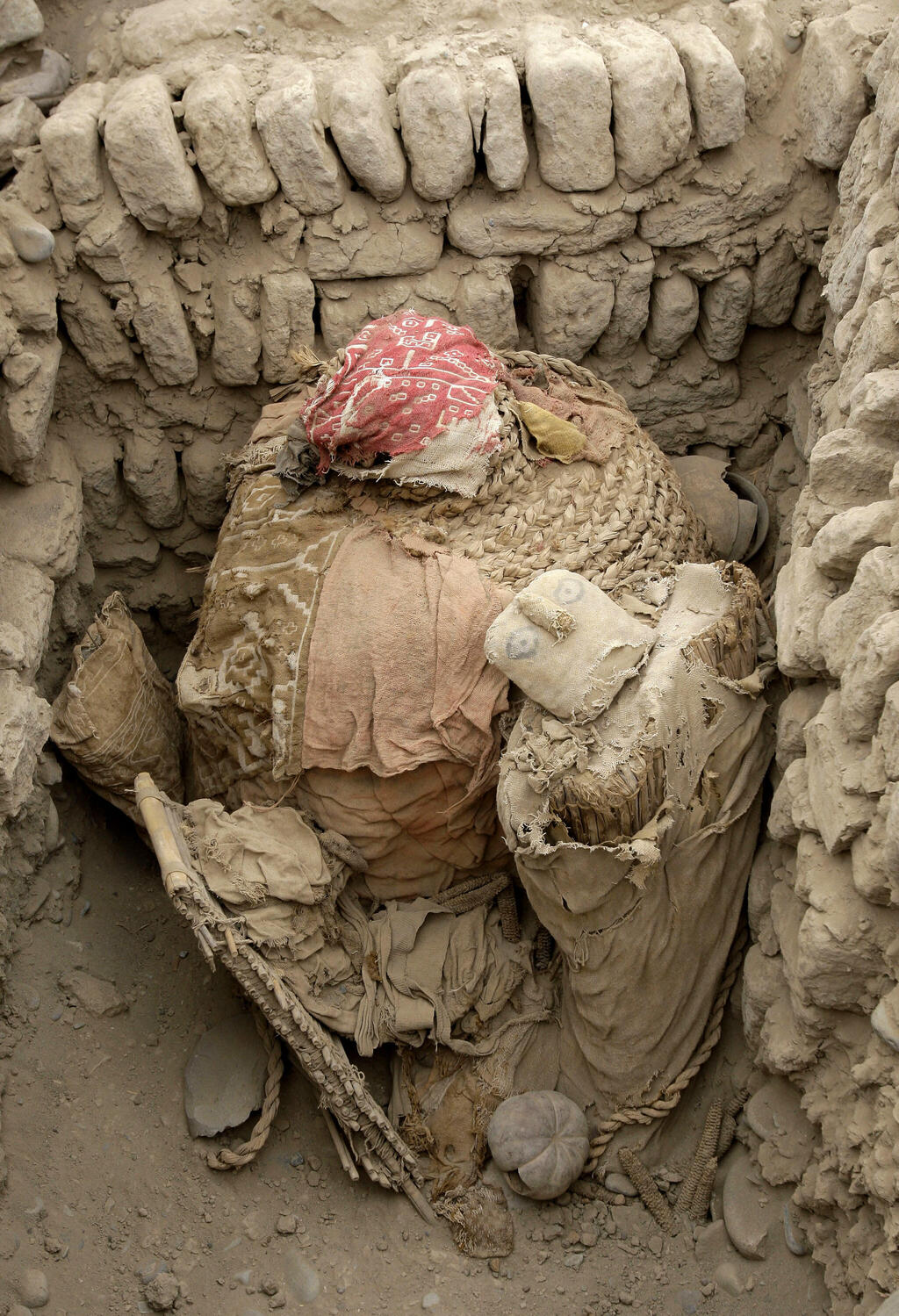
Mummies more than 1,000 years old from Peru’s Wari Empire
(Photo: Karel Navarro/AP)
To investigate further, Kellner returned to Peru this summer for five weeks, working alongside Melissa Lund and Alexandra Oshiro of the Bioarchaeology and Forensic Anthropology research group at the Pontifical Catholic University of Peru in Lima.
“When we first found these individuals, we were able to take X-rays and worked with a radiologist and a physician to interpret the results,” Kellner said. “This time, with permission from the Ministry of Culture and with the help of a group of Peruvian archaeologists and Susana Arce, director of the National Museum in Lima, where the mummies are kept, we removed them from the museum and conducted CT scans and collected DNA samples.”
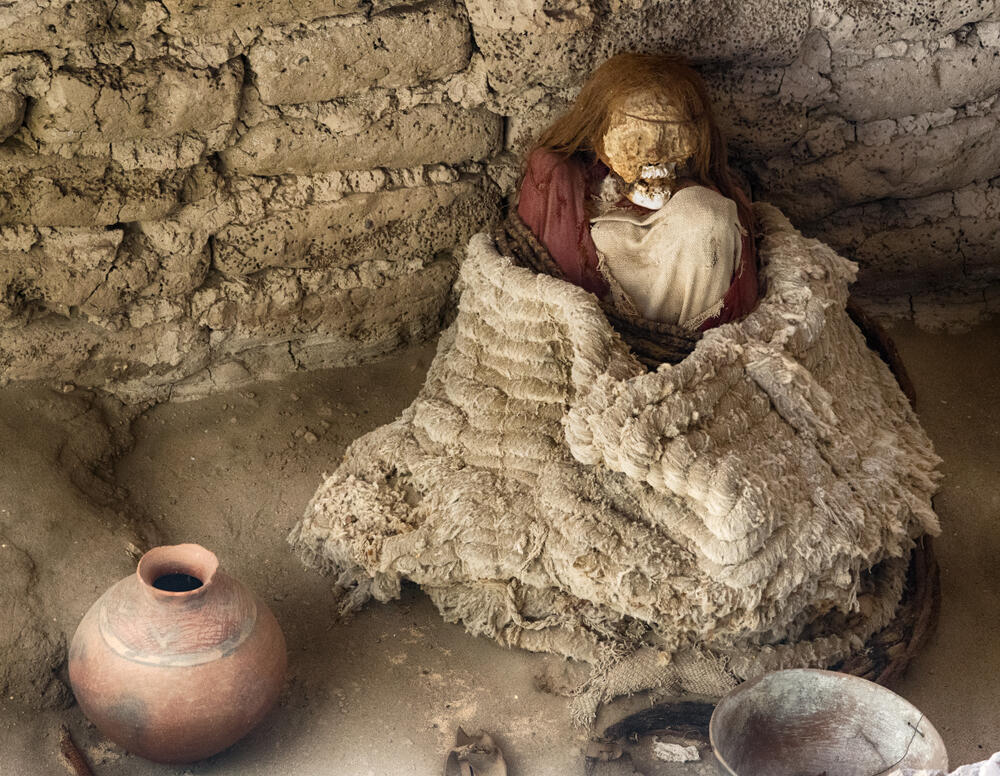
Mummy from Peru’s Nazca culture
(Photo: Matthias Kestel/Shutterstock)
The researchers also took samples from other people and animals found at the site for isotope analysis, which could help reconstruct diet, family relationships and migration patterns.
Huaca del Loro was inhabited during a period marking the end of Nazca culture and the beginning of stronger influence from both the Wari Empire in Peru and the Tiwanaku culture centered in what is now Bolivia.
Kellner said studying the human remains could help determine whether the Nazca maintained relations with the Wari as the empire entered the region, and if so, what kind of relationship existed between them.
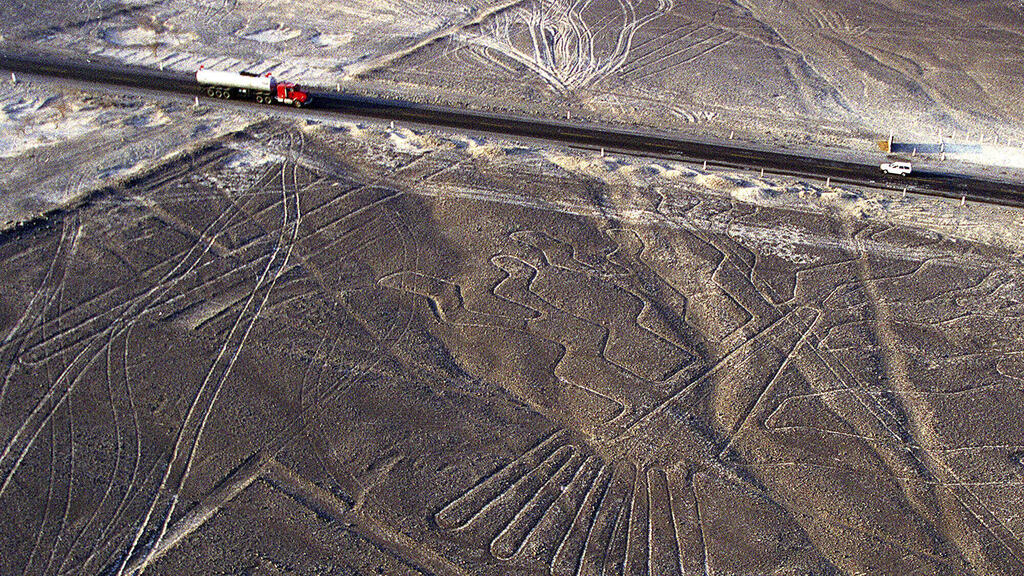
The Nazca Lines
(Photo: John Moore/AP)
“We are looking for signs of settlement and control strategies, to see whether there was any resistance and determine how complex the relationship between them was,” she said.
“We usually think of colonization as something violent and difficult, but that was not always the case. There are other ways groups can influence regions or societies, for example through things people may want from one another. These findings make us think that the Wari and Nazca had an earlier relationship and that the Nazca culture may even have supported the Wari Empire.”
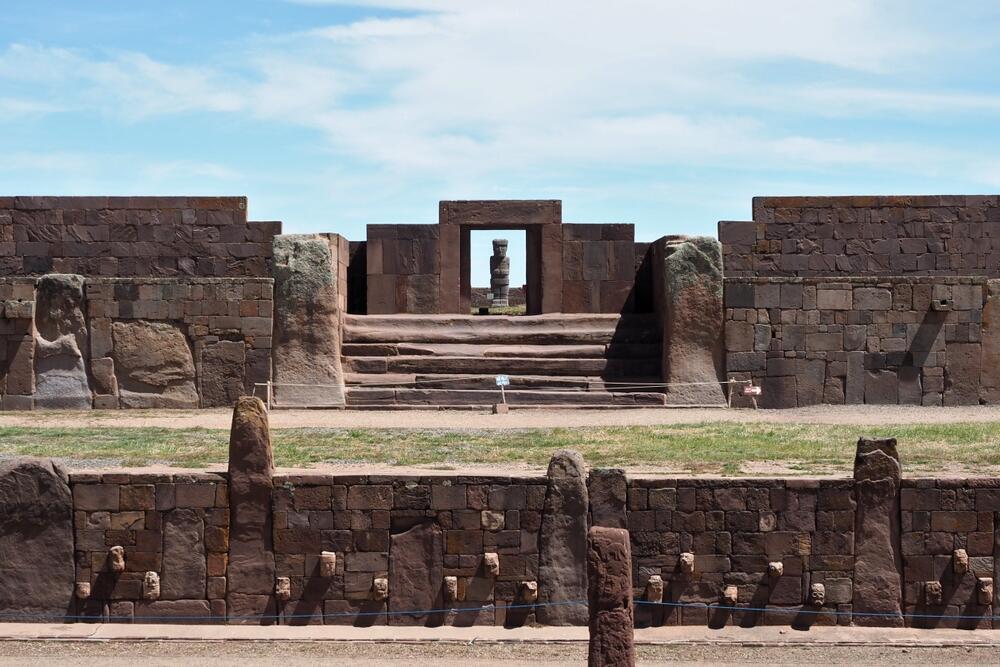
Remains of the Tiwanaku culture in Bolivia
(Photo: ABlandin/Shutterstock)
One possibility is that the relationship centered on pottery technology, since the Nazca were known for their production techniques and distinctive colors. Another possibility involves textiles and the Wari need for cotton.
The Wari heartland was based around Ayacucho, a high-altitude region where cultivating cotton would have been difficult. The Nazca, by contrast, lived at lower elevations better suited to growing cotton, coca leaves and other crops.
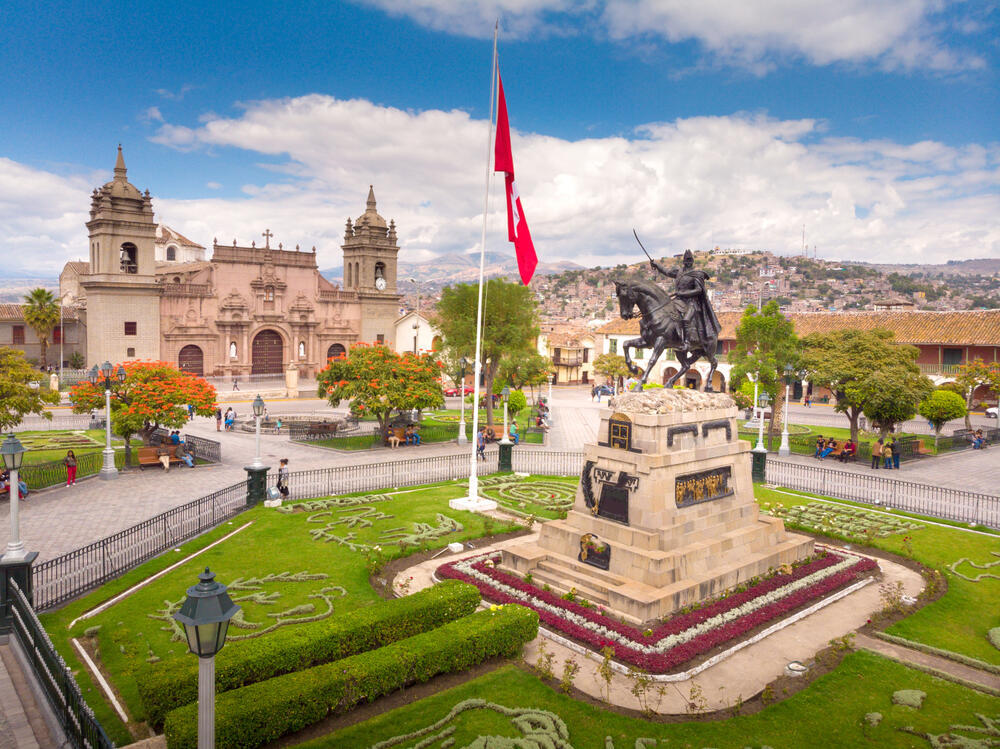
The cathedral and main square in Ayacucho, Peru
(Photo: Christian Vinces/Shutterstock)
Once Kellner receives the results of the DNA testing and CT scans, she plans to begin isotope analysis at Northern Arizona University’s Anthropology Isotope Paleodiet Laboratory with help from her students.
She hopes the research will shed new light on how different societies interacted and expanded their influence.
“We always think we are fighting one another, but humans are social beings,” Kellner said. “We also cooperate and know how to make use of the different strengths of each society.”