

The lions Ori and Ben Tzur arrived Wednesday at their new home in South Africa after a 30-hour journey. The two were part of one of the largest wildlife smuggling operations in Israel and in recent years lived at the Hai Park in Kiryat Motzkin. Watch the lions in their new home:
Four of them were named in memory of victims and heroes of the October 7 Hamas attack and the ongoing war in Gaza: Bibas, Ori, Arnon and Yahalom. The fifth cub was named Anda. They were later joined by Ben Tzur, who was found tied to a tree in a Palestinian village. Alongside the dedicated care the three male and three female lions received in Motzkin, the Israel Nature and Parks Authority worked to find a sanctuary in South Africa for some of them, closer to their natural environment.
The lions transferred to South Africa
(Photo: Uri Laniel, Israel Nature and Parks Authority)


This led them to Animal Defenders International (ADI), an organization that has rescued hundreds of wild animals from captivity over the past 20 years and transferred them to sanctuaries. Every week, the organization receives calls from government offices, wildlife organizations and private citizens seeking assistance. Originally, the two lions were supposed to arrive at another sanctuary, but a massive fire in March damaged the site and their transfer was delayed. Instead, ADI agreed to take them in.
Before the flight to South Africa, everyone was concerned that another confrontation with Iran could break out, but the tense calm remained. Ori and Ben Tzur will have a natural habitat spanning 2.5 dunams (about 0.6 acres), designed to resemble an African savanna, and will be surrounded by 33 lions and tigers living at the sanctuary.
Gallery
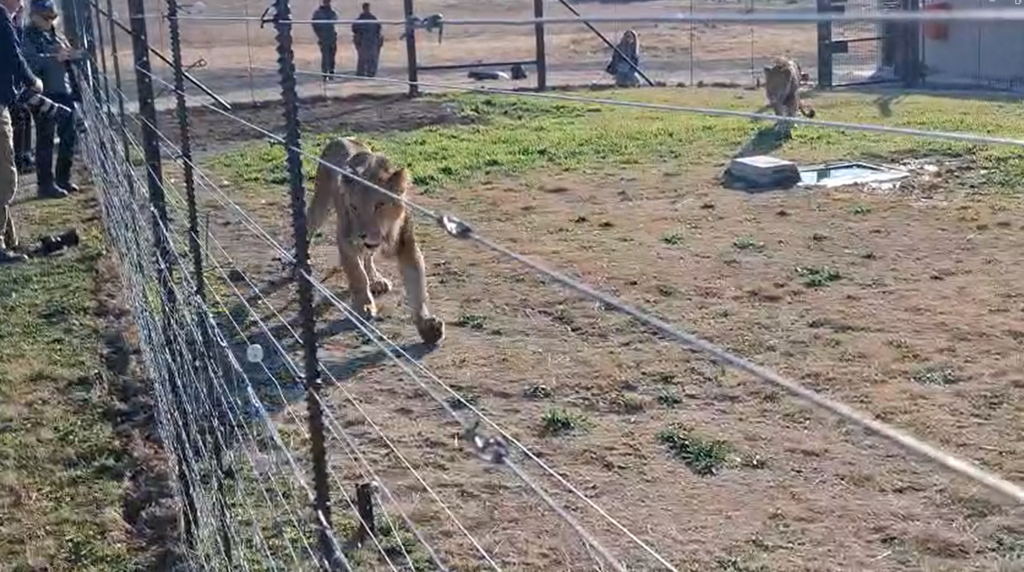
The lions that were moved to South Africa
(Photo: Uri Laniel, Israel Nature and Parks Authority)
"These sanctuaries allow rescued animals to have lives that are as good and natural as possible," an ADI representative said. "This is in contrast to the suffering they experienced as illegally smuggled pets."
Ori was named after Staff Sgt. Ori Gerby, a Givati Brigade reconnaissance fighter from Herzliya who was killed in January 2024. In his death, he saved two children after his organs were transplanted into a six-month-old baby and a 6-year-old girl. His mother, Naomi, asked for one of the cubs to be named after her son, who loved lions.
"Before he went to sleep he would say, ‘Lions need to rest too,’ instead of saying ‘good night,’" Naomi said. Originally, officials had planned to send Arnon, who was named after Chief Inspector Arnon Zmora. But the bond between Ben Tzur and Ori tipped the decision.
"Ori arrived very young and in poor nutritional condition," said Adva Peretz, a wildlife trade, import and export licensing inspector at the Israel Nature and Parks Authority. "His leg was broken due to a lack of calcium. His physical and social condition turned him into a smaller, insecure and semi-wild lion. Ben Tzur arrived older, after spending a long time with humans, which made him ‘imprinted.’ He is more sociable toward humans, which makes him more dangerous.
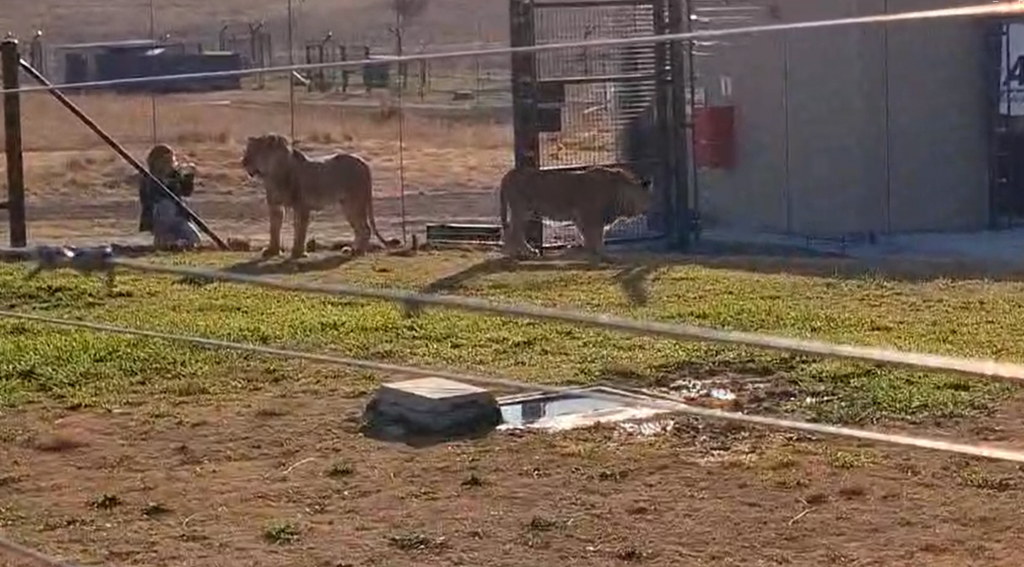
Adjusting to the new home
(Photo: Uri Laniel, Israel Nature and Parks Authority)
"Despite their differences in personality, a strong bond developed between them. The dominant Ben Tzur gave Ori confidence, but despite his condition Ori is a fighter. When needed, he stands his ground and will be confident around others. He is a bit more of a lion than Ben Tzur and does not show much interest in humans."
After consulting with experts, the authority decided to keep a pride consisting of one male and three females, as a balanced lion pride requires fewer males and more females. In the end, the bond between the two young lions, who are nearly two years old, was the deciding factor.
To transfer them safely and ensure they survived the flight and transition, the lions were gradually made accustomed to the transport crates. However, during the lengthy waiting period, caused by the war and the fire at the original sanctuary, the lions grew. The original crates were too small, so new, larger crates had to be purchased.
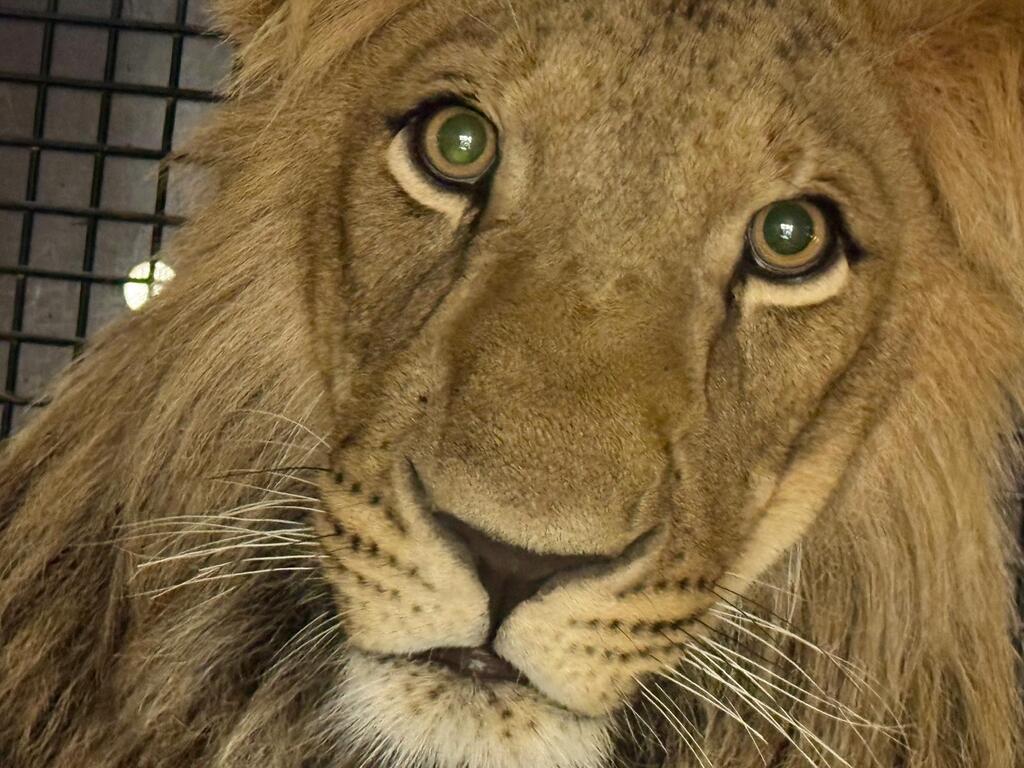
One of the lions that was transported to South Africa
(Photo: Uri Laniel, Israel Nature and Parks Authority)
"We trained the cubs to enter the transport crates so they could make the long journey without the need for anesthesia or sedation," said zoo director Ashraf Kanaan. "This is a significant achievement. Raising lions without their mother is a complex task, and all of them received devoted care. Saying goodbye to them was truly difficult. The lions also parted from each other. They were kept in separate exhibits, but it seemed they sensed that the separation was coming."
But the most difficult farewell was for the Gerby family and Ori.
"When they told me Ori had to leave, it was very difficult for me," Naomi said. "We became attached to him. Every time we came to visit, we felt a connection with Ori. Our Ori was so identified with the world of lions, and we called him ‘cub’ or ‘little cub.’ It was not easy.
"My husband said Ori loved freedom and had a free spirit, and he would surely want freedom for the cub, for him to live in nature. This is probably the best thing that can happen to him. We have to look at what is best for the animal above everything else."
Naomi was able to say goodbye to her lion cub before he was placed in the transport crate.
"These cubs did not have an easy beginning. But they are on their way to a better future," she concluded.