


Authorities confirmed Sunday that last week’s mass bee die-off at Kibbutz Ein Harod Meuhad in northern Israel was caused by deliberate poisoning. Laboratory tests conducted by the Veterinary Institute under the Agriculture and Food Security Ministry identified organophosphate — a banned, highly toxic pesticide — as the source.
The incident affected 43 hives, killing hundreds of thousands of bees. Veterinary inspectors collected samples, including dead bees, a suspicious white powder found at hive entrances, and contaminated equipment, immediately after receiving the report from the Upper Galilee site known as Tzivon.
Agricultural terror in Kibbutz Ein Harod Meuhad
(Video: Ein Harod Apiary)


Preliminary findings suggested deliberate contamination, with the toxic effect worsened by dead bees blocking hive entrances, trapping others inside. Officials noted the site’s relative isolation likely prevented wider harm to surrounding animals.
Organophosphates have been prohibited for use on animals in Israel and Europe for years due to their high toxicity to both wildlife and humans. Following the findings, the Agriculture Ministry ordered all honey from the affected hives destroyed and prohibited for sale. Authorities are also considering destroying the hives if pesticide residues remain after cleaning.
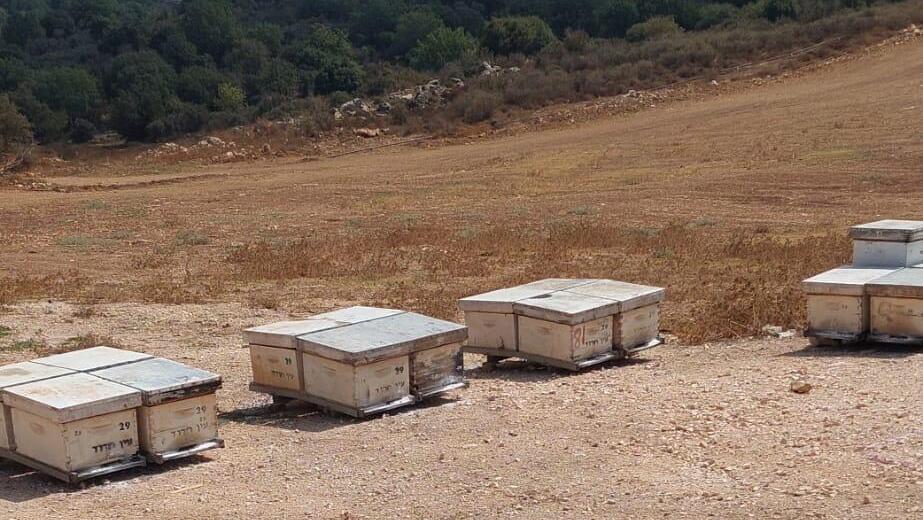
Agricultural terror in Kibbutz Ein Harod Meuhad
(Photo: Ein Harod Apiary)
The kibbutz’s beekeeping operation, one of Israel’s oldest, was established over a century ago and manages thousands of hives across northern Israel and the Shfela region. Workers monitor each hive at least weekly, providing treatments as needed. Michael Beeri, a field worker from Kibbutz Tirat Zvi in the Emek HaMaayanot region, explained that the team ensures hive health on every visit.
A police complaint has been filed, and the incident was also reported to HaShomer HaChadash (The New Guard), a volunteer-based organization that inspects security measures at Israeli apiaries to prevent similar agricultural attacks in the future.