

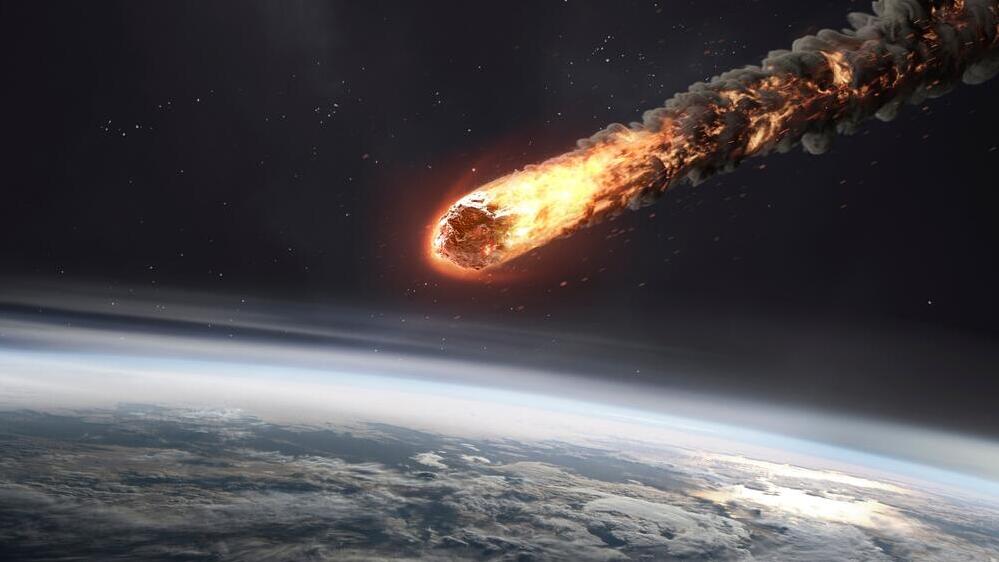
For the first time in Brazil, scientists have identified a field of tektites, natural glass formed when terrestrial rocks melt following a powerful meteorite impact.
Tektites are created when rock liquefied by an impact is ejected into the air, cools rapidly and solidifies into glass, often in irregular shapes. The first location in Brazil where tektites were discovered is Minas Gerais in the southeast, the country’s second most populous state and fourth largest by area.
The discovery was described in a study published in the journal “Geology.” Prof. Álvaro Penteado Crósta, a geologist at the Institute of Geosciences at the University of Campinas, led the research team, which included collaborators from Brazil, Europe, the Middle East and Australia.
Geochemical analyses show that the Brazilian tektites contain high levels of silicon dioxide, ranging from 70.3% to 73.7%. The combined content of sodium oxide and potassium oxide ranges from 5.86% to 8.01%, slightly higher than in other known tektite fields. Researchers also identified small variations in trace elements such as chromium, at 10 to 48 parts per million, and nickel, at 9 to 63 parts per million, indicating that the original material was neither pure nor homogeneous.
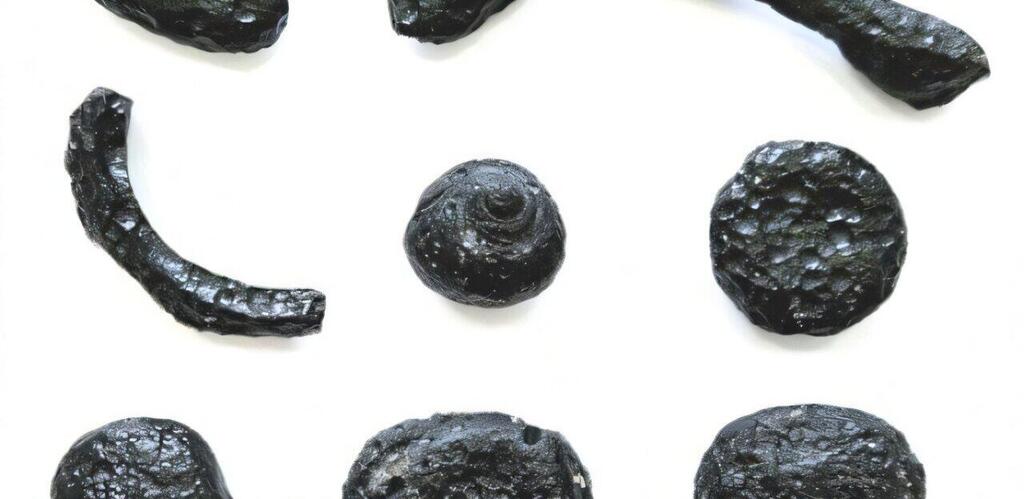
Tektites of varied shapes found in Brazil’s Minas Gerais state
(Photo: Álvaro Penteado Crósta/IG-UNICAMP)
Isotopic geochemistry suggests the molten material originated in ancient continental crust dating back 3 billion to 3.3 billion years.
By July 2025, researchers had collected about 500 samples. That number has since grown to more than 600. The fragments range in weight from less than 1 gram to 85.4 grams and reach up to about 5 centimeters in length.
“One of the decisive criteria for classifying the material as tektite was its very low water content, measured by infrared spectroscopy at between 71 and 107 parts per million,” Crósta said. “By comparison, volcanic glass such as obsidian typically contains at least 700 parts per million of water.”
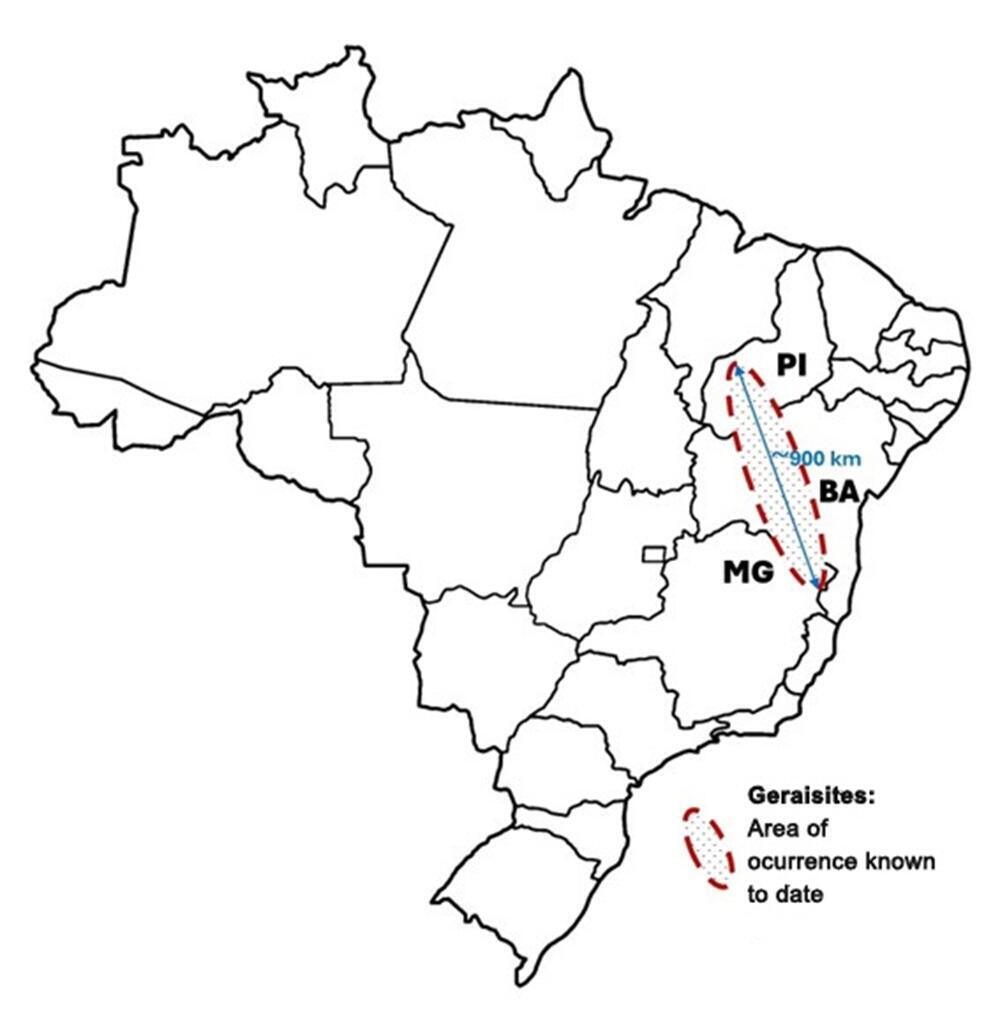
Map of the tektite field discovered in Brazil
(Photo: Álvaro Penteado Crósta/IG-UNICAMP)
Dating based on argon isotope ratios indicates that the impact event occurred about 6.3 million years ago, at the end of the Miocene epoch.
The Brazilian field joins five major tektite fields previously identified worldwide: in Australasia, Central Europe, Ivory Coast, North America and Belize. However, impact craters have been identified in only three of the six fields.
Initially, tektites were found along a strip about 90 kilometers long. Additional discoveries, including in the northeastern states of Bahia and Piauí, show that the field extends more than 900 kilometers.
“The expansion of the area is consistent with what has been observed in other tektite fields around the world,” Crósta said. “The size of the field depends directly, among other factors, on the energy of the impact.”
(Photo: I. Pilon/Shutterstock)
Although researchers cannot yet precisely estimate the size of the impacting body, they believe it was unlikely to have been small. The large volume of melted material and the broad distribution area point to a significant impact event, though smaller than the one that created the Australasian field, which spans thousands of kilometers.
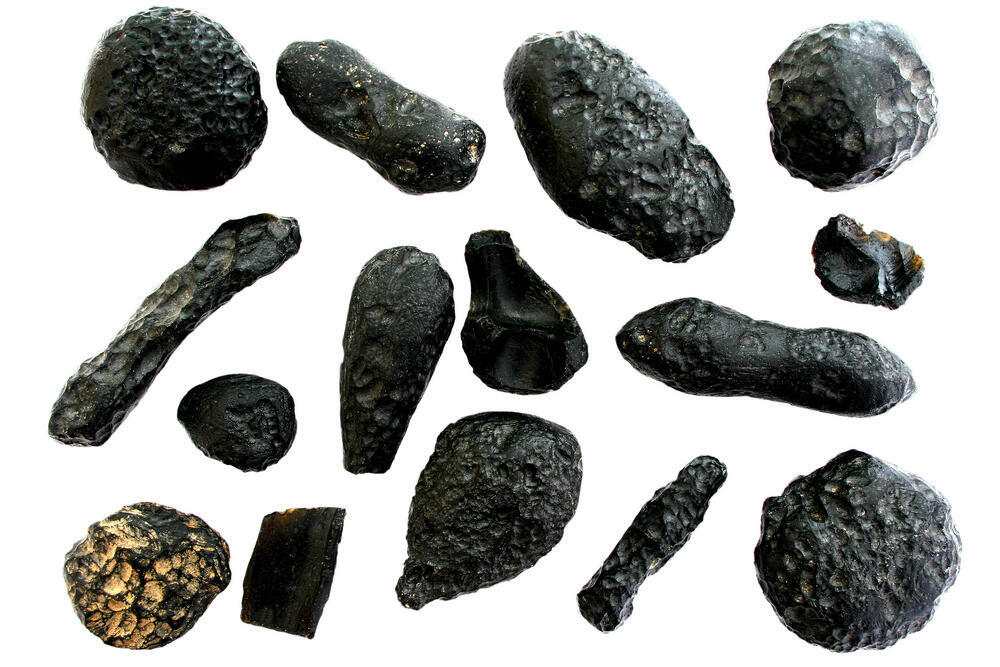
Though they initially appear black and opaque, the tektites become translucent under strong light, taking on a grayish-green hue. Small circular patterns on their dark surfaces reflect the solidification process.
“These small patterns are traces of gas bubbles released during the rapid cooling of the molten material, a process also observed in volcanic lava but particularly characteristic of tektites,” Crósta said.