

Researchers at the University of Haifa set out to test one possible answer by building a full-size reed boat using materials and techniques that would have been available during the Neolithic period, then sailing it off Israel’s Carmel coast.
The 4-meter-long vessel, constructed from about 1,600 reeds, was recently launched at Neve Yam beach, directly opposite the submerged remains of a settlement dating to roughly the same period.
Shay Niv paddles the reed boat built as part of his experimental research
(Video: Amir Yorman)


Over the past four decades, archaeologists have discovered dozens of Neolithic settlement sites along the Carmel coast, stretching from Haifa to Ma’agan Michael.
The sites, researched by University of Haifa archaeologist Prof. Ehud Galili, date from roughly 10,000 to 7,000 years ago and now lie between 2 and 12 meters below sea level.
They were submerged as sea levels rose following the end of the last Ice Age.
The finds offer strong evidence that the people who lived there made extensive use of the sea.
“At the sites, we found fishhooks, fishing-net weights and fish bones,” said Prof. David Friesem of the University of Haifa’s School of Archaeology and Maritime Cultures.
“We therefore know that Neolithic people in the eastern Mediterranean sailed into deeper waters and knew how to exploit marine resources. Some even reached Cyprus and settled the island, bringing plants and animals with them from the mainland.”
Gallery
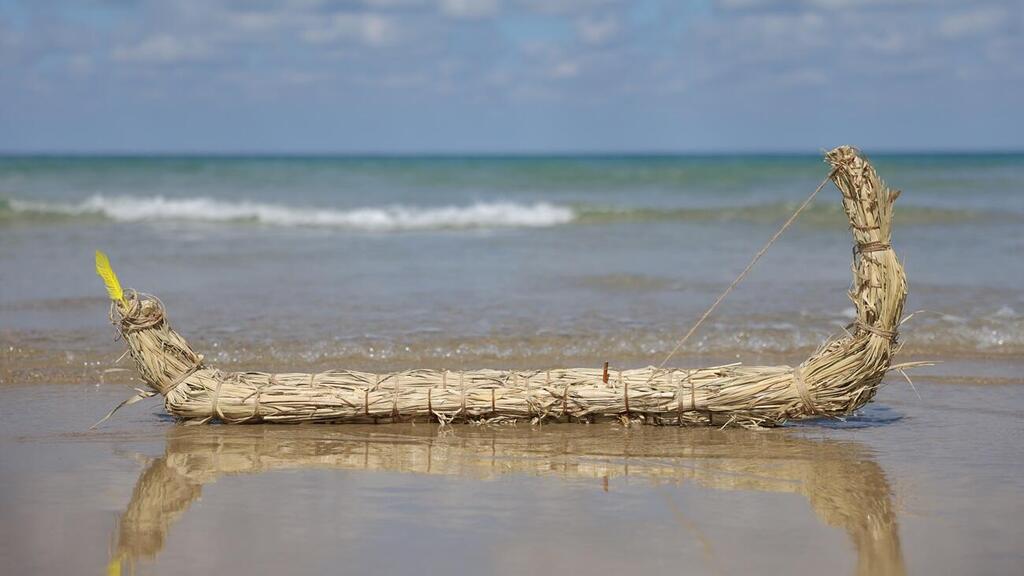
The reed boat built by University of Haifa researchers
(Photo: Sergei Lebedansky, University of Haifa)
Despite that evidence, no remains of watercraft from the period have yet been discovered anywhere in the eastern Mediterranean.
That gap prompted master’s student Shay Niv, from the university’s Department of Maritime Civilizations, to undertake an experimental archaeology project aimed at determining what kind of vessel coastal communities could realistically have built and used.
Reconstructing a Stone Age boat
Niv examined evidence of early watercraft from across the Old World, including literary descriptions, reliefs, paintings and clay models discovered in archaeological excavations.
Researchers also reconstructed the ancient landscape of the Carmel coast and assessed the natural materials that would have been available to its inhabitants.
They then compared those conditions with historical and ethnographic evidence from traditional societies that lived in similar environments, including wetlands, riverbanks and coastal zones.
The research suggested that a reed boat was among the most plausible types of craft available to Neolithic communities in the region.
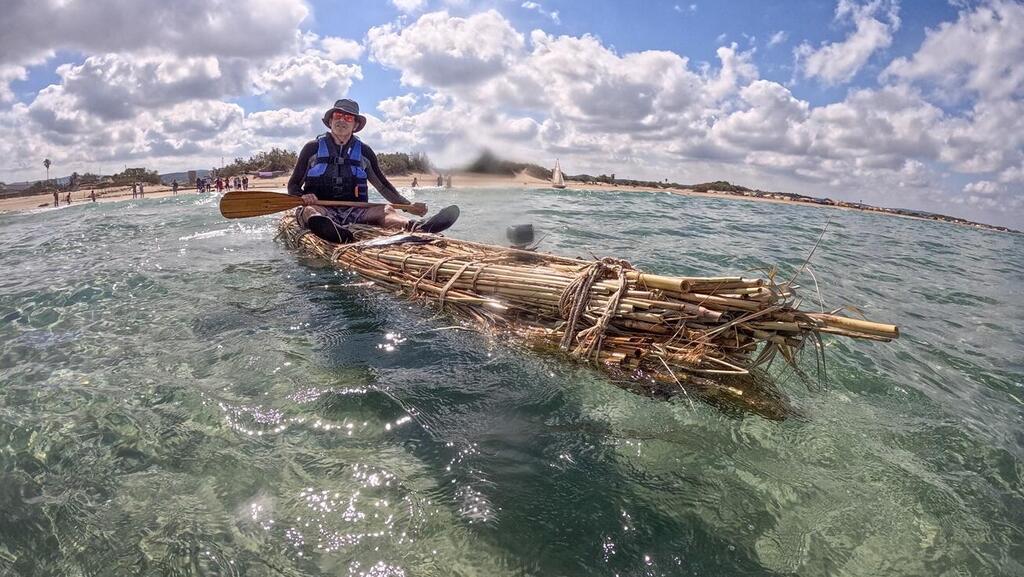
Shay Niv paddles the reed boat
(Photo: Amir Yorman)
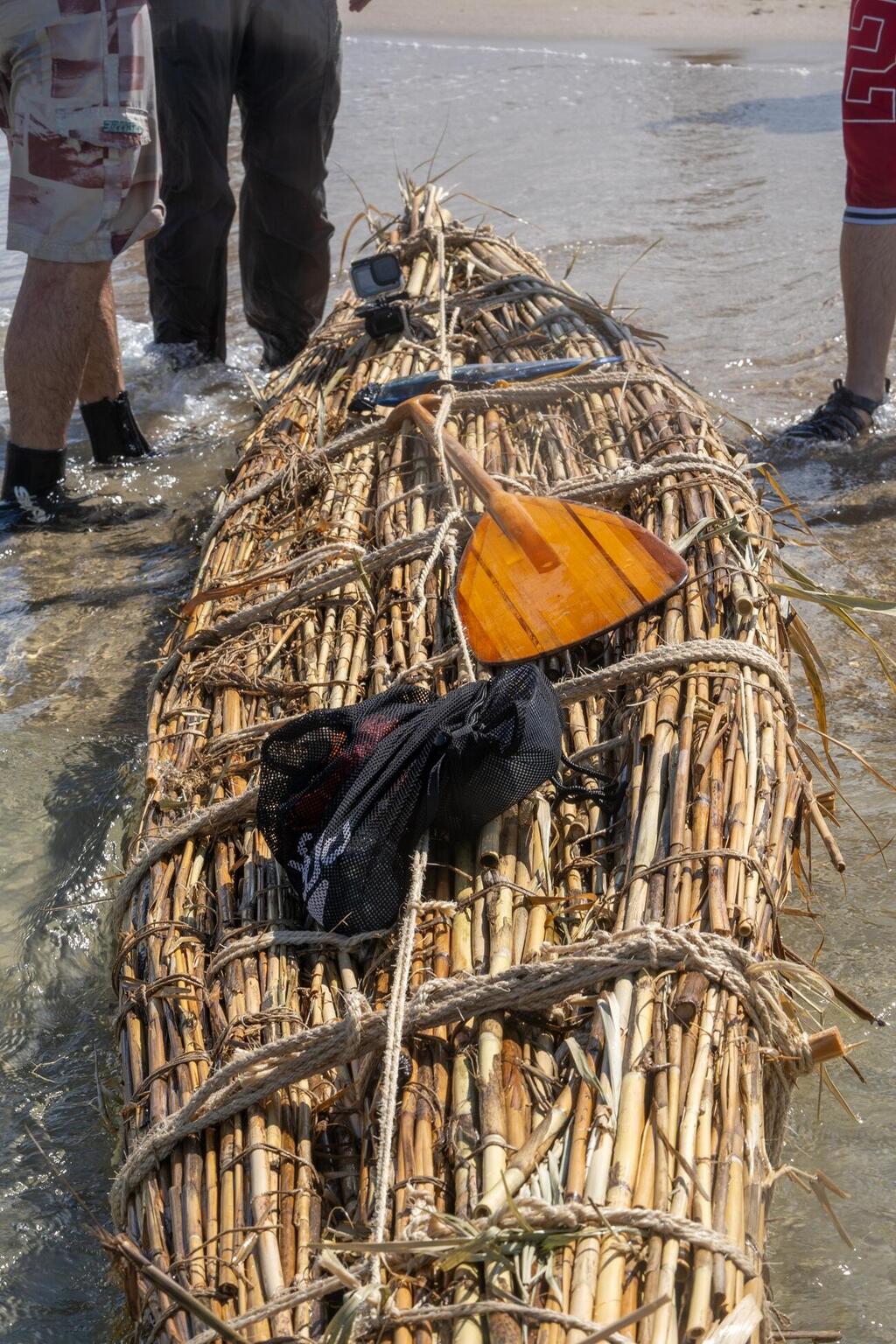
The reed boat recreating what some of the earliest vessels used along the coast of ancient Israel may have looked like 8,000 years ago
(Photo: Amir Yorman)
Before constructing a full-size vessel, the team first built a smaller model during a boat-model workshop led by Prof. Deborah Cvikel, head of the Department of Maritime Civilizations and an expert in shipwrecks and ancient seafaring technology.
“Before investing the resources required to build a full-size vessel, it was important for us to first build a small-scale model with the students in order to test the boat’s buoyancy and sailing capability,” Cvikel said.
That step was particularly important because researchers do not know whether sail technology was already in use in the region during that period.
Once the smaller model proved the concept was viable, the researchers moved ahead with a full-size version measuring 4 meters in length.
Built from 1,600 reeds
The team harvested and collected about 1,600 reeds, which were dried and cleaned before construction began.
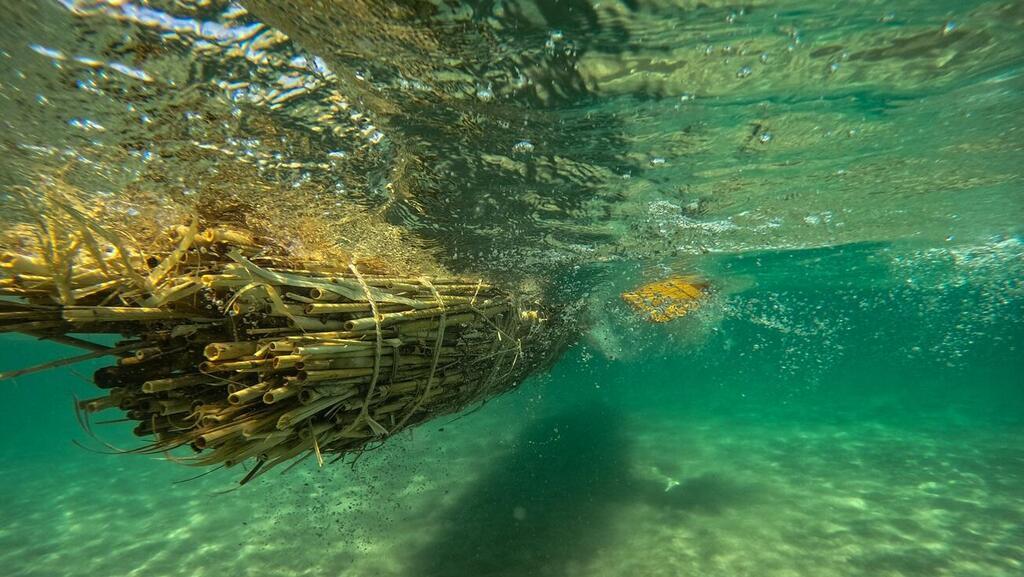
The reeds were bound into bundles and tied together in intersecting patterns, with diagonal tension used to create a stable structure capable of floating and carrying weight.
The completed vessel was then launched from Neve Yam beach.
The test was successful.
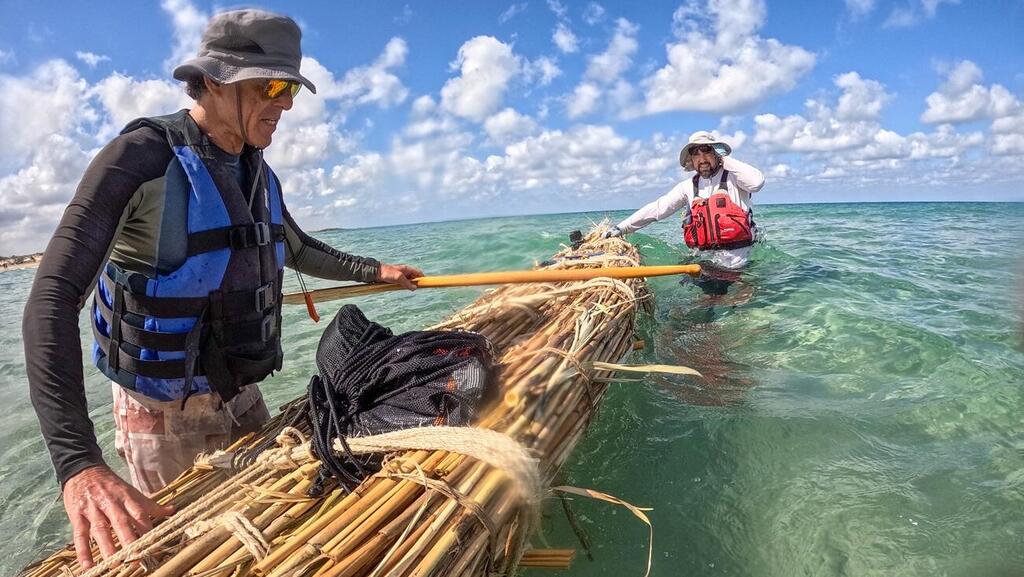
(Photo: Amir Yorman)
(Photo: Amir Yorman)
The reed boat remained stable and carried Niv along with his equipment, demonstrating that such a craft could function effectively as a seaworthy vessel.
“It’s like fulfilling a dream: starting with a theoretical idea and ending with a full-size boat that is tangible and real,” Niv said.
The location of the test added a symbolic dimension to the experiment.
The boat was sailed directly opposite the remains of a Neolithic settlement that now lies beneath the sea, allowing the researchers to test their reconstruction in the same coastal environment where people lived thousands of years ago.
For the team, the experiment does not prove that Neolithic boats looked exactly like the reconstruction.
But it does show that a reed vessel built from locally available materials could have provided an effective means of coastal travel.
“The success of the experiment does not prove that this is exactly what Neolithic watercraft looked like,” Friesem said. “But it does show that a reed boat represents an optimal use of the natural resources available in the coastal environment.”
The project, he added, offers a new way to understand how prehistoric communities along the Carmel coast may have adapted to the sea, used marine resources and traveled through the eastern Mediterranean thousands of years ago.