

A rare and extreme cold snap sweeping across the United States has reached deep into the South, bringing freezing temperatures, strong winds and even snow to parts of Florida, with unusual and sometimes bizarre consequences.
While tens of millions of Americans have been affected by the Arctic blast, including widespread power outages, flight cancellations and more than 100 reported deaths nationwide, Florida’s green iguanas have also taken a hit.
Gallery
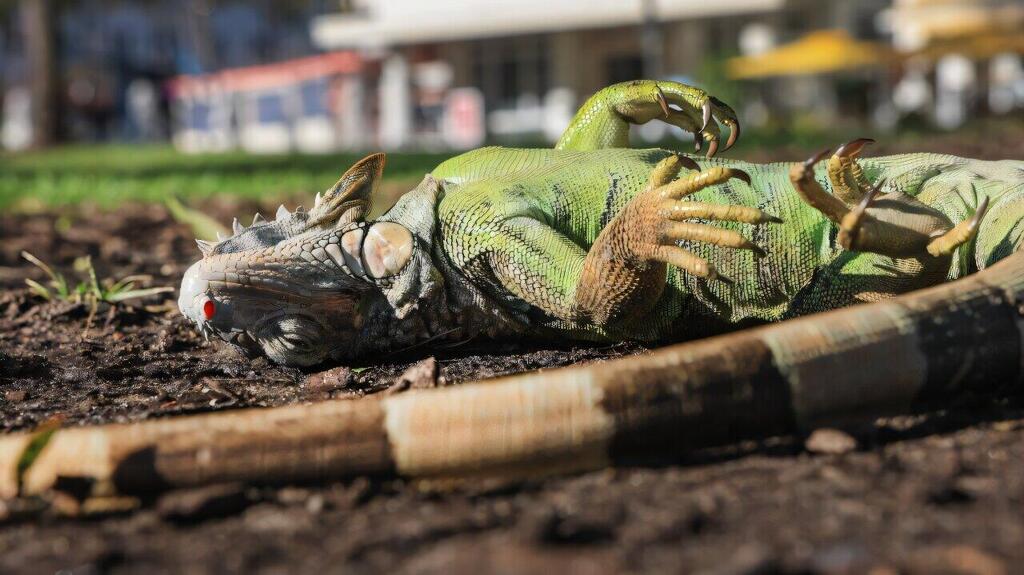
A frozen iguana that fell off amid extreme cold
(Photo: Joe Raedle/Getty Images North America/AFP)
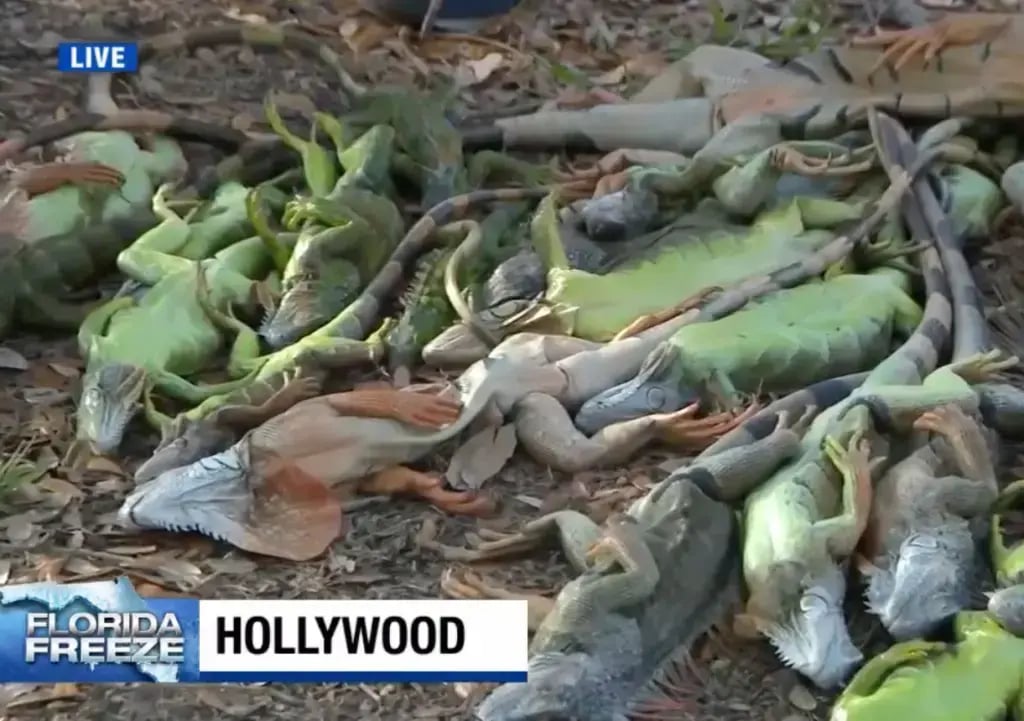
Frozen iguanas fall from trees in large numbers
(Photo: WPLG Local 10)
Beginning early Sunday, as temperatures plunged across the state, cold-blooded iguanas were found falling from trees in large numbers after becoming immobilized by the cold.
In Orlando, temperatures dropped to minus 4 degrees Celsius, the coldest February reading since 1923. Typical February temperatures in the region range from about 12 to 23 degrees Celsius. By Tuesday night, temperatures had climbed back to around freezing.
Florida-based broadcaster WPLG Local 10 described the phenomenon as a “rain of iguanas,” as stunned reptiles were found scattered across sidewalks, yards and parks in southern parts of the state. Videos circulating on social media showed iguanas lying motionless on the ground after falling from trees.
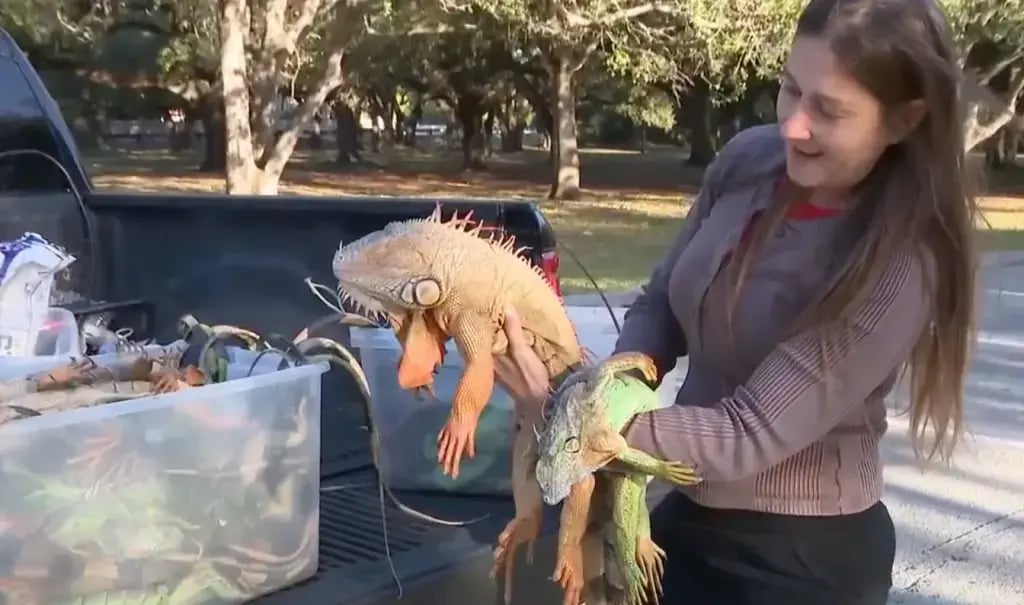
Jessica Kilgore, who runs Iguana Solutions, a service that helps manage invasive species, told WPLG she collected numerous green iguanas, both alive and dead, during the cold snap.
Under normal circumstances, Florida residents are not permitted to handle iguanas on their own. However, due to the severity of the situation, the Florida Fish and Wildlife Conservation Commission temporarily allowed residents to bring fallen iguanas to designated collection points.
(Photo: WPLG Local 10)

(Photo: WPLG Local 10)
Representatives of the commission said strong winds were expected to worsen the cold, increasing the likelihood of additional iguanas falling from trees. The National Weather Service warned that wind chill would intensify the effects of freezing temperatures across the region.
“When temperatures rise, iguanas that survived the fall will thaw and climb back into the trees,” Kilgore said, stressing that green iguanas are an invasive species and should be removed humanely to protect Florida’s ecosystem.

Iguana pizza
(Photo: Screenshot CBS)

(Photo: Screenshot CBS)
For some Floridians, the cold snap also brought an unexpected culinary opportunity. In South Florida, residents collected iguanas and handed some over to authorities, while others kept them for consumption. One local group even turned the reptiles into what they dubbed “Florida Man Pizza,” topping pies with freshly harvested iguana meat.
While the falling iguanas drew attention and social media buzz, farmers across South Florida faced more serious consequences. Agricultural losses to tomatoes, green beans and other crops were reported, raising concerns about potential price increases in the coming weeks.
As temperatures slowly rebound, officials say the spectacle of falling iguanas will fade, but the cold snap will likely be remembered as one of Florida’s strangest encounters with winter.