

You take your child or dog to the park. You feel good about yourself. Finally, you are outside, breathing fresh air, seeing trees. The green lawns beckon. But then you get closer and a terrible plastic smell hits your nose. The child cannot walk barefoot in summer on these plastic carpets, this synthetic grass. Sometimes it seems to be everywhere.
The Kfar Saba municipality was the first to decide to fight back against synthetic grass, announcing that it would get rid of the plastic in order to promote environmental quality in the city. Herzliya followed. Beginning in 2027, a plan will gradually replace all existing synthetic grass surfaces with natural and sustainable alternatives. Plastic grass will not be approved for new projects or renovations of public gardens, and vegetation suited to the local climate will be preferred in order to strengthen the urban ecosystem.
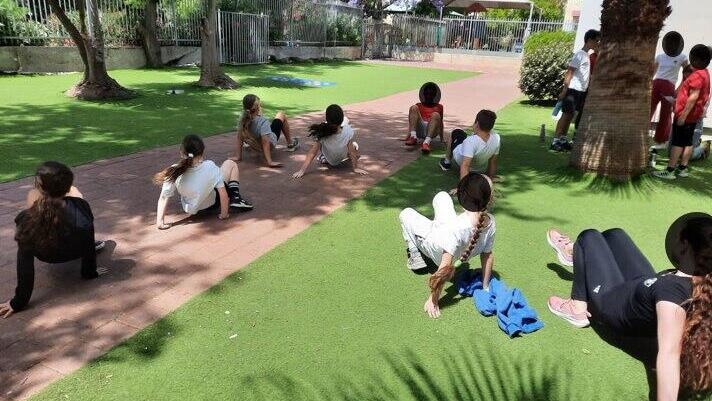
Many welcomed the move. In Herzliya, 10 dunams of synthetic grass will be replaced with real grass. Mayor Yariv Fisher admitted that years ago he even installed synthetic grass at his own home and, with admirable generosity, acknowledged that the idea had been his wife’s. Soon, he promised, he would replace it with natural grass because of the heat and because children do not enjoy playing on it.
“We have already started the process across the city, and four reasons led to the decision: It’s ugly, it’s unpleasant, it’s unhealthy and, most importantly, we are expecting a very harsh winter. According to estimates, between 70 and 400 millimeters of rain could fall within a 24-hour period. These are things we cannot cope with without permeable areas and a good drainage system.”
The argument with mayor of Givatayim
Synthetic grass seems to be one of those rare issues that unites everyone. Against it, of course. On the X platform, where ordinary citizens can speak directly with decision-makers without intermediaries, assuming they have not been blocked, the issue came up for discussion. It was thanks, in fact, to a user known as “Nirko from Givatayim,” who complained about Mayor Ran Kunik’s decision to install synthetic grass in the dog park on Lia Koenig Street: “While other cities are reducing the use of plastic grass, we are stuck behind.”
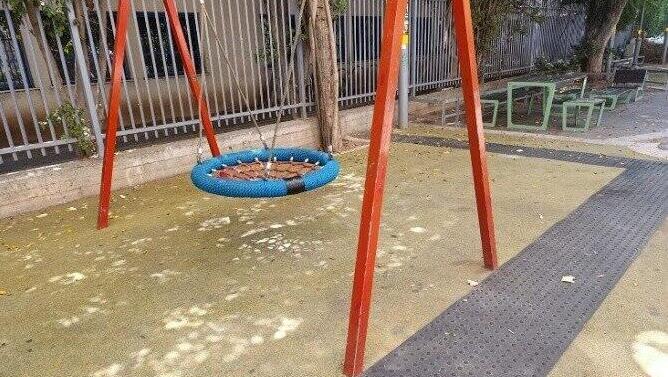
A rubber playground surface
(Photo: Courtesy of Adam Teva v'Din)
The online public did not remain indifferent. Mayor Kunik made sure to respond: “There was sand there before, which wasn’t great either. It causes disease and smells from feces. All the dog owners in this park asked for synthetic grass, and when possible we try to meet our residents’ wishes.”
He said that in other dog parks, the plastic grass had proved successful. “At the same time, throughout the city there is regular grass, on almost every traffic island and square. The little synthetic grass that existed was replaced with regular grass. But the various opinion thieves won’t write that.”
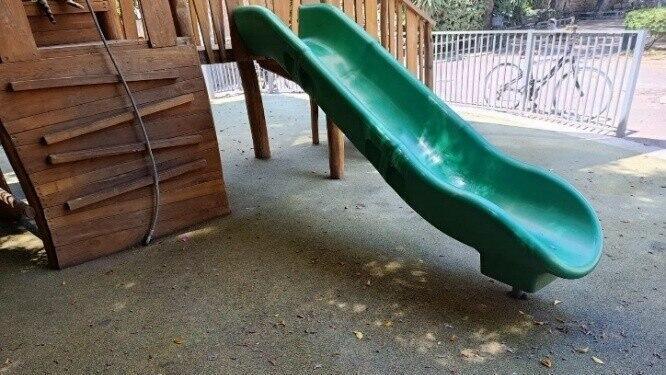
Rubber playground surface
(Photo: Courtesy of Adam Teva v'Din)
Numerous studies point to several problems associated with the use of synthetic grass: The materials it is made of, such as plastic and recycled rubber, emit toxins when exposed to sunlight. In addition, the high temperatures that develop on the surface in summer can cause burns. Synthetic grass heats its surroundings, does not allow water to seep into the ground and does not support natural ecosystems. Add to that the fact that it wears down and releases microplastic particles into the environment. And in any case it is not actually pleasant to play on.
“This is an issue that directly affects the health and safety of our most vulnerable population — our children — as well as environmental protection,” explains attorney Ortal Senkar, director of environmental justice at Adam Teva V’Din.
“Israel’s climate conditions, characterized by especially high temperatures, may increase the release of chemical substances from synthetic surfaces, some of which are suspected carcinogens, as well as plastic particles into the environment. The danger is especially significant in spaces intended for children, such as playgrounds, educational institutions and parks, where children come into direct contact with these materials and breathe them in.”
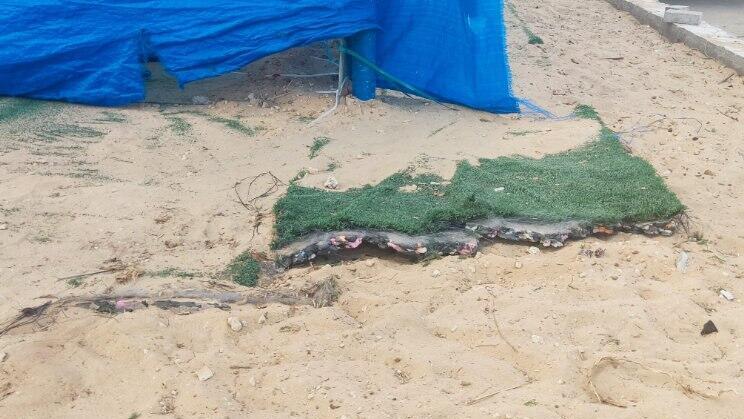
A piece of torn synthetic grass
(Photo: Courtesy of Adam Teva v'Din)
She added: “This exposure is not necessary, because natural and safe alternatives to ground coverings exist and also have environmental benefits. In fact, there is a gap between the Israeli standard and updated European regulations when it comes to safety and exposure to hazardous substances and microplastics. Although the Israeli standard refers to European regulations, those have been updated and made more stringent, while the Israeli standard has not yet been updated accordingly. This means that children in Israel may be exposed to substances that do not meet current European requirements.”
A year ago, Adam Teva V’Din, the Green Network and the Israeli Climate Forum sent a letter to the ministers of education, economy, environmental protection and others, demanding an end to the use of synthetic grass in educational institutions, playgrounds and public parks.
The Economy Ministry responded that it was necessary to examine whether natural alternatives to synthetic surfaces would meet the mandatory requirements for playground surfaces in order to protect children’s safety and health.
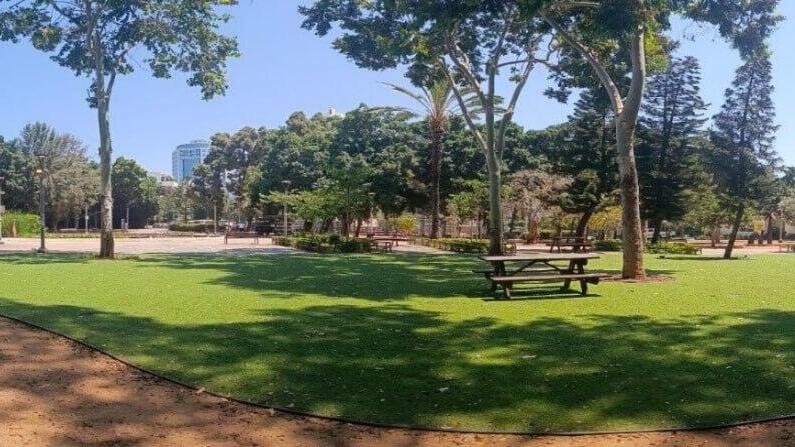
Natural green grass
(Photo: Courtesy of Adam Teva v'Din)
The Health Ministry explained that “all types of surfaces — whether made from natural materials or synthetic ones — have advantages and disadvantages.” The ministry’s chief environmental health toxicologist wrote that “based on the available information, there is no danger to public health from exposure to synthetic grass surfaces.”
The Givatayim municipality said in a statement: “The municipality invests extensive resources in cultivating and expanding natural vegetation throughout the city. Givatayim currently ranks third nationwide in the tree-canopy index. In addition, an environmental policy document is currently being formulated in cooperation with the Environmental Quality Department and the Engineering Administration.
“The public space must also accommodate daily activity and use, which require safe and durable surfaces. In areas where the Israeli standard requires impact-absorbing playground surfaces, synthetic grass is selected as part of the cushioning system. Of Givatayim’s 15 dog parks, synthetic grass has been installed in only two.”