

In partnership with Leket Israel
Now that Shavuot celebrations and harvest festival events are over, it is time to return to reality on the ground — and it is a troubling one.
Agriculture Ministry data in recent years points to a clear aging trend in the industry: the average Israeli farmer today is around 60 years old. The question of who will grow Israel’s food in the future and safeguard the country’s food security remains open and worrying.
Leket Israel - Adir Hajaj
(Video: Intervisia)


Against that backdrop, young people choosing to take over farms is no longer just a career decision, but increasingly viewed as a profoundly Zionist act.
As a fighter and commander in the Givati Reconnaissance Unit, Adir Hajaj never imagined his next battle would be for home — in the most agricultural sense of the word.
“My grandparents built the farm from scratch and raised me with very strong Zionist values,” said Hajaj, 27, from Moshav Gilat.
Those values became a way of life for him. “During my military service, I understood from my father how much he needed me to come and join the business,” he said.
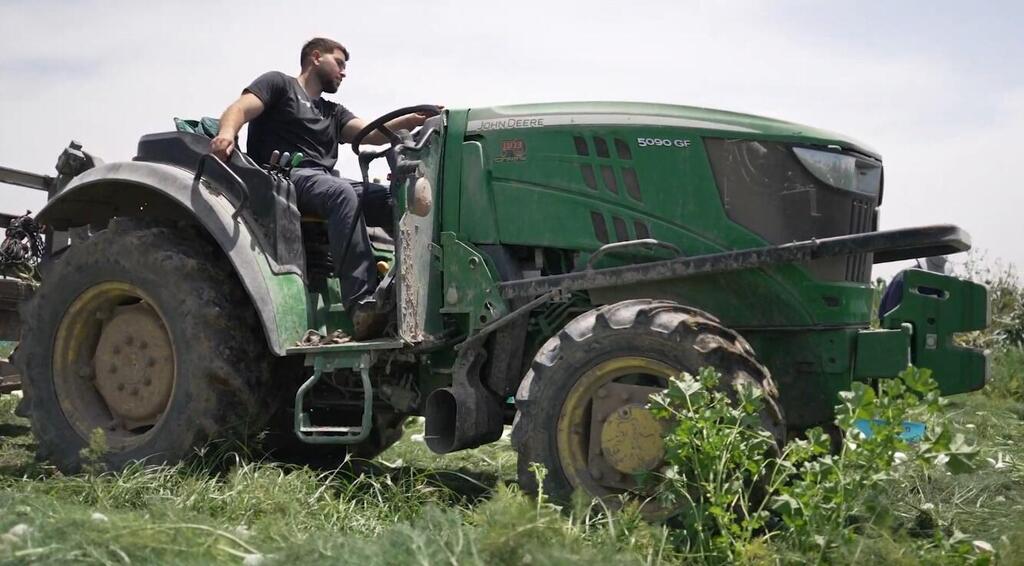
What began as a sense of obligation to support his father quickly turned into a genuine love for farm work. “Going into such an amazing field with my father,” he said emotionally, “there’s nothing more fulfilling or satisfying than that. I told him: I’m with you all the way.”
Today, Hajaj manages the economic, operational and logistical systems of the family farm, which spans about 400 dunams (100 acres) of greenhouses, orchards and field crops.
In an industry marked by constant uncertainty, weather damage and unstable markets, Hajaj says he finds deep meaning in his work every morning and speaks about farming with immense pride — especially at a time when the entire sector is desperate for younger generations to continue the legacy.
‘The farm was on the verge of collapse’
Over the course of the war, Hajaj’s faith in his mission faced its toughest test yet.
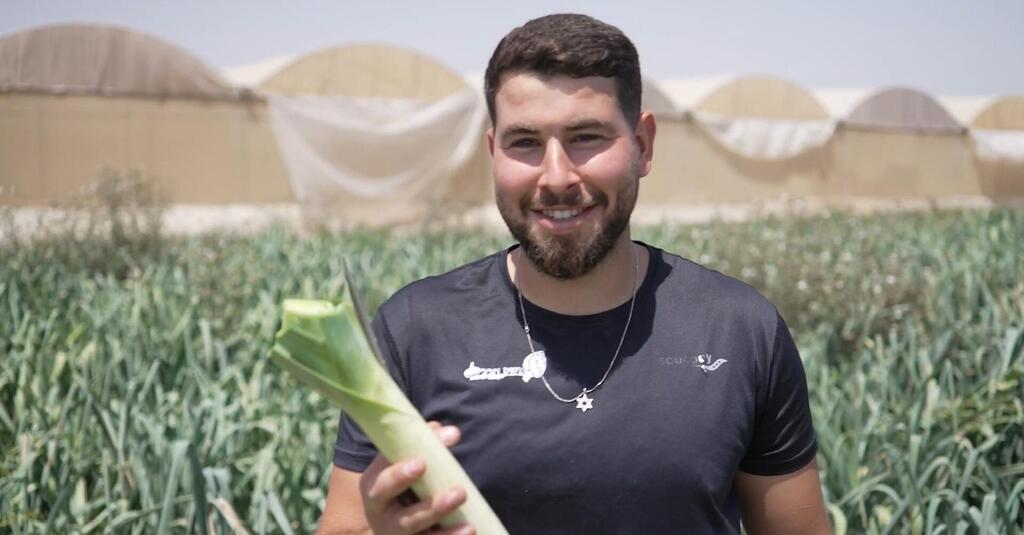
Hajaj
(Photo: Intervisia)
While serving a lengthy reserve duty deployment on the front lines, the family farm was left behind, struggling with a severe and sudden labor shortage.
“The fields were simply abandoned — nothing was planted, nothing was harvested. The thing that hurts a farmer most is seeing all of his crops go to waste,” Hajaj recalled painfully. “The farm was on the verge of collapse.”
While Hajaj was fighting, his sisters established a civilian emergency headquarters to recruit volunteers, and the nonprofit organization Leket Israel stepped in as a major lifeline.
“In times of emergency, we saw them come even more strongly, pushing and helping from every direction,” he said. “Whether it was thousands of volunteers arriving in the fields or produce they purchased from us, they helped us stop the collapse and grow out of the crisis.”
Hajaj’s story, along with those of hundreds of other farmers, is part of the human mosaic behind the “May for Farmers” project — a special initiative by Leket Israel aimed at thanking farmers who repeatedly choose to donate surplus produce instead of allowing it to go to waste.
This is the fourth year of the project, which seeks to strengthen ties with farmers and increase appreciation for their role in rescuing food and helping Israelis in need.
Thanks to that partnership, about 700 Israeli farmers managed over the past year to save 32,000 tons of fresh agricultural produce that was headed for destruction and redirect it to roughly 470,000 people in need every week.
For Hajaj, the partnership represents the essence of Israeli society. “Leket Israel is doing holy work,” he said, looking toward the future of the farm with the confidence and optimism of a soldier who knows his roots run too deep to give up.
“Saving food and knowing our produce reaches people who truly need it — that’s our true resilience.”
Have surplus crops? Don’t let them go to waste. Contact Leket Israel and join the effort. Agricultural hotline: *8054