

Offered to gods for prosperity, used as payment for laborers in major construction projects and distributed by elites during feasts to foster social cohesion and reinforce hierarchies, alcohol was deeply embedded in society.
Gallery

Illustration of ancient Mesopotamians drinking alcoholic beverage
(Illustration: MPI f. Evolutionary Anthropology)
The Sumerian Epic of Gilgamesh, centered on the fifth king of Uruk, includes a tale where the wild Enkidu drinks beer to become civilized, highlighting its cultural significance. Scholars, drawing on Edward Slingerland’s book exploring alcohol’s link to civilization’s development, argue it was a key driver in forming complex societies.
Slingerland, a philosophy professor at the University of British Columbia, integrates archaeology, history, neuroscience, psychopharmacology, social psychology, literature and genetics to support this claim. He suggests the desire for intoxication, with its social and personal benefits, outweighed health and social drawbacks, fostering large, stratified societies.
A new study from the Max Planck Institute for Evolutionary Anthropology in Leipzig tested this “drunkenness hypothesis” through cross-cultural analysis, published in Humanities and Social Sciences Communications.
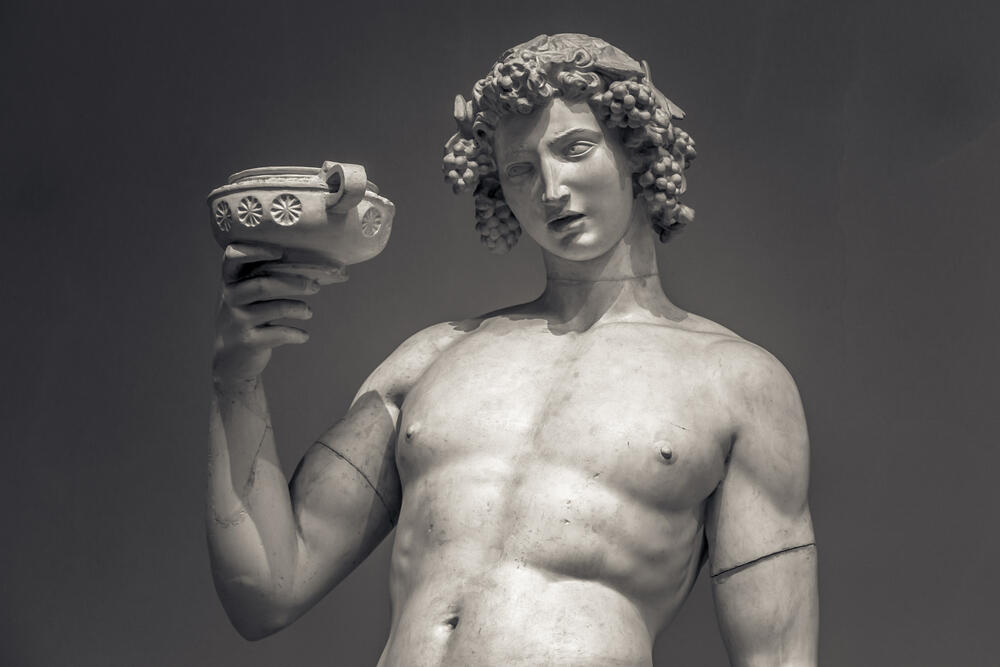
Statue of Greek god Dionysus holding cup with drink
(Photo: Gilmanshin/Shutterstock)
Get the Ynetnews app on your smartphone: Google Play: https://bit.ly/4eJ37pE | Apple App Store: https://bit.ly/3ZL7iNv
Led by postdoctoral researcher Václav Hrnčíř, the team examined the hypothesis quantitatively for the first time. “The earliest written sources come only from already centralised, complex societies, while the archaeological evidence is often very fragmentary and mostly inconclusive,” Hrnčíř explained.
Using advanced comparative ethnology and causal inference, the researchers analyzed data on traditional fermented drinks from 186 ethnographically documented societies with varying political complexity.
The study found a positive link between the presence of fermented drinks and higher political complexity. “We used statistical models to account for alternative explanations, like agricultural intensity or environmental productivity, isolating alcohol’s role,” said Angela Maria Chira, a team member from the same institute.

Gilgamesh
(Photo: Dima Moroz/Shutterstock)
While not exploring specific mechanisms, the data suggests alcohol may have aided political complexity, possibly by enabling elites to mobilize labor, forge alliances and consolidate power.
The researchers focused on low-alcohol beverages in non-industrial settings, noting that in today’s world, with abundant high-alcohol distilled drinks often tied to isolation, the risks of alcohol consumption can sometimes outweigh its social benefits.