

The microscopic organism that has disrupted most of Israel’s Mediterranean desalination plants has been identified as a cyanobacterium from the genus Synechococcus, researchers say, although scientists have yet to determine the specific species or what caused its sudden proliferation.
The discovery comes as Israel’s water authorities continue trying to stabilize desalination operations and scientists debate whether sewage flowing into the Mediterranean from Gaza helped fuel the bloom.
Sorek B desalination plant
(Video: Meir Turgeman)


A similar disruption has also been reported farther south in Egypt’s Sinai Peninsula, where a desalination facility near El-Arish has been operating at reduced capacity because of unusually turbid seawater. That development has complicated the theory that pollution from Gaza was the principal cause of the phenomenon affecting Israel.
Israel’s Water Authority sought Friday to reassure the public that supplies remained secure. “The water sector is fully stable: supply to residents and agriculture is continuing as usual, and reservoirs will be replenished over the weekend,” the authority said. Experts, however, say the situation facing the desalination system remains more complicated.
The desalination plants in Ashdod and Ashkelon have been shut for several days. The Sorek B and Palmachim plants are operating at reduced capacity, while Sorek A stopped operating after several hours.
The Hadera desalination plant is the only major Mediterranean facility whose operations have so far not been affected by the microorganisms, although officials are concerned that the bloom could continue moving north. Israel’s desalination facility in Eilat, on the Red Sea, is also operating normally.
Dr. Ruti Kaplan-Levy, head of the National Algae Center at the Kinneret Limnological Laboratory, said the organism is extraordinarily small. “It is a very, very small cyanobacterium, with cells about two microns in size,” she said. “We are now conducting genetic identification of the organism, but it belongs to a genus that is very common in the Mediterranean.”
Once researchers manage to isolate it, she said, they will be able to study its genome and physiology in greater detail and better understand the conditions behind the outbreak. “Ultimately, it is a photosynthetic bacterium,” Kaplan-Levy said.
She said warming seawater can promote the growth of such organisms. “I see this case as an opportunity to strengthen taxonomic work in Israel,” she said. “In the Sea of Galilee, where we monitor freshwater, we follow phytoplankton populations. There are all kinds of phenomena there, and we need to know what could happen, including whether there is a chance of a toxic algal bloom. It is an entire world that the public is rarely exposed to.”
Algal taxonomy, which involves identifying species under a microscope, has become an increasingly limited field in Israel, while the Kinneret laboratory maintains an extensive collection of knowledge and strains. “Algae and cyanobacteria provide around 50% of the oxygen in the atmosphere, so they are extremely important to the ecosystem,” Kaplan-Levy said.
Gallery
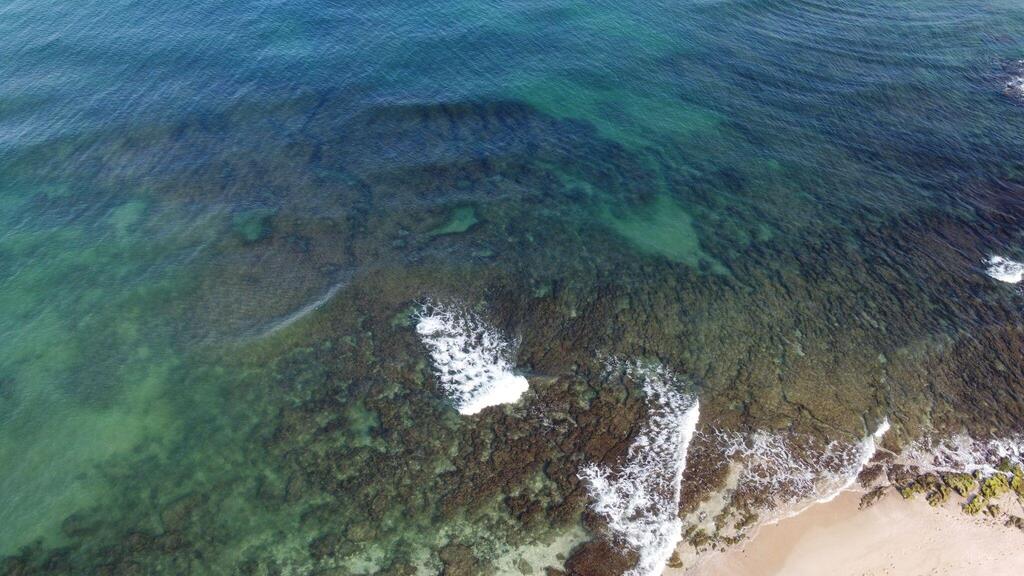
Algae near Palmachim this week
(Photo: Israel Oceanographic and Limnological Research (IOLR))
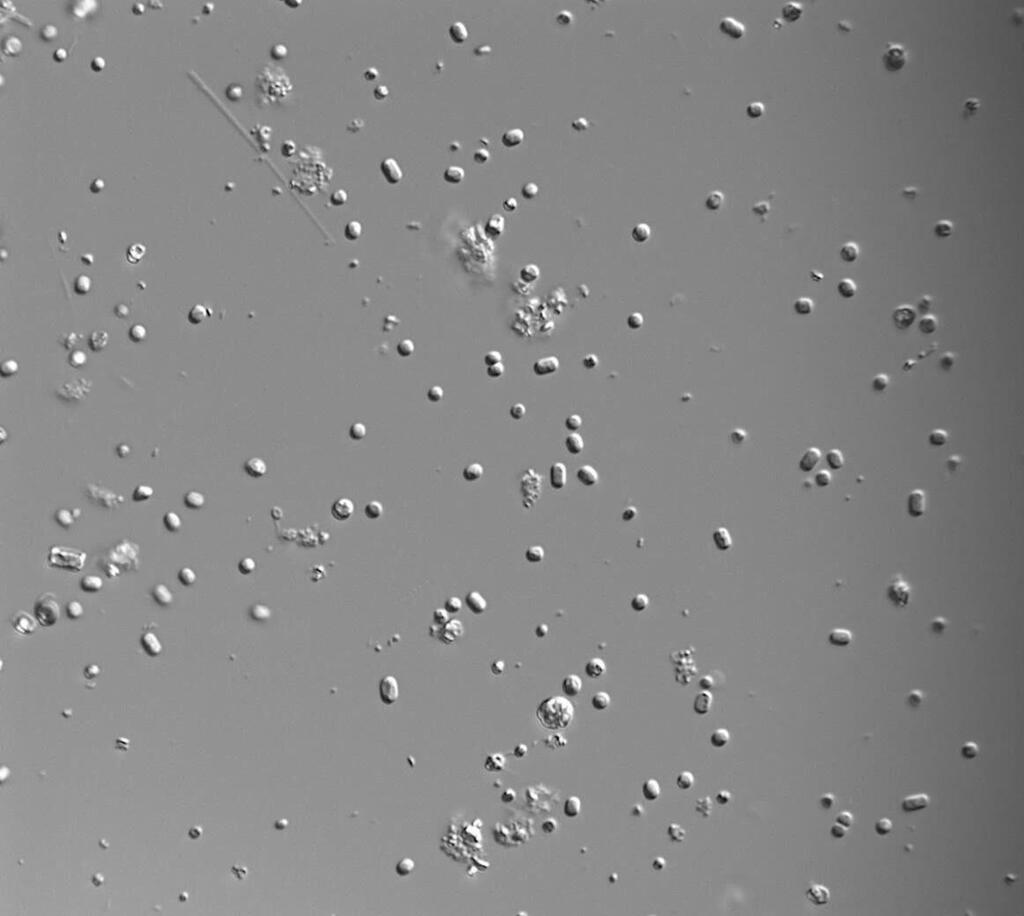
Microscope images of the algae
(Photo: Dr. Ella Alster, Kinneret Limnological Laboratory, Israel Oceanographic and Limnological Research)
Researchers at Israel Oceanographic and Limnological Research, Ben-Gurion University of the Negev and the Technion-Israel Institute of Technology are working with the companies operating the desalination plants in an effort to understand the bloom and find ways to deal with the resulting seawater turbidity.
Did sewage from Gaza fuel the bloom?
One theory raised this week is that sewage discharged along the Gaza coast supplied nutrients that helped the microorganisms multiply, with unusually warm Mediterranean waters creating favorable conditions for rapid growth.
Dr. Avner Gross, head of Ben-Gurion University’s Climate Change Laboratory, said such blooms require warm water, strong sunlight and sources of phosphorus and nitrogen. Based on satellite images, Gross said similar algae-rich turbid water can regularly be seen near the Nile Delta, where fertilizer runoff enters the Mediterranean. “In our case, I currently have no other explanation except a pollution source in the southern Gaza Strip,” he said.
Writing on X, Gross said global warming had turned the Mediterranean into “a bathtub in August.”
“Add phosphorus and nitrogen pollution and you get a deadly algal bloom,” he wrote. “Coincidentally, in recent days there were weak, steady winds that mixed the fertilizer from the sewage along Israel’s coast. A perfect storm.”
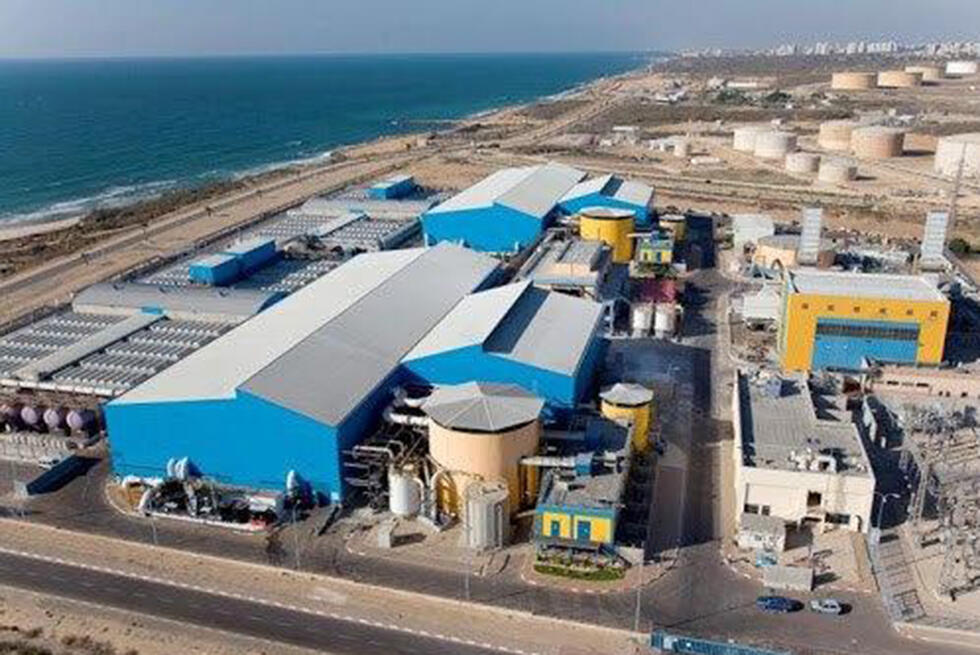
The Ashkelon desalination plant
(Photo: From the Water Authority website)
Other scientists are more skeptical. Prof. Tamar Guy-Haim, a marine ecologist and laboratory head at Israel’s National Institute of Oceanography, said the likelihood that sewage from Gaza was the main driver of the bloom that shut the desalination plants was relatively low.
One reason is what has happened farther south. Desalination facilities around El-Arish in northern Sinai, upstream of Gaza relative to the reported coastal conditions, have also been disrupted by seawater turbidity. The facility there has been affected since August 30.
Sinai desalination plant also affected
North and South Sinai’s drinking water and sanitation company said Thursday that the desalination plant at Kilometer 17 was still operating at reduced capacity. “As part of continuous monitoring, the company reports that the Kilometer 17 desalination plant is still operating at reduced capacity until seawater intake and water quality stabilize,” it said.
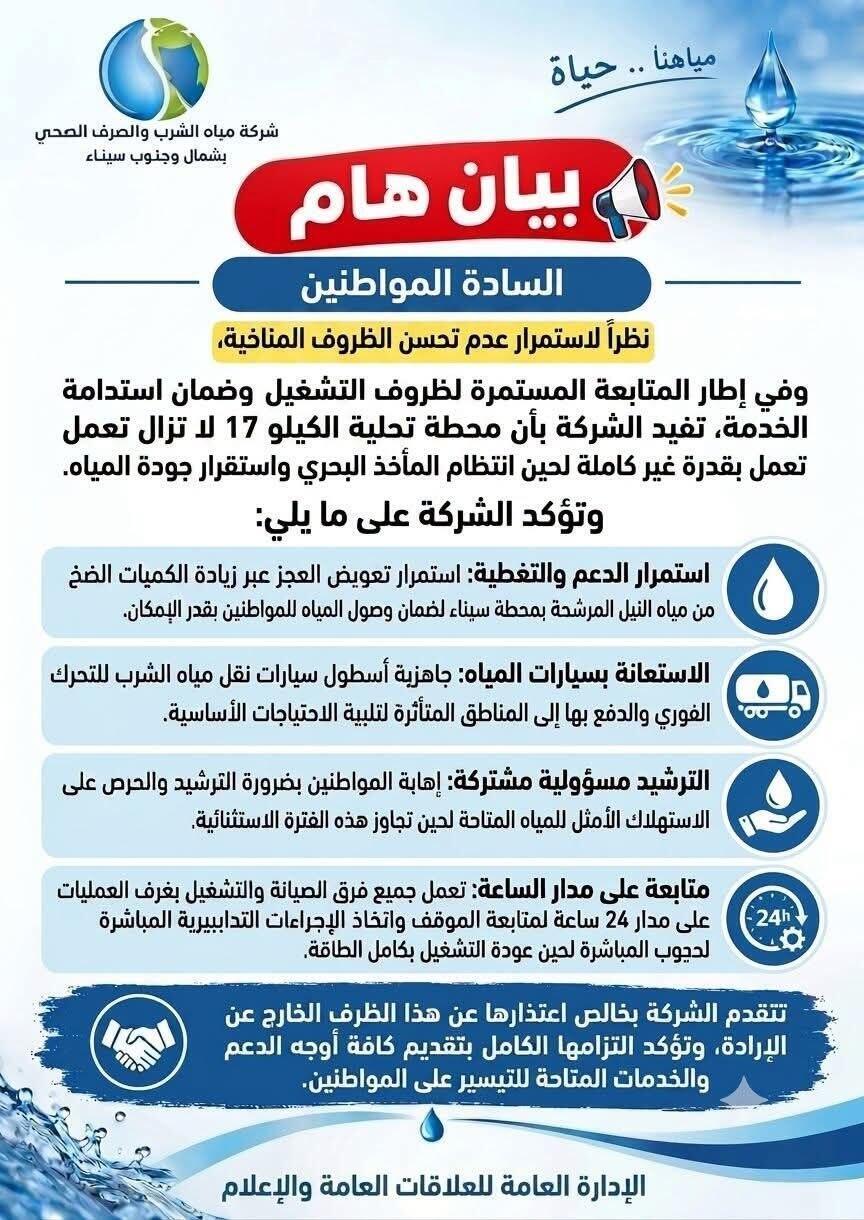
Egyptian water authority statement
Egyptian authorities said they were using alternative measures to compensate for the reduced water supply.
“Our drinking water tankers are ready to be deployed to affected areas to meet basic needs,” the company said in a statement. “We urge citizens to conserve and make optimal use of the available water.”
It added that maintenance and operations crews were working around the clock to monitor the situation and respond to problems until normal operations could resume.
Residents in Sinai have meanwhile called for water tankers to be sent to affected communities, while some complained that attempts to contact authorities for assistance had gone unanswered.
Chemical treatment raises environmental concerns
Israel’s Water Authority took another step Wednesday in an effort to reduce the turbidity near Ashkelon, spraying the area with copper sulfate pentahydrate. The substance is used to kill algae broadly and is not targeted specifically at the Synechococcus organism currently under investigation.
One expert warned that such treatment could have a much wider ecological impact. “Spraying like this can broadly damage the entire population of algae and cyanobacteria in the water, not only the species currently thriving, and could kill the entire community of photosynthetic microorganisms,” the expert said.
A day after Israel’s committee responsible for approving discharges and dumping at sea authorized the treatment, the Agriculture Ministry imposed a fishing ban in the affected area.
The Agriculture Ministry is not a member of the committee, and it remains unclear why the fishing restriction was issued only after the chemical had already been dispersed.