

Two dead loggerhead sea turtles (Caretta caretta) washed ashore at the Achziv Marine Reserve near Rosh Hanikra in northern Israel, according to a report submitted this week through the SeaWatch app of the Society for the Protection of Nature in Israel. A hook and fishing line were found lodged in the mouth of one of the turtles.
The loggerhead sea turtle is one of two species that nest along Israel’s Mediterranean coastline. Although the turtles are classified as a protected species in Israel, conservationists say fishing remains one of the main threats to their survival due to accidental capture in nets and on hooks.
Gallery
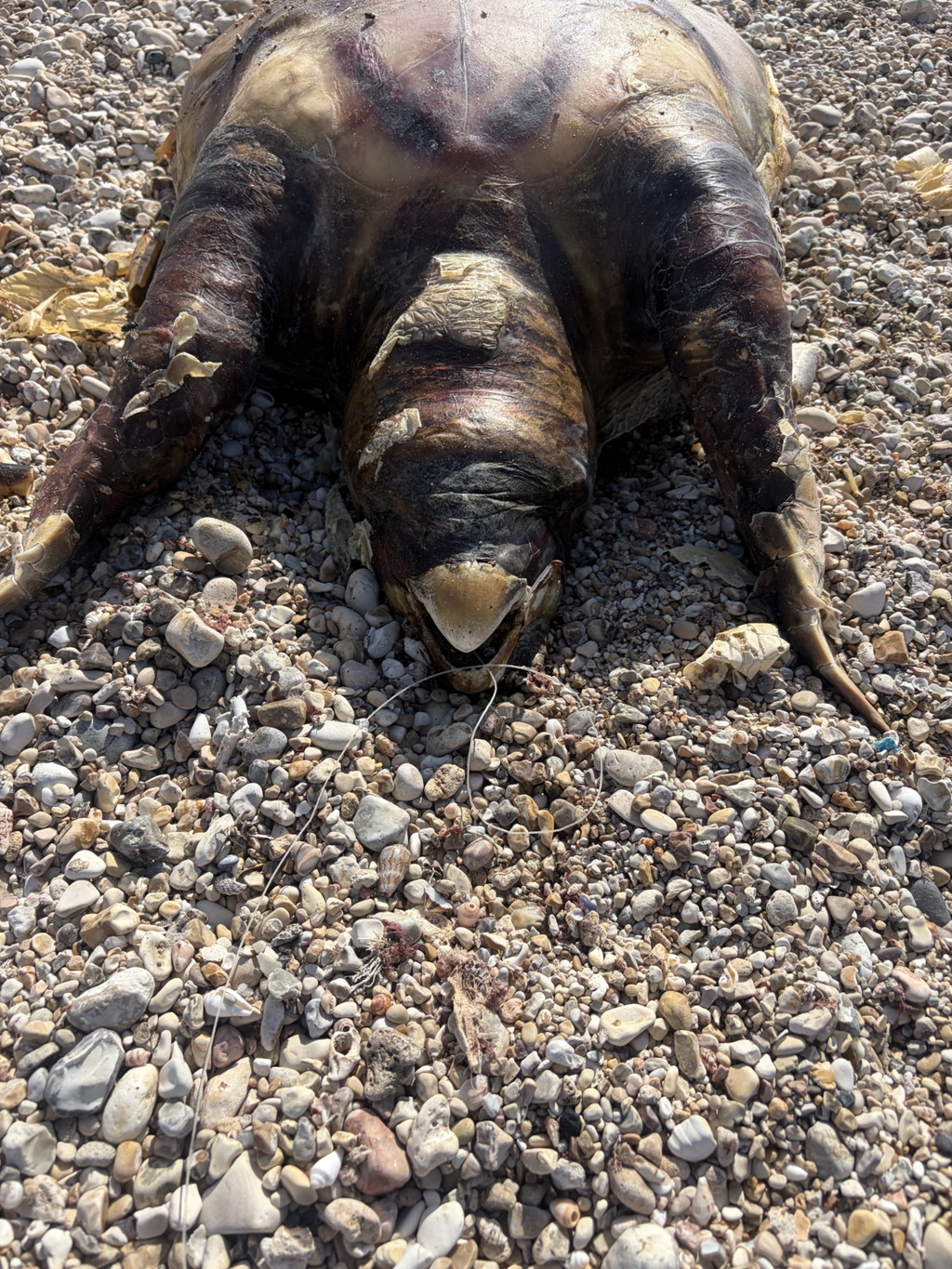
Loggerhead sea turtle carcass found on Achziv beach with a hook and fishing line in its mouth
(Photo: From SeaWatch app)
Bar Sternbach, SeaWatch coordinator and marine projects manager at the Blue Half organization (Mediterranean Conservation Reform), said loggerhead turtles begin reproducing only at ages 15 to 20. He explains that the species faces numerous challenges, including damage to nesting beaches, plastic pollution, vessel strikes and entanglement in fishing gear.
“About a decade ago, it was estimated that nearly 3,000 sea turtles were caught each year in commercial fishing gear in Israel,” Sternbach said. “That estimate did not include the significant growth in recreational fishing, which suggests that the actual number of turtles harmed in the Mediterranean is likely higher.”
The Society for the Protection of Nature in Israel notes that despite the expansion of marine nature reserves and restrictions imposed on some fishing methods in 2016, sea turtles remain exposed to many dangers. In parts of the Achziv–Rosh Hanikra Marine Reserve, where the dead turtles were found, shore fishing with rods is still permitted.
In addition, fishing regulations in Israel allow the use of non-selective gear such as hooks and nets in areas where sea turtles feed and reproduce, conservationists say. Earlier this year, the Fisheries Department in the Agriculture Ministry approved the use of nets and hooks during the peak sea turtle breeding season in May at depths of 20 meters and deeper.
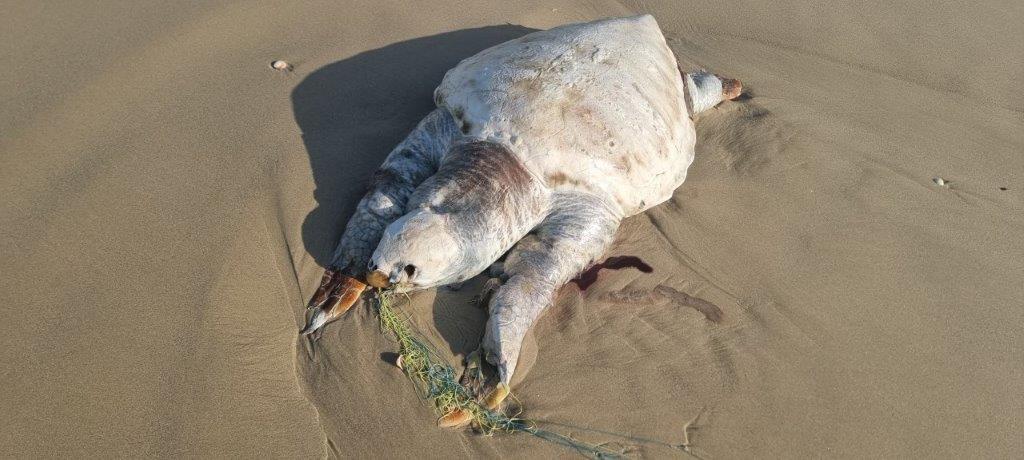
Sea turtle in advanced state of decomposition after washing ashore dead on Israel’s coast following entanglement in fishing gear
(Photo: SeaWatch app)
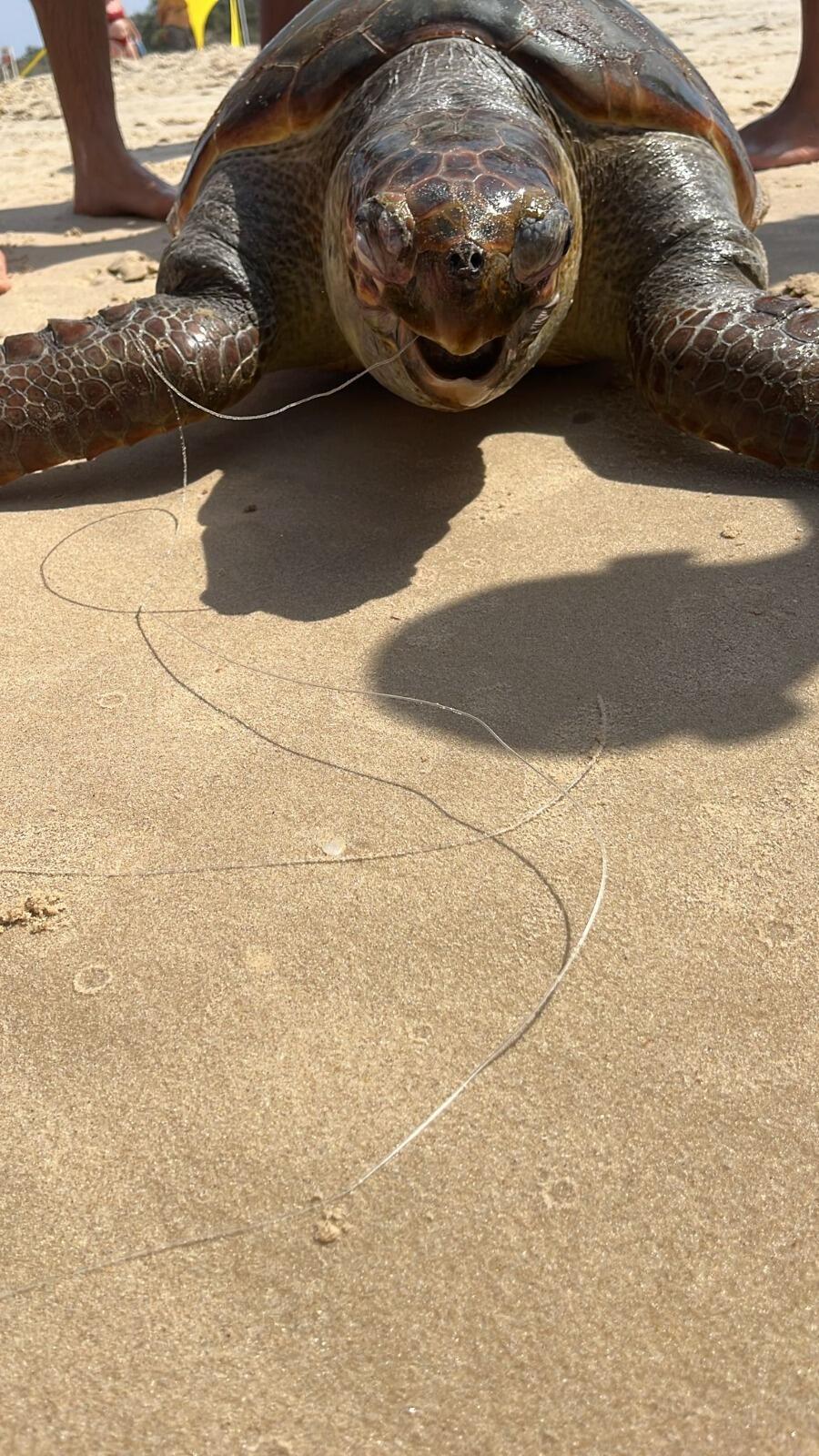
Sea turtle injured by fishing line and later died
(Photo: SeaWatch app report, Society for the Protection of Nature in Israel)
The SeaWatch app allows the public to report hazards and sightings from the sea in real time, helping protect the marine environment in both the Mediterranean and the Gulf of Eilat. Since its launch, the app has been downloaded by more than 26,000 users. Through the platform, more than 6,400 reports have been submitted, including reports of illegal fishing, injured wildlife, pollution and marine litter.
Users can also report wildlife sightings, including Scyllarides latus (the Mediterranean slipper lobster), invasive species, sea turtles, marine mammals and more. Each report is forwarded directly to the relevant enforcement and response authorities, while the identity of the person submitting the report remains confidential, thus allowing anyone who spends time at sea to play an active role in protecting the marine environment.