

For years, streams running through Israel’s agricultural regions have served not only as natural watercourses but also as conduits for pollutants washing off nearby fields. The combination of intensive farming, bare soil exposed to rainfall, and outdated drainage systems has caused widespread damage to water quality, local ecosystems, and the ability of rivers to function properly.
A three-year study conducted by the Soil Erosion Research Station at the Ministry of Agriculture and Rural Development, in collaboration with and funded by Jewish National Fund (JNF), offers a new approach to tackling the problem. Instead of relying on concrete walls, dikes, or purification facilities, the researchers focused on a simpler, natural solution: trees, shrubs, and native vegetation.
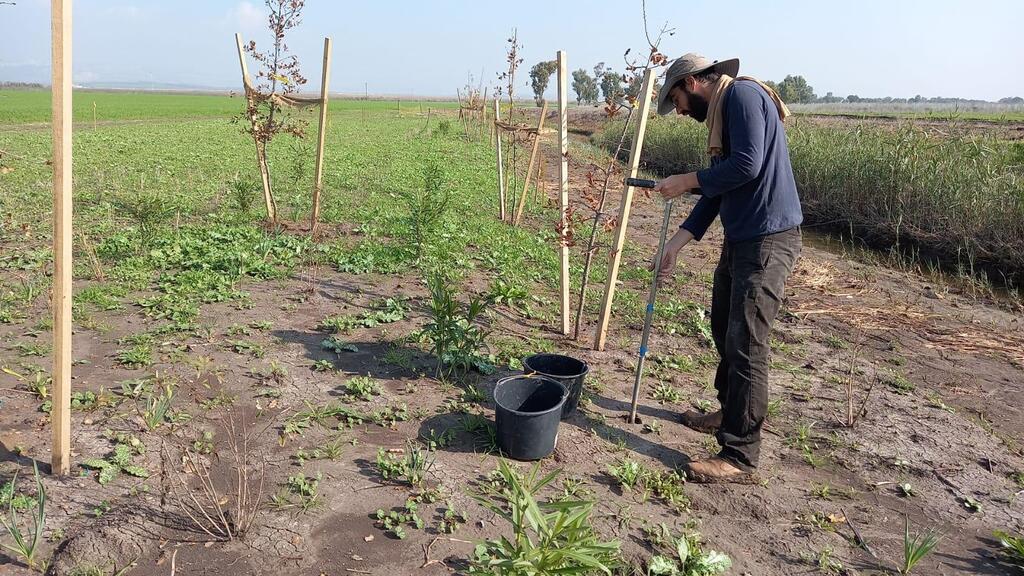
The study was carried out in the Kishon River basin, one of Israel’s largest and most significant drainage systems. The area is known for its intensive agricultural activity, and over the years the Kishon and its tributaries have suffered from severe pollution, poor water quality, soil erosion, and blockages in drainage infrastructure. Field tests revealed traces of pesticides, fertilizers, and pharmaceuticals at nearly every sampling point—clear evidence of agricultural runoff entering the rivers, particularly during rainfall.
One of the main causes, researchers found, is land-use practice. In many places, cultivation extends right up to the riverbank, leaving no buffer zones to intercept or filter pollutants before they reach the water. The result is the unchecked flow of contaminants, accelerated soil erosion, and heavy pressure on drainage systems. In recent years, tens of millions of shekels have been spent dredging sediment from drainage basins in the Kishon area to improve water flow and prevent flooding.
A nature-based solution: vegetative buffer strips
The solution the researchers tested is well known internationally but has rarely been studied or applied scientifically in Israel: vegetative buffer strips. These are narrow bands of trees, shrubs, and local plants planted between agricultural fields and riverbanks. Around the world, such buffers are used to prevent soil erosion, filter pollutants, retain soil moisture, and restore habitats.
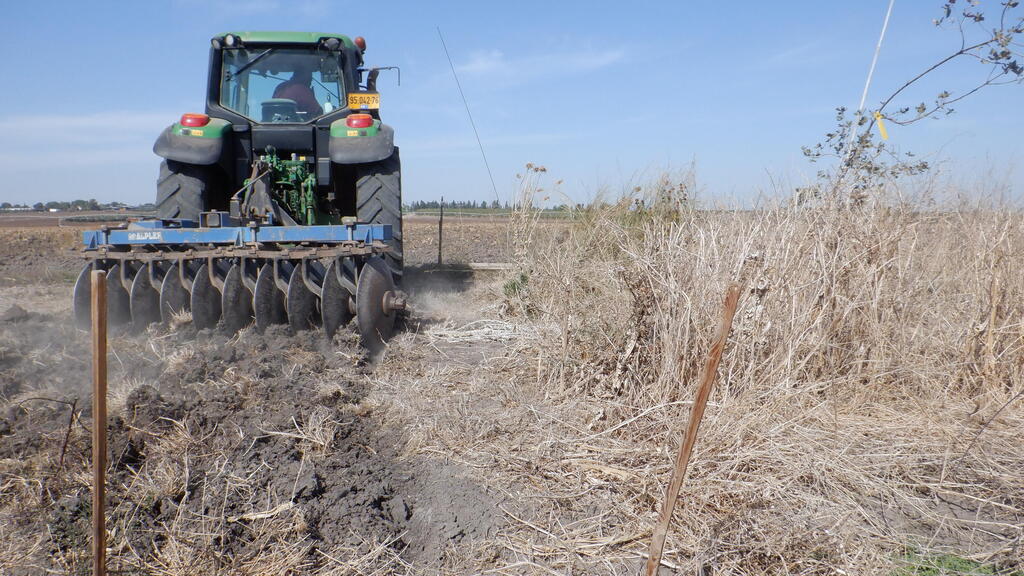
Restored buffer strip versus cultivated strip
(Photo: Liron Israeli)
“The goal of the study was to explore the possibility of rehabilitating land near the river that had suffered severe degradation,” explained Dr. Ora Rein, the study’s lead researcher at the Soil Erosion Research Station. “We examined this as a nature-based solution to reduce flooding risks, trap eroded soil, improve water quality, and increase biodiversity. Specifically, we looked at the role of trees in restoring ecosystem services through buffer zones in intensively farmed areas where natural vegetation has been almost completely lost.”
The team established a pilot site along the Kina River, a tributary of the Kishon, where buffer strips were planted in a carefully designed layout as part of a long-term basin restoration project.
Over three years, the researchers monitored how vegetation affected hydrological and ecological processes. They tracked pollutant levels in the water, soil erosion rates, and soil moisture fluctuations. They also conducted bioacoustic monitoring—recording the sounds of wildlife—to identify changes in biodiversity. In parallel, they built a spatial computer model to analyze surface runoff pathways across the basin and pinpoint where buffer strips would have the greatest impact.
Nature’s filter
The results were striking. The findings showed a clear positive effect of vegetation on the surrounding environment. The more diverse the plant species within the buffer strip, the lower the levels of fertilizers and pollutants detected in the water. Areas with richer plant diversity had significantly lower concentrations of ammonium nitrogen—a key indicator of agricultural contamination.
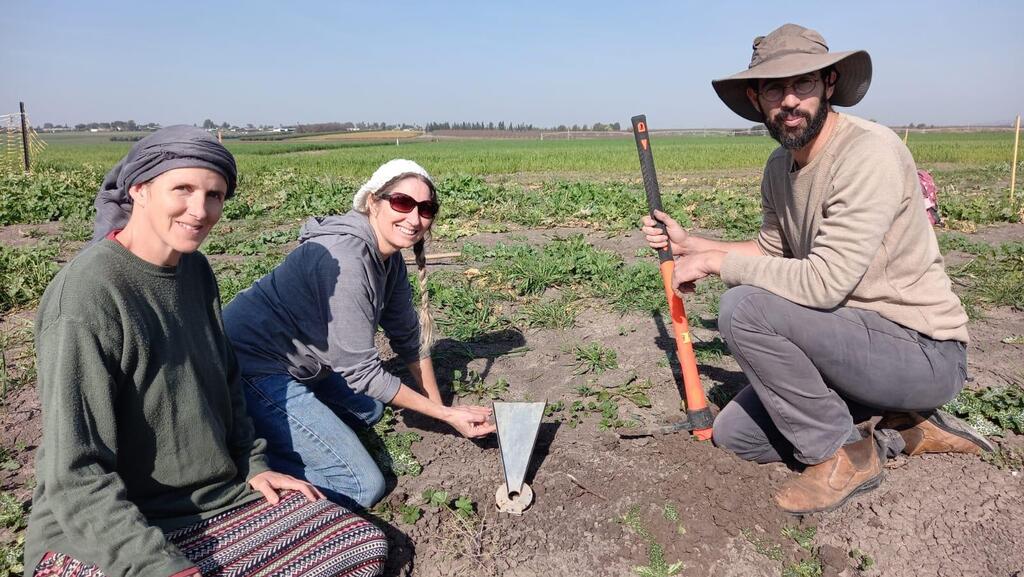
Researchers in the field
(Photo: Liron Israeli)
In effect, the vegetative buffer acts as a natural filter, preventing pollutants from entering the river and helping preserve water quality.
In addition, the vegetation reduced soil loss and erosion over time. In test areas where trees and shrubs were planted, soil loss dropped sharply, while open agricultural plots showed nearly double the erosion. The effect was particularly noticeable along flow paths, where erosion risks are highest.
The buffers also stabilized soil moisture levels, helping retain fertility and supporting biological activity even during dry seasons.
Biodiversity also benefited. Using continuous sound monitoring, the researchers recorded tens of thousands of individual animals from various species over the course of a year. Areas with mature trees showed significantly more activity, particularly from bird species such as francolins and amphibians like tree frogs. This demonstrates how small changes in land management can greatly enhance a habitat’s capacity to support wildlife and biodiversity.
Mapping for maximum impact
Another key aspect of the research was developing a spatial decision-making tool. Using this system, researchers were able to identify strategic points where planting buffer strips would provide the greatest benefit in filtering pollutants and conserving soil.
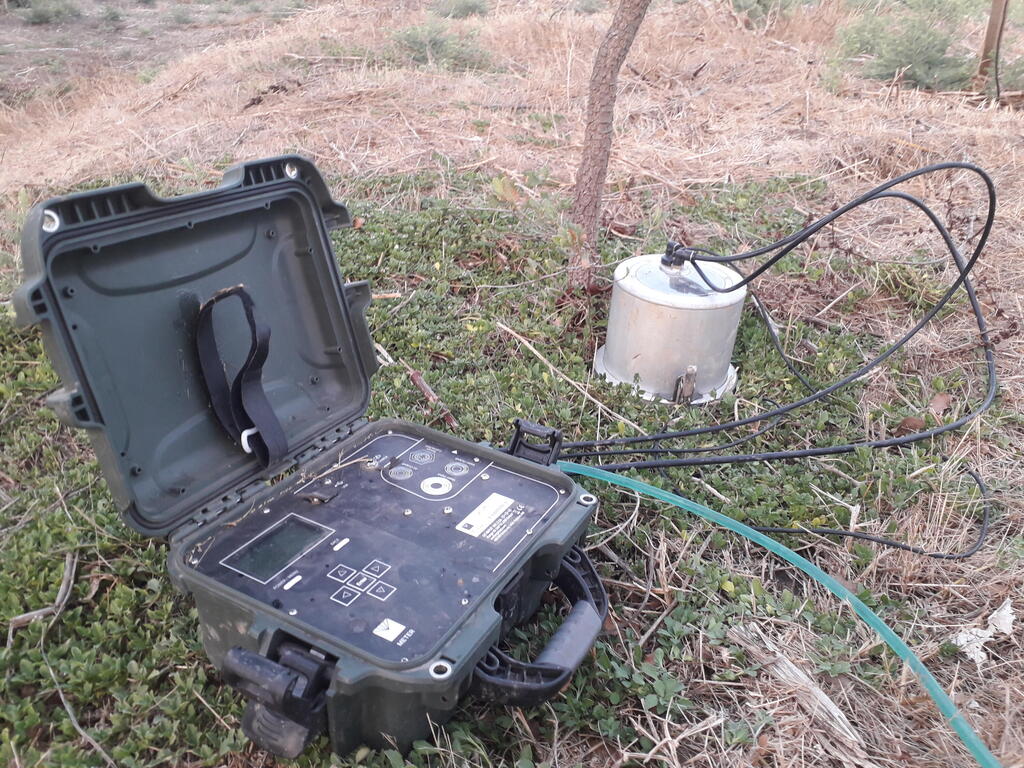
Testing infiltration capacity near trees in the buffer zone
(Photo: Liron Israeli)
“We analyzed surface runoff pathways and showed that when trees are planted along those routes, their effectiveness in reducing flow and filtering pollutants is much higher,” said Liron Israeli, a doctoral student at Tel Aviv University’s School of Zoology and a co-author of the study. “Of course, you can’t plant trees along every stream or across an entire basin, but by focusing on the most vulnerable areas, we can maximize the ecological and economic benefits.”
The analysis highlighted that in areas with high hydrological sensitivity or impermeable soils, buffer strips offer exceptional added value.
Conducted in partnership with local farmers and the Kishon Drainage Authority, the study lays a scientific and practical foundation for restoring buffer zones across Israel. It demonstrates that even in regions dominated by intensive agriculture, nature-based solutions can effectively reduce water pollution, conserve soil, support biodiversity, and establish sustainable watershed management models.
“The study helps us develop a multidimensional understanding of the considerations required in designing buffer zones,” said Dr. Orit Skutelsky, an ecologist in KKL-JNF’s Chief Scientist Unit. “It highlights the unique contribution of trees and shrubs to the function of restored buffers and shows how their spatial and ecological characteristics directly influence river health. This supports a system-wide, landscape-based approach to ecological restoration of Israel’s waterways.”