

Temperatures in Israel are expected to climb slightly today (Saturday), reaching levels above the seasonal average, while health and environmental authorities warned Friday of elevated concentrations of fine particulate pollution across the country.
The poor air quality is being driven by haze linked to southwest winds carrying dust from North Africa and is expected to persist through Monday.
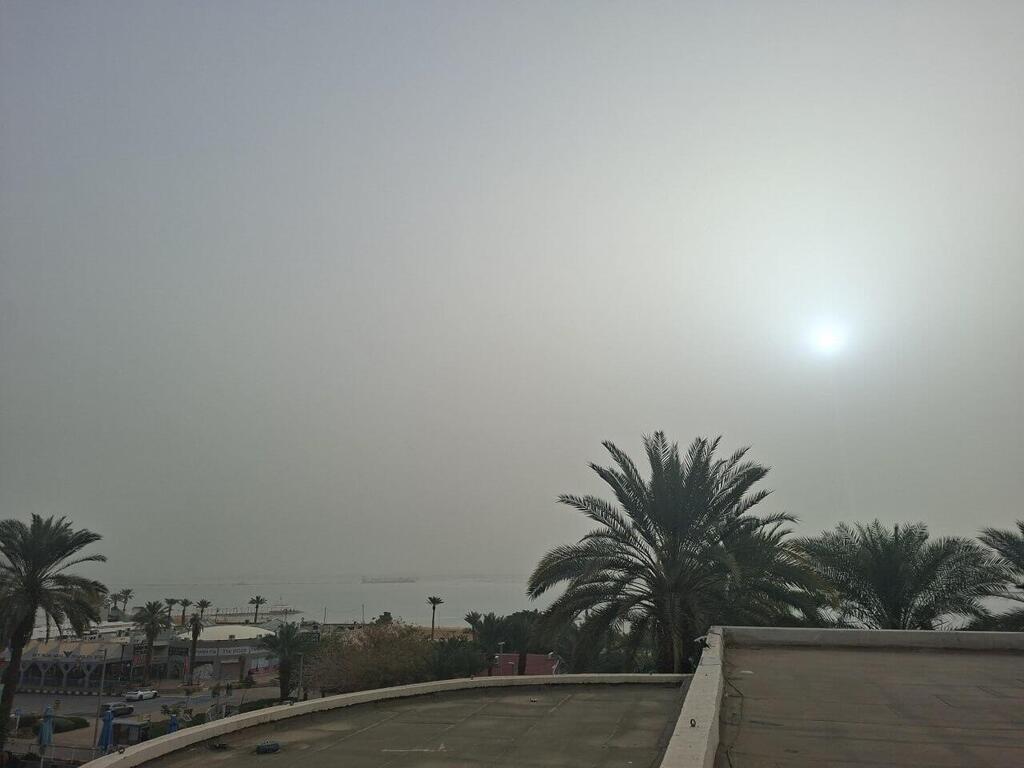
Meteorologists say temperatures will rise further on Sunday and remain unusually warm for the season. On Monday, a significant drop is forecast, especially in central and southern parts of the country, though readings are still expected to stay somewhat above normal.
From Monday night, local showers and occasional thunderstorms are forecast in the north and along the coastal plain. A further temperature decrease is expected Tuesday, with lingering local rain in the north and center that should taper off during the day.
Forecast temperatures:
• Jerusalem: 48–61°F (9–16°C)
• Tel Aviv: 55–70°F (13–21°C)
• Haifa: 59–66°F (15–19°C)
• Safed: 46–55°F (8–13°C)
• Katzrin: 52–61°F (11–16°C)
• Tiberias: 54–68°F (12–20°C)
• Nazareth: 54–64°F (12–18°C)
• Afula: 52–70°F (11–21°C)
• Beit She’an: 54–73°F (12–23°C)
• Lod: 55–70°F (13–21°C)
• Ashdod: 54–72°F (12–22°C)
• Ein Gedi: 63–77°F (17–25°C)
• Be'er Sheva: 46–70°F (8–21°C)
• Mitzpe Ramon: 50–66°F (10–19°C)
• Eilat: 61–75°F (16–24°C)
Because of the heavy haze, the Health Ministry and the Ministry of Environmental Protection are advising sensitive groups — including people with heart or lung conditions, the elderly, children and pregnant women — to avoid strenuous outdoor activity. Others are urged to limit intense exercise outdoors. “The public will be updated as required based on forecast data and measurements from monitoring stations across the country,” the ministries said.
The haze is accompanying an unusually warm weather pattern for the season. The Israel Meteorological Service’s director, Dr. Amir Givati, said Friday that on Sunday temperatures are expected to approach 30°C (86°F) in the lowlands and northern Negev. Such high readings so early in February are rare: data from the weather service show comparable warmth in central Israel has not been recorded in about 40 years, since February 1987.