

A bird weighing 11 kilograms can travel a kilometer using just one-fifth of the energy required by another bird of almost identical weight. The difference lies not in its size or strength, but in how it uses the air around it.
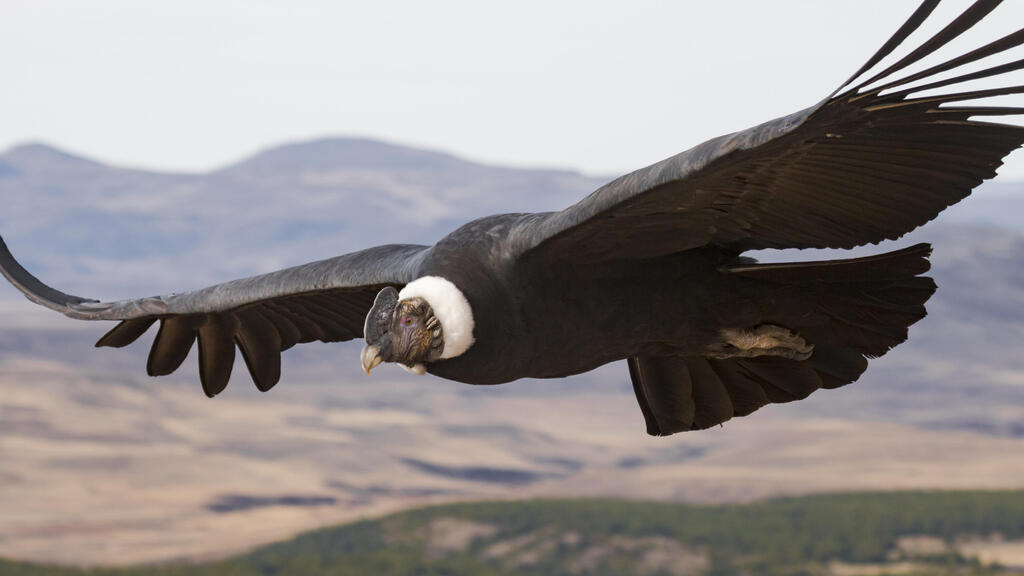
An Andean condor, for example, can cover vast distances while barely flapping its wings, relying instead on rising air currents to remain airborne. A trumpeter swan of similar weight must flap almost continuously. According to a major international study published in the journal Science, the condor uses approximately 79% less energy per kilometer of flight than the swan.
Andean condor soaring through the air
(Video: Bruno Osório)


The findings challenge a long-standing assumption about the energy required for animal movement. Traditional laboratory measurements have suggested that swimming is more energy-efficient than flying. But when birds take advantage of natural atmospheric currents, soaring can require even less energy than swimming the same distance, when comparing animals of similar body weight.
"The air is not just the space in which birds fly, but also a source of energy for them," said Dr. Yuval Werber, a researcher in evolutionary and environmental biology at the University of Haifa who participated in the study. "Atmospheric conditions determine how much birds can rely on soaring and how much effort they need to invest in flapping their wings along the way."
How scientists measured the true cost of flying
Conventional estimates of the energy animals expend during movement are largely based on laboratory experiments conducted in swimming tanks, wind tunnels and on treadmills.
In nature, however, flying animals encounter winds and rising air currents that can help them travel long distances while reducing the need to flap their wings.
The international research team, which included Professor Nir Sapir of the University of Haifa's Department of Evolutionary and Environmental Biology and head of its Animal Flight Laboratory, set out to determine how atmospheric conditions affect the energy needed to travel a given distance, and how those effects vary with body weight and flight strategy.
To investigate, the scientists combined 17 years of GPS and accelerometer tracking data from 850 birds and bats representing 38 species with four years of radar observations.
Werber and Sapir led the analysis of the radar data, which enabled the researchers to study smaller flying animals that cannot easily carry tracking devices. The radar observations were divided into 12 groups according to body weight.
Together, the two methods allowed the scientists to examine animals weighing as little as 12 grams and others exceeding 11 kilograms.
The researchers measured how much time the animals spent actively flapping their wings compared with soaring or gliding without flapping. They also calculated their travel speeds and examined the atmospheric conditions encountered during flight.
Combining these observations with models of energy consumption, the scientists estimated the energy required to travel a given distance. Importantly, energy expenditure was calculated using these models rather than measured directly inside the animals' bodies.
The condor that barely flaps its wings
One of the clearest examples came from a comparison between the Andean condor (Vultur gryphus) and the trumpeter swan. Both birds weigh approximately 11 kilograms, yet their flight strategies are dramatically different.
During the flight periods examined, the condor flapped its wings for just 0.1% of the time, compared with approximately 99% for the swan. As a result, the condor's estimated energy expenditure per kilometer was approximately 79% lower, equivalent to about one-fifth of the swan's energy use.
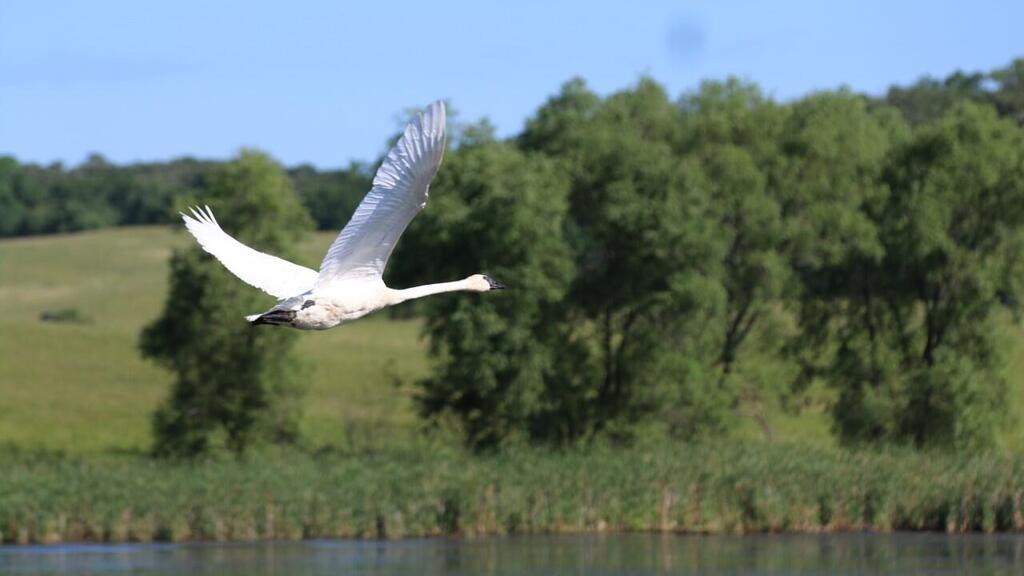
Trumpeter swan in flight
(Photo: Brett Blocker)
"According to the rules established in laboratory studies, condors and swans should have identical energy expenditures because their body masses are the same," said Professor Emily Shepard of Swansea University's Animal Movement Laboratory, one of the study's researchers. "But when we see condors soaring while swans flap their wings, it becomes clear that there must be a difference."
Shepard explained that the surrounding atmosphere provides an energy resource that laboratory comparisons have largely overlooked.
"When flying animals take advantage of natural atmospheric currents, they get 'free fuel' from the sky," she said. "This study reveals the mistakes we make when we ignore real-world environmental conditions that animals have been responding to for thousands of years."
The pattern extended beyond condors. Among birds that use air currents to soar, larger body size was generally associated with less wing flapping and lower energy expenditure per kilometer relative to body weight.
For many large soaring birds, the estimated energy required to travel a given distance was comparable to that of similarly sized swimming fish and, under certain conditions, even lower.
More than 4 million kilometers with barely a wingbeat
The scale of the energy savings becomes even more striking when examining the seven vulture species included in the research.
Together, the birds accumulated approximately 128,000 flight-days and traveled more than 4.3 million kilometers, enough to circle the Earth more than 100 times.
Remarkably, they accomplished those journeys while flapping their wings for only 0.1% to 7% of their total flight time.
The Andean condor, a member of the New World vulture family, recorded the lowest proportion of wing flapping among the species studied.
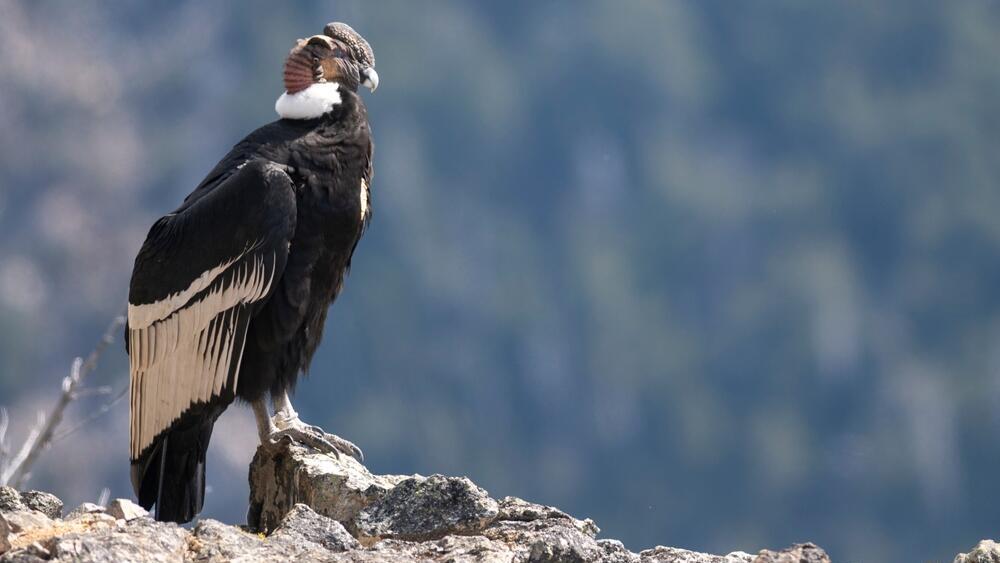
Andean condor resting
(Photo: buenaventura/Shutterstock)
"Soaring birds specialize in extracting energy from their environment," Shepard said. "When conditions are right, they can reduce their energy expenditure to extremely low levels."
But this remarkable efficiency comes with a significant limitation. Birds that rely on soaring need favorable atmospheric conditions, particularly rising air currents that allow them to gain altitude without expending much energy.
As a result, their ability to travel is more restricted by weather conditions, location and time. If suitable air currents are unavailable, their opportunities to fly may be severely limited.
Birds that rely primarily on flapping their wings, by contrast, can fly under a wider range of conditions, but must expend considerably more energy to do so.
Under unfavorable atmospheric conditions, the energy required for flapping flight can approach, or even exceed, the energy needed for running the same distance by similarly sized animals, based on laboratory measurements.
The findings therefore highlight a fundamental trade-off between two flight strategies. Soaring offers extraordinary energy efficiency but depends on the availability of suitable air currents. Flapping flight is more demanding but provides greater flexibility in changing conditions.
The researchers concluded that changes in atmospheric conditions could restrict the flight opportunities available to animals that depend on soaring, while increasing the energy costs faced by species that rely on flapping their wings.
Beyond challenging established assumptions about how animals move, the findings could change how scientists estimate the energy costs of movement in the natural world. Rather than treating the atmosphere merely as the environment through which animals travel, the study demonstrates that the air itself can be a crucial energy resource, one that determines how far animals can go and how much effort the journey requires.