


Israel’s water and electricity grids have managed to meet soaring demand during an intense heat wave, particularly on Wednesday, the peak of an extended period of extreme heat. However, with forecasts predicting declining rainfall and rising temperatures in the coming years, providing these essential services will become increasingly challenging.
The national water system supplies nearly the entire country, except for areas not linked to the network like the Golan Heights and Western Galilee, with daily consumption ranging from 4.1 to 4.2 million cubic meters (1.08 to 1.11 billion gallons). This includes household, industrial and agricultural use, with up to 2 million cubic meters (528 million gallons) sourced from desalination plants during hot days.
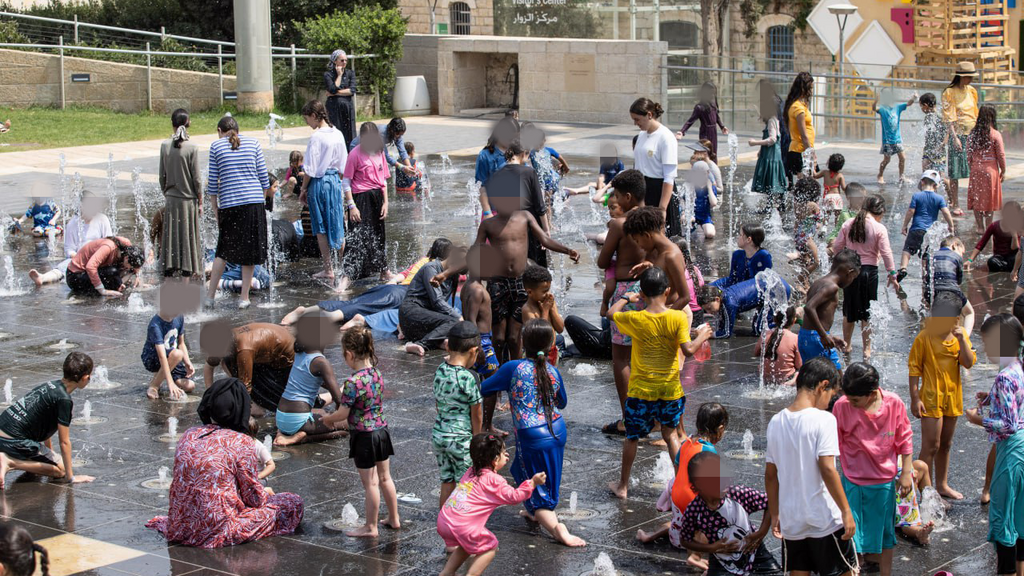
Approximately 800 wells nationwide contribute another 1.8 million cubic meters (475 million gallons), with the remainder drawn from the shrinking Sea of Galilee, though policy prioritizes minimal extraction to preserve the lake.
“Water consumption spikes in summer, dropping to about 2.3 million cubic meters (608 million gallons) per day in winter,” said Gal Malachi, operations manager at Mekorot, Israel’s national water company. “We manage this supply around the clock, but prolonged hot spells push us to operate all water sources at maximum capacity.
“Hundreds of wells are active and we’re stretched thin. Any breakdown, big or small, requires immediate action—we can’t let wells rest.” In the Arava Desert region, workers begin at 3:30 a.m. to avoid daytime heat, which Malachi described as grueling.
Get the Ynetnews app on your smartphone: Google Play: https://bit.ly/4eJ37pE | Apple App Store: https://bit.ly/3ZL7iNv
Mekorot reported a 4% annual increase in water consumption in southern Israel, compared to a national average of 2 to 3%. “We constantly need new water sources,” Malachi said. “People are working in extreme conditions—temperatures in the Jordan Valley hit around 50°C (122°F).”
The challenge lies not just in rising demand but in sustained periods of high consumption. Weekends typically see a drop, allowing reservoirs to refill, but hot weekends shrink this buffer. “We used to see peak demand in July and August, but now it starts in May and June,” Malachi noted. “Summer has lengthened, and winters are barely there.”
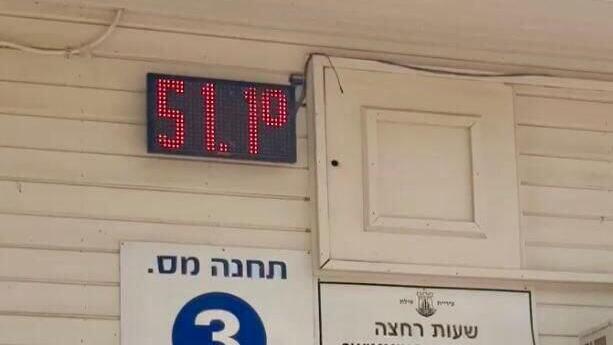
Eilat beach sign showing 51°C (123°F)
(Photo: Eilat Municipality)
The Water Authority had a comprehensive plan extending to 2075, reflecting the need for long-term planning. “We must look 70 years ahead,” Malachi explained. “We account for all climate change scenarios.
“Rising temperatures stress equipment, causing more motor overheating and breakdowns. Everything works harder with no downtime. From May, water demand is consistently high, and we’re operating at the limit.”
Electricity demand also shattered records, surpassing 17,000 megawatts for the first time on Wednesday, driven by unprecedented heat and humidity. According to Noga, Israel’s electricity grid manager, consumption reached 17,287 megawatts at 3:15 p.m., marking the fourth consecutive day of record-breaking usage.
Just a day earlier, demand crossed 16,000 megawatts for the first time. Meir Spiegler, CEO of the Israel Electric Corporation, said, “Our workers are deployed nationwide under scorching heat to address blown fuses and grid failures caused by overloading, ensuring uninterrupted power supply.”
The combination of extreme temperatures and humidity has pushed infrastructure to its limits, highlighting the urgent need for adaptive measures as climate challenges intensify.