

An American spy satellite launched near the end of the Cold War has suddenly broken apart above Earth, and so far investigators do not know why.
Live Science reported that experts are warning that the hundreds or potentially thousands of fragments created by the breakup could pose a “real threat” to other spacecraft in one of the most crowded regions of low Earth orbit, or LEO, which extends to about 2,000 kilometers above the planet.
Gallery
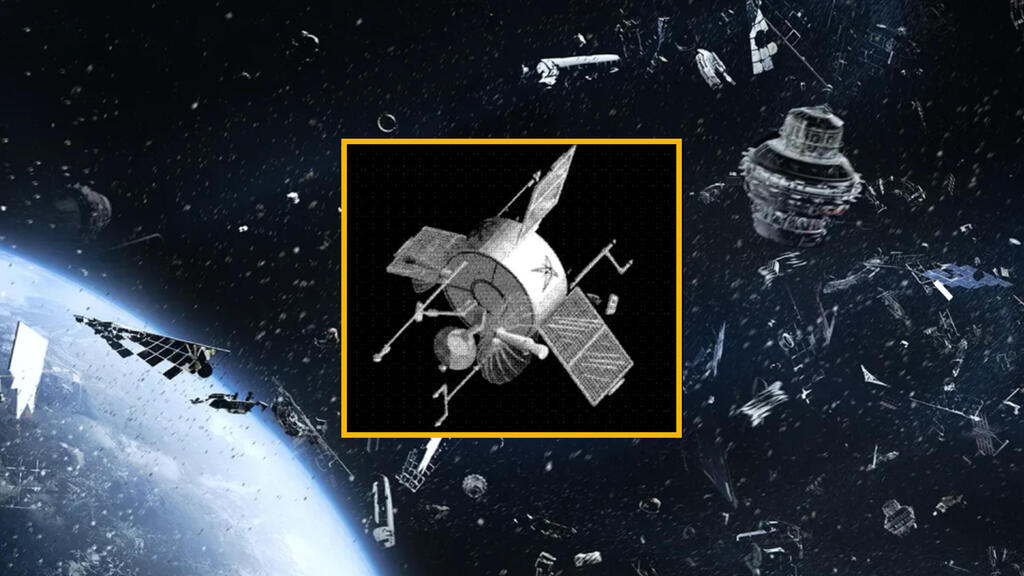
Cold War-era US spy satellite USA 32, also known as Farrah III, which suddenly broke apart on Sept. 13 and scattered debris across its orbit
(Photo: janiecbros/Getty Images/NRO)
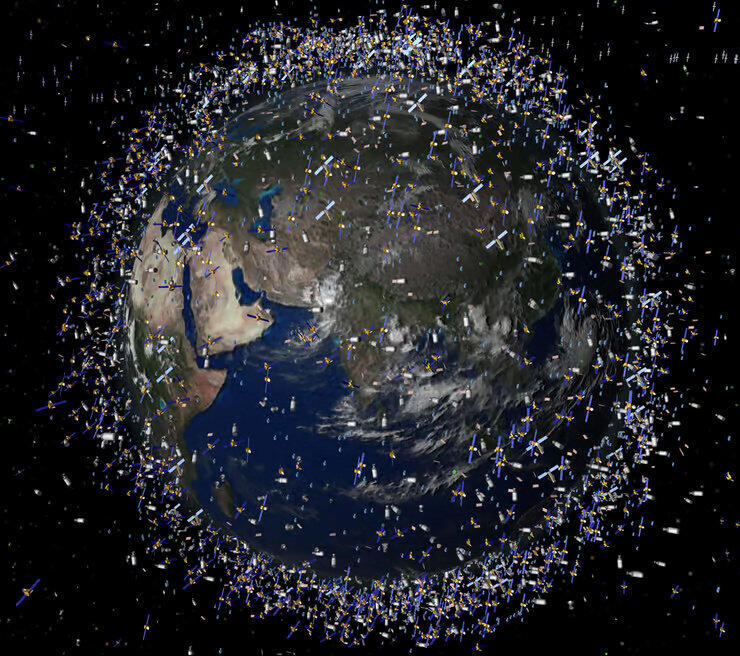
Space debris orbiting Earth
(Photo: ESA/Reuters)
The satellite, known as USA 32, or Farrah III, after American film and television actress Farrah Fawcett, was launched by the National Reconnaissance Office on Sept. 5, 1988. Its mission, whose details were fully revealed only earlier this year, was to intercept Soviet radar and radio signals from space.
Earlier this month, Space-Track, the U.S. military system that monitors objects in orbit, announced that USA 32 had undergone a sudden fragmentation event on Sept. 13.
The breakup occurred at an altitude of about 775 kilometers above Earth. Collisions with other satellites or small pieces of space debris are among the most common causes of satellite breakups, particularly given the increasing congestion in low Earth orbit.
However, no collision involving USA 32 was reported. Potential encounters with tracked space debris can often be predicted days or even weeks in advance, making such a scenario less likely.
One possibility is that an undetected natural space object struck the satellite at high speed. Another leading theory is simply age. USA 32 had spent nearly four decades in orbit and was not designed to remain in space for such an extended period. Components may have deteriorated over the years until part of the spacecraft eventually failed and caused it to break apart.

(Photo: Frame Stock Footage/Shutterstock)
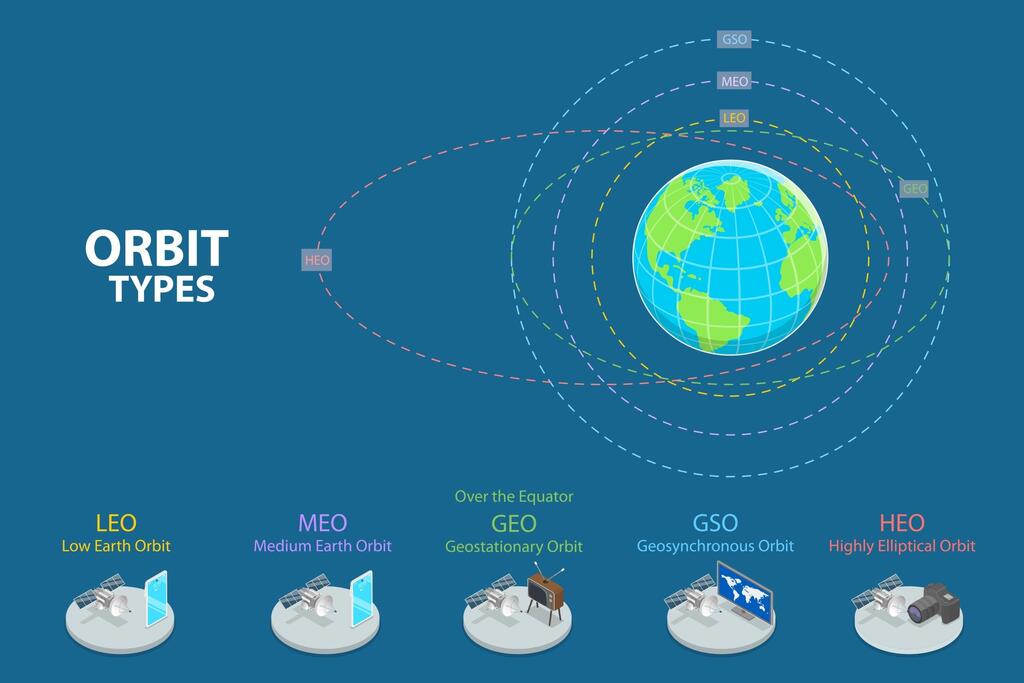
(Photo: TarikVision/Shutterstock)
Spaceweather.com has also noted that the possibility of some form of anti-satellite weapon cannot be entirely ruled out, although there is currently no evidence establishing that as the cause.
Earlier this month, U.S. Air Force Secretary Troy Meink revealed that the United States had deployed previously undisclosed weapons in orbit. Experts have long suspected that other countries, including China and Russia, possess comparable anti-satellite capabilities.
Researchers will likely be able to learn more about what caused USA 32 to break apart by reconstructing the event in reverse.
That process begins by identifying and tracking the newly created fragments and then tracing their trajectories back toward the original point of fragmentation.
But such an investigation could take months or even years. Until then, the debris remains a concern because hundreds of other satellites travel through the same region of space.
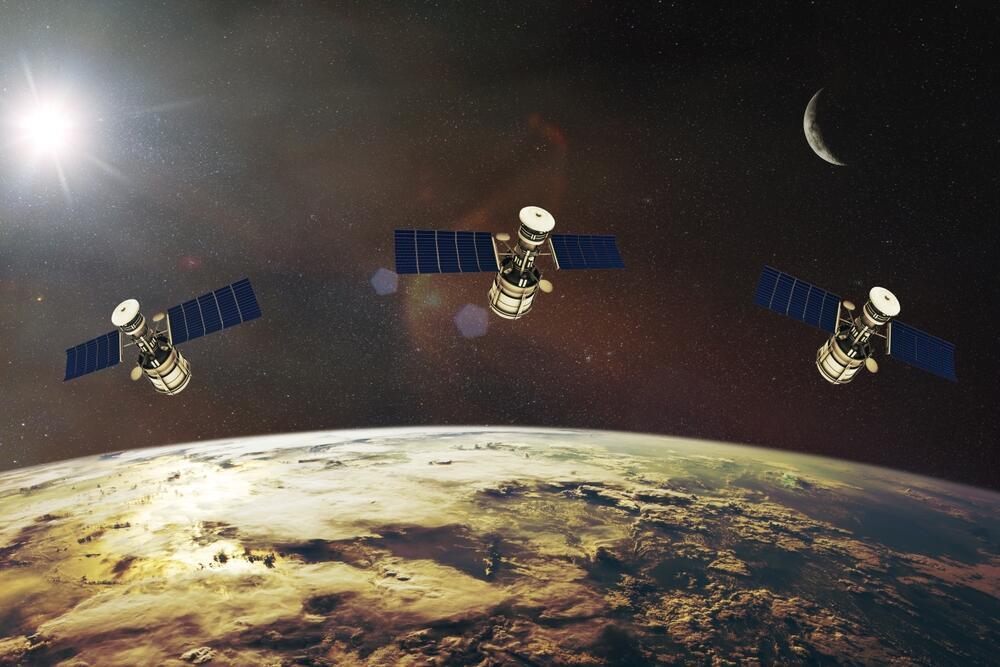
Satellites orbiting Earth in low Earth orbit
(Photo: Paopano/Shutterstock)
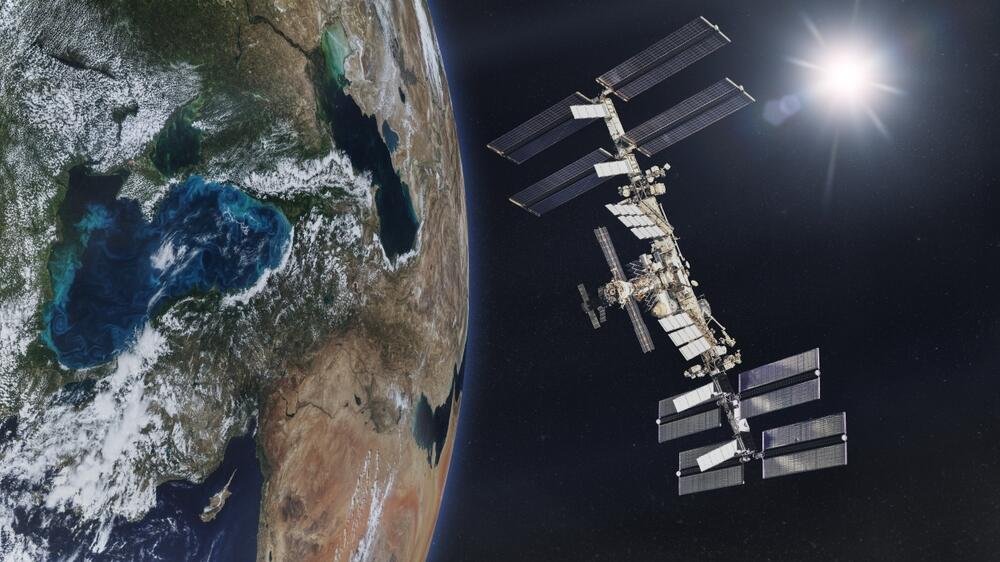
International Space Station in low Earth orbit
(Photo: Paopano/Shutterstock)
So far, the breakup has not caused any reported problems or disrupted subsequent launches. Russia, for example, carried out a resupply mission to the International Space Station on Sept. 16. The ISS orbits Earth at an altitude of roughly 400 kilometers, about half the altitude at which USA 32 broke apart.
SpaceX also launched classified missions for the U.S. Space Force on Sept. 16 and Sept. 26, and on Sept. 28 carried out the 14th test flight of its Starship spacecraft, during which the massive vehicle successfully reached orbit.
Neither the International Space Station nor China’s Tiangong space station is currently within the primary danger zone created by the breakup.
Over time, however, the fragments’ orbits could change as Earth’s gravity and atmospheric drag gradually pull them toward lower altitudes.
If that happens, the stations could eventually be forced to perform avoidance maneuvers to steer clear of debris, something orbital stations have already had to do dozens of times in response to other pieces of space junk.
The incident is also reviving concern over the so-called Kessler syndrome, named after NASA scientist Donald Kessler.
The scenario describes a point at which the concentration of debris in Earth orbit becomes so high that one collision produces additional fragments, which then trigger more collisions in an uncontrolled chain reaction.
Such a cascade could make entire regions of low Earth orbit extremely hazardous, potentially preventing satellites from operating safely there and complicating or even preventing future spacecraft launches.