

Instead of making costumes at home, many families now order them online from overseas. While the shift may save money, experts say the environmental and health costs are significant.
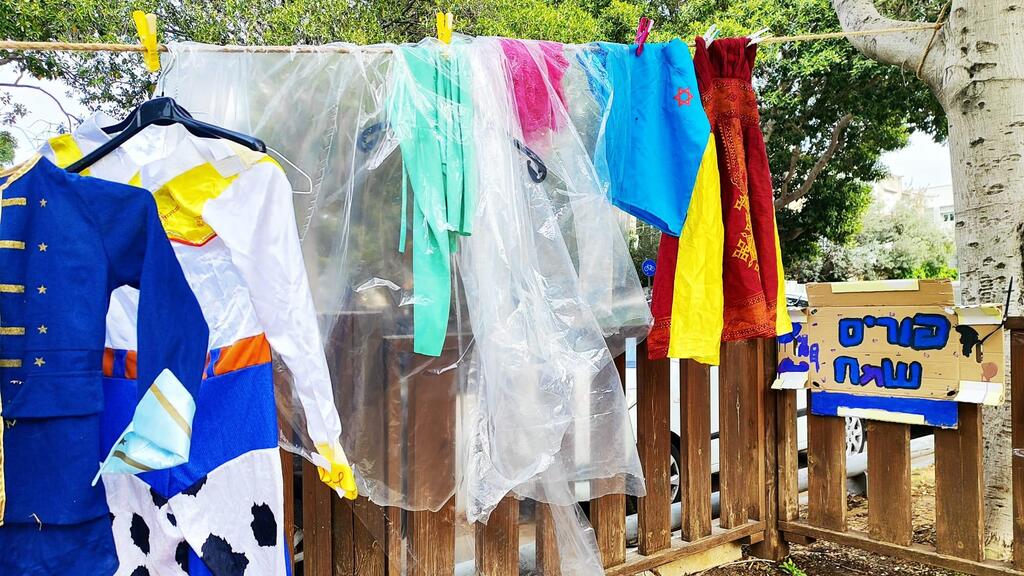
As a child, preparations for Purim began weeks or even months in advance, with careful planning and homemade costumes sewn by relatives or assembled from clothes found at home. Today, preparations often start just as early, but for a different reason: advance orders from online retailers. Costumes have become another form of fast fashion, with serious environmental consequences.

Dr. Meital Peleg Mizrachi, of Yale University’s economics department and Tel-Hai College’s multidisciplinary studies program, researches sustainable fashion. She says many characteristics of fast fashion have seeped into Purim culture.
“Once, we would sit together and make costumes. There was a celebration around that,” she said. “Today the pace is much faster. We simply order costumes from AliExpress or Amazon.”
The change, she said, is not only in where costumes come from, but in how they are treated. “We’ve moved from handmade costumes passed down through generations to low-quality items ordered online. The attitude is disposable,” she said. “Costumes are worn once or twice, sometimes people buy several for different parties. We relate to them like fashion, with no thought about environmental impact.”
A plastic-heavy holiday
That impact includes growing volumes of textile waste and the carbon footprint of shipping items, often produced in China, to Israel. It also includes the materials themselves.
“Most of the costumes we order online are made from very cheap materials, primarily petroleum-based synthetic fibers,” Peleg Mizrachi said.
Purim has long involved plastic, from cellophane-wrapped gift baskets to noisemakers and masks. But today even the fabrics are plastic. She noted that between 70% and 80% of clothing worldwide contains synthetic fibers. In costumes, the proportion is even higher because they are designed to be inexpensive and nearly disposable.
The widespread use of synthetic fibers is largely economic. A kilogram of polyester, the most common synthetic fiber, costs about 60% of a kilogram of cotton. “That’s what allows fast fashion to thrive,” she said. “It’s much cheaper to produce garments and costumes from synthetic fibers than from natural ones.”
(Photo: Adi Weinberger)
Environmental and health concerns
The reliance on petroleum and plastic carries environmental costs. Synthetic fibers are derived from fossil fuels, and unlike cotton, which can decompose within decades, synthetic garments may take hundreds of years to break down.
“The problem is twofold,” Peleg Mizrachi said. “First, the environmental impact, because they are made from oil at a time when we are trying to reduce greenhouse gas emissions. Second, they are not biodegradable.”
There are also health concerns. Synthetic clothing sheds microplastic particles that accumulate in water, soil and air. These particles can enter the human body through inhalation, ingestion and skin contact. Research has linked microplastic exposure to cellular damage, inflammation, changes in gut microbiota and possible effects on the nervous system.

Purim costumes
(Photo: Dana Kopel)
In addition, petroleum-based fabrics may contain toxic chemicals. Oversight is limited, particularly for costumes, which fall between clothing and toys in regulatory frameworks. “Clothing is already a relatively unregulated market, and we don’t really know which chemicals are in our garments,” she said. “With costumes, it’s even more problematic. That’s why we sometimes see allergic reactions.”
Alternatives and policy solutions
Despite the prevalence of plastic, experts say a more sustainable holiday is possible.
“The first alternative is to use what already exists,” Peleg Mizrachi said, suggesting reusing costumes from previous years, buying secondhand or organizing swap parties instead of purchasing new items.
For those willing to invest time, making costumes at home is another option. Online platforms such as Pinterest offer ideas based on clothing and materials already available.
Schools can also play a role by organizing costume-making workshops or swap events, reducing textile waste and encouraging creativity.
Beyond individual choices, Peleg Mizrachi called for stronger regulation of both commercial and personal imports. “There needs to be standards for costumes, including for wholesale importers and individual orders,” she said. “Regulators must examine both chemical safety and product safety.”
The article was prepared by Zavit, the news agency of the Israeli Society of Ecology and Environmental Sciences.