

The carcass of a rare gray sixgill shark was spotted on a beach near Netanya before being carried back out to sea by the waves. It marked the first time since 2012 that a shark of this species has washed ashore in Israel.
On Thursday morning, Uri Yosef, a hiker and nature enthusiast, called the hotline of the Israel Nature and Parks Authority after spotting the body of a large shark lying along the shoreline at Shoshanat HaAmakim Beach. Inspectors dispatched to the scene were unable to locate the carcass, which had apparently drifted back into the sea.
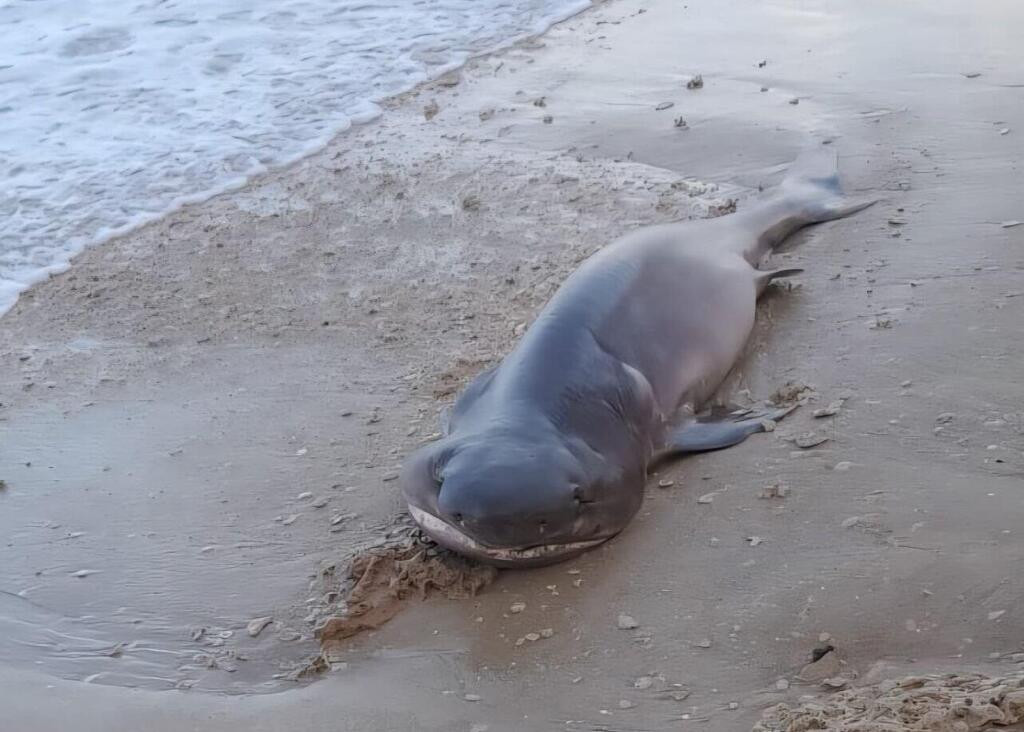
“As soon as I received the photos from Uri, I understood this was a rare shark species,” said Guy Levian, deputy director of the marine unit at the Nature and Parks Authority. “We sent the images to experts at the Sharks in Israel Association, who identified it as a gray sixgill shark. When we reached the location, we searched for the carcass but found nothing.”
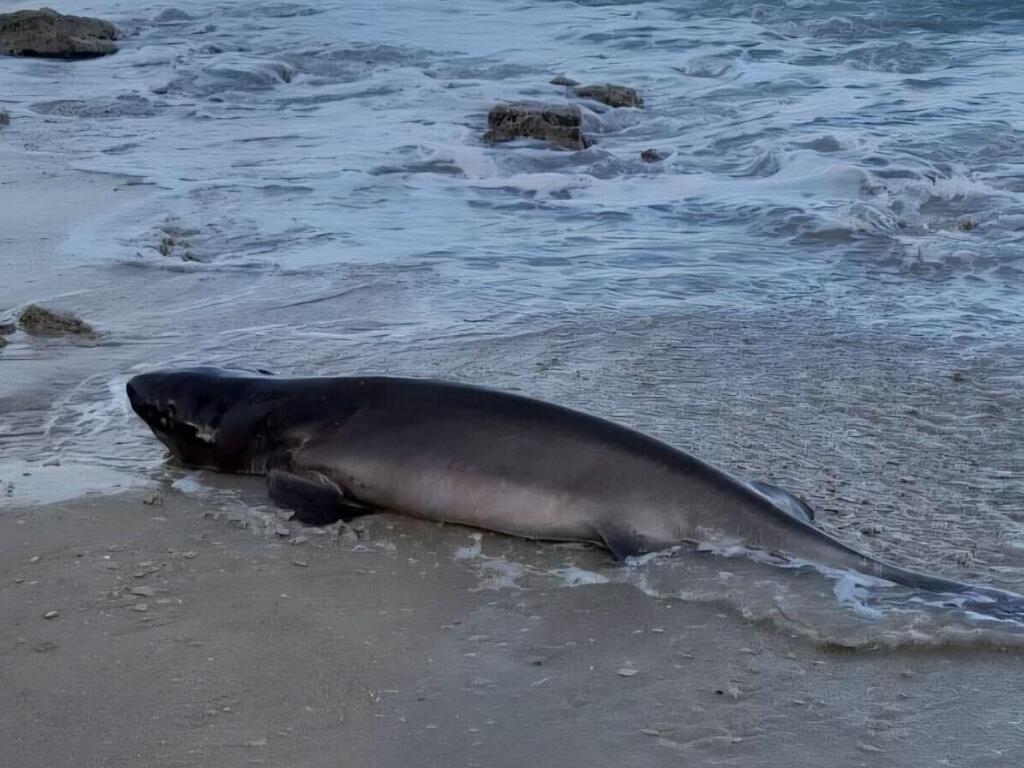
The species was last seen in Israel in 2012
(Photo: Uri Yosef)
Dr. Adi Barash, scientific director of the Sharks in Israel Association, said sightings of sixgill sharks along Israel’s coast are rare because the species lives at great depths, often hundreds of meters below the surface. In Israel, they are usually encountered only during deep-sea fishing operations. “The gray sixgill can reach a maximum length of about 6 meters,” Barash said. “It is brownish-gray in color, with relatively large green eyes, typical of deep-sea species.” She added that one of the shark’s most distinctive features is the absence of a prominent dorsal fin like those found on most sharks. “The sixgill has a single dorsal fin positioned toward the rear of the body, close to the tail. Unlike most sharks, which have five gill slits, this species has six, which is how it got its name.”
Gray sixgill sharks are known for daily vertical migrations, descending to deep waters during the day and rising at night. The depth of their daytime habitat varies depending on the shark’s size and sex. According to data collected by the association, the last time a gray sixgill shark washed ashore in Israel was in 2012. Due to the great depths at which they live in the Mediterranean Sea, the species is relatively less exposed to threats and is not currently classified as at risk.
The Nature and Parks Authority reminded the public that anyone who encounters an injured or distressed wild animal should contact its hotline at *3639.