


Israeli archaeologists have uncovered evidence of some of the country’s earliest wine production and ritual activity dating back thousands of years near Tel Megiddo, a key site in the Jezreel Valley known for its biblical and historical significance.
The Israel Antiquities Authority announced Wednesday that a rock-hewn winepress about 5,000 years old — among the earliest ever found in Israel — was discovered east of the tell during excavations carried out ahead of work on Highway 66. The dig, funded by the state-owned company Netivei Israel, also revealed ritual artifacts from roughly 3,300 years ago that shed light on Canaanite worship practices before the Israelite period.
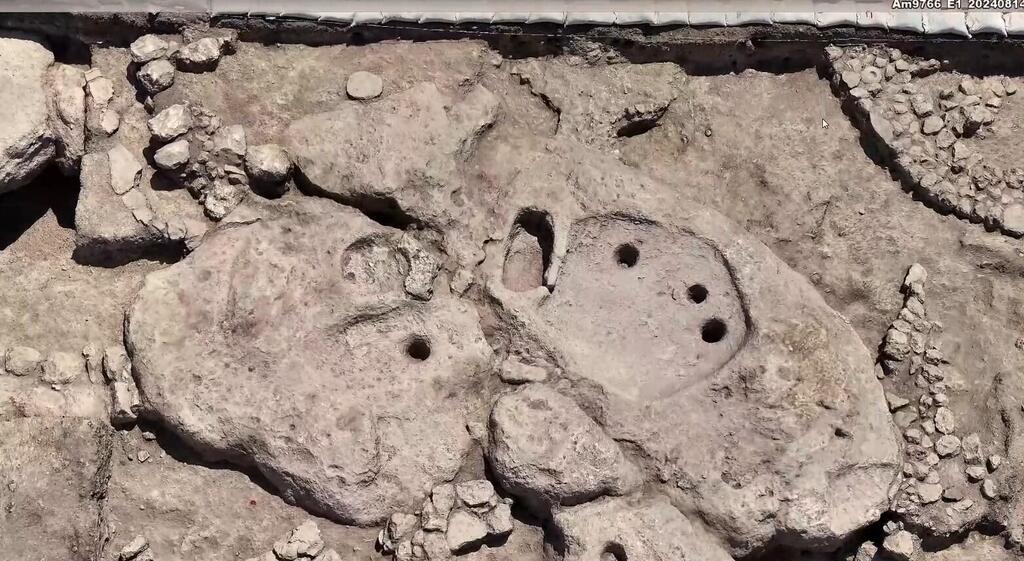
The winepress, carved into the bedrock, includes a treading floor and a collecting vat. Excavation directors Dr. Amir Golani and Barak Zin said the find is rare for such an early period, which coincides with the first wave of urbanization in the region.
“Until now, we had only indirect evidence that wine could have been produced here 5,000 years ago,” Golani said. “This discovery provides clear proof — the ‘smoking gun’ — that wine production was already taking place in this area.”
Remains of numerous dwellings found around the winepress suggest the ancient settlement at Megiddo extended well beyond the boundaries of the mound itself.
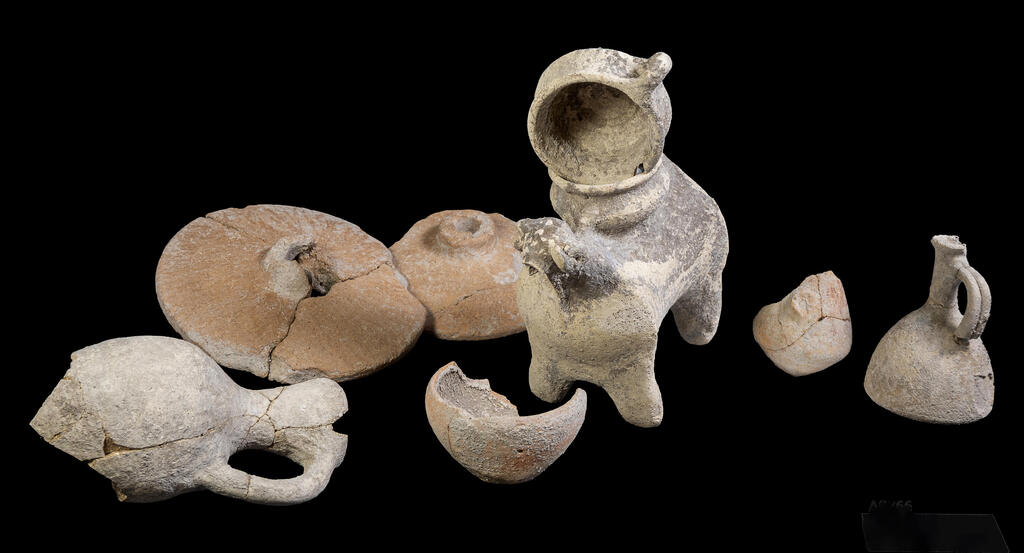
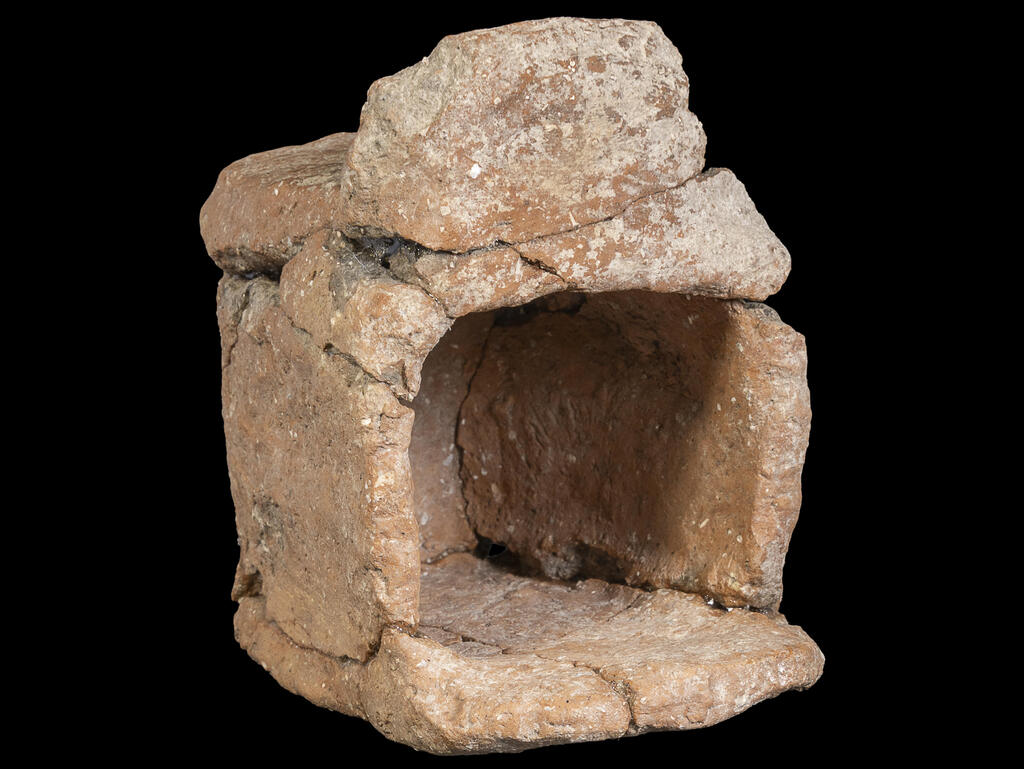
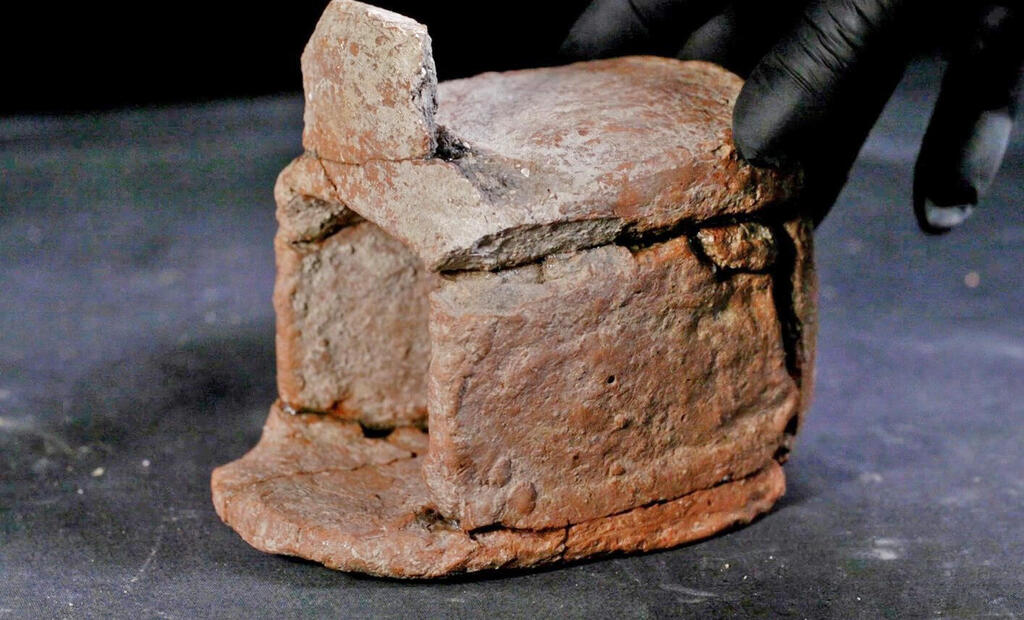
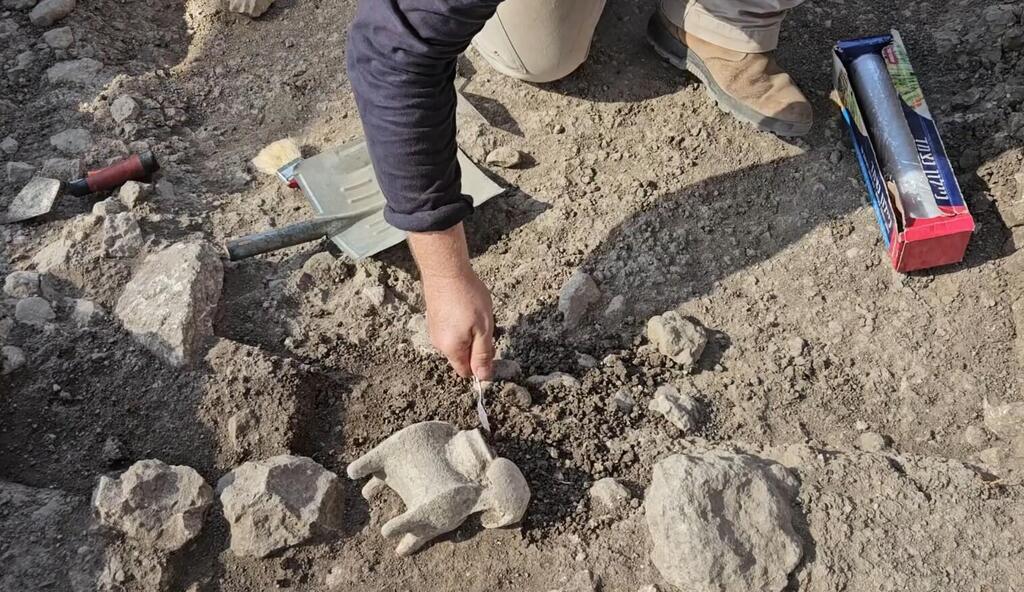
Archaeologists also uncovered ritual vessels from the Late Bronze Age, around 3,300 years ago, which appear to have been deliberately buried as offerings. The items include a small clay model of a temple, imported Cypriot flasks and juglets, and a distinctive set of vessels apparently used for ceremonial pouring of liquids.
The ritual set, according to the IAA, included a ram-shaped vessel accompanied by several small bowls. Such items are usually found as isolated fragments, making it difficult for researchers to reconstruct their appearance or use. Because this set was discovered intact and arranged as if in use, it offers a rare glimpse into how Canaanite ritual ceremonies were performed.
(Photo: Israel Antiquities Authority)
“A small bowl attached to the ram’s body functioned as a funnel,” Zin said. “Another handled bowl was probably used to pour the liquid into it during the ceremony. The ram’s head formed a spout, and when the vessel was tilted forward, the liquid flowed from its mouth into a small bowl placed before it. It likely held valuable liquids such as milk, oil, or wine offered as libations.”
Researchers believe the location of the offerings — buried underground but within view of Megiddo’s large Late Bronze Age temple — indicates local Canaanite worship carried out outside the city. The offerings may have been made by nearby farmers dedicating prized agricultural products such as wine or oil. Some intact ceramic vessels were found beside a large rock that may have served as an altar.
(Photo: Israel Antiquities Authority)
“Megiddo has been excavated for more than a century,” the archaeologists said. “These new findings east of the tell reveal activity in the area between the main city and its surroundings, linking early urban life with the rural landscape beyond.”
Elie Escusido, director of the Israel Antiquities Authority, said the discoveries highlight the rich history embedded in the Jezreel Valley.
(Photo: Israel Antiquities Authority)
“Our excavations along the road corridor expose layer after layer of the region’s deep past,” he said. “The winepress and ritual artifacts provide a vivid picture of daily life and beliefs spanning thousands of years.”
Nissim Peretz, CEO of Netivei Israel, said the road project reflects both infrastructure development and heritage preservation.
“Highway 66 is part of the ‘Connecting Israel’ program, aimed at linking the periphery to the center while maintaining safety and continuity,” he said. “These remarkable discoveries are a national treasure and proof that progress can coexist with responsibility toward our history.”
(Photo: Israel Antiquities Authority)
The finds will be presented Thursday at the annual conference on archaeological discoveries in northern Israel, hosted by the Israel Antiquities Authority and the University of Haifa’s School of Archaeology and Maritime Cultures. Beginning Sunday, the artifacts from Megiddo will go on display at the Jay and Jeanie Schottenstein National Campus for the Archaeology of Israel in Jerusalem.