

A richly decorated church dating back about 1,400 years has been uncovered in Nitzana National Park in the Negev, revealing striking mosaic floors decorated with a wide range of geometric elements, including medallions containing intricate patterns made from tiny colored stones alongside floral motifs.
The church is one of several that operated in the settlement during the Byzantine period and the beginning of the early Islamic era, between the fifth and seventh centuries CE. They served not only residents but also the many pilgrims who passed through the area on their way to St. Catherine’s Monastery and other monasteries in Egypt’s Sinai Peninsula.
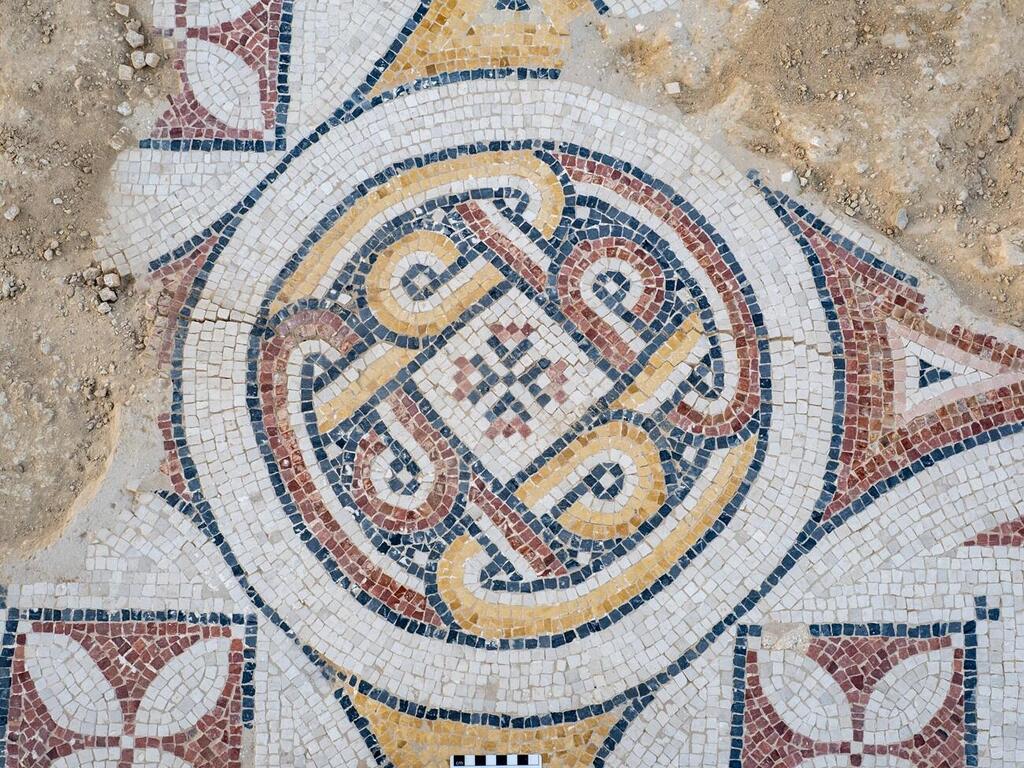
“The scale of construction and the rich decoration indicate a thriving and well-funded religious center,” said excavation director Prof. Yana Tchekhanovets of the Department of Archaeology at Ben-Gurion University of the Negev.
The ancient settlement of Nitzana, almost entirely destroyed during the construction of the Ottoman administrative center of Auja al-Hafir during World War I, is now part of the national park that bears its name.
Excavations have been conducted at the site by several expeditions over the past century. Earlier digs uncovered a military fortress, a monastery, residential buildings and several Byzantine-era churches. The newly discovered church now joins that list.
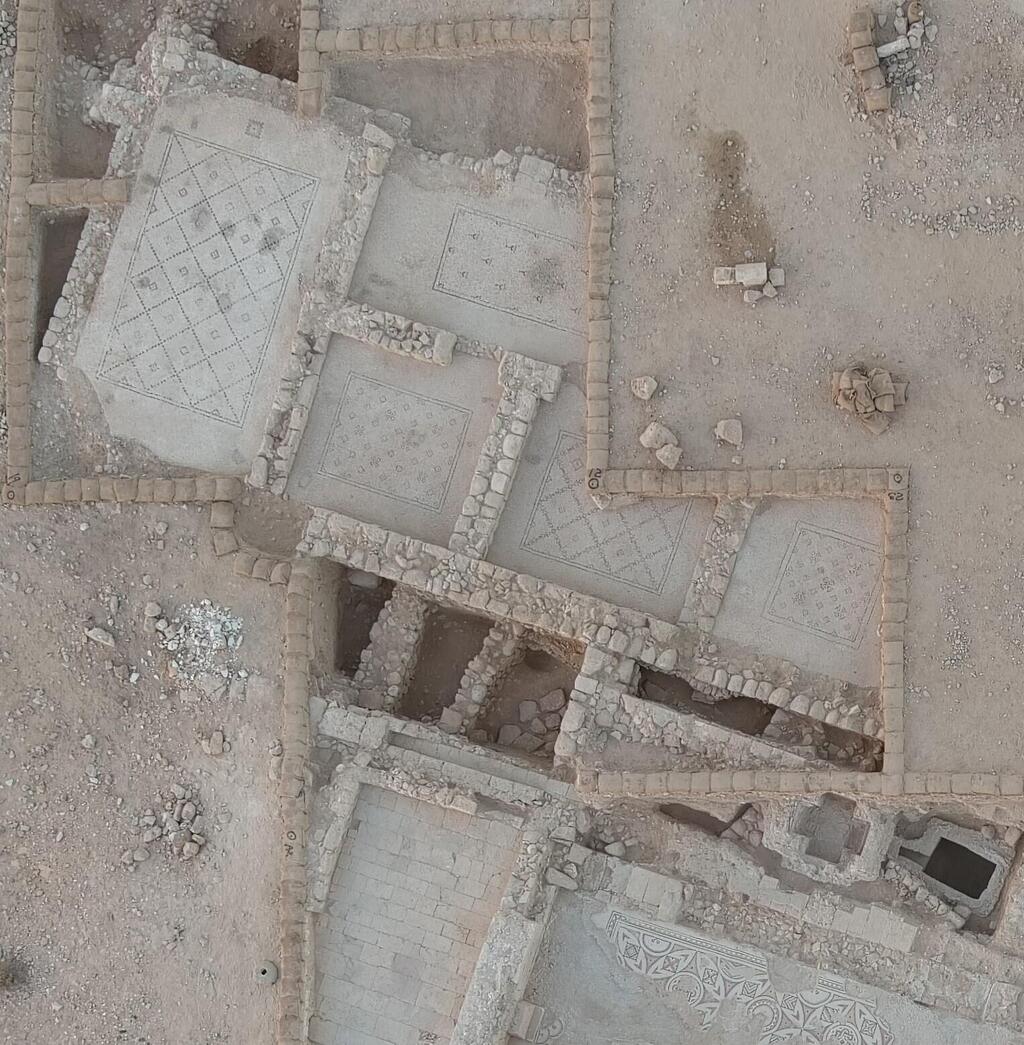
The mosaic wing adjacent to the church in Nitzana
(Photo: Yaakov Shmidov)
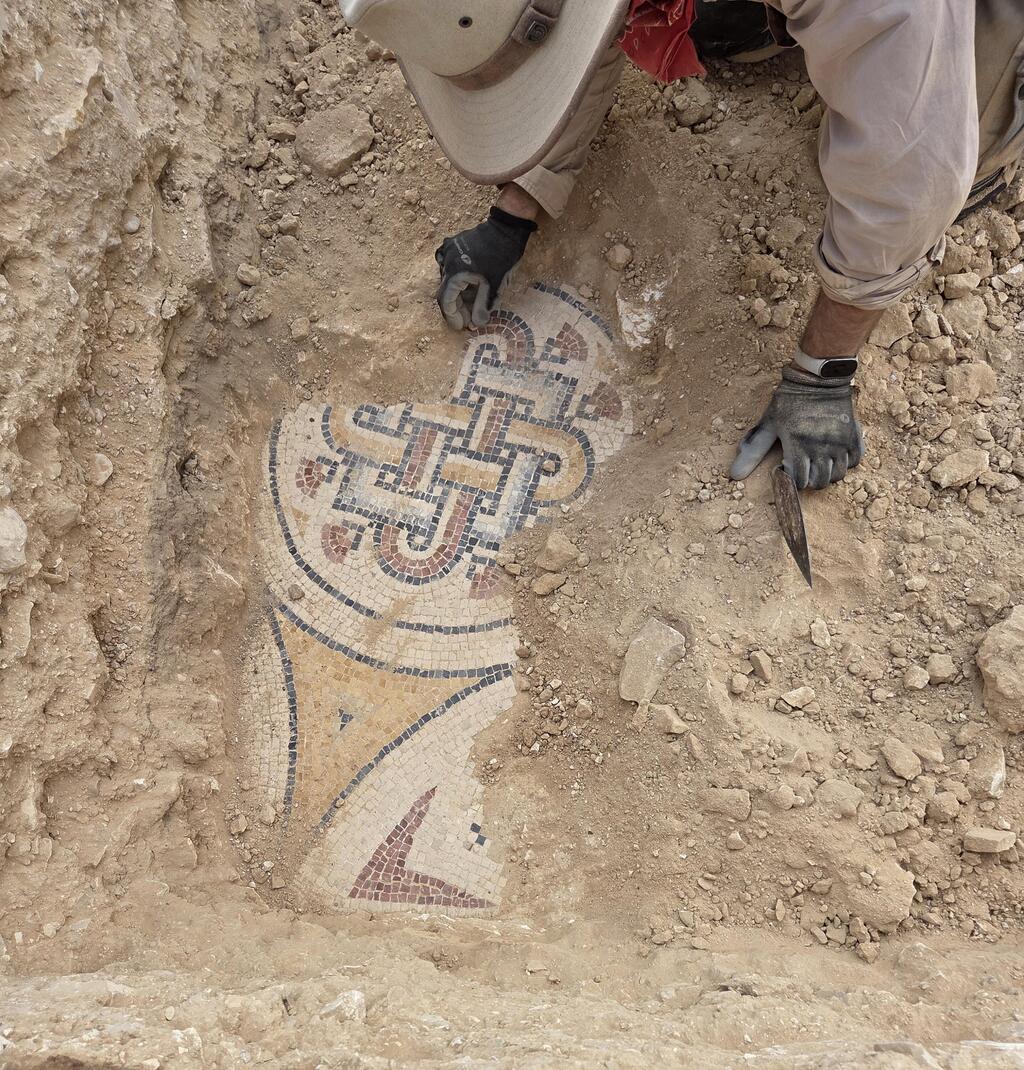
Discovery of the mosaic from Nitzana (Discovery of the mosaic from Nitzana
(Photo: Nitzana Expedition)
A British-American expedition that excavated Nitzana in the 1930s also uncovered a large and unique archive of papyri, an early form of paper made from the papyrus plant. The hundreds of texts discovered there remain one of the main sources of information about daily life in the Negev during the Byzantine period.
In the late 1980s and early 1990s, another excavation led by Ben-Gurion University took place at the site as part of a Jewish Agency project. Thousands of participants took part, including students from the Nitzana Youth Village, new immigrants, soldiers and volunteers.
Tchekhanovets recently launched a renewed excavation project aimed at examining Nitzana’s role in the Byzantine pilgrimage network and bringing the results of earlier excavations at the site to full publication.
The expedition, run by the university’s Department of Archaeology, is supported by a research grant from the Gerda Henkel Foundation in Germany and includes volunteers from Israel and abroad, as well as Ben-Gurion University students.
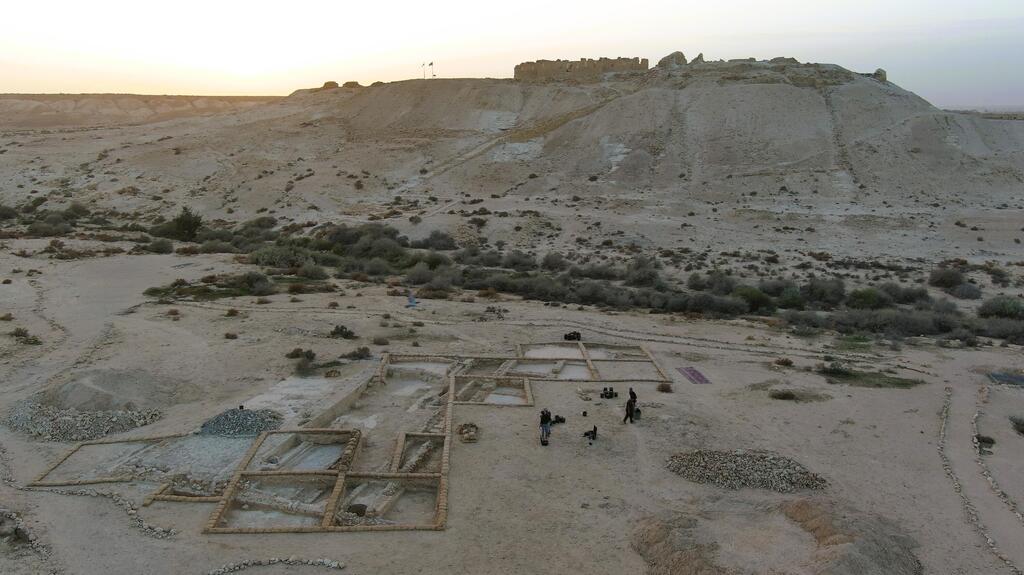
Ancient Nitzana
(Photo: Yaakov Shmidov)
In previous excavation seasons, the team uncovered a large hostel complex in another part of the site that served as a way station for pilgrims. The complex included multiple rooms, a prayer chapel and a lavish bathhouse with pools, marble-covered bathtubs and walls decorated with frescoes.
According to Tchekhanovets, a 1909 photograph taken during the construction of the Ottoman town documented a church with a mosaic inscription that had been covered by the Ottomans.
“Our excavation rediscovered this church and the important inscription, which dates the construction of the church to the early seventh century,” she said. “Each excavation season reveals the hidden richness beneath the ruins of Nitzana, which was a very important station in the Byzantine pilgrimage network.
“From the papyri and other inscriptions found at the site, we know that pilgrims arrived here from many places. Graffiti discovered here even records pilgrims who came from Georgia, Armenia and other regions.”
“Our goal is to continue uncovering Nitzana’s fascinating secrets and to learn more about life and movement across the Negev in ancient times,” she added.