


The falcon that escaped captivity and started a family: During a survey of birds of prey in the Judean Desert, Israel Nature and Parks Authority inspectors spotted a rare desert falcon alongside its family which bore visible signs of captivity on its legs. The finding suggests that the endangered bird managed to escape, recover, find a mate and raise chicks in the wild.
The unusual case — combining survival, wild nature and human impact — was recently uncovered during a seasonal raptor survey conducted by the authority in cooperation with expert birders. The survey took place along the cliffs of the Judean Desert, led by Asaf Miroz together with inspectors Yinon Shahaf and Hanan Levavi.
Gallery
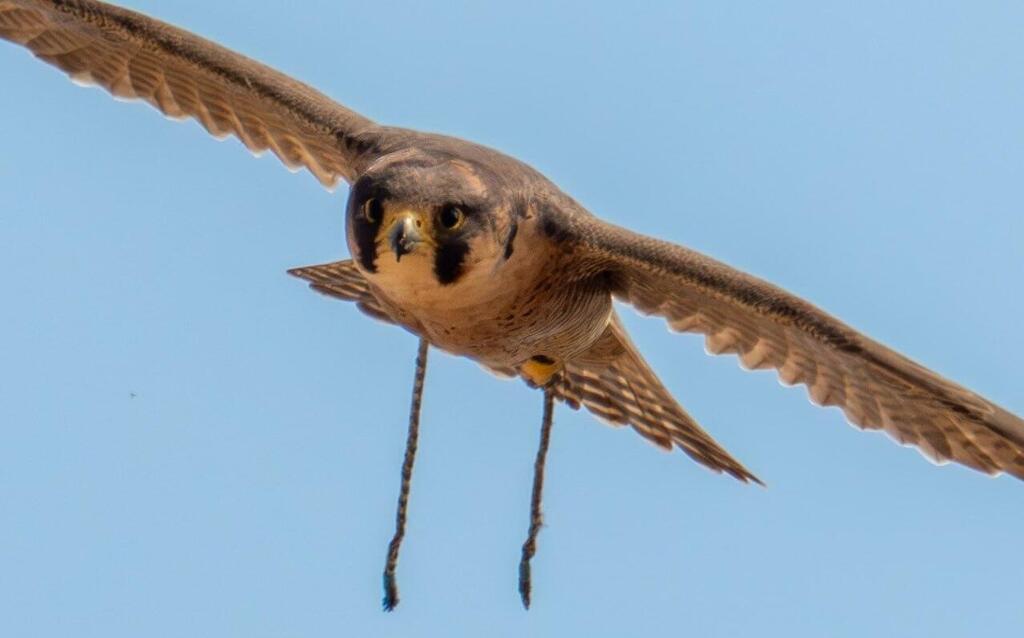
Strips of leather remained attached to the falcon's legs
(Photo: Ayalon Gur, Israel Nature and Parks Authority)
As part of the survey, aimed at locating active nesting territories of birds of prey, a pair of desert falcons was identified in one of the region’s wadis. The desert falcon is a rare species considered endangered, with fewer than 50 nesting pairs remaining in Israel.
The nest was found to be active, containing two healthy chicks. The parents were observed making hunting flights and feeding the young. During the observation, surveyors noticed an unusual detail: remnants of leather straps were visible on the legs of one of the adults — equipment used by falconers (who use falcons and other raptors for hunting as a sport or as “pets,” a practice that is illegal in Israel).
“When we saw the falcon gliding above us, we noticed something strange — straps dangling from its legs,” said Yuval Dax, a member of the survey team and the Society for the Protection of Nature in Israel. “On closer inspection, we realized this was a falcon that had escaped captivity. To see such an individual survive, return to the wild and even start a family — it’s both impressive and moving.”
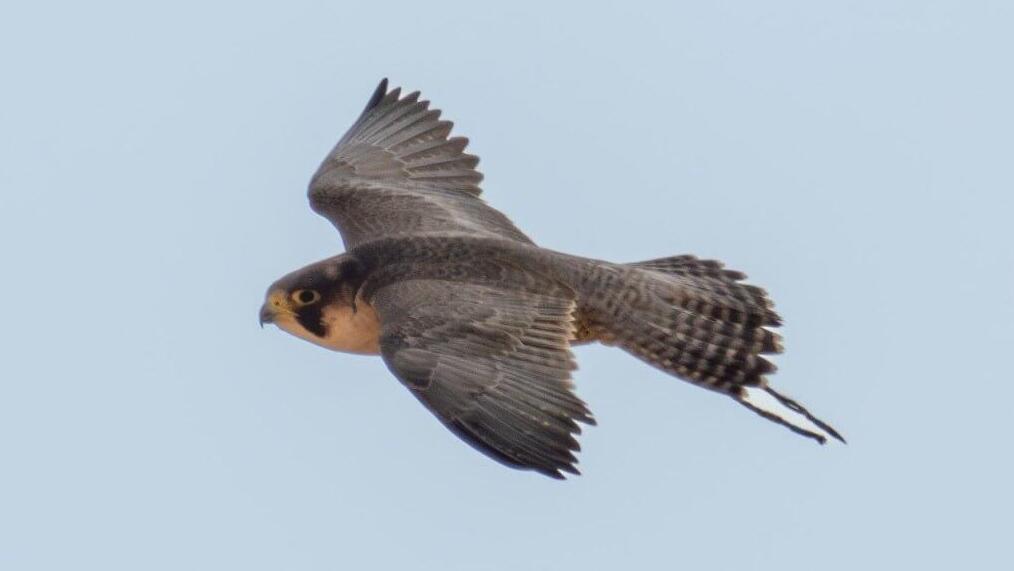
The falcon escaped from captivity
(Photo: Ayalon Gur, Israel Nature and Parks Authority)
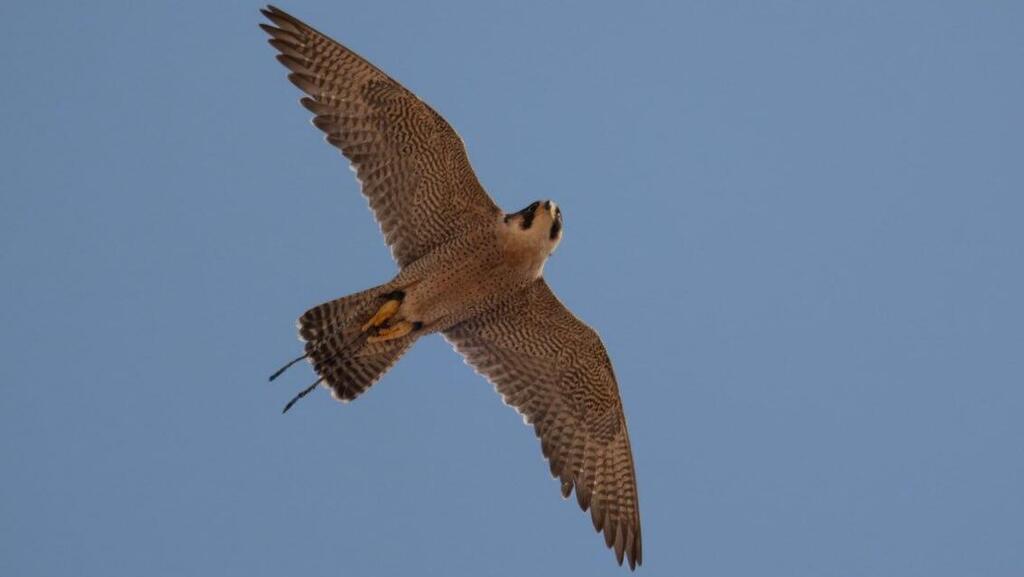
The leather strips are clearly visible on the falcon's legs
(Photo: Ayalon Gur, Israel Nature and Parks Authority)
The Nature and Parks Authority explained that this is essentially a “refugee of captivity” — a falcon captured from the wild for falconry that managed to escape and return to its natural environment. Despite the harm and the marks left on it, the bird survived in an exceptional way, found a mate, established a territory and is now raising a new generation in the wild.
“There is something both chilling and inspiring in such an encounter,” said Levavi, a raptor and vulture inspector in the Judean Desert. “This is a falcon that bore the marks of captivity, and yet managed not only to survive — but to thrive. It’s a story about the power of nature and the remarkable ability of wildlife to recover, if only given the chance.”
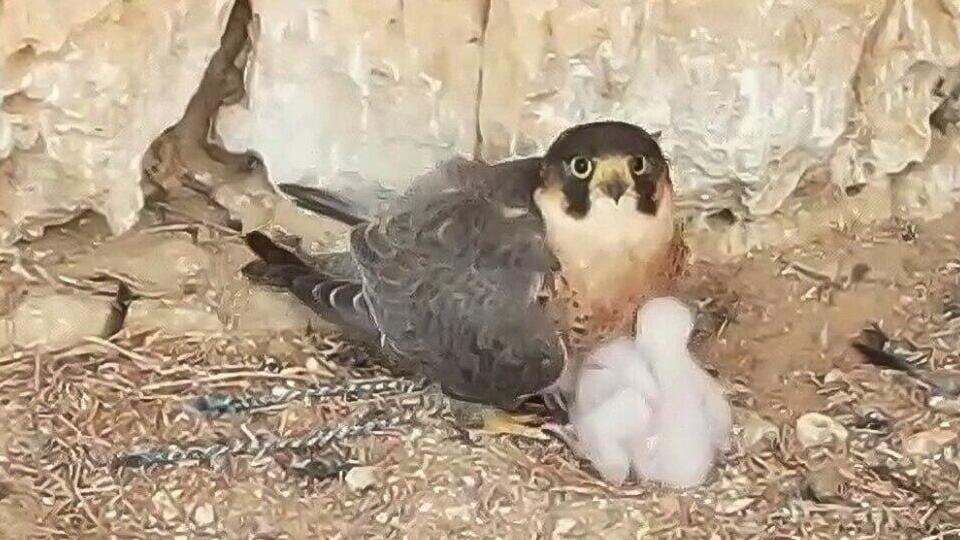
In the nest with his two chicks
(Photo: Ayalon Gur, Israel Nature and Parks Authority)
The desert falcon is considered one of the symbols of Israel’s desert ecosystems. It is a small, exceptionally fast bird of prey, perfectly adapted to the harsh desert environment and feeding mainly on small birds. As a top predator, its presence is an important indicator of ecosystem health.
“The fact that a desert falcon is successfully raising chicks in the wild indicates a functioning environment, with sufficient food and habitat." according to Dr. Ohad Hatzofe, an avian ecologist at the Nature and Parks Authority. "At the same time, this case highlights the ongoing threat of capturing falcons from the wild. This is a serious phenomenon that endangers already vulnerable populations.”
Falconry — hunting with trained falcons — is an ancient tradition, but in recent decades it has become a large-scale economic industry, particularly in the Persian Gulf states. High demand for falcons drives the capture of wild birds, sometimes even in Israel, harming populations already under pressure. The capture of large falcons — such as peregrine falcons, desert falcons, saker falcons and lanner falcons — is on the rise worldwide and constitutes a major threat to these species across Asia, Europe and North Africa.