


At first glance, it looked like an Israeli department store had decided to start selling dogs. On the website of Mashbir, one of Israel’s best-known department store chains, visitors were met with listings for purebred dogs carrying price tags of thousands of shekels.
A poodle was “offered” for 7,499 shekels ($2,500) instead of 8,900 ($2,967). A smooth reddish-brown dachshund appeared with a 15% discount and a price of 6,499 shekels ($2,166). A Cavalier King Charles Spaniel, described as a small dog with long ears and silky fur, was listed with a 30% discount and a price tag of about 9,000 shekels ($3,000).
Gallery
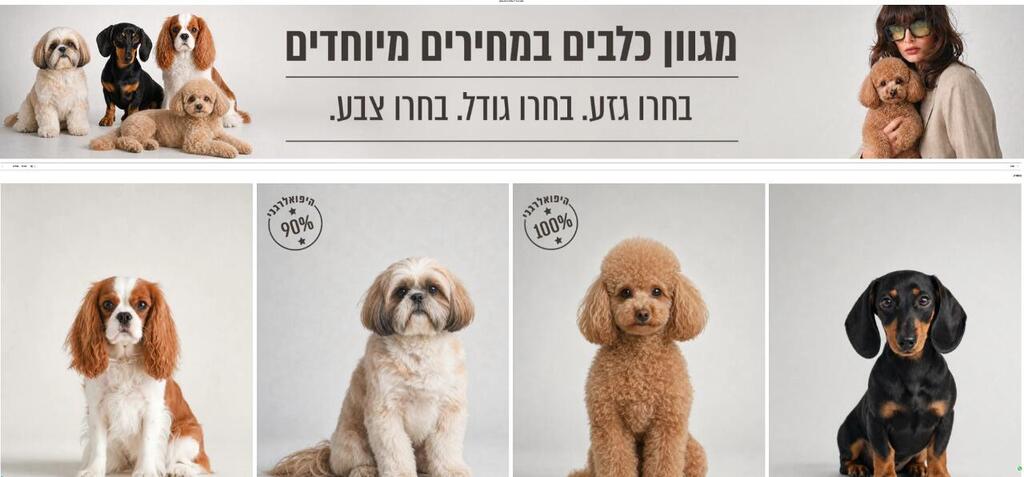
A range of dogs at special prices. Choose a breed. Choose size. Choose a color.
(Photo: Let the Animals Live, Mashbir campaign)
Animal lovers were furious. Many questioned how a major retail chain could treat dogs like products to be added to an online shopping cart.
But the listings were not real. They were part of a provocative campaign by the Israeli animal welfare organization Let the Animals Live, created in cooperation with Mashbir, to promote dog adoption and challenge the idea that pets are consumer goods.
The campaign’s message was blunt: dogs are not accessories, shelf products or fashion trends. They are living creatures in need of homes.
Anyone who tried to “buy” one of the dogs discovered the twist. Instead of completing a purchase, potential buyers were shown the campaign’s message: “Dogs are not accessories. Dogs are not bought. Dogs are adopted.”
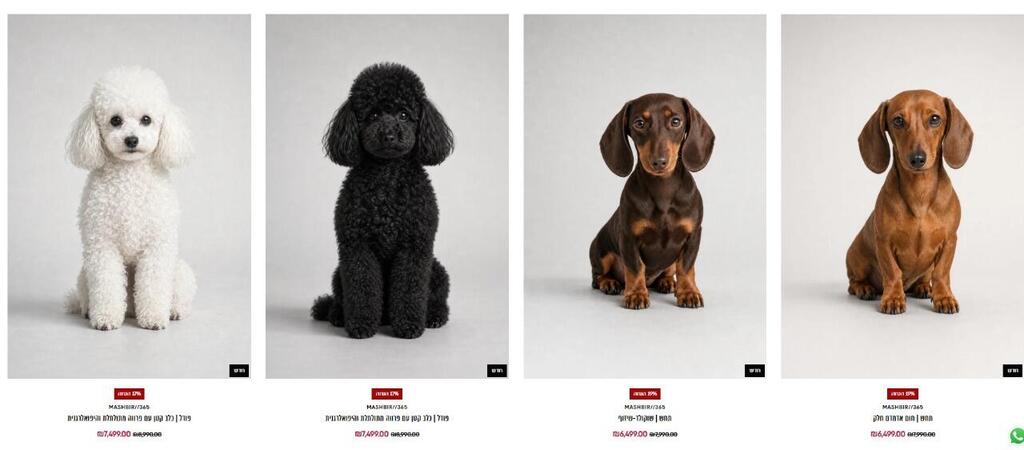
Visitors were met with listings for purebred dogs carrying price tags of thousands of shekels
(Photo: Let the Animals Live, Mashbir campaign)
Let the Animals Live and Mashbir said the campaign was designed to shake the public and deliver a clear message: buying a dog is not the only option, and adopting mixed-breed dogs from shelters is a moral, responsible and often smarter choice.
The campaign argued that adoption saves lives and frees space in shelters and municipal kennels for more dogs in need. It also said adoption helps fight so-called puppy mills, the abusive and often illegal breeding industry that produces dogs in poor conditions for profit.
The campaign also highlighted the advantages of adopting adult dogs, whose personalities are already known, and the financial benefit of adoption packages that often include vaccinations, a microchip and spaying or neutering. It noted that mixed-breed dogs are often considered more genetically resilient.
“Every day, thousands of dogs in Israel are waiting for a home, and some of them are in a race against time,” said Yael Arkin, CEO of Let the Animals Live. “For them, adoption is not just a new beginning, it is a real lifesaving act. This campaign reminds the public that a dog is not a trend, not an accessory and not a product you add to a cart, but a family member who deserves a loving and responsible home.”
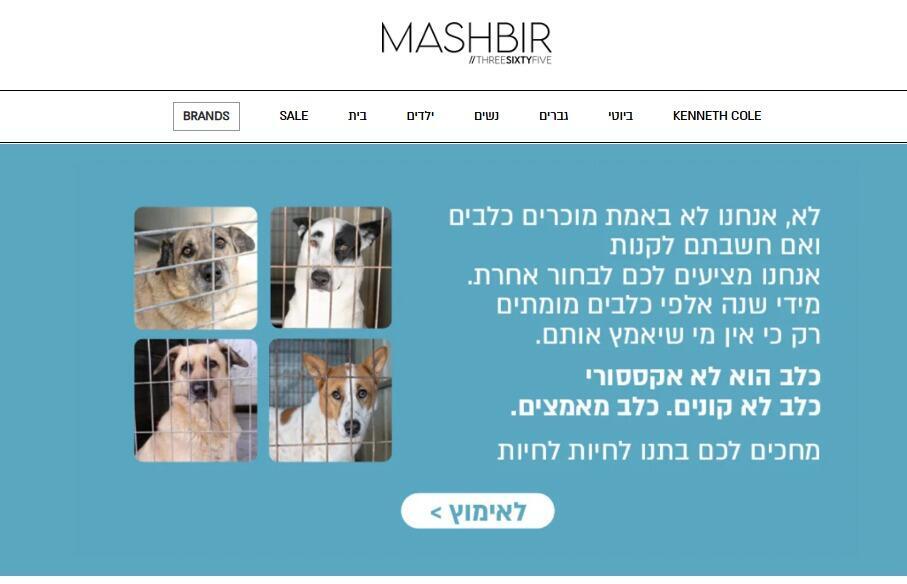
No, we’re not really selling dogs and you can’t add them to the cart. We’re suggesting you choose something else. From hundreds of dogs waiting in shelters, there is probably one that will suit you. A dog is not an accessory. A dog is not bought. A dog is adopted. Waiting for you at Let the Animals Live.
(Photo: Let the Animals Live, Mashbir campaign)
Dekla Ganor Shemesh, Mashbir’s marketing director, said the chain knew the campaign would draw harsh criticism before the twist was revealed.
“When the idea for the campaign was presented to us, it touched us immediately,” she said. “It was completely clear to us that the initial message, which seemingly showed dogs for sale on our website, would spark an uproar and draw sharp public criticism. Nevertheless, we immediately understood how big and important this goal was, and decided to stand fully behind the move and give it the widest platform possible.”
She said the campaign sought to shock people into rethinking the way they view animals.
“The campaign by Let the Animals Live tries to shake the perception that animals are consumer products, and we are here to strengthen and amplify their call: ‘Dogs are not bought. Dogs are adopted,’” she said.
The campaign was created by the advertising agency McCann on a fully voluntary basis. No real animals were photographed for the campaign. The dog images were produced using artificial intelligence.