


Israeli archaeologists have uncovered a vast 1,600-year-old agricultural estate in the central town of Kafr Qasim, shedding light on the prosperity and endurance of a Samaritan community that lived there for centuries, officials said Tuesday.
The excavation, conducted by the Israel Antiquities Authority (IAA) and funded by the Construction and Housing Ministry ahead of a new neighborhood development, revealed the remains of a large estate within the archaeological site of Khirbet Kafr Hatta. The site is mentioned in historical sources as the birthplace of Menander, a Samaritan magician who succeeded Simon Magus, regarded as the father of the Gnostic sects and one of Christianity’s first converts.
Gallery
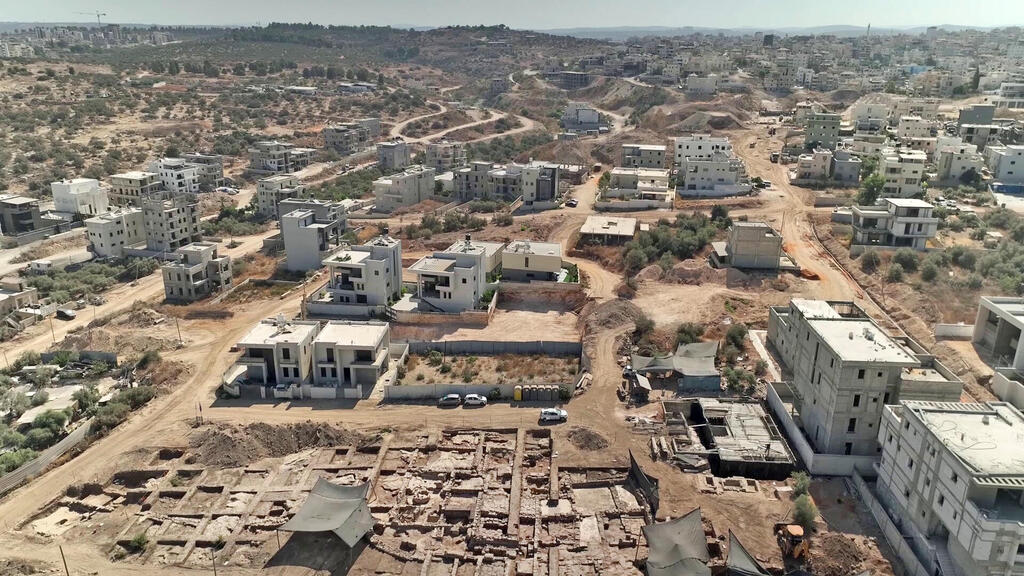
The Israel Antiquities Authority excavation in Kafr Qasim. Aerial view
(Photo: Emil Aladjem/Israel Antiquities Authority)
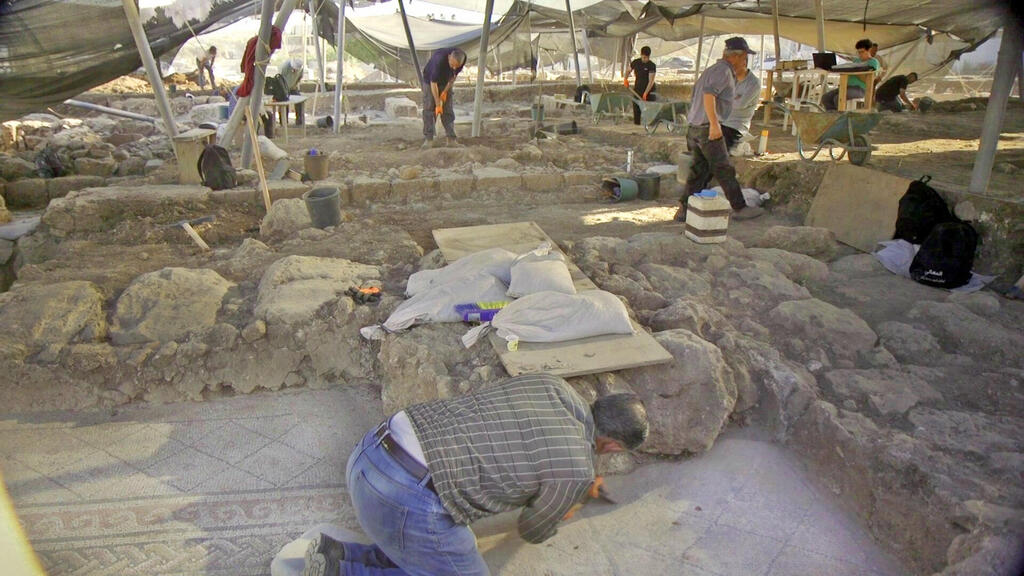
The Israel Antiquities Authority excavation in Kafr Qasim
(Photo: Emil Aladjem/Israel Antiquities Authority)
According to the IAA, the settlement thrived for roughly 400 years, from the late Roman to the end of the Byzantine period (4th–7th centuries CE). “The size and splendor of the buildings, the quality of their mosaic floors and the impressive agricultural installations all point to the great wealth and prosperity of the local Samaritan community over the years,” said excavation directors Alla Nagorsky and Dr. Daniel Leahy Griswold.
One of the buildings contained a well-preserved mosaic floor decorated with geometric patterns and plant motifs. Its central medallion was surrounded by acanthus leaves and rare depictions of fruits and vegetables, including grapes, dates, watermelons, artichokes and asparagus. A partially preserved Greek inscription at the entrance wished the owner “good luck.”

Magnificent mosaics attesting to the great wealth and prosperity of the ancient Samaritan community
(Photo: Emil Aladjem/Israel Antiquities Authority)
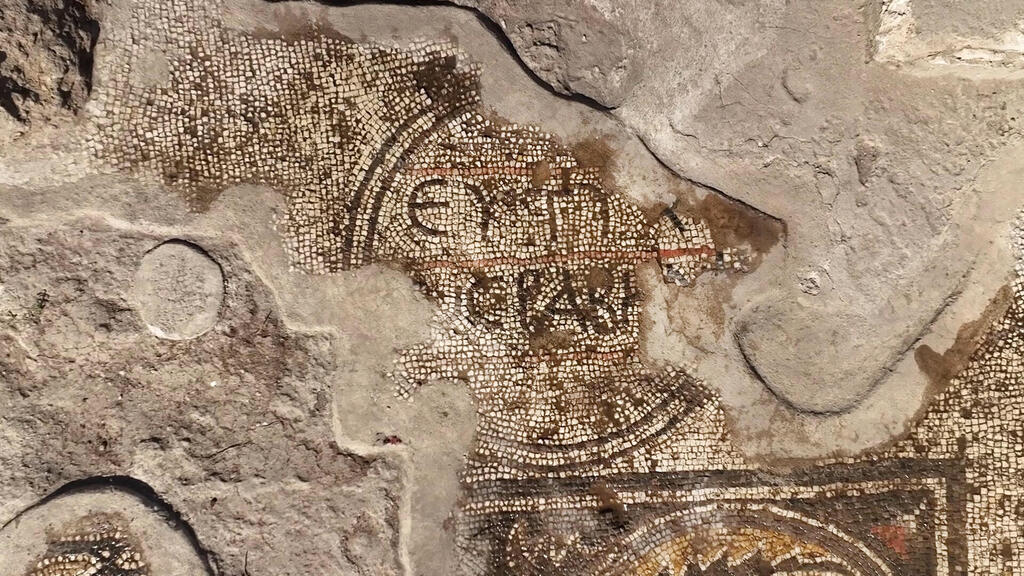
Mazal Tov – Good Luck! The inscription on one of the mosaics
(Photo: Emil Aladjem/Israel Antiquities Authority)
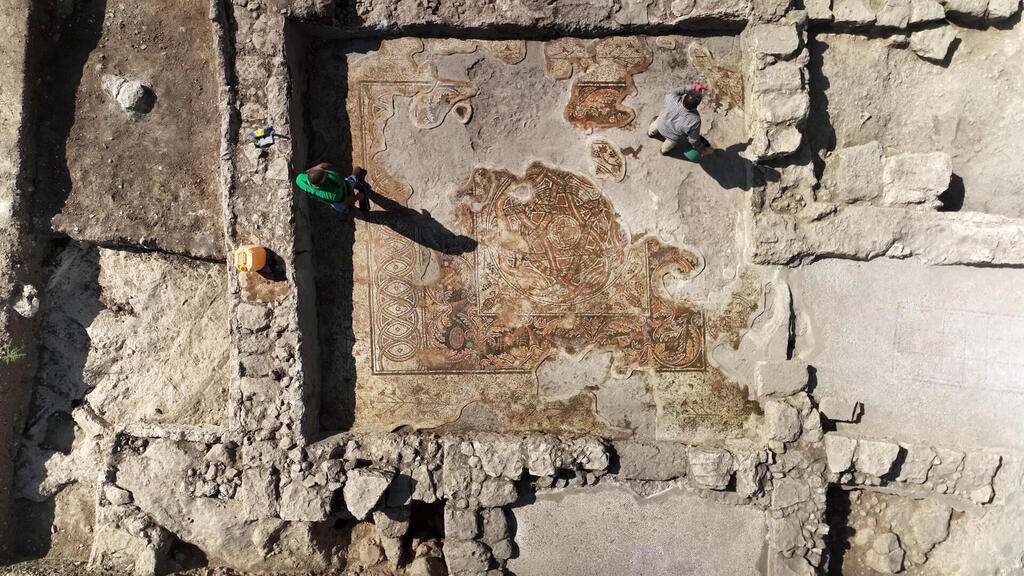
(Photo: Emil Aladjem/Israel Antiquities Authority)
The northern part of the estate featured an olive press, a spacious warehouse and a ritual purification bath, or miqveh. Archaeologists believe the proximity of the press and bath suggests oil was produced in ritual purity. The olive press, designed with two wings, contained screw presses and a large crushing basin — a type more common in the Jerusalem area than in Samaria, Nagorsky noted.
Over time, the estate shifted from luxury living to agricultural production. Walls were rebuilt over mosaic floors, and decorative capitals and columns were reused as building material. Nagorsky said these changes may be linked to the Samaritan revolts against Byzantine rule in the 5th and 6th centuries, when restrictive laws and uprisings destabilized the community.

An olive press for production of oil in ritually pure conditions and an adjacent ritual bath (miqveh)
(Photo: Emil Aladjem/Israel Antiquities Authority)
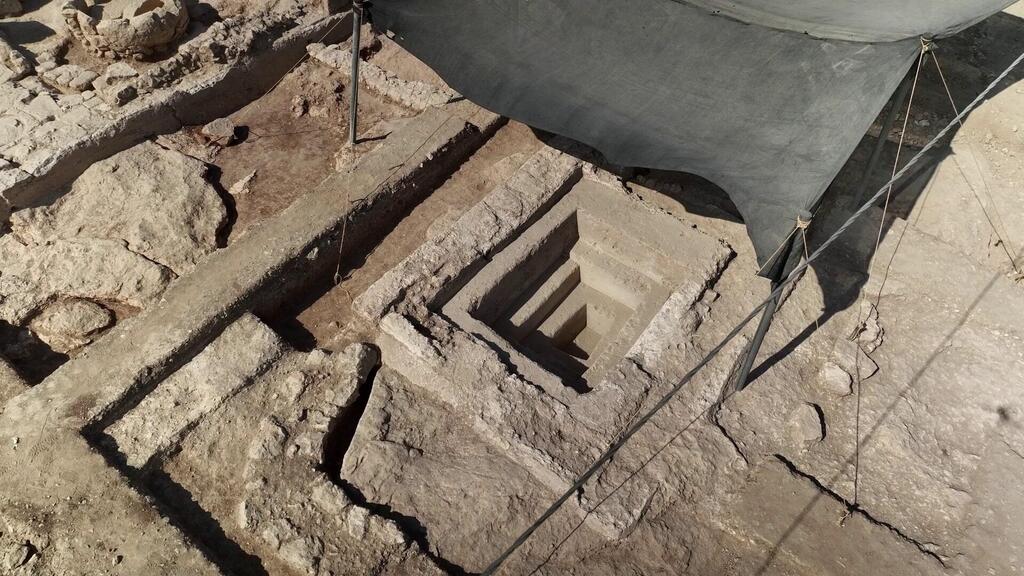
A purification bath (miqveh) discovered in the excavation, used by the Samaritan community to produce olive oil in ritually pure conditions
(Photo: Emil Aladjem/Israel Antiquities Authority)
“What makes this site particularly interesting is that unlike some of the other Samaritan sites destroyed in these revolts, the agricultural estate in Kafr Qasim continued in use, and even preserved its Samaritan identity — as evidenced by the Samaritan ceramic oil lamps uncovered in our excavation,” she said.
Heritage Minister Rabbi Amichai Eliyahu called the find “another chapter in the common story of the ancient peoples of this land — Jews and Samaritans alike.” He added: “These two ancient communities led their lives based on the Torah and shared common roots, and also experienced similar hardships under hostile rulers. The impressive findings highlight the prosperity of a community closely related to Judaism, which lived in the Land of Israel for many centuries.”
Nagorsky said the discovery provides a unique window into both the prosperity and decline of the Samaritan community. “Its long-term existence and impressive findings will allow us to reconstruct its history over centuries and enrich our knowledge of this population in ancient times.”