


On Mount Gilboa, facing the winds of the Valley of Springs and its relentless summer sun, an unusual Israeli harvest unfolded last week.
In the early morning, before the heavy heat settled over the valley, farmers from Gidash Maayanot at Kibbutz Ma’ale Gilboa, students from a pre-military academy in the Beit She’an area and employees of renewable-energy company Doral entered a vineyard growing directly beneath rows of solar panels.
A vineyard growing directly beneath rows of solar panels
(Video: Eitan Barnet)


Their work produced 30 tons of sweet, juicy grapes, setting a new Israeli record for agrivoltaic farming.
The system allows the same plot of land to serve two purposes. The solar panels generate renewable electricity from sunlight, while also providing shade that protects the vines from the valley’s extreme heat and helps the fruit develop under less stressful conditions.
For months, the vines were closely monitored as researchers and agricultural professionals worked to find the right balance between crop requirements and electricity production.
Gallery
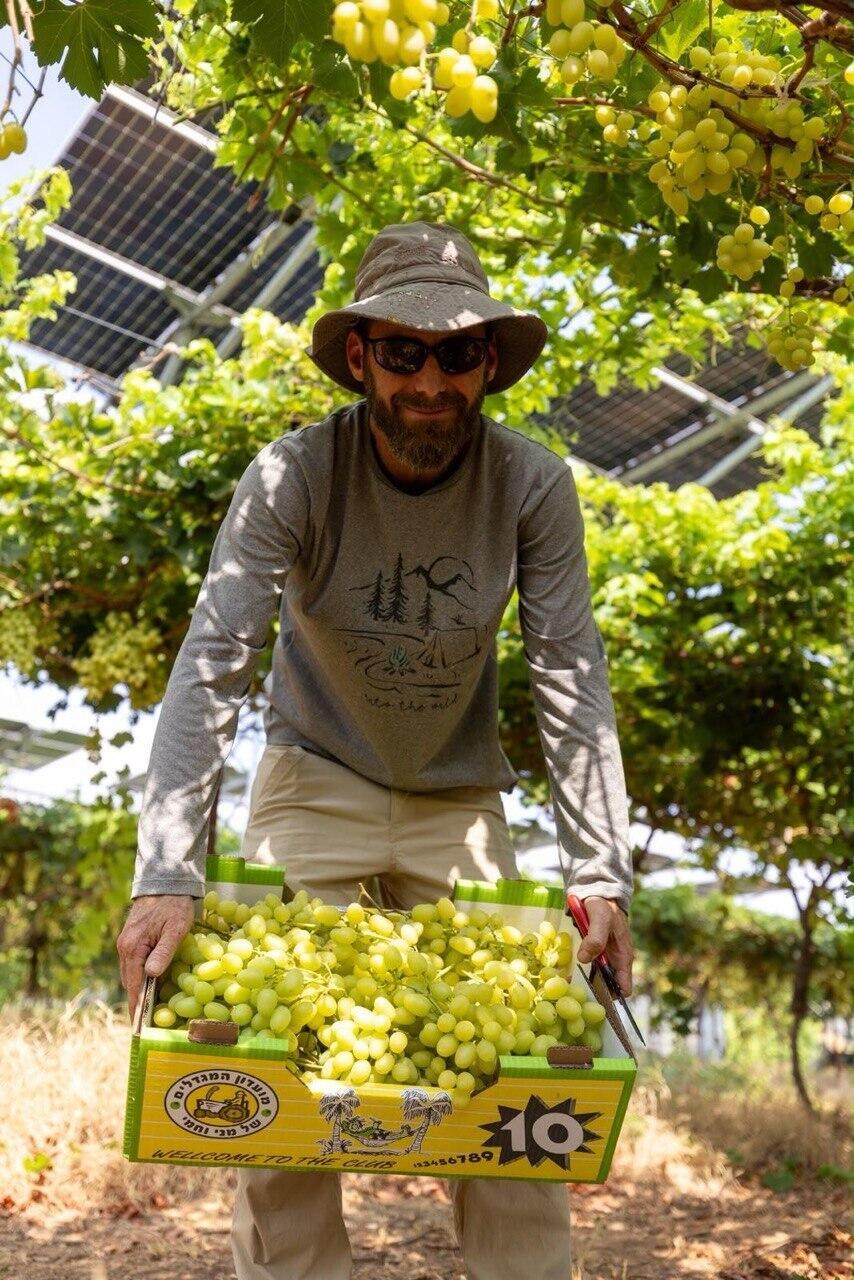
The solar panels generate renewable electricity from sunlight, while also providing shade that protects the vines from the valley’s extreme heat
(Photo: Eitan Barnet)
As crate after crate was filled with grapes, what had once been a theoretical model became a working agricultural project.
“When we established the project at Ma’ale Gilboa, we set ourselves a clear goal: to prove that the same land could produce not only renewable energy but also thriving agriculture,” said Ofer Stavay, CEO of Doral Israel.
“This first harvest of grapes grown beneath solar systems is the moment when that vision became reality.”
A crop chosen for one of Israel’s hottest regions
Oved Yavin, Doral’s professional director for agrivoltaic development, said the location and crop presented a significant physical and agricultural challenge.
“This is an especially hot region, and we deliberately chose vines, which are among the most difficult crops to grow under these climatic conditions,” he said.
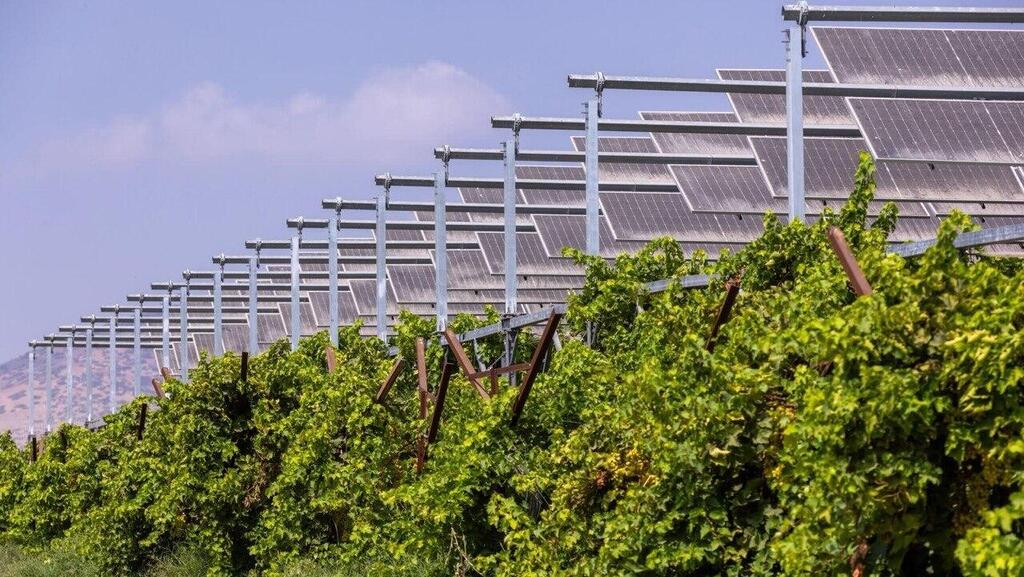
Grapes and green energy together
(Photo: Eitan Barnet)
“We knew that if we could grow grapes in these conditions, we could grow almost anything. The great success and full harvest reflect the close and successful cooperation between Doral and Kibbutz Ma’ale Gilboa.”
The Ma’ale Gilboa site has become a research and development center for new models combining land, food production and energy generation.
Alongside the vineyard harvested last week, the site also includes lychee and mango orchards and other field crops. Sweet corn, wheat and potatoes have previously been grown there successfully.
For members of the kibbutz, the harvest represents more than an agricultural or technological achievement. They see it as a possible path for securing the future of Israeli farming.
“We see this activity as a once-in-a-generation opportunity to develop agriculture in Israel and ensure that it has a next generation,” said Dubi Miller, chairman of Kibbutz Ma’ale Gilboa’s energy operations.
“Young people will not enter agriculture unless it is closely connected to renewable energy and advanced technologies. Our full harvest is a significant mark of success and gives all of us tremendous momentum for the road ahead.”