

We all know the irritating buzz in the ear that makes us tense up and swat wildly. A mosquito may not be as intimidating as a lion or a snake, but despite its tiny size, it is statistically the deadliest animal on Earth.
“Israel has become Thailand, why are you surprised?” asks Dr. Shay Reicher, Head of the Pest and Extermination Division at the Ministry of Environmental Protection. “It’s hotter and more humid here.” According to Reicher, the greatest danger created by climate change is not necessarily rising sea levels, but the rapid spread of disease-carrying pests that could affect everyone.

Several factors influence mosquito development, the main one being temperature. Mosquitoes are considered "cold-blooded", meaning they cannot regulate their body temperature and depend on the temperature of their surroundings. For humans, a one- or two-degree increase usually means discomfort and higher air conditioning consumption. For mosquitoes, Reicher says, even a 0.1 degree Celsius rise can drastically alter their biology.
Which mosquitoes are here?
The common house mosquito, Culex pipiens, which is active only at night, spreads West Nile fever. About 40 mosquito species live in Israel, though most do not transmit disease. Still, this summer, the Ministry of Environmental Protection's monitoring program trapped females carrying the West Nile virus.
The Asian tiger mosquito, by contrast, bites also during the day. Reicher calls it “lazy,” usually staying within 100 to 200 meters. That means if it’s in your yard, it is likely that there are standing water sources nearby, and it did not arrive from a more distant area with sewage or sanitation risks.

Asian tiger mosquito
(Photo: Shutterstock)
According to a recent study in The Lancet, the Asian tiger mosquito was first spotted in Europe in 1979 in Albania and reached Italy in 1990. Since then, it has spread to 21 European countries and appeared in six more, establishing itself in 126 countries worldwide. It ranks fourth on the list of the world’s 100 most problematic invasive species and first among invasive disease carriers. In the EU countries alone, its range grew from one area in one country to 358 regions over the past three decades.
The change is already here
The study found that mosquito-borne disease outbreaks are happening earlier and more often in warm regions than in cooler ones, meaning the likelihood of avoiding outbreaks is shrinking as the planet warms. Under extreme climate scenarios, the risk will rise further. A one-degree increase in average summer temperatures raises the likelihood of outbreaks by 55 percent.
Researchers focused on two tropical diseases spread by the Asian tiger mosquito: dengue fever and chikungunya. The gap between the first and second outbreaks has shrunk from 12 years in 1990 to less than a year in 2024.
Another factor contributing to outbreaks is human mobility between different parts of the world, which has grown significantly over the years, along with the faster and easier spread of diseases and their carriers.
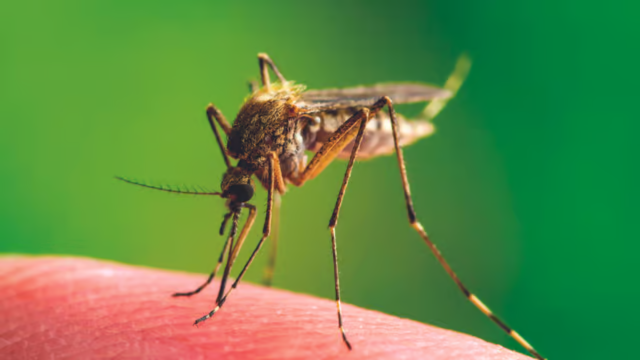
Mosquito
(Photo: Shutterstock)
Yet, climate factors were found to be the strongest predictors of outbreaks.
Reicher explains that “We face serious challenges from climate change. Mosquito populations are expanding into new areas, adapting to habitats where they couldn’t survive before. That means more disease transmission. The female mosquitoes we normally detect in mid-June were already found in mid-May last year.”
What can be done?
The Ministry of Environmental Protection, he says, is well aware of the threat and is working with local authorities. “We monitor land, sea and air borders so we will be the first to know if a disease-carrying mosquito enters Israel, and we respond accordingly,” Reicher says.
The ministry conducts more than 10,000 inspections a year, tracking larvae and pupae in water sources and capturing adult mosquitoes nationwide. This is essential to understand their potential risk of transmitting diseases and to ensure they remain only a nuisance rather than a public health hazard.”
Local governments play a key role, but individuals also have responsibility, Reicher stresses. Simple measures like installing window screens, emptying standing water, wearing long sleeves, using fans or repellents, and planting certain herbs can reduce bites.
“Our goal is to protect public health and minimize environmental damage,” he adds. “We need to control mosquito populations, not eradicate them, to maintain ecological balance."
Despite the challenges, Reicher remains optimistic. “Climate change is unfortunately a fact. We can’t reverse it in the next 20 to 30 years. What we can do is prepare. Everyone needs to be more aware and vigilant - local authorities at their level, and we at the national level. If we work together, we can succeed despite climate change", he concludes.
- This article was written by Zavit, Israel's science and environment news agency