


After a wintery weekend with rain and floods, a reversal in the weather is expected this week, and starting Tuesday the weather will be warm and dry. Across the country strong dry east winds will blow, and in the central region, the coastal plain and the coastal lowlands, temperatures will approach 30 °C by the weekend. In the hills the temperatures will climb to around 25 °C.
Water level between Ashkelon and Ashdod
(Video: Omer Dor, Shimshon Vlotker)


“The rain system that struck us over the weekend met the early expectations,” said Dr. Amir Givati, director of the Meteorological Service. “It brought large rainfall amounts to the coastal cities and the lowlands, hail, lightning, gale‑force winds and floods. The rain phase is over and from tomorrow temperatures will rise gradually and will be above normal for November. No further rain systems are on the horizon, and we’ll need to wait well into November for more rain.”
Today the weather will be partly to mostly cloudy. Occasional local rain, mostly light, is expected especially in the center of the country and in the northern Negev. From mid‑afternoon the rain will gradually cease. Temperatures will be slightly below the seasonal norm.
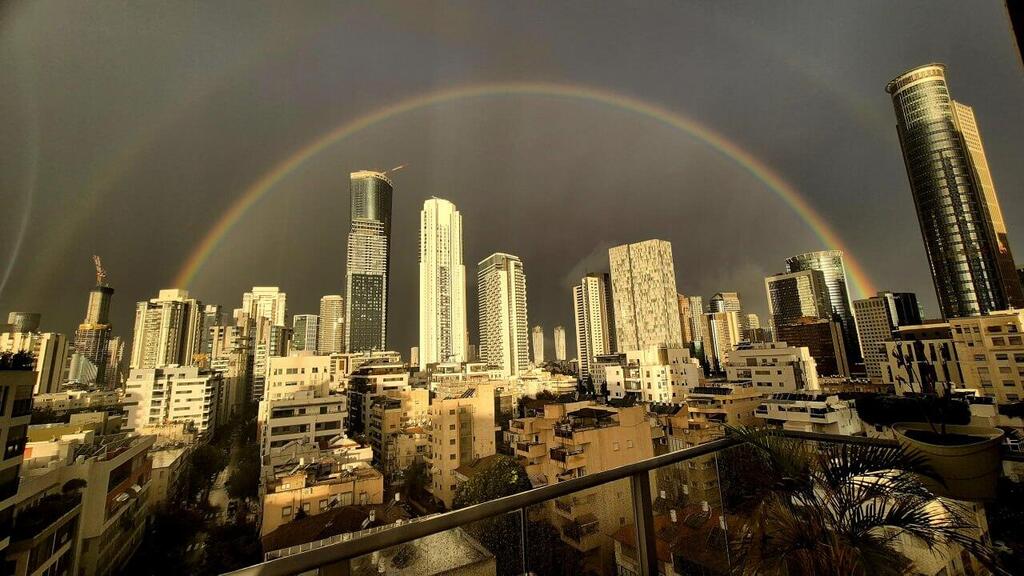
On Monday there will be a temperature rise and conditions will return to normal for the season, with gusty east winds in the morning over the northern hills.
Tuesday will be clear, with a further rise in temperatures, making it warmer than normal for the season. In the morning strong east winds will blow in the northern and central hills. East winds will continue during the day, especially in the northern hills, where haze may also develop.
Wednesday will see temperatures rise further, remaining warm and dry in most areas. In the morning strong east winds will still occur in the northern and central hills, and again haze may develop during the day.

Rescue of a vehicle that sank in an underpass in Haifa
(Photo: Coastal District Police Department)

A tree fell on a vehicle in north Tel Aviv
Forecast temperatures for Sunday and overnight: Jerusalem 12°C‑18 °C, Tel Aviv 16°C‑23 °C, Haifa 15°C‑23 °C, Safed 10°C‑17 °C, Katzrin 11°C‑21 °C, Tiberias 14°C‑22 °C, Nazareth 14°C‑20 °C, Afula 13°C‑23 °C, Beit She’an 15°C‑24 °C, Lod 16°C‑24 °C, Ashdod 17°C‑24 °C, Ein Gedi 18°C‑22 °C, Be’er Sheva 14°C‑22 °C, Mitzpe Ramon 11°C‑18 °C, Eilat 17°C‑26 °C.
Rainfall summary: On Saturday rainfall focused on the coast and southern lowlands. The highest totals from Thursday to Saturday were in the stretch from Ashkelon‑Ashdod to Be’er Tuvia. At Azrikam station near Kiryat Malachi, 93 mm fell in total, of which 35 mm fell in 20 minutes. In Ashkelon 86 mm fell, with 53 mm in a single hour. Near Nitzan to the north, 79 mm fell.
The area from the northern Sharon to the Haifa Bay also received very high totals: Hadera port recorded 90 mm, Be’erotayim in the Sharon 86 mm, Pardes Hanna 83 mm and Lahavot Habiva 68 mm. In many places along the coast totals ranged between 30mm‑50 mm (in Tel Aviv 60 mm), while Jerusalem only recorded 6 mm, but the weather there remained cold and wintry.
Aside from the floods that struck cities like Haifa, Netanya, Ashdod, Ashkelon and Kiryat Malachi, the rain reached the Arava and the Judean desert, with even Eilat receiving rainfall. Several wadis in the south suffered flash floods — in Nahal Ashosh in the central Arava and in Nahal Zohar, Nahal Himar, Nahal Chalmish, Nahal Azgad, Nahal Ashlim — and also south of the Dead Sea.