

Last week’s Washington summit between U.S. President Donald Trump and Chinese President Xi Jinping produced few major diplomatic breakthroughs, but there was at least one subject on which agreement came easily: giant pandas are hard to resist.
Three days after Xi announced that China would send the United States what he called “envoys of friendship,” two giant pandas arrived in Georgia. Ping Ping, a male, and Fu Shuang, a female, were both born in 2020 and have been loaned to Zoo Atlanta for 10 years. They are now undergoing quarantine and will remain under close observation for about a month before going on public display.
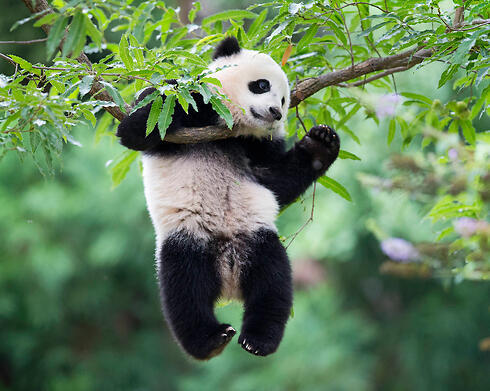
The pair made the overnight journey from the Chengdu Research Base of Giant Panda Breeding in southwestern China aboard a dedicated FedEx flight, with an image of a panda eating bamboo emblazoned on the aircraft.
They traveled in specially designed containers under the supervision of Zoo Atlanta animal-care specialists. FedEx said the pandas were the only cargo aboard, accompanied by fresh bamboo, water and a selection of their favorite treats. For the journey, the aircraft effectively became “Panda Express.”
The excitement in Atlanta was considerable. The zoo has hosted giant pandas before, but its previous animals were also on loan and returned to China in 2024. Several months later, Beijing sent another pair to the San Diego Zoo and two more to the Smithsonian’s National Zoo in Washington.
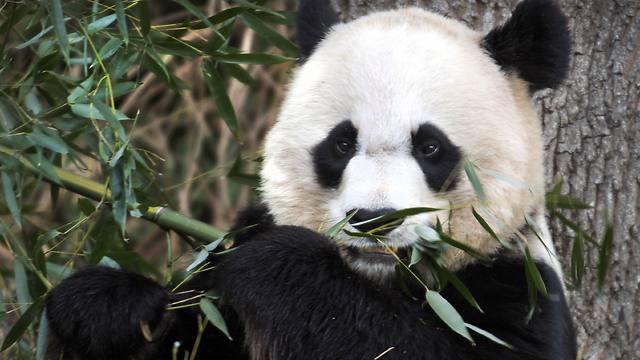
(Photo: Tal Shachar)
The practice is part of what has become known as China’s “panda diplomacy,” one of Beijing’s best-known soft-power tools. Giant pandas are not simply popular zoo attractions. Their overseas loans have long carried diplomatic significance, with Beijing using the animals as highly visible symbols of goodwill.
That symbolism was particularly striking during Xi’s Washington visit. The summit took place against continuing tensions between the United States and China over trade, as well as Chinese military activity around Taiwan and across the Pacific. Beyond the panda announcement, the meetings produced few concrete diplomatic outcomes.
Maria Repnikova, a Georgia State University professor who specializes in Chinese political communication, told The New York Times that China’s broader approach to soft-power diplomacy can often be rigid, while panda diplomacy has proved particularly successful at attracting the American public and softening perceptions of China.
The animals can also serve as a measure of the broader political climate. During periods of increased tension between Beijing and Washington, China has at times allowed panda-loan agreements to expire without renewing them.
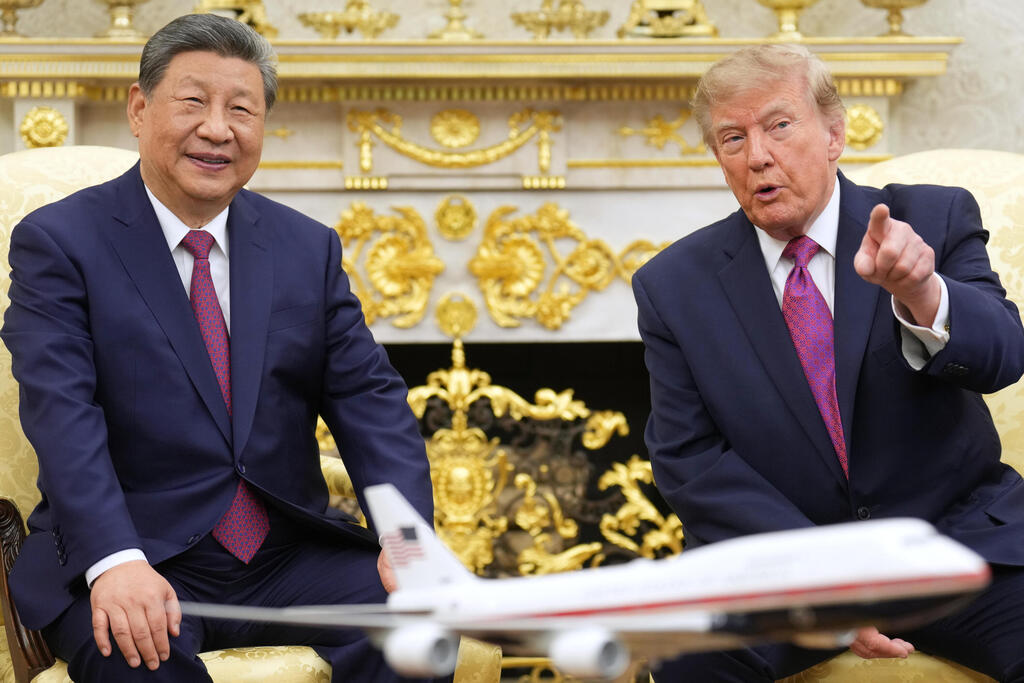
US President Donald Trump and Chinese President Xi Jinping meet at the White House
(Photo: Jacquelyn Martin/AP)
China’s panda diplomacy with the United States dates back more than half a century, to President Richard Nixon’s historic visit to Beijing in 1972.
After first lady Pat Nixon told Chinese Premier Zhou Enlai that she loved pandas, Chinese officials sent a male and female pair to the National Zoo in Washington. The animals quickly became enormously popular, establishing a diplomatic tradition that China would later repeat with zoos across the United States and around the world.
More than five decades later, Ping Ping and Fu Shuang are continuing that tradition. They may look like an unusually adorable diplomatic gesture, but for Beijing, the panda has long been more than a bear. It is also a carefully managed symbol of friendship, access and political goodwill.