

Along the Dead Sea shoreline, where desert cliffs meet one of the world’s most extreme climatic and ecological environments, a quiet drama is unfolding linked to the expansion of human activity in recent decades. Short-tailed ravens (Corvus rhipidurus) are shown to make daily life-or-death decisions that may depend on personality.
Using a combination of controlled behavioral experiments in the lab and advanced GPS tracking in the field, an international research team led by Dr. Miguel de Guinea and Prof. Ran Nathan from the Movement Ecology Lab at the Hebrew University of Jerusalem found that individuals with a higher tendency to take risks are more likely to be drawn to areas of human activity — and suffer higher mortality rates. In contrast, more cautious individuals of the same species avoid humans and show higher survival rates.
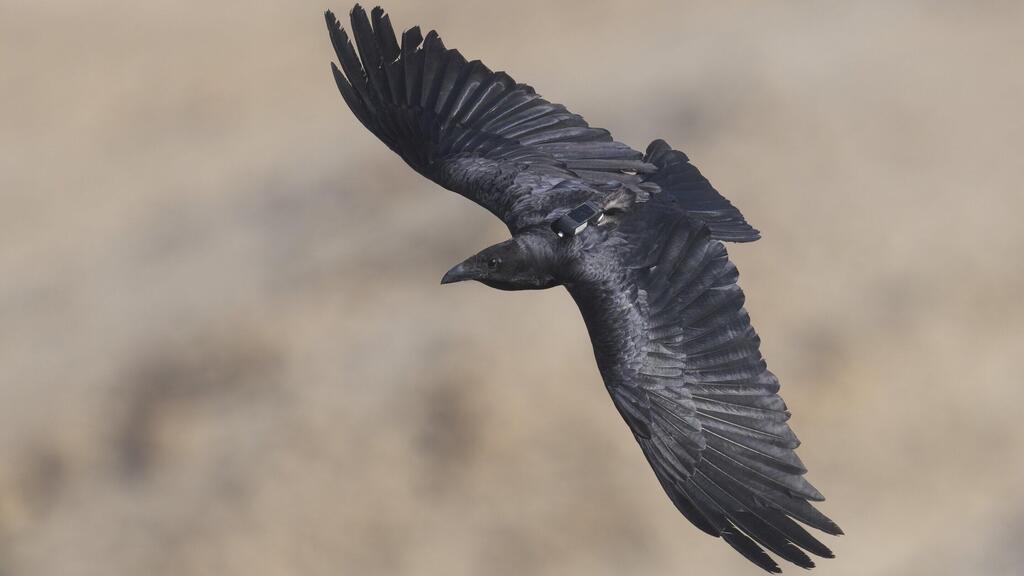
The findings, published in Ecology Letters and funded by the Israel Science Foundation’s special program for breakthrough research, show that responses to human-driven environmental change are not uniform even within the same species living side by side, but depend on consistent behavioral traits of individuals.
Therefore, ongoing anthropogenic pressures may reshape wildlife populations by favoring certain personality types, with wide-ranging ecological consequences.
Through controlled lab experiments combined with GPS tracking of ravens along the Dead Sea region in the Judean Desert, researchers examined risk-taking in contexts such as approaching unfamiliar objects, seeking novel food, and feeding near humans.
(צילום: Ai-Ivanov/ Shutterstock)
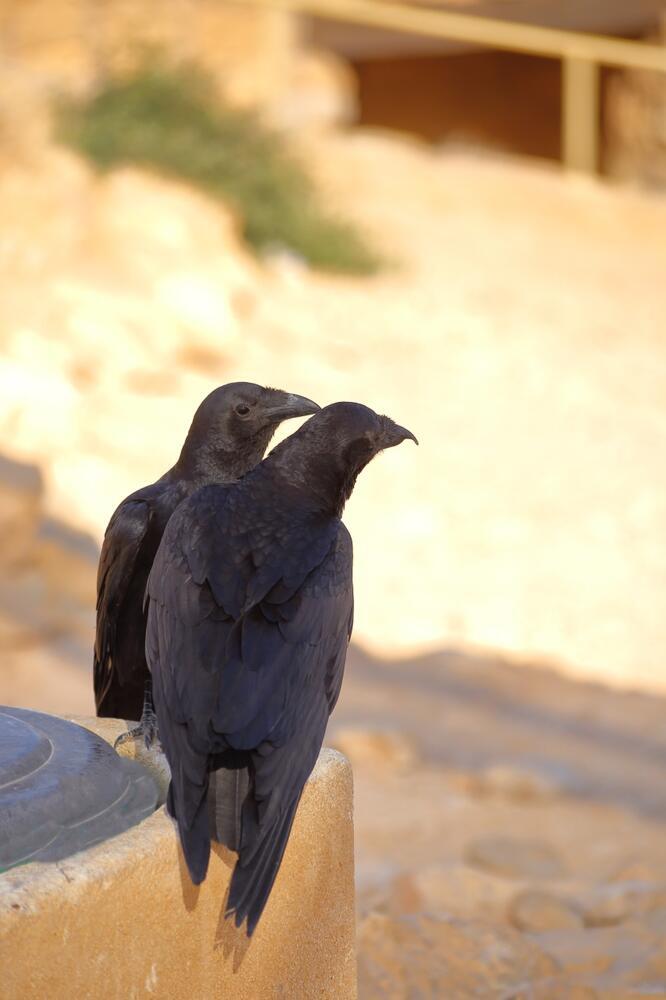
The results showed that behavioral traits were consistent across contexts: birds willing to eat unfamiliar food were also more likely to approach new objects, feed near humans, and explore novel structures in their environment, while others consistently avoided such risks.
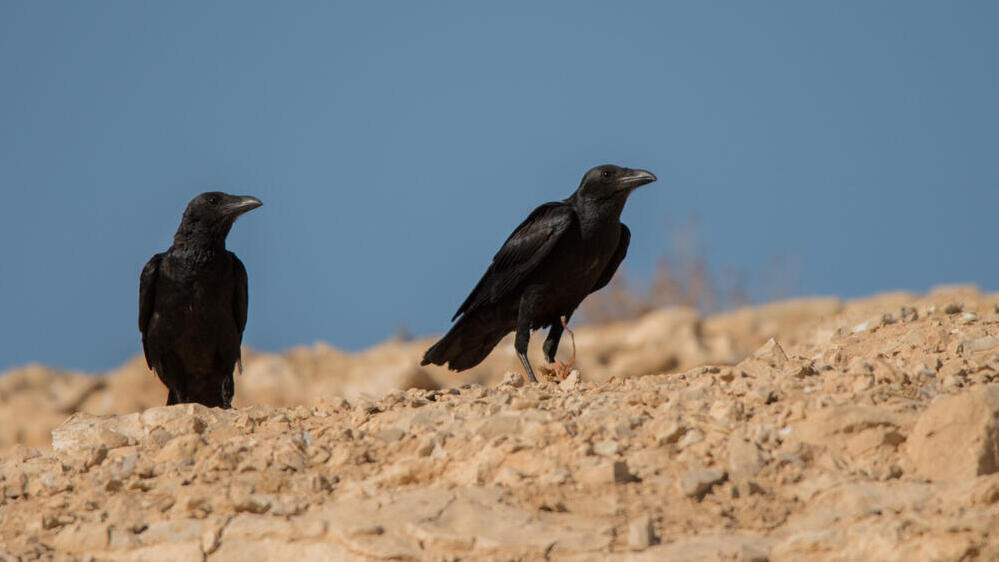
The most significant finding emerged in the wild. GPS data revealed that these behavioral differences become even more pronounced in natural settings. Risk-prone individuals preferred to stay near tourist areas and exploit food resources while exposing themselves to greater danger, while cautious individuals avoided human activity and remained at the edges of their home range.
Over time, cautious ravens were found to have significantly higher survival rates than their more daring counterparts. While risk-taking can offer short-term advantages — such as access to abundant food near humans — it appears to come at a long-term cost.
(Photo: Shutterstock)
“Our findings show that consistent behavioral traits are not marginal — they can determine life or death,” said Dr. de Guinea. “This is particularly important for short-tailed ravens along the Dead Sea in the Judean Desert, a population that is in continuous decline and may disappear from the area soon.”
As human pressures on wildlife increase globally, the study suggests that differences in risk-taking behavior may play a critical role in determining which individuals and populations survive.
“The combination of lab-based behavioral testing with real-world movement data reveals patterns we would otherwise miss,” said Prof. Nathan. “It is a powerful approach to understanding how animals respond to human-driven environmental change, not only in Israel but worldwide.”
(Photo: ChWeiss/Shutterstock)
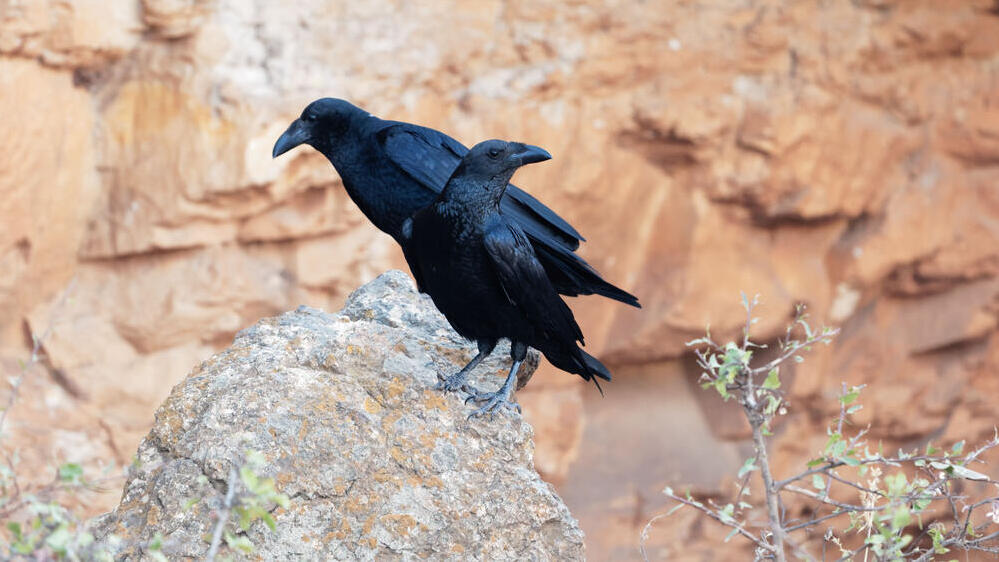
Wildlife that thrives in urban environments tends to display bolder traits than those in natural habitats. In the Dead Sea region, however, human-driven environmental change may create a “death trap” for bold ravens attracted to human proximity, contributing to the species’ decline.
By bridging controlled experiments and field behavior, the researchers provide new insight into how animals navigate the Anthropocene — and how survival may increasingly depend on personality.