

Certain dogs that excel at learning words are capable of acquiring the names of objects simply by listening to conversations between two humans, much like one-and-a-half-year-old children, according to a new study.
How do children learn to speak? They gradually build their vocabulary, starting with “mom” and “dad,” moving on to “doll” and “car,” and eventually reaching words like “rhinoceroses.” Children learn words when parents and other adults speak directly to them, pointing things out and saying, “Here’s a ball. Say ball.” But that is not the only way they learn. They also listen to conversations between adults and pick up new words from them.
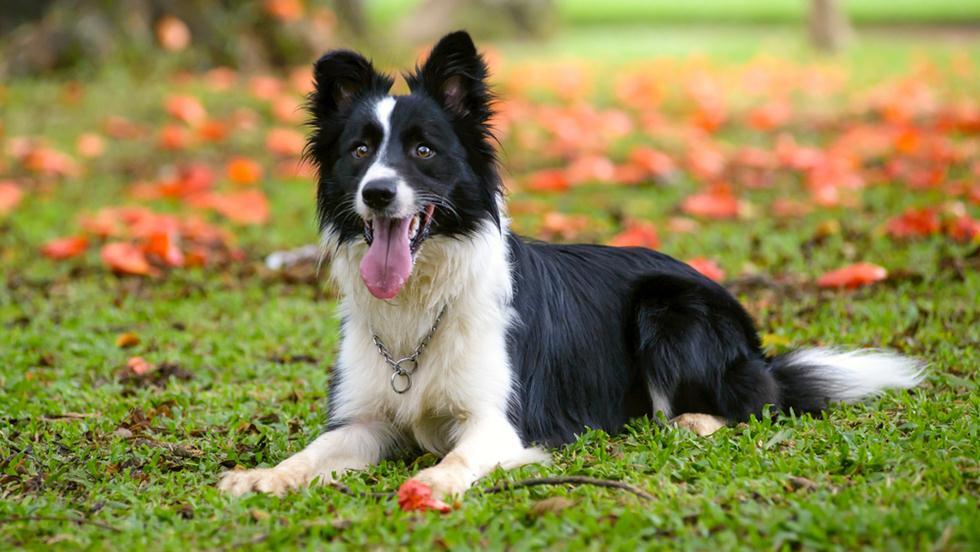
Some dogs can listen to conversations and pick up new words
(Photo: Shutterstock)
A newly published study shows that some dogs can learn words in the same way.
The research was conducted by a group of Hungarian scientists who have previously published several papers on word learning in dogs. It is well known that dogs can understand certain words. They can be taught commands such as “come” or “sit,” and they often learn on their own to recognize words with special meaning, like “food” or “walk.”
The researchers found that a small subset of dogs can do much more. Some dogs can remember the names of dozens of toys, often without their owners making any special effort to teach them. Owners simply used the toy’s name while playing with the dog, and the dog learned it. Tests showed that these “gifted” dogs learn the names of new toys easily, unlike other dogs that fail at the task. They also retain the new names over time.
In the new study, the researchers examined 10 of these gifted dogs and tested their ability to learn new toy names without being directly taught. In the experiment, the dog’s owner and another family member sat together and passed a toy between them while talking about it and repeatedly saying its name, for example: “This is Saint Claire. Saint Claire is a dinosaur. Saint Claire is very happy to be in our home.” The dog watched from the side as the conversation unfolded.
“It was very funny to watch the video afterward, just to see what she was doing,” said Elle Baumgartel-Austin, whose dog, Basket, participated in the study, in an interview with The Washington Post. As the humans talked about the toy, Basket followed it with her eyes. “She got a little frustrated. It was not fun for her to watch two humans play with a toy she wanted.”
The dog owners repeated the same type of conversation several times over a few days, using two different toys. Then came the test phase. The two new toys were placed in another room along with several familiar ones, and the owners asked the dog, “Bring Saint Claire.” Seven of the 10 dogs brought the correct toy most of the time, far more often than would be expected by guessing. The results suggest the dogs learned the new toy’s name simply by listening to a conversation between two humans.
Like babies
These dogs join a very short list of animals capable of following a conversation and extracting meaning from it. Aside from humans, the list includes bonobos (Pan paniscus) and possibly the African gray parrot (Psittacus erithacus).
“This is something that develops before language,” said Shany Dror, who led the study. “Dogs do not have language, but they do have this ability.”
According to the researchers, gifted dogs can help scientists understand how humans learn language, since they use cognitive processes similar to those of human infants. “Under the right conditions, some dogs display behavior that is surprisingly similar to that of young children,” Dror said in a press release.
Not all dogs learn this way. When the researchers repeated the experiment with 10 “ordinary” dogs that were not considered gifted, they were unable to learn the names of the new toys through listening alone.
Previous studies by the same research group showed a fundamental difference in how gifted dogs learn words compared to other dogs. The current study demonstrates that gifted dogs acquire words in a way that closely resembles how humans do it.
Dr. Yonat Eshchar is the editor in chief of the Davidson Institute of Science Education, the educational arm of the Weizmann Institute of Science