

Together with the Tigris, the Euphrates is one of the most historically significant river systems in Western Asia. The way it formed marks a key event in the development of the Fertile Crescent, the arc of fertile land in the Middle East where some of the world’s earliest civilizations emerged.
The Tigris and Euphrates created an oasis of fertile soil in an otherwise arid region, helping ancient civilizations such as the Sumerians and Assyrians flourish about 6,000 years ago. Uruk, widely considered the world’s first metropolis and one of the birthplaces of written language, was fed by the Euphrates, as was Babylon, the largest city of ancient Mesopotamia.
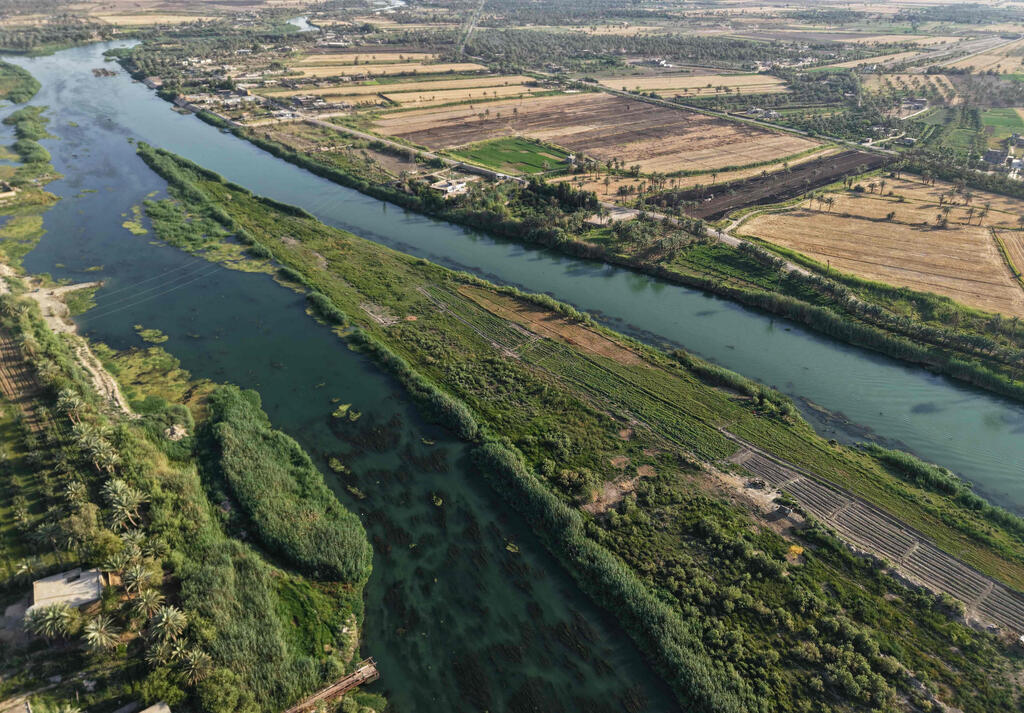
A new study published in Nature Geoscience suggests the Euphrates formed between 3.6 million and 1.6 million years ago, when two ancient river systems merged after millions of years of tectonic activity redirected them away from the Mediterranean Sea and toward the Arabian plate.
The Euphrates, the longest river in Southwest Asia, stretches for about 2,800 kilometers, or 1,740 miles. It begins in Turkey and flows through Syria and Iraq before emptying into the Persian Gulf. Although the river has long shaped the region’s geology and history, the timing of its origin and the evolution of its modern course have remained uncertain. Researchers say reconstructing the river’s history is important for understanding the landscape where major milestones in farming, writing, urban development and other foundations of human civilization took place.
About 5.4 million years ago, the ancient Paleo-Karasu and Paleo-Murat rivers flowed toward the eastern Mediterranean, which at the time had largely dried out and become a vast salt desert during a geological event known as the Messinian salinity crisis. At its southernmost edge, the Paleo-Murat came close to the ancient Paleo-Nile, possibly marking the shortest distance between them in Earth’s history.
Geologists using underground seismic data, originally gathered in efforts to identify possible gas reserves beneath the Mediterranean, detected buried channel-like formations dating to that period. They determined that two separate rivers, predecessors of the modern Karasu and Murat rivers in Turkey, once flowed across an area spanning Turkey and Syria before draining into the Mediterranean basin.
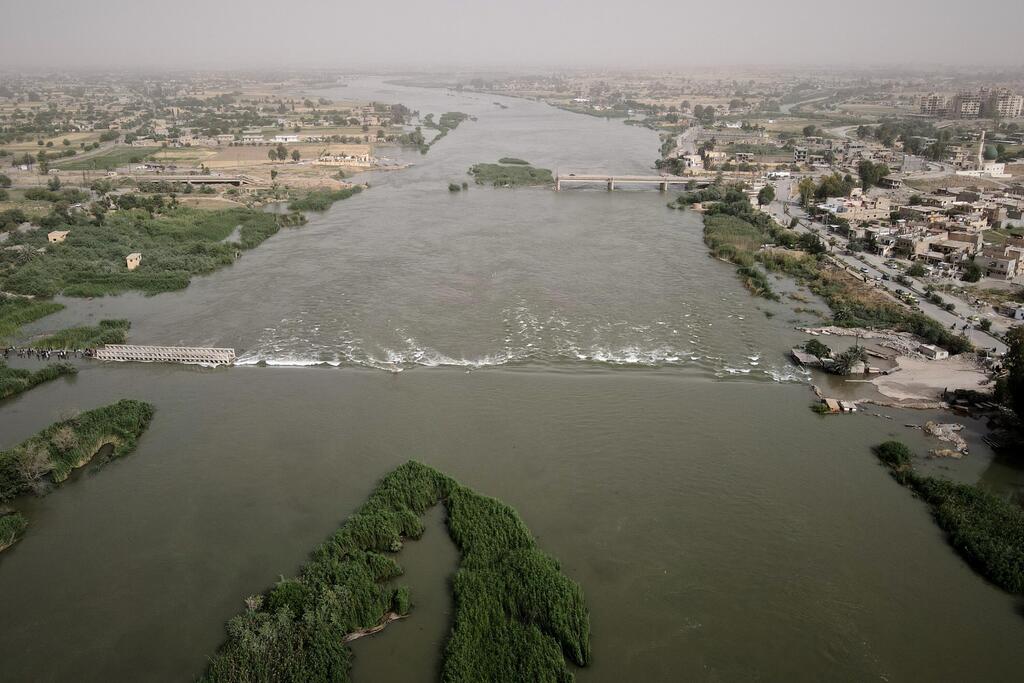
The Euphrates River flows through Syria
(Photo: Omar Albam/AP)
The researchers believe tectonic activity in this earthquake-prone region caused the Paleo-Murat to turn toward the Persian Gulf about 3.6 million years ago, while the Paleo-Karasu joined it about 2.8 million years ago. The merger created a single river system that eventually became the Euphrates.
“These diversions ultimately created a single river network that evolved into the modern Euphrates River about 1.6 million years ago, which today drains into the Persian Gulf,” said Dr. Andrew Madof, a geologist at the multinational energy corporation Chevron in Houston. “The findings highlight the central role of tectonic processes, from mountain uplift to earthquakes, in reorganizing river systems over geological timescales.”
One of the key tools used by the researchers was seismic imaging, an advanced technology based on sound waves and supercomputing that maps underground structures. It is used to locate oil and gas reservoirs, study volcanoes and understand the structure of the Earth.
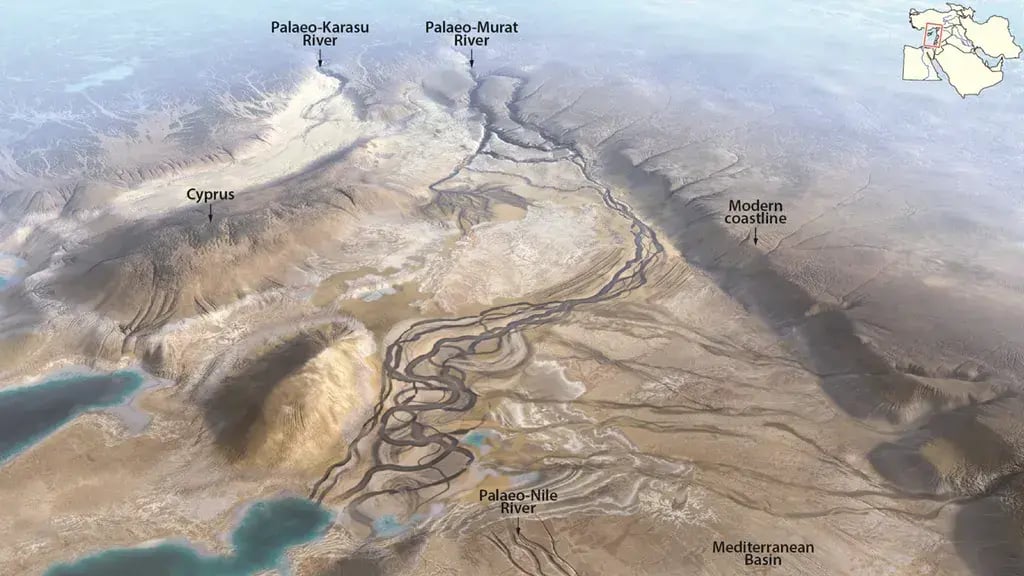
The Paleo-Karasu and Paleo-Murat rivers flowed into the mostly dried-up eastern Mediterranean 5.4 million years ago, when it had become a vast salt desert; the Paleo-Murat may have come closer to the Paleo-Nile than ever before
(Photo: Lina Jakaitė ,Andrew S. Madof)
“This technology is equivalent to using ultrasound, but in this case we used it to image buried gravels, sands, muds, limestones and salts that were compacted and turned into rock,” said Prof. Simon Lang, a geologist at the University of Western Australia and one of the study’s authors.
By modeling the underground features, the researchers determined that the two ancient rivers had a higher flow rate than the modern Nile, Euphrates and Tigris.
“Today, the waters along the Euphrates and Tigris unite near Basra and form a huge delta at the head of the Persian Gulf. They filled a large area of the Mesopotamian plain where early agriculture developed, including the rise of ancient city-states and the development of cuneiform writing, which was so crucial to early human development,” Lang said.
The Euphrates is not the only great river shaped by deep geological forces. The Amazon, the largest river on Earth, was also transformed by tectonic change. Before the Andes rose, it once flowed westward toward what are now Colombia and Peru and into the Pacific Ocean. As the mountains grew over millions of years, the river’s course reversed. Today, the Amazon flows in the opposite direction, eastward into the Atlantic Ocean.