

The first known trackway made by an adult Tyrannosaurus rex has been discovered in the Hell Creek Formation in southwestern North Dakota.
The four footprints were found by an American-British research team and provide new insight into how the iconic predator moved before it went extinct about 66.5 million years ago. The trackway stretches about 7 meters, or 23 feet, while each of the three-toed footprints is about 1 meter long. The findings were published in the Journal of Vertebrate Paleontology.
3D scan of the T. rex footprints discovered in North Dakota
(Credit: Peter Falkingham)


Based on the unusually large size of the footprints and their narrow, three-toed shape, the researchers concluded that they were made by a Tyrannosaurus rex. The abundance of fossils from the species found in the Late Cretaceous Hell Creek Formation, known for its rich fossil record and considered a paradise for paleontologists, also supported that conclusion.
While individual footprints have previously been attributed to adult Tyrannosaurus rex specimens, researchers said this is the first time a sequence of tracks has been described that likely belonged to the prehistoric apex predator.
"Bones tell us an enormous amount about these animals, but footprints capture a moment of behavior," said Dr. Tyler Lyson, senior curator of vertebrate paleontology at the Denver Museum of Nature & Science and a member of the research team. "With a trackway, we can actually follow an animal as it moved across the landscape. That is incredibly rare for T. rex."
Gallery
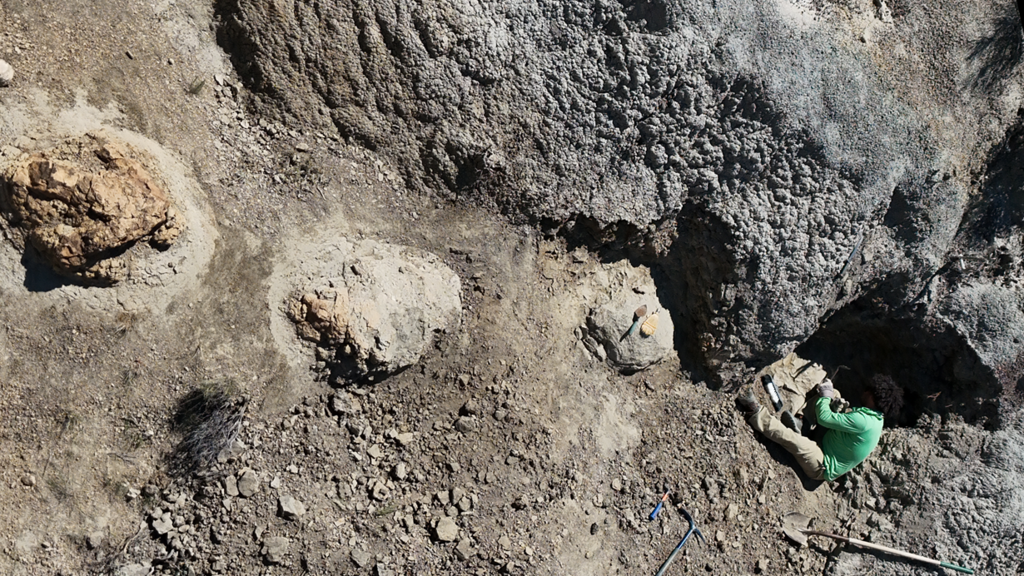
Four footprints from an adult Tyrannosaurus rex discovered in the Hell Creek Formation
(Photo: Tyler Lyson/Denver Museum of Nature & Science)
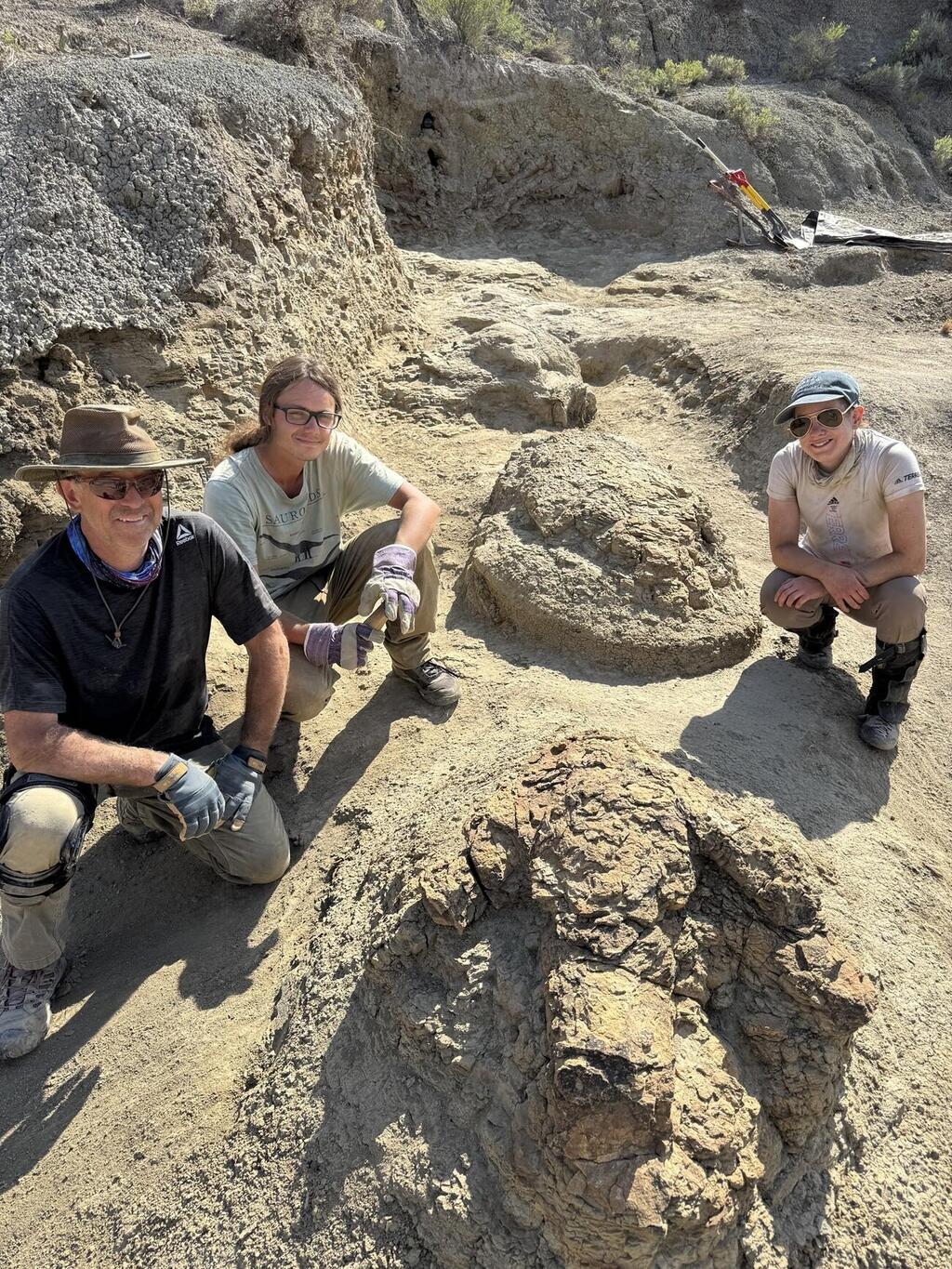
Members of the research team beside the footprints discovered in the Hell Creek Formation
(Photo: Tyler Lyson/Denver Museum of Nature & Science)
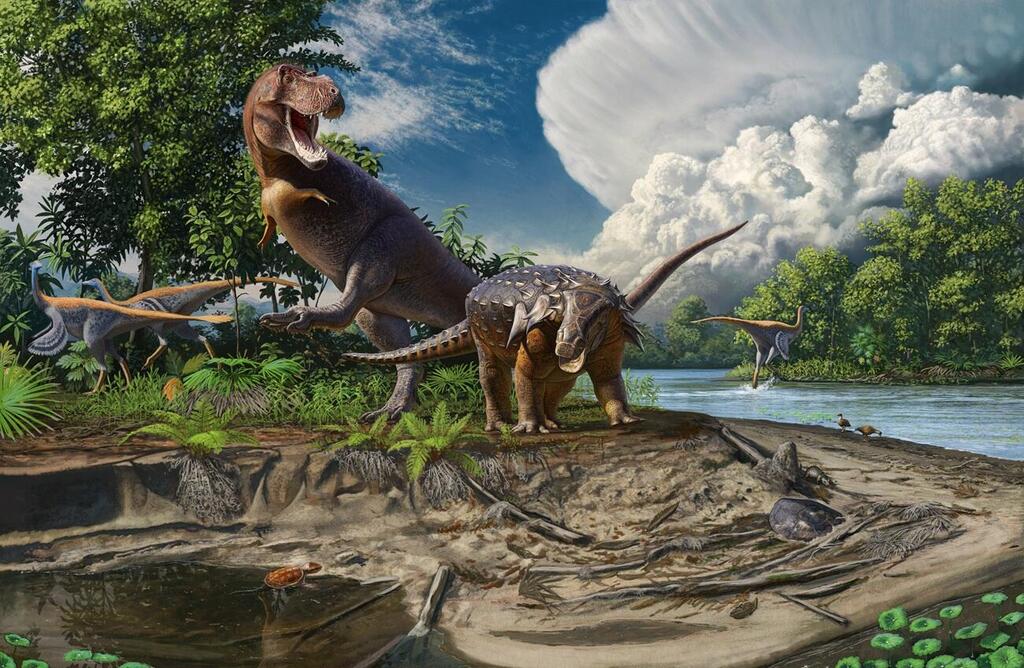
Illustration of a Tyrannosaurus rex roaming the landscape and terrorizing other dinosaurs of its time
(Illustration: Andrey Atuchin)
The trackway was discovered in 2025 on federal land managed by the U.S. Forest Service near Marmarth, North Dakota. The team used high-resolution 3D surface scanning to document each footprint and the entire trackway.
The resulting digital models allow researchers to examine the tracks in detail and create physical 3D replicas.
"The technology we’re able to apply in the digital age means my colleagues could scan the tracks in the field, and then send the 3D information over to me to visualize on my computer and in VR, enabling me to take as close a look as they did in person," said Dr. Peter Falkingham, a paleobiologist at Liverpool John Moores University and a member of the research team.
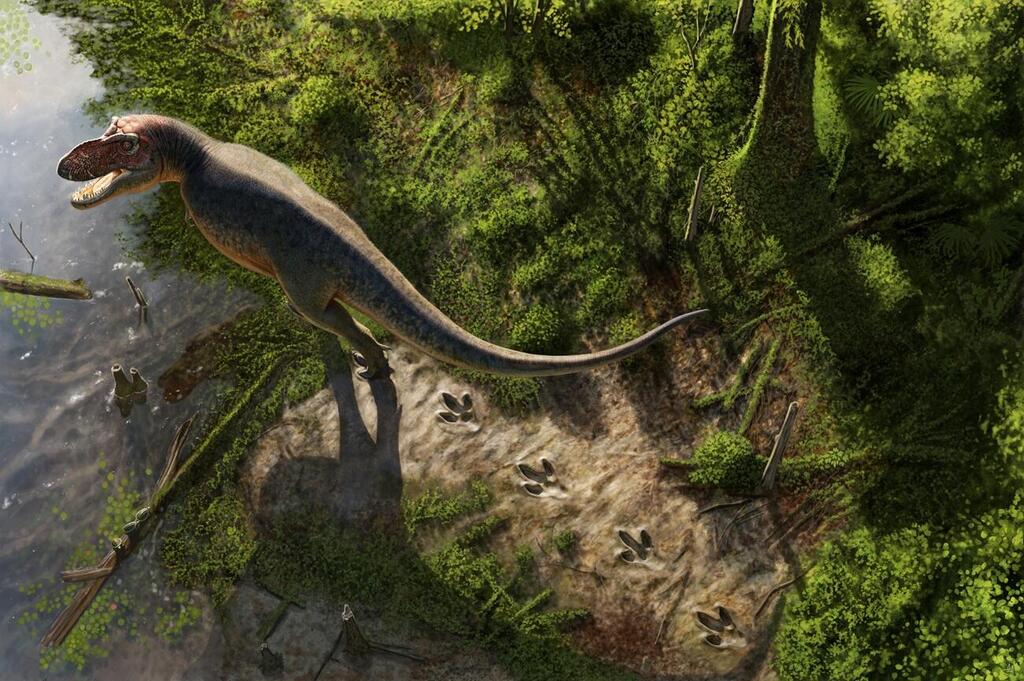
Rendering of a Tyrannosaurus rex roaming the landscape about 66.5 million years ago, leaving footprints behind
(Illustration: Andrey Atuchin)
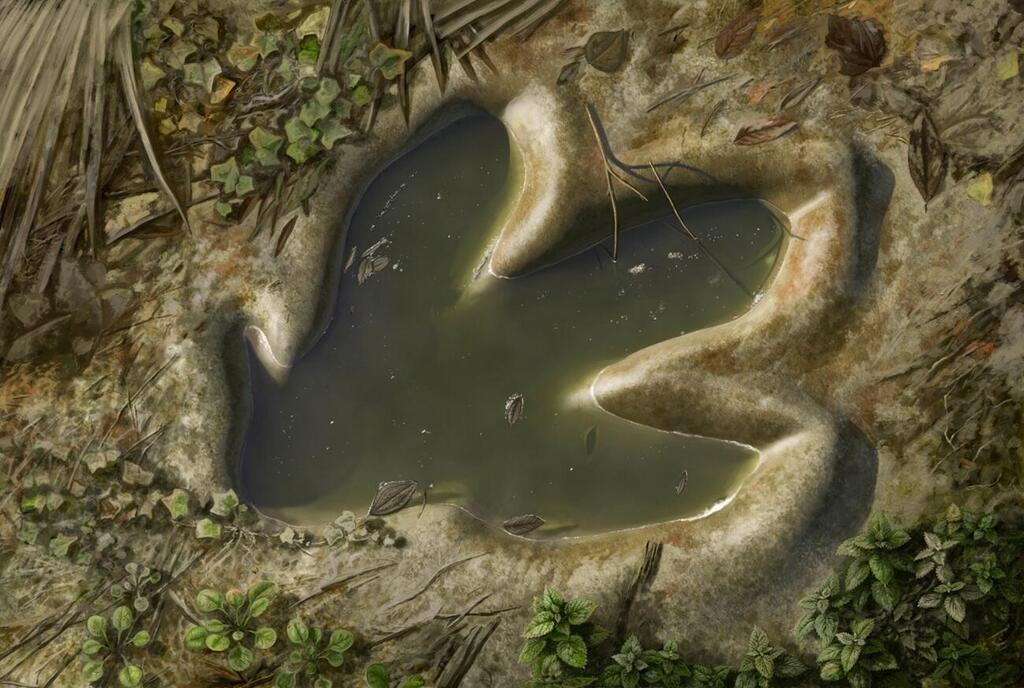
Rendering of an adult T. rex footprint similar to those discovered in the Hell Creek Formation
(Illustration: Andrey Atuchin)
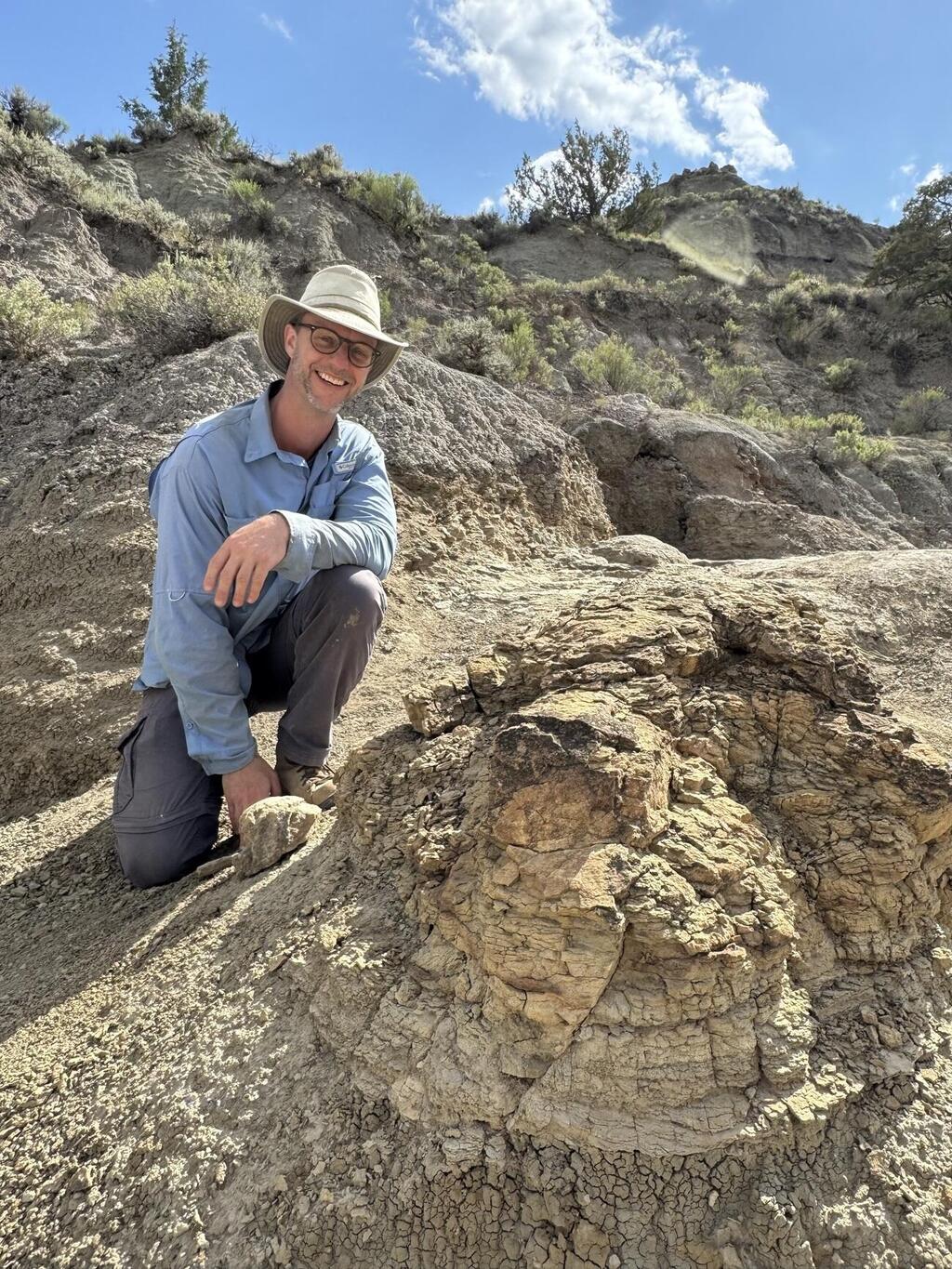
Dr. Tyler Lyson beside one of the Tyrannosaurus rex footprints discovered in North Dakota
(Photo: Natalie Toth)
The T. rex trackway includes two left-foot prints and two right-foot prints, with a stride length of about 4 meters, or 13 feet. Researchers estimate that the formidable predator was moving at about 5.6 to 7.2 kilometers per hour, or roughly 3.5 to 4.5 mph — a pace comparable to a brisk human walk.
"As a teacher, I’m always telling my students that science starts with curiosity, passion and careful observation," said Kent M. Hups, a teacher at Northglenn High School in Colorado who discovered the site and participated in the study. "I never imagined that could lead me to a discovery like this."