

Could one tool for protecting glaciers come not from an advanced laboratory, but from sheep grazing in the mountains?
As Switzerland struggles to slow the retreat of its glaciers, researchers in the Alps are testing whether one of the country’s most undervalued natural resources, sheep wool, can help shield ice from summer heat.
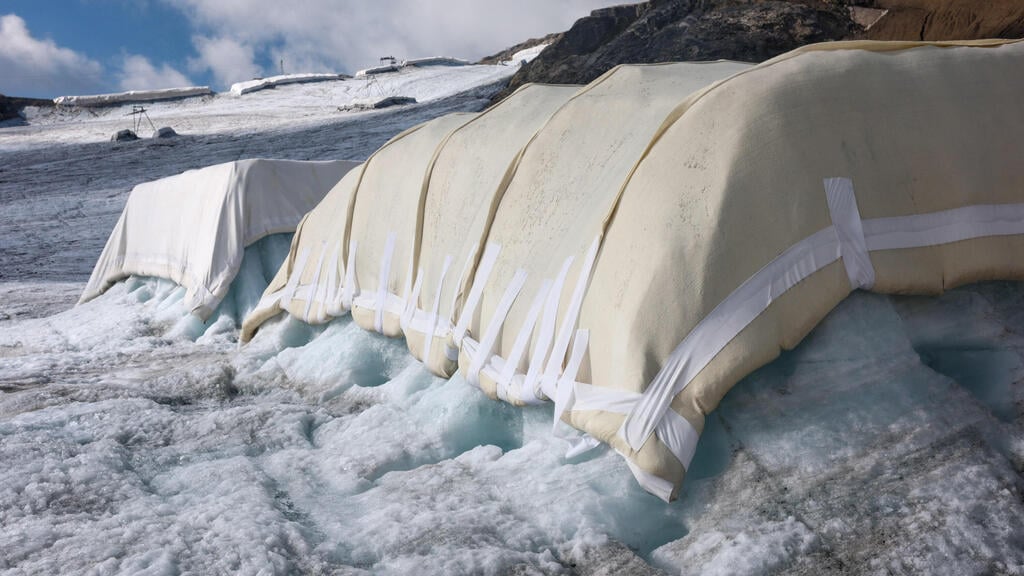
The experiment, carried out on the Tsanfleuron Glacier in western Switzerland, is part of the “Keep It Wool” project led by the environmental group Summit Foundation and the University of Lausanne.
Researchers spread sheets made from Swiss sheep wool over sections of the glacier as a biodegradable alternative to the synthetic covers commonly used to reflect sunlight and reduce heat absorption.
Early results are encouraging: the wool appears to protect the ice about as effectively as the synthetic material.
The finding could offer two environmental benefits at once, reducing reliance on plastic-based glacier coverings while creating a new use for Swiss wool, much of which is currently discarded.
But the researchers stress that the technique is not a solution to global warming itself. Glacier coverings protect only tiny areas, while cutting greenhouse gas emissions, largely from fossil fuels, remains the only meaningful long-term way to slow widespread glacier loss.
Wool instead of plastic
The project began after four master’s students developed the idea of using wool as an insulating and reflective layer.
Project manager Timothy Steiner said the team wanted to test a biodegradable alternative while also finding a use for a local material that often goes to waste. Between 40% and 70% of Swiss wool is discarded each year, according to the project.
In June, researchers laid out two prototype wool blankets produced by Swiss company Fisolan across roughly 200 square meters of the Tsanfleuron Glacier.
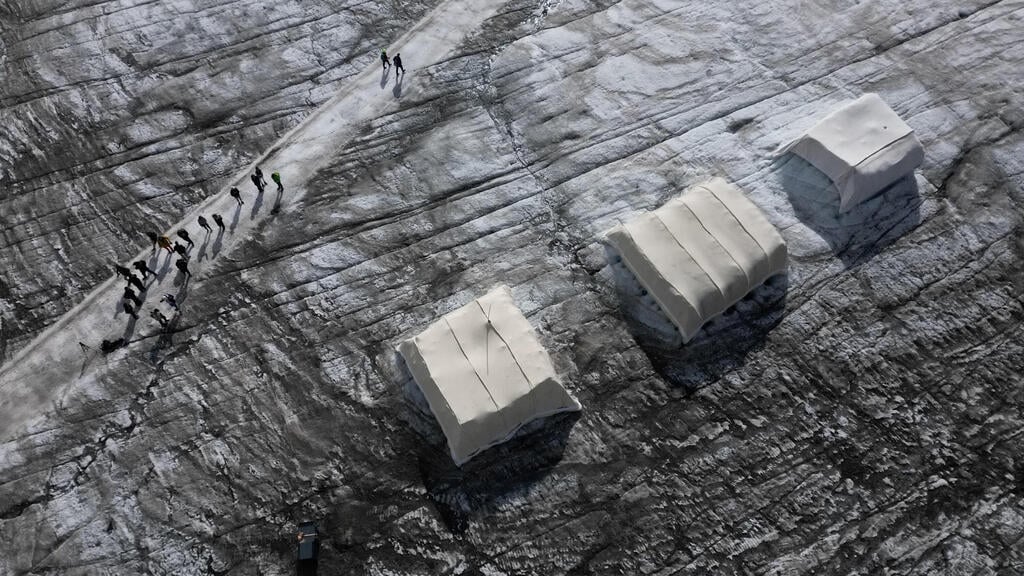
Sheep wool sheets that showed promising results in protecting Alpine glaciers
(Photo: Denis Balibouse/Reuters)
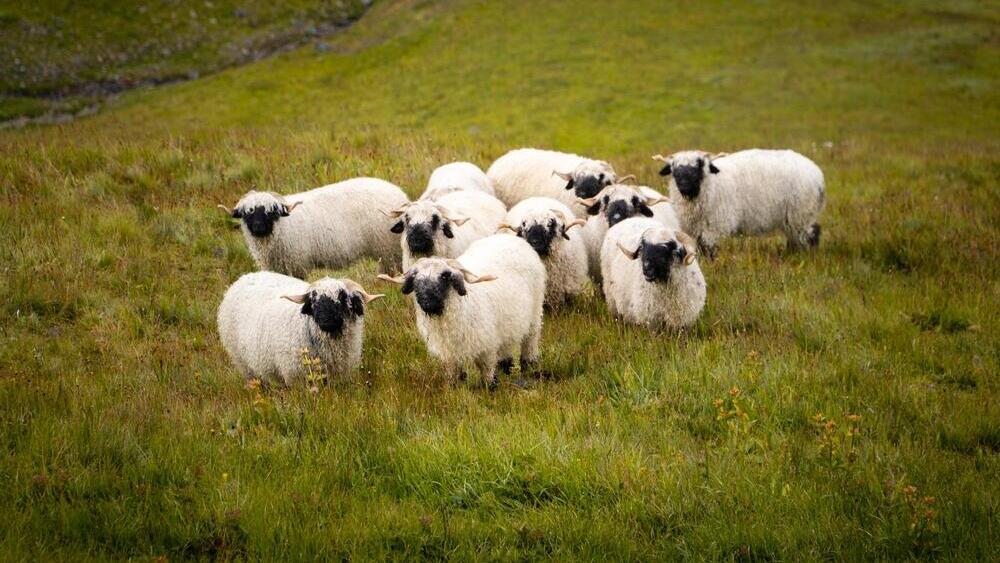
A flock of sheep in the Swiss Alps
(Photo: UlabPhoto/Shutterstock)
The glacier stretches for about 3.5 kilometers and reaches an elevation of roughly 3,000 meters at its highest point.
Throughout the summer, the team compared the wool covers with conventional synthetic fabric sheets.
Measurements taken every two weeks showed that the wool limited ice loss to roughly the same degree as the synthetic material.
“Now we have an environmentally friendly solution that you can not only imagine, but also see and touch,” said University of Lausanne student Eliot Gapio.
Glaciers under growing pressure
The experiment comes after another season of extreme temperatures across the Alps, where heat has accelerated ice loss and reshaped the mountain landscape.
The consequences of glacier retreat extend far beyond the loss of ice itself.
Rapid warming can destabilize mountain slopes and contribute to rockfalls, landslides and other hazards.
One dramatic example came on May 28, 2025, when the Birch Glacier collapsed near the Swiss village of Blatten. The resulting mass of ice, mud and rock destroyed or buried around 90% of the village’s homes.
More recently, on August 26, 2026, a deadly natural disaster struck Nepal near the border with Tibet, where a flash flood and massive mudslides followed the collapse of a Himalayan glacier.
Such events have added urgency to efforts to understand how rapidly warming mountain regions are changing.
A useful tool, not a climate solution
Despite the promising results, the researchers are careful not to overstate what wool coverings can achieve.
Only about 0.02% of Switzerland’s glacier area is currently covered with protective sheets.
That means even if wool proves to be a cleaner substitute for synthetic materials, it can protect only limited sections of ice, such as areas around ski infrastructure or specific research sites.
The broader problem remains global warming.
Scientists say sustained reductions in greenhouse gas emissions are still the only significant long-term way to slow glacier retreat.
For now, the wool experiment offers a more modest possibility: replacing polluting synthetic covers with a biodegradable local material, while giving value to a resource that would otherwise often be thrown away.