

Eighty-eight years after prominent British archaeologist James Leslie Starkey was shot dead while traveling from the ancient city of Lachish to Jerusalem, compelling new evidence has emerged, shedding light on who was behind his murder and why he was targeted.
A study by Prof. Yosef Garfinkel of the Hebrew University of Jerusalem's Institute of Archaeology and historian Dr. Roy Marom of the Polonsky Academy at the Van Leer Jerusalem Institute challenges the historical account that has prevailed for decades. According to that account, Starkey fell victim to random violence by armed gangs at the height of the Arab Revolt (1936–1939). Instead, the researchers argue that his assassination on January 10, 1938, was directly linked to a bitter land dispute between the British archaeological expedition at Tel Lachish and Arab farmers from the nearby village of al-Qubayba.
Gallery
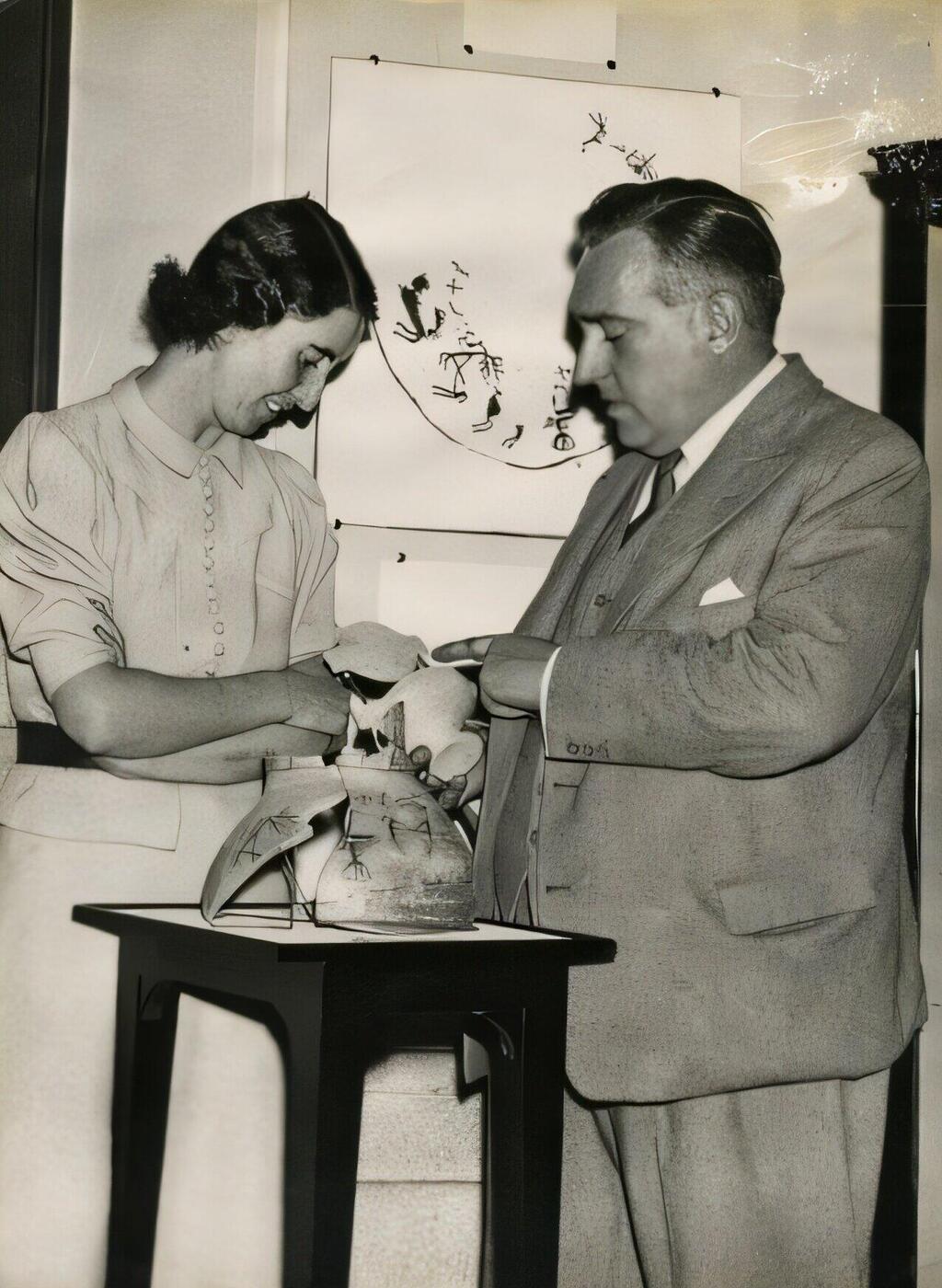
James Leslie Starkey and British archaeologist Olga Tufnell with a Late Bronze Age pottery jar discovered during excavations at Tel Lachish
(Photo: Courtesy of the Starkey family)
The findings, published in the Bulletin of the History of Archaeology, combine previously unpublished British colonial records, Palestinian historical sources, military intelligence documents and oral testimonies preserved among descendants of the village's residents. The study also identifies Palestinian rebel commander Issa al-Battat as a central figure in carrying out the assassination, which the researchers say was organized locally amid deep resentment toward the excavation project.
A murder that shocked the archaeological world
Starkey was one of the leading pioneering figures in archaeological research in Mandatory Palestine. Beginning in 1932, he directed a large-scale excavation expedition at Tell ed-Duweir, identified as biblical Lachish, one of the most important cities in the Kingdom of Judah. The archaeological project was financed by influential British philanthropists, foremost among them wealthy pharmaceutical entrepreneur Sir Henry Solomon Wellcome, and attracted considerable international attention.
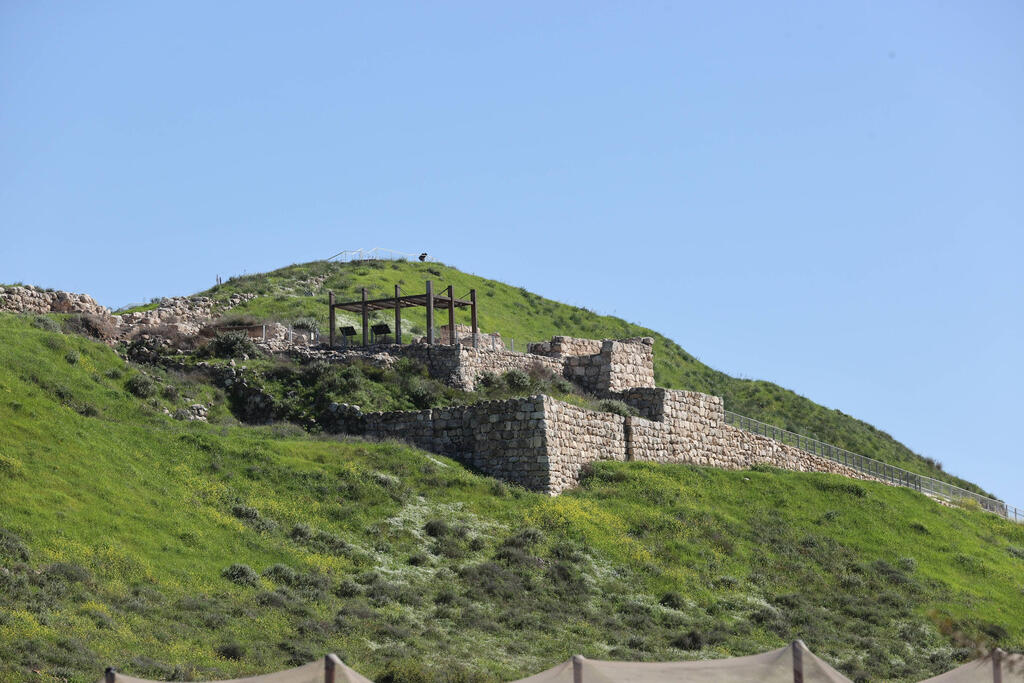
Tel Lachish
(Photo: Gadi Kabalo)
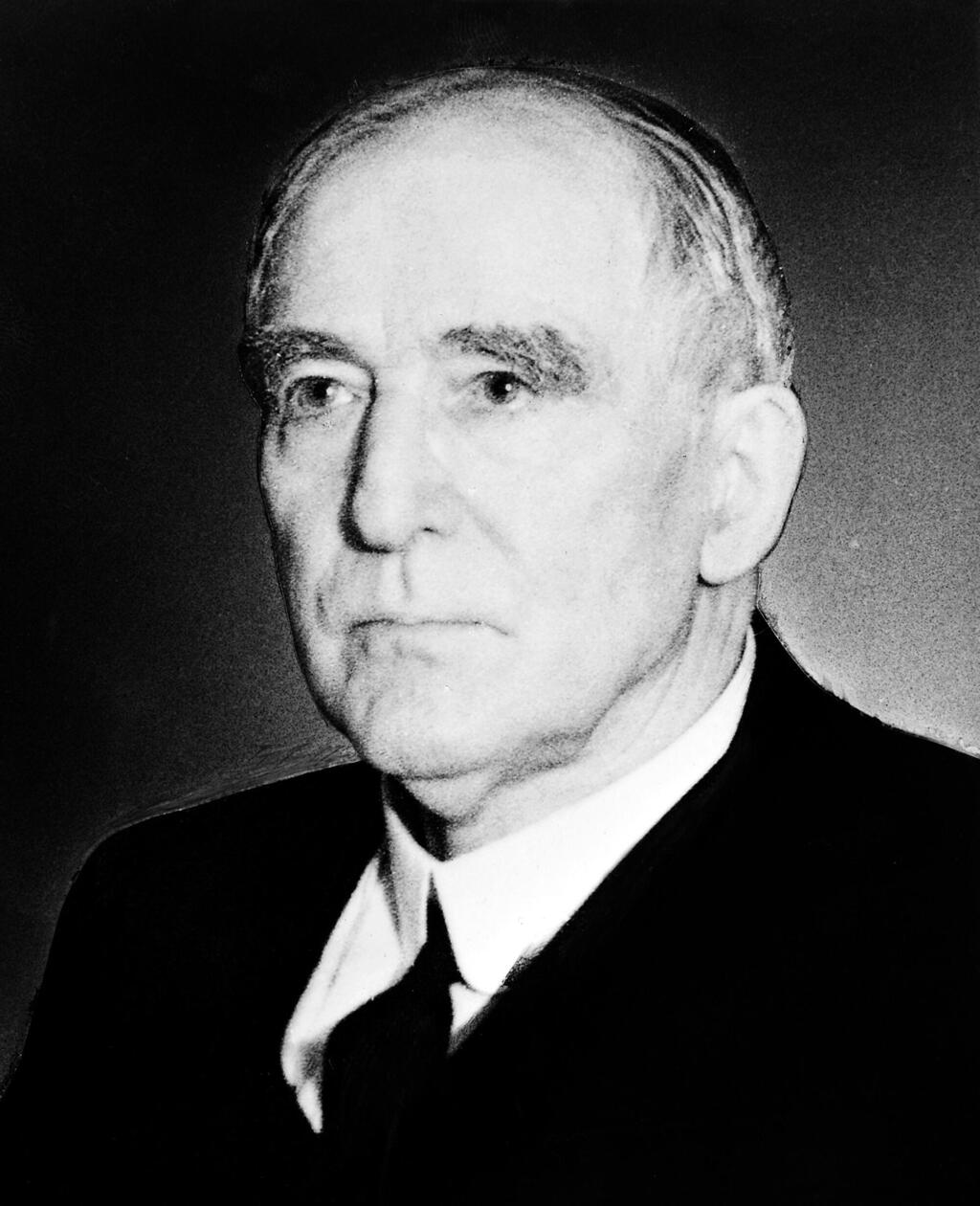
Sir Henry Solomon Wellcome
(Photo: Unknown author/Wikimedia Commons)
On January 10, 1938, Starkey left Lachish for Jerusalem, intending to attend the inauguration of the Palestine Archaeological Museum, now known as the Rockefeller Archaeological Museum. He never reached his destination. Near Hebron, an armed group blocked his car. After identifying the passengers and establishing that Starkey was the director of the Lachish excavations, the attackers ordered the driver to leave the scene and shot the archaeologist dead. His death shocked the international scientific community and brought one of the region's most ambitious archaeological projects to a premature end.
At the time, British authorities classified the killing as an act of robbery and general violence associated with the Arab Revolt, officially clearing residents of the nearby village of al-Qubayba of any involvement. For decades, the precise circumstances and motives behind the murder remained shrouded in uncertainty.
A breakthrough in the investigation
The new study builds directly on research published by Garfinkel a decade earlier. In his 2016 study, published in Palestine Exploration Quarterly, he first challenged the official account after examining previously unpublished internal reports from the British expedition and correspondence from the Mandatory Department of Antiquities.
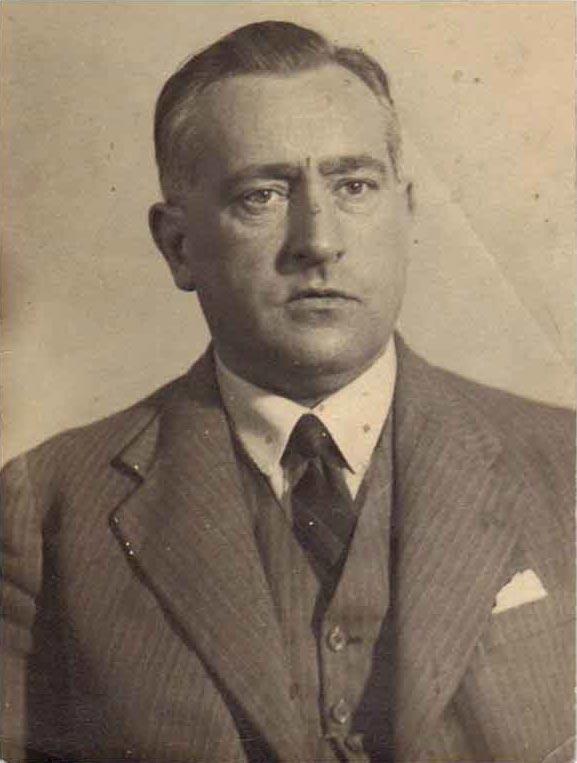
James Leslie Starkey
(Photo: Starkey Family Archive)
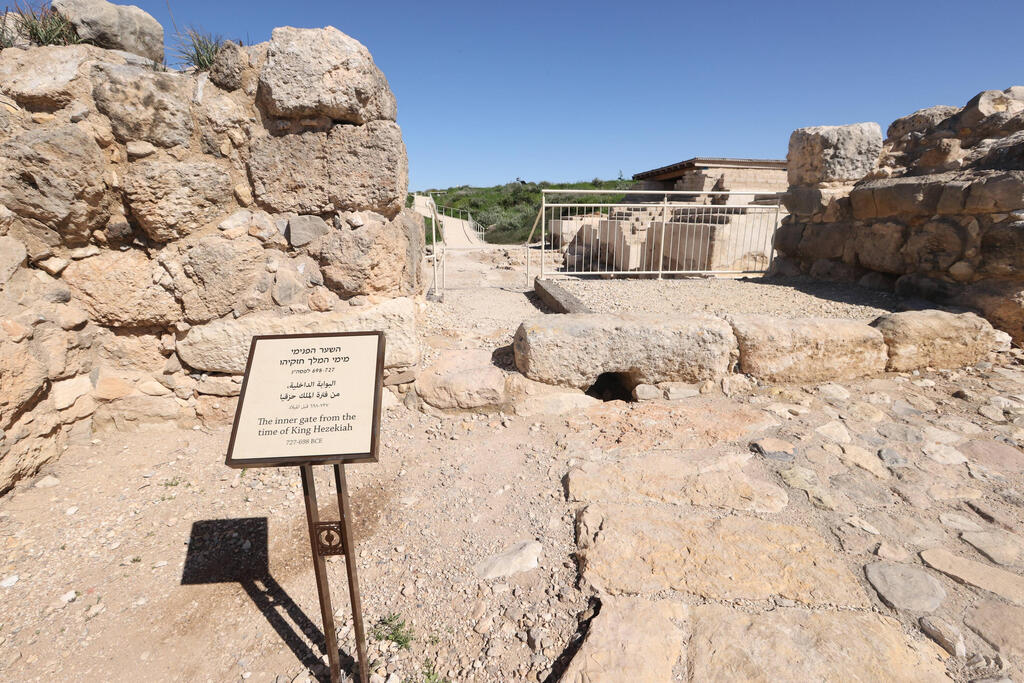
The archaeological site of Tel Lachish
(Photo: Gadi Kabalo)
The documents revealed a prolonged dispute between Starkey's expedition and local landowners over agricultural plots at the summit of Tel Lachish. Although the expedition attempted to purchase or lease the land, negotiations repeatedly broke down. Eventually, the British Mandate authorities intervened and expropriated the disputed land to allow excavations to continue, a move made more contentious by lengthy delays in compensating the affected families.
In his 2016 study, Garfinkel noted that the landowners had never received full compensation for their expropriated land, which he considered a strong and undeniable motive for revenge. At the time, however, the connection between local resentment and the identity of Starkey's killers remained a hypothesis.
Now, working with Marom, the researchers say they have found the missing link: documentary evidence and Palestinian testimonies that independently corroborate the earlier hypothesis.
Garfinkel explains that when he first examined the Lachish expedition archives in 2016, it became clear that Starkey's murder could not be understood without considering the bitter land dispute. However, the Palestinian perspective was still missing. He says the new evidence, particularly the oral testimonies, makes it possible to connect the archival documents with the memories of the local community and reconstruct the circumstances leading to the assassination with far greater precision.
Oral history reveals a fuller picture
One of the study's central contributions comes from the Palestinian Rural History Project, led by Marom, which documents the collective memory and social history of rural communities. Interviews with former residents of al-Qubayba and their descendants have preserved accounts of the bitterness surrounding the British excavation project.
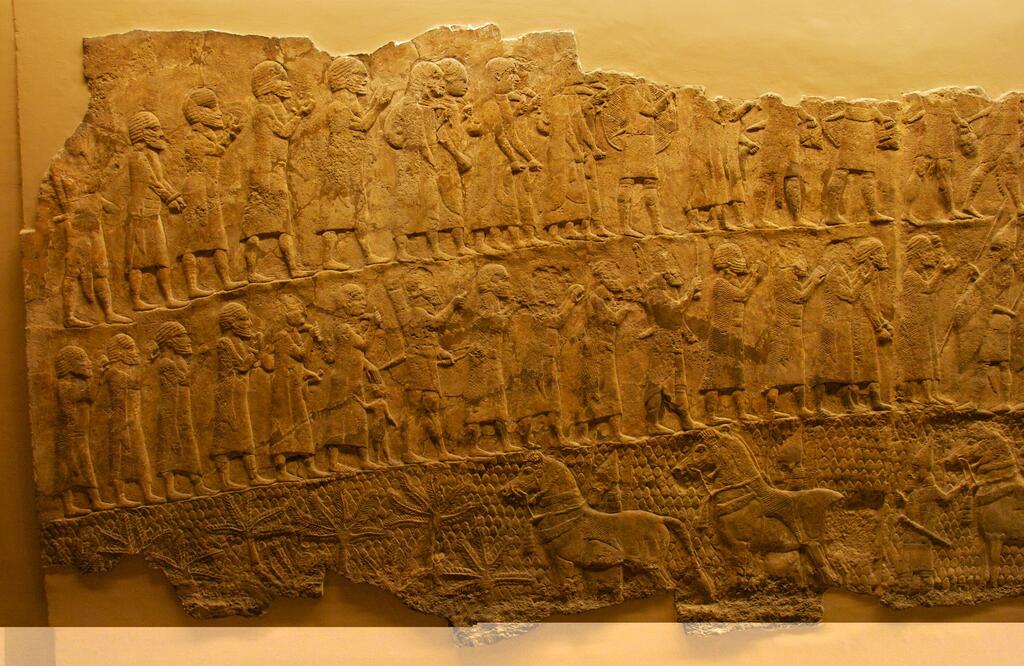
A section of the Lachish reliefs, Assyrian carvings depicting the siege and Assyrian victory over the Judean city of Lachish during Sennacherib's campaign in the Levant in 701 BCE
(Photo: Mike Peel/ British Museum Department of the Middle East/Wikimedia Commons)
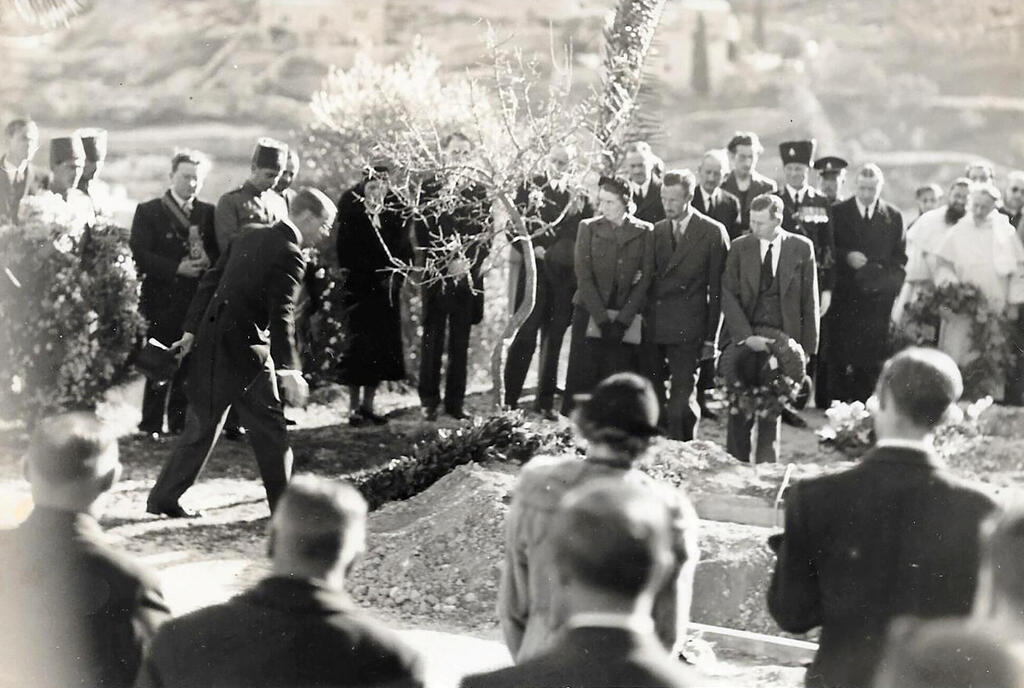
The funeral of James Leslie Starkey
(Photo: Starkey Family Archive)
According to the testimonies, local families felt deeply wronged by losing access to land they had cultivated for generations. The dispute was not limited to land ownership. It also involved the uprooting of trees, restrictions on routine agricultural activity and the exclusion of certain families from employment opportunities at the excavations. Although the expedition provided jobs, medical services and economic opportunities for some residents, other families viewed its activities as a damaging intrusion on their livelihoods.
The study also uncovers a forgotten petition submitted in May 1937 by a local farmer named Salah al-Hajj Hamad Abu Awwad to the British Department of Antiquities. In the petition, he complained that parts of his land had been occupied for years without the compensation he had been promised.
"I am a poor and weak man, and my entire livelihood depends on the crops from this land," he wrote.
The researchers found that compensation for the expropriated land was not finally paid until 1943, five years after Starkey's murder.
Who pulled the trigger?
By cross-referencing Palestinian sources with British and Zionist intelligence reports, the researchers identified rebel commander Issa al-Battat as a central figure in the assassination. According to their reconstruction, local individuals connected to the village and the rebel movement helped arrange and carry out the ambush.
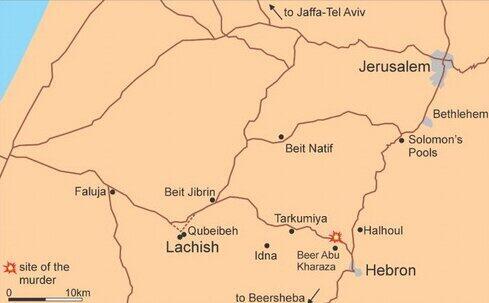
A 1938 map showing the locations of Lachish, Beit Jibrin, Hebron and Jerusalem, and the roads connecting them; James Leslie Starkey was murdered several kilometers west of Hebron
(Illustration: Prof. Yosef Garfinkel)
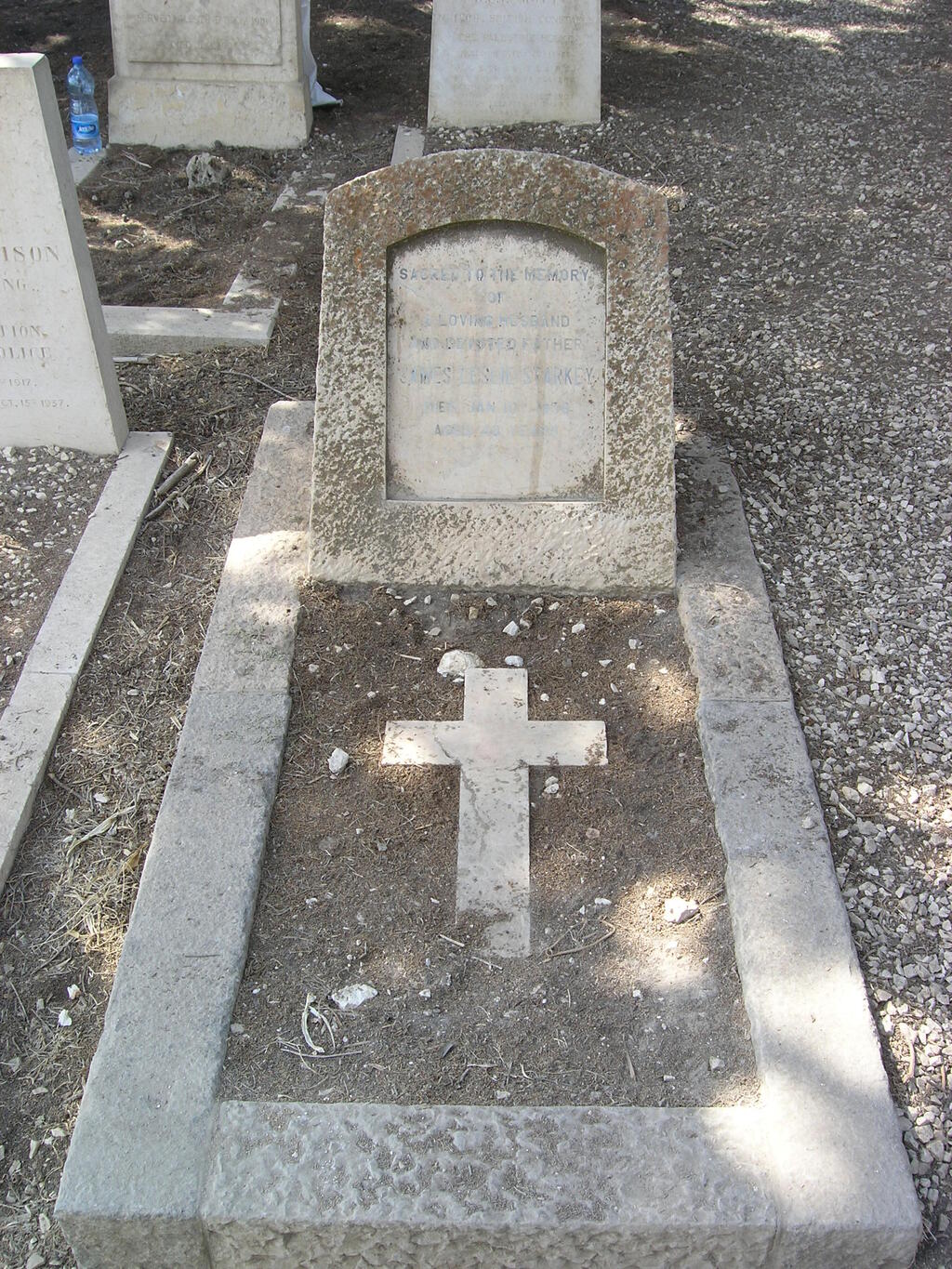
The grave of James Leslie Starkey at the Protestant Cemetery on Mount Zion in Jerusalem
(Photo: Ana al'ain/Wikimedia Commons)
The researchers emphasize that the location of the assassination, on the road leading to Hebron rather than at Lachish itself, was deliberately chosen to divert suspicion away from al-Qubayba's residents and prevent punitive or retaliatory actions against the village by the British military.
This reconstruction is also supported by the testimony of Starkey's driver, who described how the gunmen stopped the vehicle, confirmed the archaeologist's identity, sent the driver away and only then shot Starkey.
The researchers argue that the murder was not a random incident but a targeted assassination arising from a specific local land dispute. However, they stress that their conclusions are based on a historical reconstruction drawing on multiple converging sources, rather than a direct confession by those involved. Previous researchers have also offered differing interpretations of the perpetrators' identities.
A tragic intersection of science, land and colonial rule
Beyond shedding new light on a historical mystery, the study raises broader questions about the relationship between archaeology, colonial rule and local communities during the British Mandate. The excavations at Lachish fundamentally transformed scholarly understanding of the biblical world, but they depended on access to land belonging to local residents, a situation that became increasingly contentious as the Arab Revolt against British rule intensified.
Garfinkel's comprehensive 2024 book, "Colonial Archaeology in Palestine in the 1930s: The First Expedition to Lachish," examines the political and social context of those excavations in depth. The new findings offer a measure of historical closure for Starkey's family and demonstrate how combining official archives with oral history can shed new light on historical cases long considered closed.