


Heavy haze blanketing Israel on Saturday began moving eastward, with air quality gradually improving, the Israel Meteorological Service said. A noticeable improvement is expected by Sunday.
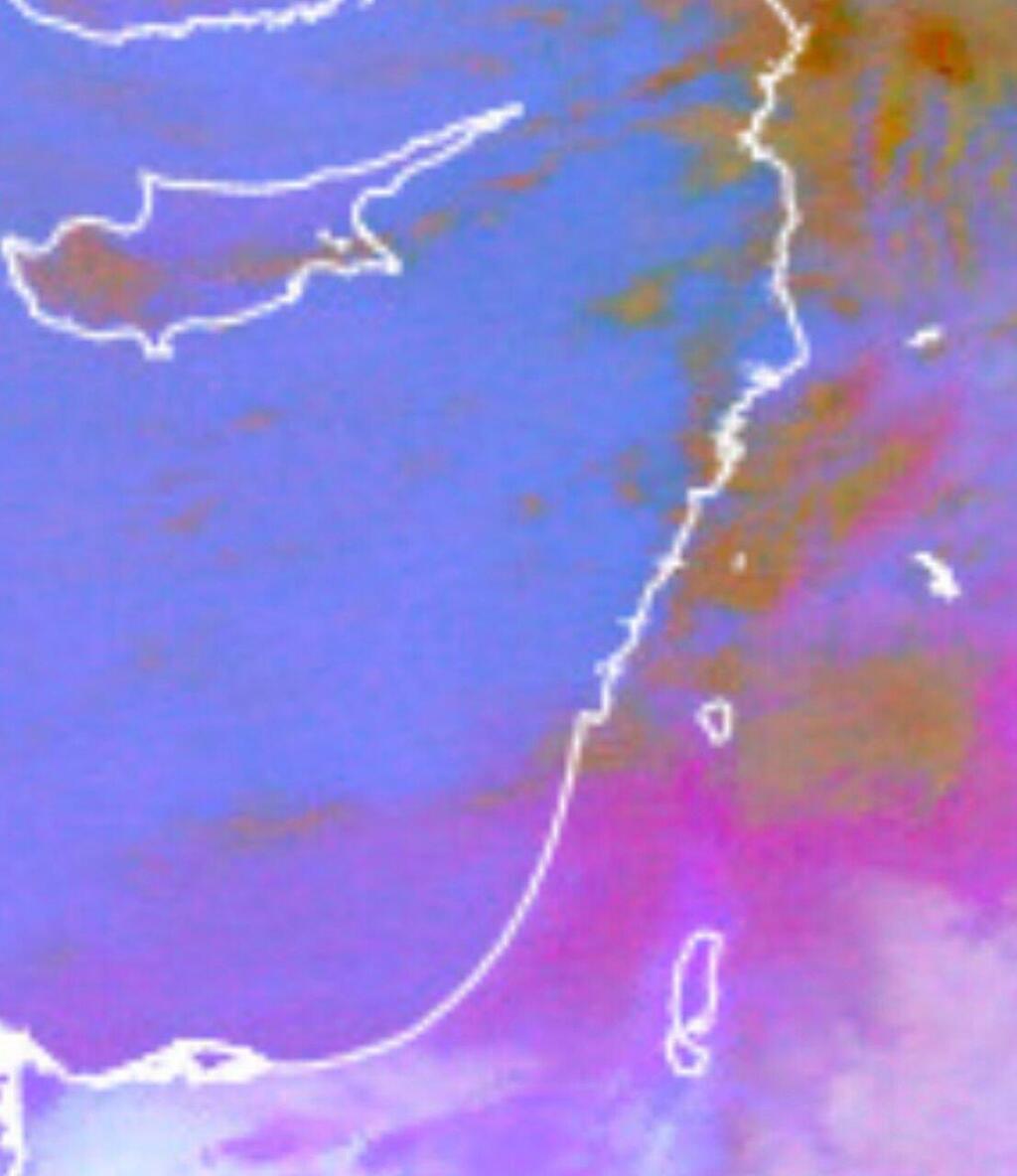
The dust storm reached Israel from Egypt due to strong southwesterly winds over the weekend. Satellite images released by the service showed the main dust cloud concentrated over inland areas and drifting east.
Haze over Ramat Gan
(Video: Oren Reiss)


Officials said the phenomenon was caused by air pressure differences between a deep low-pressure system over southern Europe — bringing winter weather and rain there — and high pressure over Israel. The contrast generated powerful winds that carried dust particles from the deserts of Libya and Egypt across the Mediterranean Sea.
As a result, the highest concentrations of airborne particles were recorded in coastal cities and the central lowlands.
Unseasonably volatile weather is expected to continue in the coming days. A heat wave is forecast for Monday, with temperatures well above seasonal norms. The western Negev is expected to be the hottest region, with highs of 33 to 34 degrees Celsius (91 to 93 Fahrenheit). Temperatures in the central lowlands and Sharon region are forecast to reach 31 to 32 C (88 to 90 F), while mountainous areas are expected to see 25 to 26 C (77 to 79 F).
On Tuesday, temperatures are expected to drop by about 10 degrees Celsius, returning to seasonal averages. Significant rainfall is not currently forecast.

Ranking of cities with most air pollution
Overnight and daytime temperatures are expected to range as follows: Jerusalem 9-29 C (48-84 F), Tel Aviv 15-22 C (59-72 F), Haifa 14-22 C (57-72 F), Safed 8-16 C (46-61 F), Katzrin 11-21 C (52-70 F), Tiberias 13-21 C (55-70 F), Nazareth 12-21 C (54-70 F), Afula 12-23 C (54-73 F), Beit Shean 13-24 C (55-75 F), Lod 14-23 C (57-73 F), Ashdod 13-22 C (55-72 F), Ein Gedi 17-24 C (63-75 F), Be'er Sheva 12-24 C (54-75 F), Mitzpe Ramon 11-21 C (52-70 F) and Eilat 19-27 C (66-81 F).
Meteorological Service Director Dr. Amir Givati said the haze resulted from the contrast between winter weather in Europe and unusually warm, dry southerly winds over Israel.
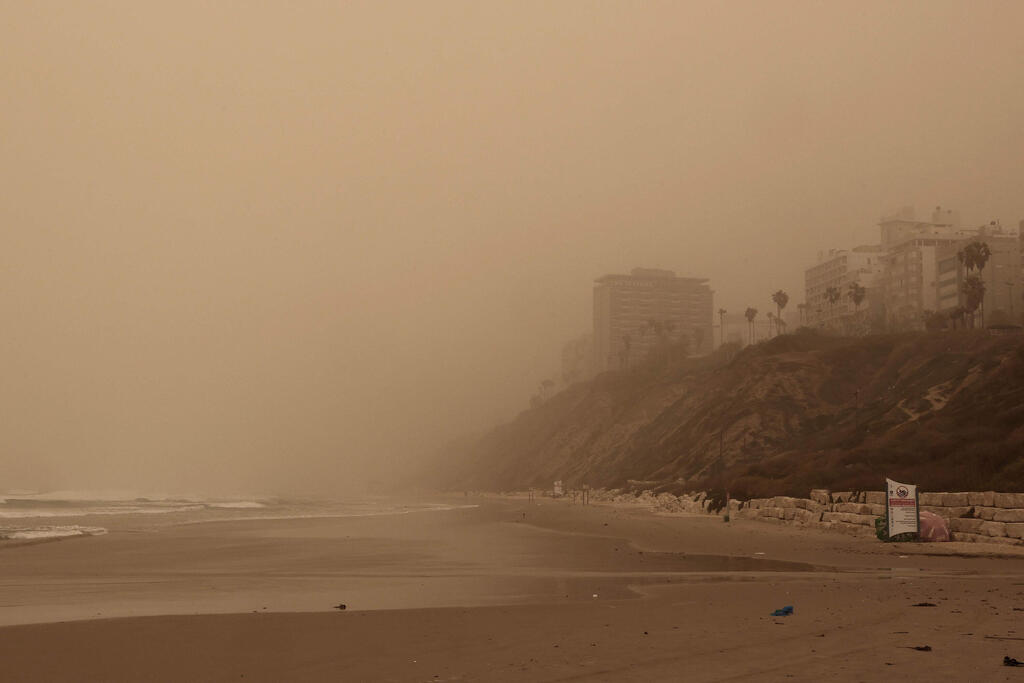
Haze over Netanya
(Photo: JACK GUEZ / AFP)
“Such haze is highly unusual for the season and is rarely documented in mid-February,” Givati said. “We are familiar with white and yellow skies at the peak of spring, in late March or around Passover in April, but not in early or mid-February. This was a widespread event affecting large areas, particularly central Israel.”
He added that while Sunday is expected to bring a return to more typical weather, it will likely be brief.
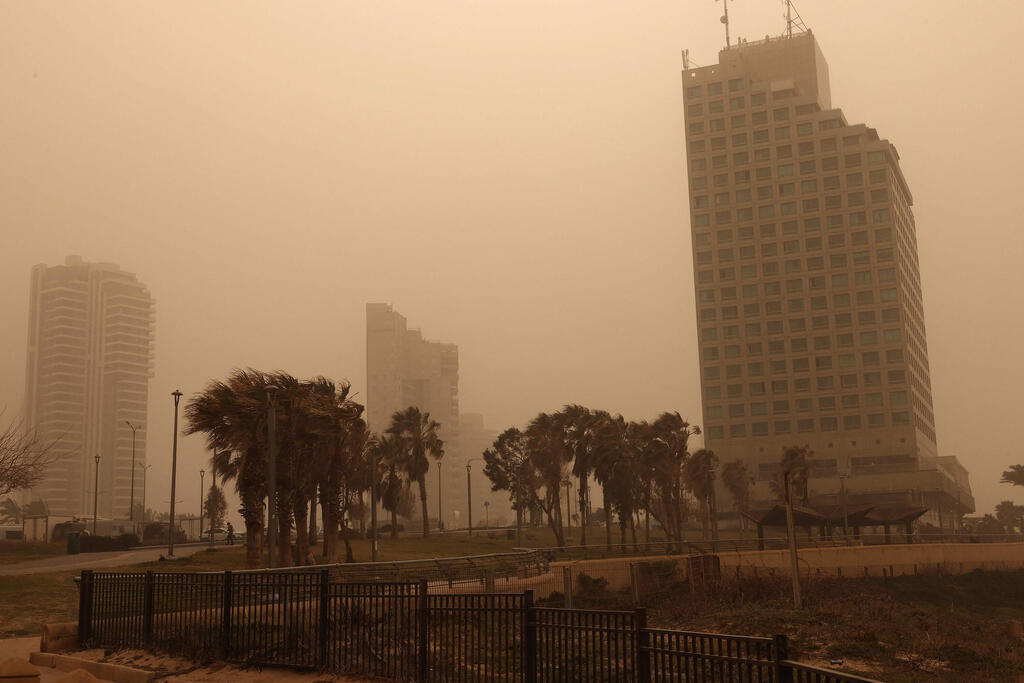
(Photo: JACK GUEZ / AFP)
“On Monday it will again be hot and dry, even more than over the weekend. Not with heavy haze, but again with white skies due to strong easterly winds and temperatures that may break mid-February records in the lowlands and the Negev,” he said.
Because of the dust, Israel ranked first Saturday on a global list of cities with the highest air pollution levels. Givati noted, however, that pollution in other cities on the list, including Dhaka, Delhi, Shanghai and Kolkata, stems from sources such as vehicle emissions and industrial activity. “That is far worse pollution than dust,” he said.