

While tattoos of animals on the human body can often be seen as a moving tribute commemorating the deep bond between a person and their pet, it is important to distinguish them from tattoos on animals themselves, the practice of tattooing directly onto an animal’s skin.
In many countries, including Israel, the practice is considered animal abuse and is prohibited by law, since animals cannot consent to a painful and medically unnecessary procedure. Tattooing is painful, often requires general anesthesia, which carries risks of its own, and can cause infections or allergic reactions to the ink.
(Photo: Social media)
Despite this, several such cases have been documented. In some countries, pet owners have sought to tattoo their animals for aesthetic reasons, sparking widespread public outrage.
“A tattoo is a complex physiological procedure that combines trauma to the skin with an immediate immune response. During tattooing, the epidermis, or outer layer of skin, is punctured and ink is injected into the dermis, the deeper layer of skin. The body identifies the ink as a foreign substance, and the immune system activates phagocytic cells, known as macrophages, which attempt to remove the ink. This process ultimately creates a permanent tattoo, though the immune system continuously breaks down the ink particles,” explained Dr. Hilik Marom of the Israeli Organization for Companion Animal Veterinary Medicine.
According to Marom, animal protection laws explicitly prohibit such procedures because there is no authorization to cut into living tissue or carry out cosmetic interventions that expose animals to health risks.
“It is unnecessary, cruel and involves significant risk,” he said. “This is certainly not art. A person who tattoos themselves does so with full awareness. Animals, however, have no choice. It is forced upon them and constitutes outright abuse that causes the tattooed animal considerable pain.”
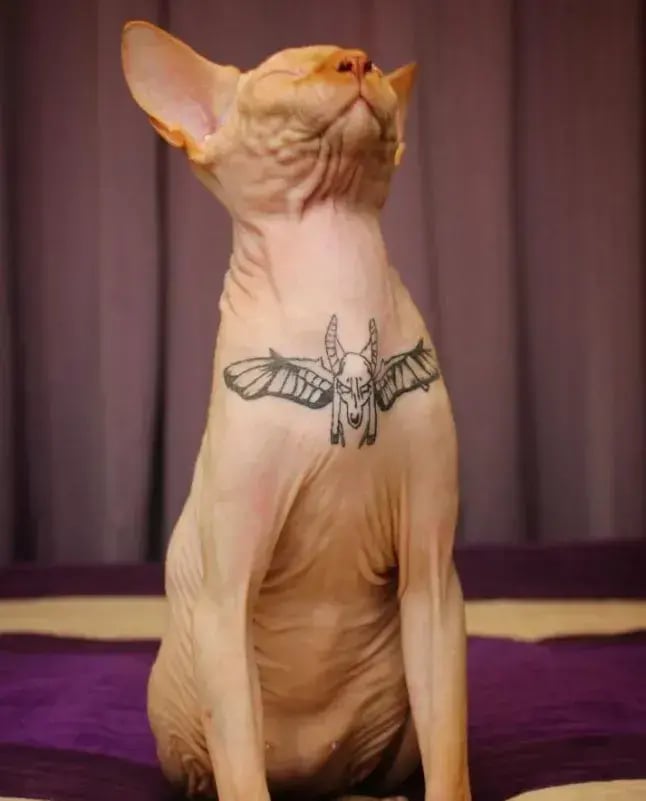
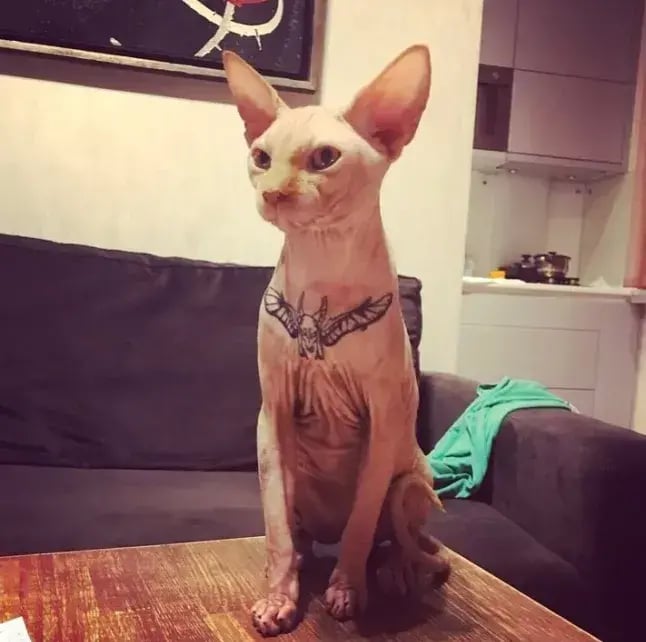
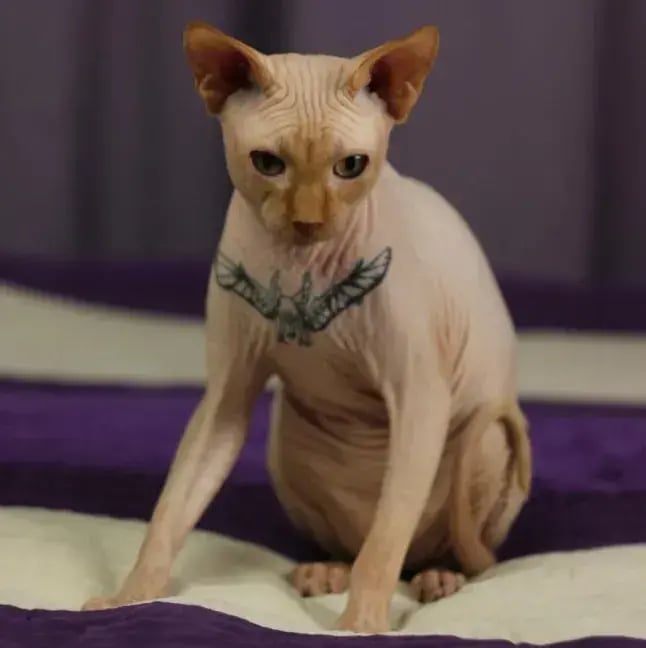
Because of their hairless skin, sphynx cats are among the most common “victims” of the phenomenon. In Ukraine, Yelena Ivnitskaya drew criticism after publishing photos of her cat, Yasha, showing a tattoo across its chest, including images from the procedure itself while the cat was unconscious.
The incident, carried out in October 2017 by a tattoo artist from the city of Chernihiv, prompted furious reactions online, with users accusing Ivnitskaya of torturing the cat.
“It would have been better to tattoo the word ‘idiot’ on her forehead and break her finger for torturing a helpless animal,” one commenter wrote.
“You cannot torture someone weaker than you. This is not a toy, it is a living creature — hell awaits you,” others wrote.
(Photo: Social media)
According to Britain’s Metro newspaper, the influencer defended herself, saying: “This cat’s life is better than yours. Maybe it’s hell for you, but he feels perfectly fine. He has not been neutered and will not be neutered — that would be real cruelty. I checked with the veterinarian before getting the tattoo and he approved it. A veterinarian was present during the tattooing, so everything was under control.”
A year earlier, in October 2016, Brazilian tattoo artist Emerson Damasceno faced backlash after tattooing the face of his bull terrier. According to a report in the Daily Mail, Damasceno claimed he believed the tattoos would protect the dog from cancer.
Following widespread criticism and statements by local veterinarians that tattooing a dog provides no medical benefit, while condemning the act itself, the tattoo artist deleted his social media profiles.
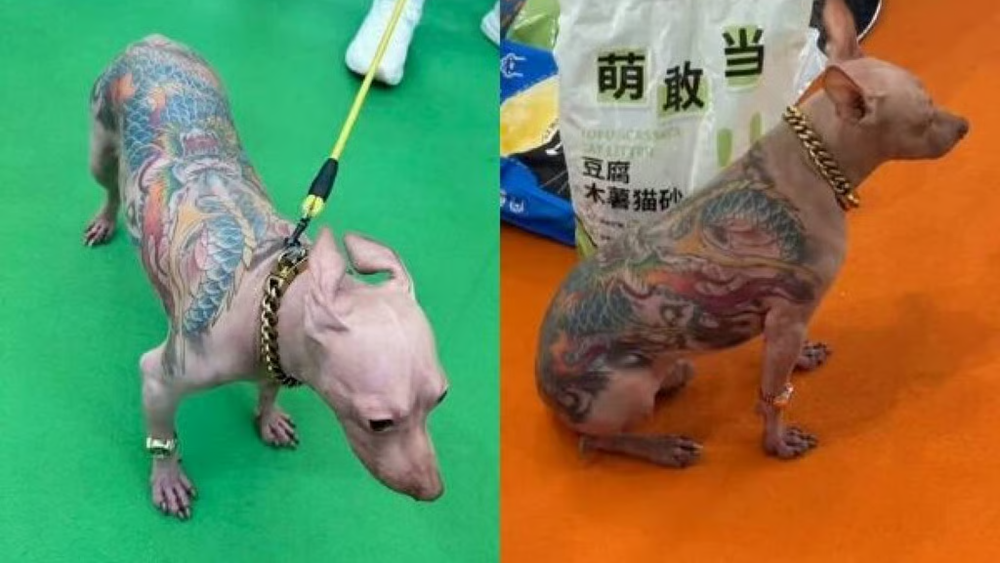
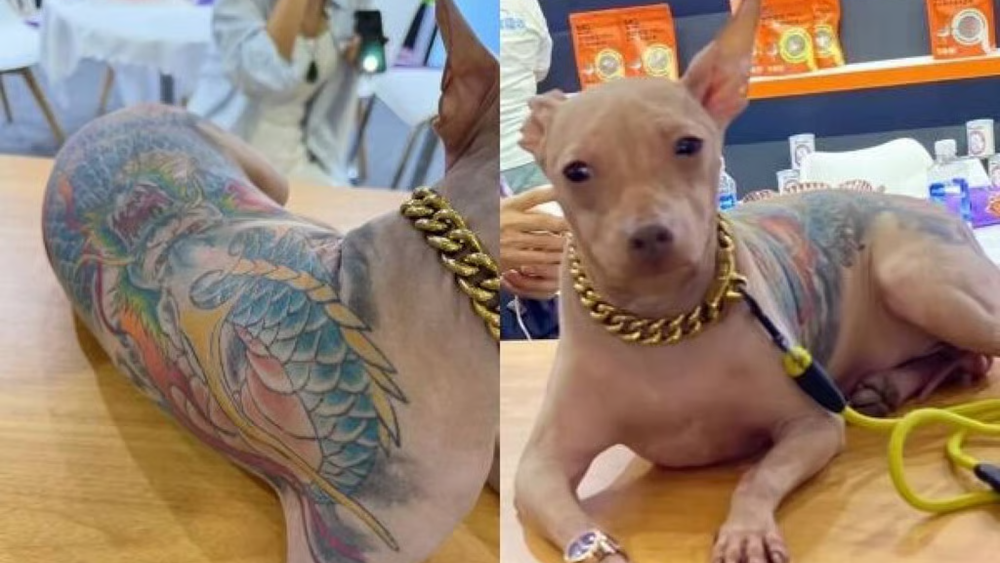
Another case occurred in China last year, where a hairless Mexican dog covered in colorful tattoos sparked public outrage. The case emerged on Aug. 22, 2025, in a video posted by a participant at Pet Fair Asia, one of the largest pet industry events in Asia.
The footage showed an elaborate dragon tattoo stretching from the dog’s back to its front legs. The dog was also wearing a gold chain and wristwatch.
(Photo: RedNote)
(Photo: RedNote)
According to a report by the South China Morning Post, eyewitnesses said the owner encouraged people to photograph the dog and claimed no anesthesia had been used during the tattooing process. He reportedly even lifted the dog by the scruff of its neck while telling onlookers: “See? It doesn’t hurt at all. He feels nothing.”
In response, event organizers banned the dog’s owner from entering the venue.
The incident quickly went viral, with many social media users condemning the owner’s actions and emphasizing that the dog had been unable to resist the procedure.
“This owner is inhuman. What a terrible person. The poor dog is so unlucky to have ended up with someone like this,” one user wrote.
Legally, it is important to note that China’s current wildlife protection law provides legal protection only for wild animals, leaving domesticated animals and strays largely unprotected.
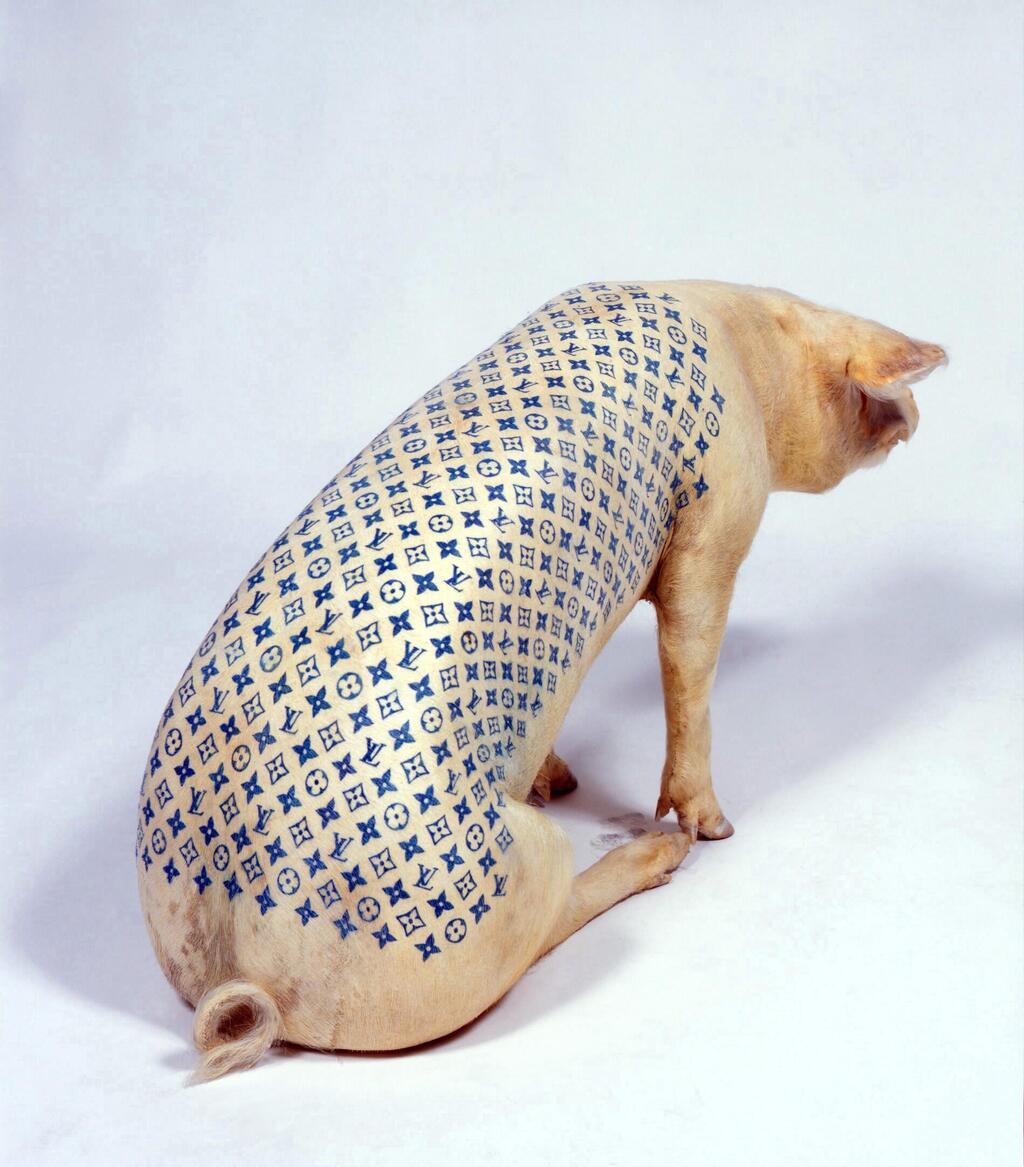
Belgian artist Wim Delvoye also sparked global outrage after establishing a “tattoo farm” in China in the early 2000s. He hired professional tattoo artists who anesthetized pigs and tattooed luxury brand logos, such as Louis Vuitton, or Disney characters onto their bodies.
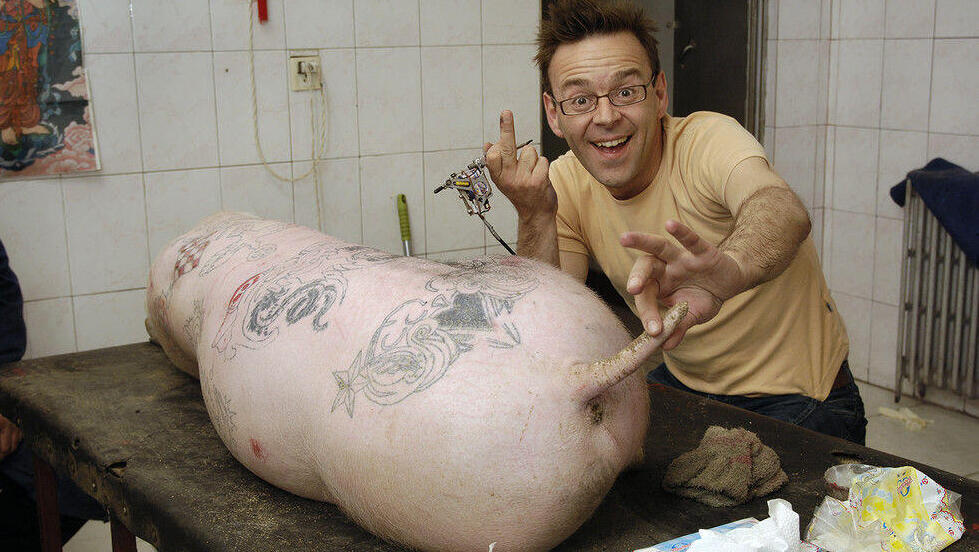
Wim Delvoye tattooing a pig
(Photo: Public Delivery)
(Photo: Public Delivery)
Delvoye argued that he was increasing the pigs’ value and transforming them into expensive works of art. The project drew fierce criticism from animal rights organizations, which argued it constituted abuse and commodification of living creatures. Delvoye, however, maintained that the pigs were well cared for, anesthetized during the tattooing process, and that their skin closely resembled human skin.
After the pigs died of natural causes, their skin was sold to collectors in art galleries as rare items worth thousands of dollars.
In an interview with The Wall Street Journal in September 2014, Delvoye said in response to the controversy: “Art has to fascinate people, and doing easy and simple things is not a good way to enchant them.”
Yael Arkin, CEO of the Let the Animals Live nonprofit organization, said tattooing pets is a disturbing and unacceptable practice that can cause anxiety and stress in animals, expose them to severe infections, skin problems and complications from anesthesia that could even result in death.
“Fortunately, we have not heard of dogs or cats in Israel undergoing this procedure, and we hope we never will,” Arkin said. “It is important to note that Israel’s animal cruelty law explicitly prohibits tattooing animals, just as it prohibits any other mutilation of their bodies, including tail docking and ear cropping. This is a criminal offense punishable even by imprisonment.”
The history of tattooing animals began as a practical tool for survival and property management before evolving into a modern ethical controversy.
As early as ancient Egypt and Rome, marking animals was considered necessary for managing livestock. Evidence suggests that in some cases, puncturing and ink were used to mark valuable or sacred animals in order to establish ownership and prevent theft.
Later, during the Middle Ages and the Renaissance, hunting animals were considered highly valuable status symbols. Falcon owners, for example, marked the legs or beaks of birds of prey with small identifying symbols.
With the rise of bureaucracy and modern armies, tattooing became an administrative tool. During the world wars, militaries tattooed identification numbers on the inner lips of horses because the method was considered more reliable than metal tags, which could be lost in battle. Military dogs were also tattooed inside their ears to identify them with specific units.