


The collapse of landfill Cell 7 at the Efaa site in southern Israel last month was not an unforeseen accident, but the result of prolonged, exceptional overloading that authorities knew about yet allowed to continue.
The landfill, designed to handle 5,000 tons of waste a day, sometimes received more than three times that amount. That represents nearly half of all the waste buried in landfills across Israel.
Trucks at the Efaa landfill
(Video: Social media)


The warning signs were already there: leaks, cracks and fires. The collapse was only a matter of time. From the authorities' perspective, however, the alternative was far worse: garbage piling up in the streets. But no one wants a waste crisis.
A week before the collapse, Yedioth Ahronoth and ynet reported on Israel's waste crisis, the result of government policies that have failed to bring about an increase in recycling. Today, more than 80% of Israel's waste ends up in landfills.
Management at the Efaa landfill had warned that the site was approaching the limits of its capacity. In May 2025, a fire broke out in Cell 7, which had been used, with the Environmental Protection Ministry's knowledge and approval, as a reservoir holding approximately 70,000 cubic meters of leachate, the contaminated liquid that drains through waste. The fire was caused by a thermal failure in a lithium battery. It took the company about a month to bring the fire under control and extinguish it, at a cost of approximately 6.5 million shekels.
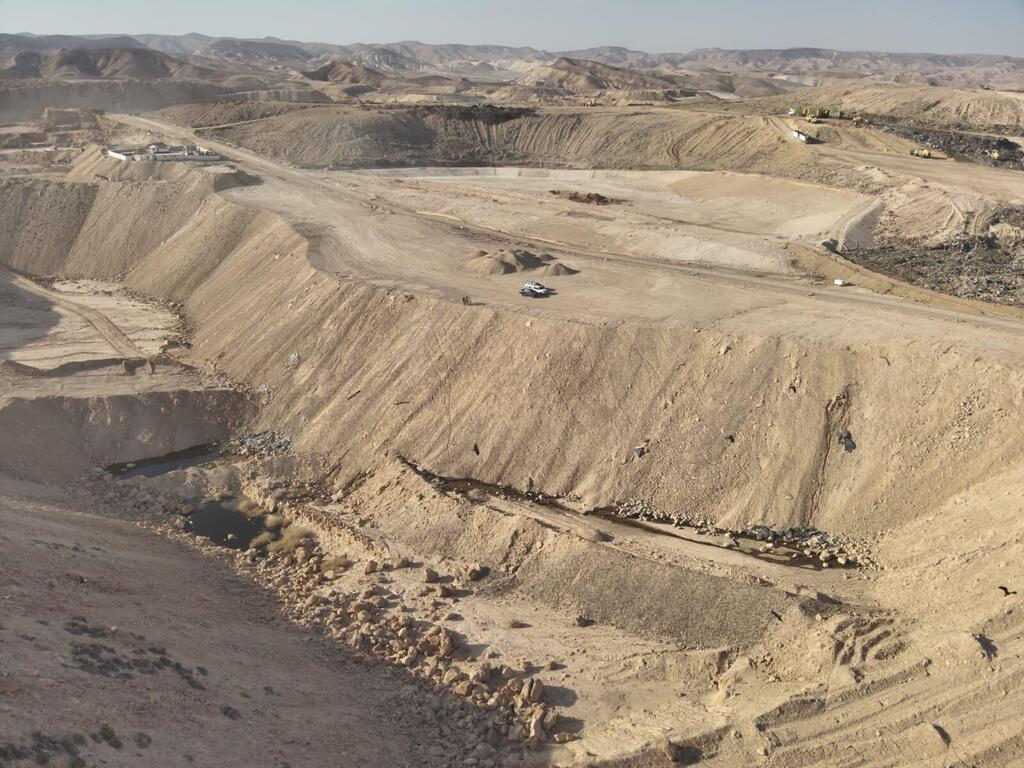
The Environmental Protection Ministry decided to impose a fine of 1.8 million shekels on the company. In other words, the ministry, which serves as the regulator, pushed the company to the limits of its capacity, effectively forcing it to operate in emergency mode, and then penalized it when an environmental incident occurred.
Efaa had also warned about the situation in the spring of 2023. In an appeal to the Environmental Protection Ministry, the landfill's operators cautioned that they did not have the capacity to cope with the volume of leachate. The ministry acknowledged the need to reduce the quantities, but in practice, little was done.
Last month, the ministry reported a leachate leak from Cell 7 and cracks discovered in the cell's southern embankment. The leachate overflowed in the area of the embankment adjacent to a pile of oil shale, raising concerns at the site about the embankment's stability. The incident, which carried the potential to contaminate the Efaa and Hemar streams, should not have come as a surprise to anyone.
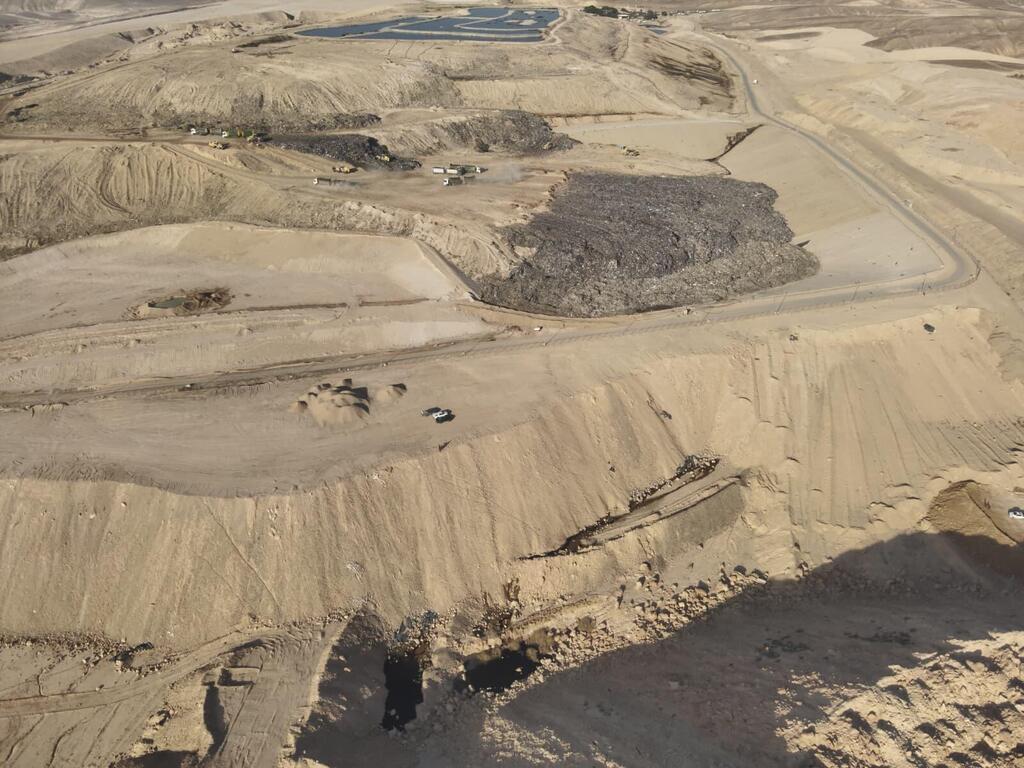
Leachate at the Efaa landfill
(Photo: Aryeh Rosenberg, Israel Nature and Parks Authority)
Inspectors from the Israel Nature and Parks Authority conducted field surveys and documented the flow of leachate and the areas where it accumulated. "According to the findings, the flow of leachate stopped in the mining area of Rotem Amfert and did not reach the natural section of Efaa Stream. So far, no animals have been found to have been harmed by the incident," the authority said.
In response, Efaa Landfills said: "The waste disposal crisis in Israel is well known, is nothing new, and the Efaa site has provided an optimal solution over the years. The leachate leak from the site was immediately reported to the Environmental Protection Ministry. Work was carried out at the site, including the installation of embankments to prevent leachate from overflowing into the regional drainage system and nearby streams. The incident is being monitored, supervised and is under the control of the Environmental Protection Ministry.
"We note that the Efaa landfills were designed to receive approximately 5,000 tons, but in practice, due to the lack of alternative landfill sites, the facility has been forced to accept more than 10,000 tons. We emphasize that Efaa Landfills is taking all necessary measures in cooperation with the Environmental Protection Ministry. We would also like to thank Rotem Amfert for stepping in to assist with the emergency that arose."
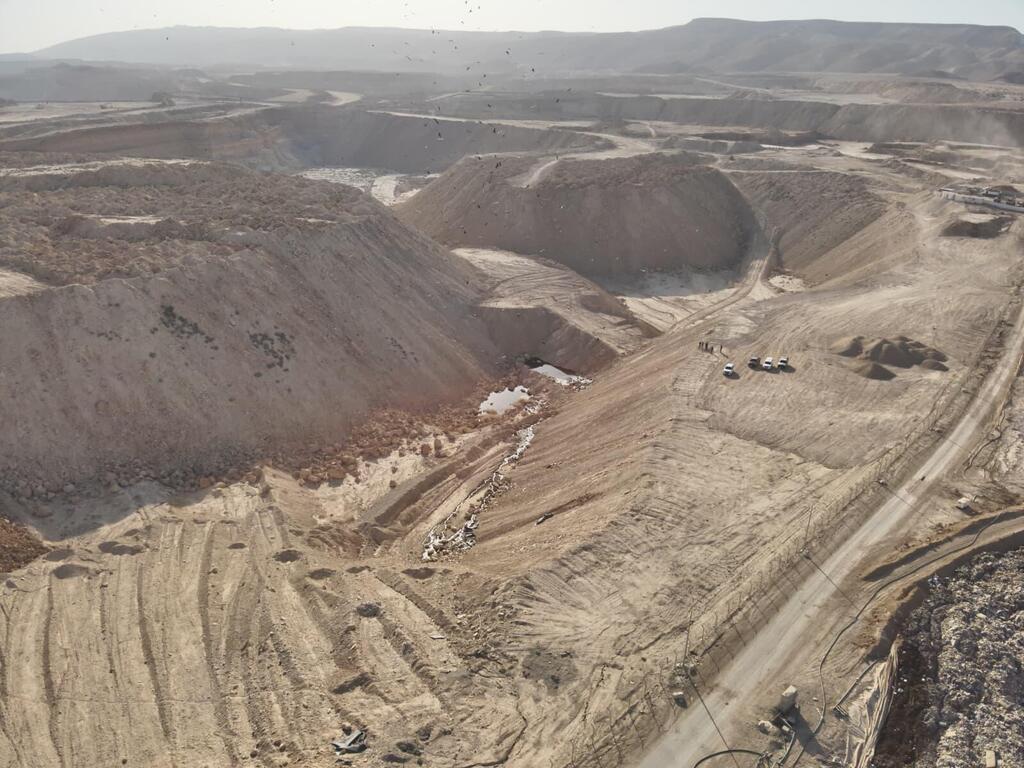
Leachate at the Efaa landfill
(Photo: Aryeh Rosenberg, Israel Nature and Parks Authority)
The Environmental Protection Ministry said in response: "The Environmental Protection Ministry is working continuously to ensure that sufficient landfill capacity remains available to meet the needs of the waste sector during the interim period, until the construction and expansion of advanced waste sorting and treatment infrastructure are completed, as part of the ministry's policy to reduce landfilling and transition to a circular economy.
"Cell 8 at the Efaa site has been allocated to the Tamar Regional Council. According to the timetable submitted by the council to the ministry, the cell is expected to open for waste disposal in January 2029. Among other things, the council must complete the engineering plans, obtain building permits, select construction and operating contractors, carry out the construction work and obtain operating licenses."