

A round hole, 1.5 centimeters in diameter, in the shoulder blade of a Neanderthal whose partial remains were uncovered in Shanidar Cave in Iraqi Kurdistan may represent the earliest known evidence in the fossil record of lethal violence between hominins involving a wooden spear.
The Neanderthal's shoulder blade, a broad, flat bone that is so thin in places it becomes almost translucent when held up to the light, survived almost intact beneath 7.5 meters (25 feet) of rock and sediment for some 75,000 years.
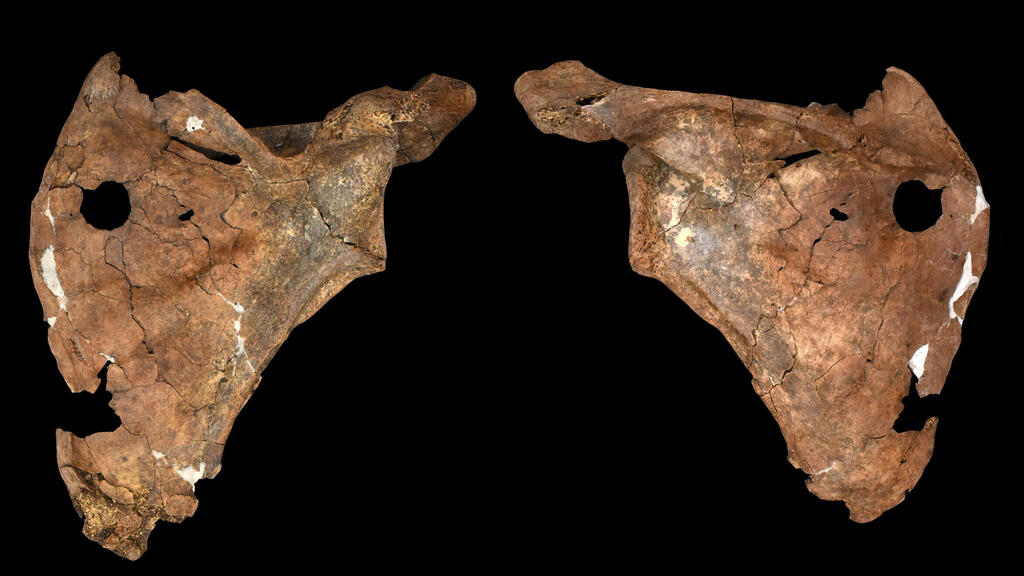
3D scan of the hole in the scapula of "Shanidar A"
(Video: Dr. Emma Pomeroy)


Archaeologists from the University of Cambridge, who led the team that discovered the rare find, concluded that a sharpened wooden spear caused the hole in the shoulder blade, since a spear tipped with flint or stone would have left a flat or angular opening.
The spear entered the left side of the chest from the front and passed through the body, damaging a lung and probably major arteries before emerging through the left shoulder blade, causing a rapid death. Researchers believe the fatal blow may have been deliberately aimed at the heart.
"This is an extraordinary find because the shoulder blade was so remarkably well preserved. These bones are so thin that they are often not found intact even in burials from much later periods," said Dr. Emma Pomeroy of the University of Cambridge's Department of Archaeology, who led the research team. "We managed to recover it in one piece from beneath a layer of almost eight meters of rock and sediment."
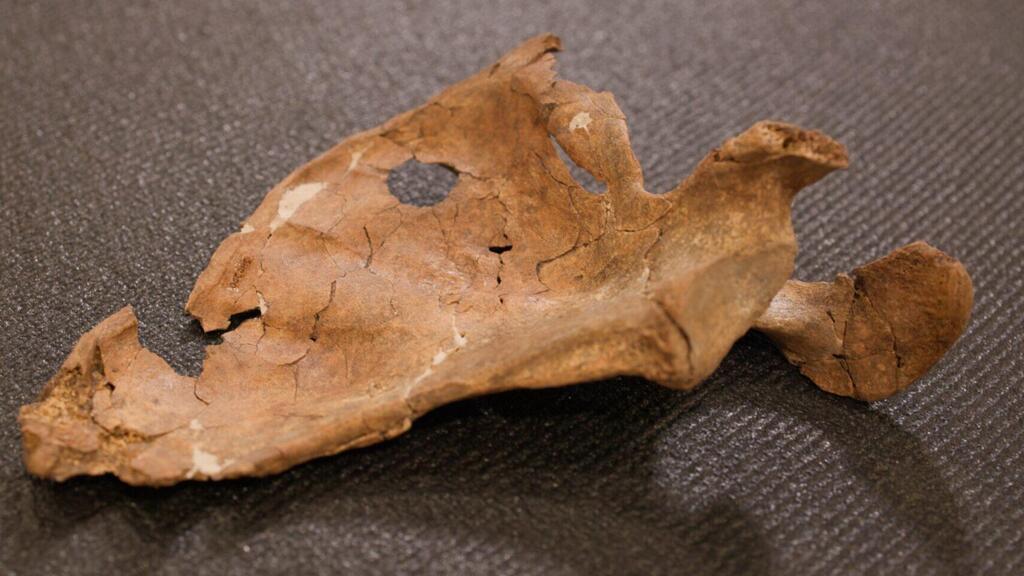
The left shoulder blade of the Neanderthal, which was struck by a wooden spear that created the round hole
(Photo: University of Cambridge)
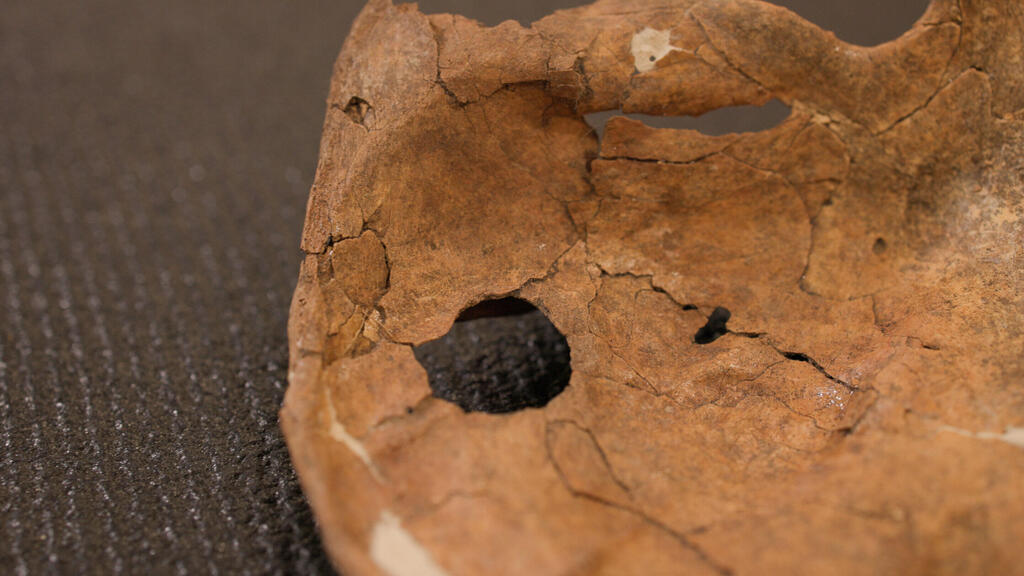
Closeup of the hole in the left shoulder blade
(Photo: University of Cambridge)
Very few wooden objects from early prehistoric periods have survived because of decay. In the 1990s, several wooden spears were discovered at Schöningen, Germany, where waterlogged conditions had preserved them. The spears date back more than 200,000 years, when early Neanderthals roamed what is now Europe.
Some of the spears measured more than two meters (6.5 feet) long and were crafted from carefully selected wood, with their weight distributed to optimize throwing, much like modern javelins. Researchers believe they were used to hunt large animals.
The authors of the study, published in the journal Scientific Reports, believe similar technology may have been responsible for the death of "Shanidar A." They say the injury could represent the earliest evidence of sharpened wooden spears being used in the prehistoric Middle East.
"Holes produced in reconstructions using spears from that period are a perfect match for the hole we found in the Neanderthal's shoulder blade," Pomeroy said. "This ancient technology therefore provides a convincing explanation for the injury this individual sustained. The evidence we have indicates that Neanderthals and their ancestors developed woodworking and weapons-making skills many thousands of years before Shanidar A died. These capabilities may have extended across the entire Neanderthal range, from what is now Wales to Siberia."
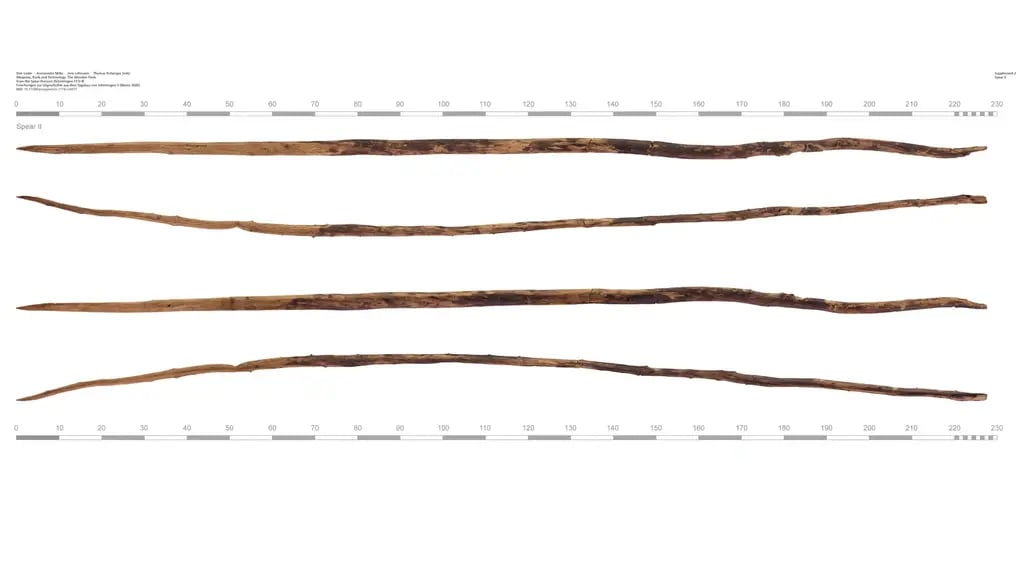
Spears found in Shenanigan, in 1995; they have been dated to over 200,000 years old, and were thrown like modern-day bayonets
(Photo: Dirk Leder et al. (eds), Weapons, Tools and Technology (2026))
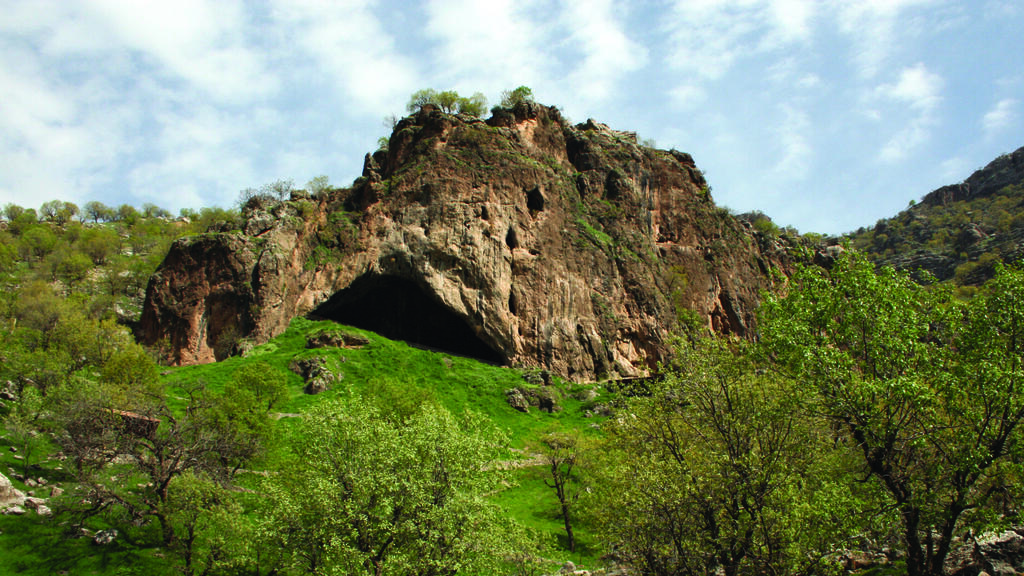
Entrance to Shanidar Cave in Iraqi Kurdistan
(Photo: Professor Graeme Barker)
Pomeroy said the location of the wound and the force required to drive the spear through the Neanderthal's body bore all the hallmarks of a deliberate, fatal strike aimed at the heart.
There is no way to determine what prompted the violence, but researchers believe the incident involved two Neanderthals.
"Evidence of systematic violence is extremely rare in the very earliest prehistoric periods. The overwhelming majority of evidence comes from periods of settled agricultural communities, thousands of years after the hunter-gatherer societies such as the one we have recently studied," said Professor Graeme Barker, a University of Cambridge archaeologist who led the excavations at Shanidar Cave.
The shoulder blade was discovered alongside a largely complete right hand, two left ribs, a fragment of a right rib and seven teeth, all that remained of an adult Neanderthal estimated to have been about 45 years old at the time of death.
One tooth, an incisor from the front of the lower jaw, had split lengthwise, and a substantial amount of tartar had accumulated along the exposed root canal. The finding indicates that the tooth remained in the mouth for some time after what researchers identified as a violent blow to the front of the face with a blunt object.
"Surviving a blow that cracked a tooth in this way, and continuing to live and eat for at least a year, and possibly longer, would have required care and support from other Neanderthals," Pomeroy said.
"Shanidar A may have been fed soft food after that initial injury. There is no doubt that this individual would have struggled to communicate and endured terrible suffering over a prolonged period, making this a discovery that combines both violence and compassion among Neanderthals."
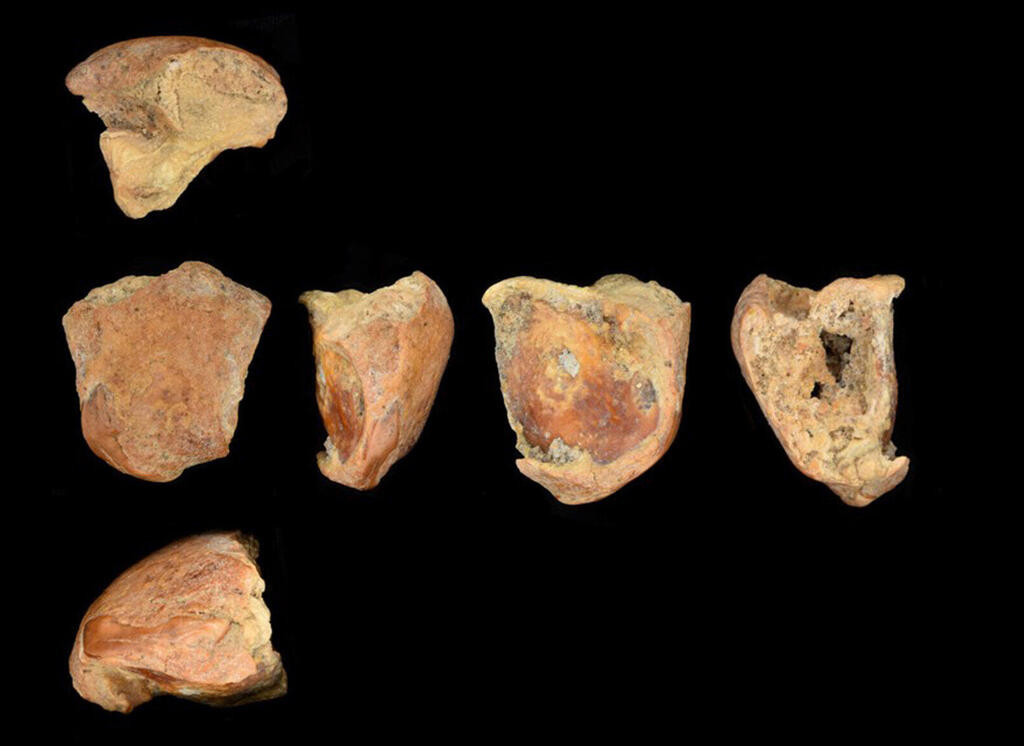
Different views of the split tooth; the Neanderthals took care of their own
(Photo: Dr. Emma Pomeroy)
The cave, located at the foot of the mountains in Iraqi Kurdistan, is one of the world's most famous Neanderthal sites.
Excavations in the 1950s uncovered the remains of 10 individuals, including four buried in the same location despite having died at different times. The discovery suggests that Neanderthals returned to the site to bury their dead.
The remains of another Neanderthal from a different part of the cave, who lived thousands of years later, showed evidence of a paralyzed arm, arthritis, deafness and partial blindness. Yet the individual survived into old age, suggesting that others likely provided care.
Such signs of compassion, social support and rituals surrounding death have helped transform perceptions of Neanderthals, once widely regarded as crude and inferior beings. Further evidence of cultural sophistication has continued to emerge, from cave art to jewelry-making, alongside genetic analyses showing that Neanderthals interbred with modern humans.