

Beneath the surface of the Sea of Galilee and Israel’s streams lives an impressive, graceful and exceptionally rare mammal. The Eurasian otter depends entirely on the health of the country’s water systems, and it is in a race for survival against infrastructure development, roadkill and climate change.
To better understand the world of otters, we spoke with Dr. Amit Dolev, northern district ecologist at the Israel Nature and Parks Authority, who has been studying otters for more than two decades.
What is the otter, and what makes it special?
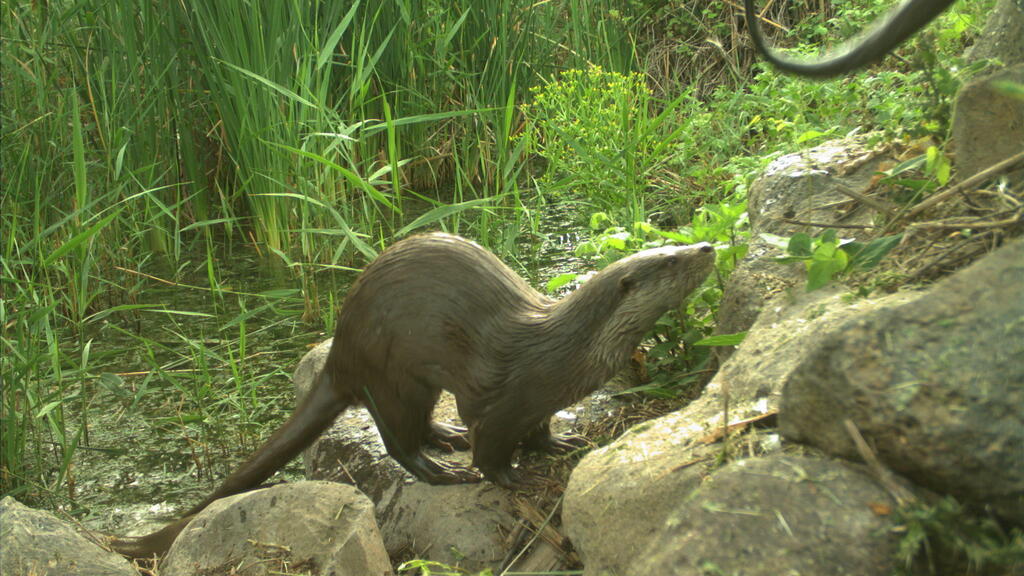
“The otter is an aquatic mammal that lives mainly in streams, rivers and lakes. Its physical structure is wonderfully adapted to life in water. It has very dense fur that insulates it from moisture and a long tail that serves as a kind of powerful paddle while swimming. The otter is a skilled hunter that finds its main food, fish, by diving and catching them underwater. It is interesting to know that otters can stay underwater for several minutes at a time before coming back up to breathe,” Dolev said.
“There are 13 otter species in the world. The species found in Israel is the Eurasian otter, which is widespread across Europe and parts of Asia. Israel is the southern edge of this species’ distribution range in the eastern Mediterranean.”
Where can otters be found in Israel, and what is their current status?
“In Israel, the otter is defined as a critically endangered species, unlike its global status, which is near threatened. Its distribution is limited to northern Israel because of its dependence on permanent bodies of water. Its main and most stable stronghold is the Sea of Galilee, where it is active in the shallow water and at stream estuaries. The Hula Valley, including the nature reserve and Agamon Hula, is another significant center of activity. The canals and streams in the Hula Valley serve as essential movement corridors, and the Jordan River channel north of the Sea of Galilee is its only movement route connecting the Sea of Galilee to the Hula Valley,” he said.
(Photo: Alon Reichman, Israel Nature and Parks Authority)
“In the past, there was also continuous activity in the Valley of Springs and the Beit She’an Valley, but since 2011, otters have disappeared from the area and have not yet managed to recolonize it. Occasionally, there are reports of individual otters in the Jezreel Valley or the northern coastal plain, but these usually fail to establish a stable population.”
How do otters communicate, and do they live in groups?
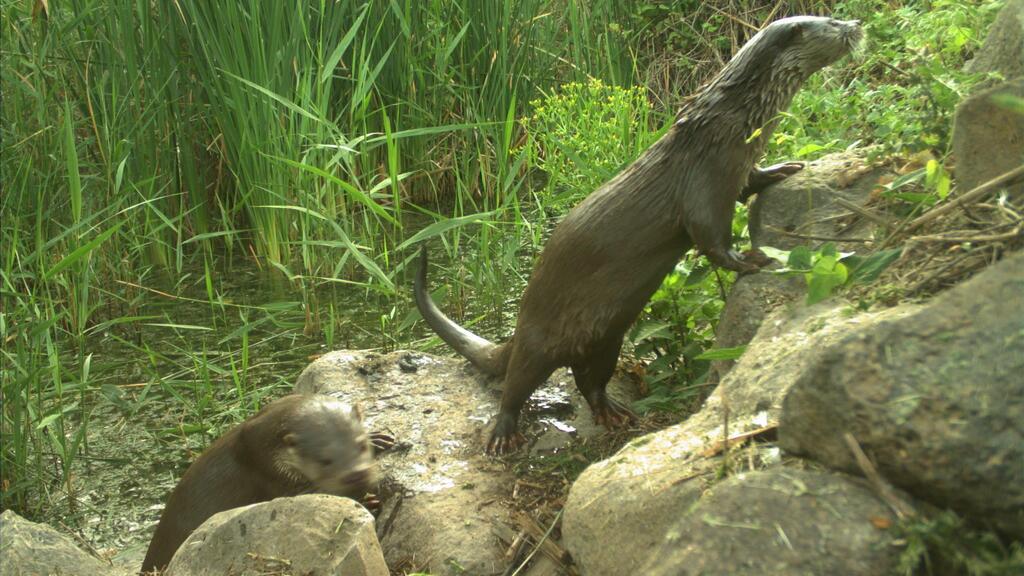
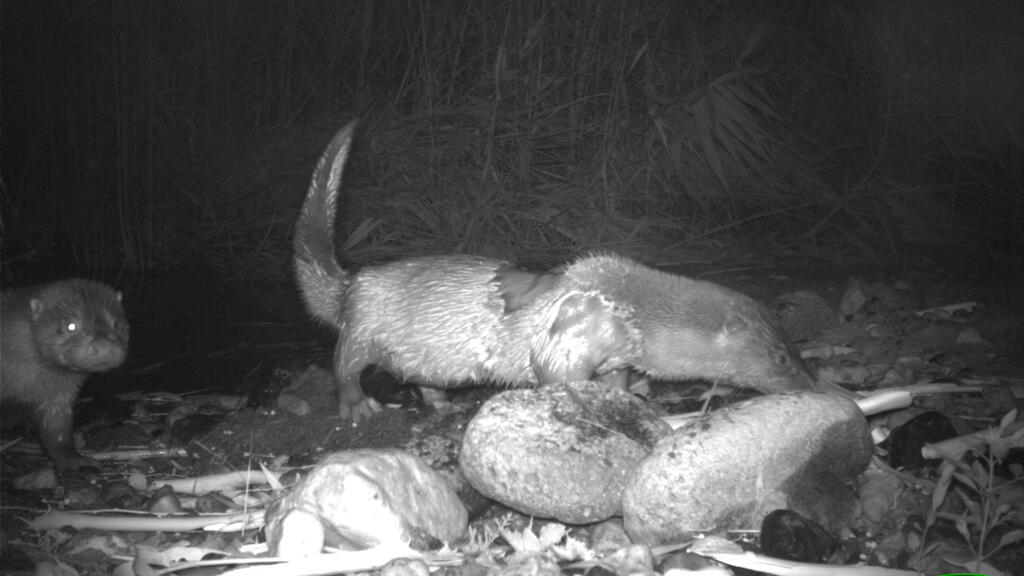
“The otter is basically a solitary animal, and the overlap between adult individuals is very limited. The only group we usually see in nature is a mother and her cubs during their first year of life. Otters have a unique and fascinating ability to play, usually seen in mothers and cubs. However, because it is very difficult to see them with our own eyes, most of our information comes from trail cameras,” Dolev said.
“Otters communicate through their sense of smell by leaving droppings and urine in prominent places, such as rocks by the water, which we call latrines. Through these latrines, an otter can receive complete information about the identity of individuals in the area, their sex, whether male or female, their nutritional state and even their readiness to reproduce.”
What is the otter’s ecological role, and does it come into conflict with humans?
“The otter is an apex predator, and as such it plays a critical role in regulating its prey populations, mainly fish. Its presence is a ‘seal of quality’ for the health of the aquatic ecosystem. In other words, wherever an otter population exists, the aquatic ecosystem is in good condition,” Dolev said.
“As for its relationship with humans, because otters are solitary, the damage they may cause in fish ponds is fairly limited. Still, in various places around the world, fish farmers see them as a threat and harm them. In Israel, the greatest threat does not come from direct conflict, but from human activity that changes the landscape.”
(Photo: Yifat Artzi, Israel Nature and Parks Authority)
What human activity affects otters?
“The most critical human activity is roadkill. It sounds strange that an animal that lives in water would be run over, but in winter, when the water under bridges is stormy, otters try to cross the road from above and are killed. Between 2000 and 2011, 17 such deaths were documented in the Harod Valley and the Valley of Springs, and that is probably what led to their disappearance from the area,” he said.
“Another major threat is the reduction of habitat and the loss of connectivity between habitats. For example, the drying of bodies of water, such as Lake Hula in the 1950s, and the closure of water canals into pipes cut off the species’ movement routes and prevented it from reaching new living areas. In addition, intensive human activity on road infrastructure near streams is a clear risk factor.”
How does the climate crisis affect the future of otters in Israel?
“The climate crisis is a direct threat because stream channels are drying up. Israel is not rich in water, and any further reduction in flow, whether as a result of climate change or water capture for human needs, cuts off the connectivity between distribution areas. Without flowing water routes, otters cannot move through space, and that increases the risk that populations will disappear,” Dolev said.
What conservation efforts are being made in the field?
“We are working in creative ways. One of the most successful methods is building dry passages under bridges, above the highest water level, allowing otters to cross safely even when the stream is stormy. We are working with Netivei Israel to improve these crossings in the Hula Valley, and that is definitely reducing roadkill,” he said.
“In addition, when water reservoirs are expanded, we work to adapt the banks so they are friendly to otters and other wildlife.”
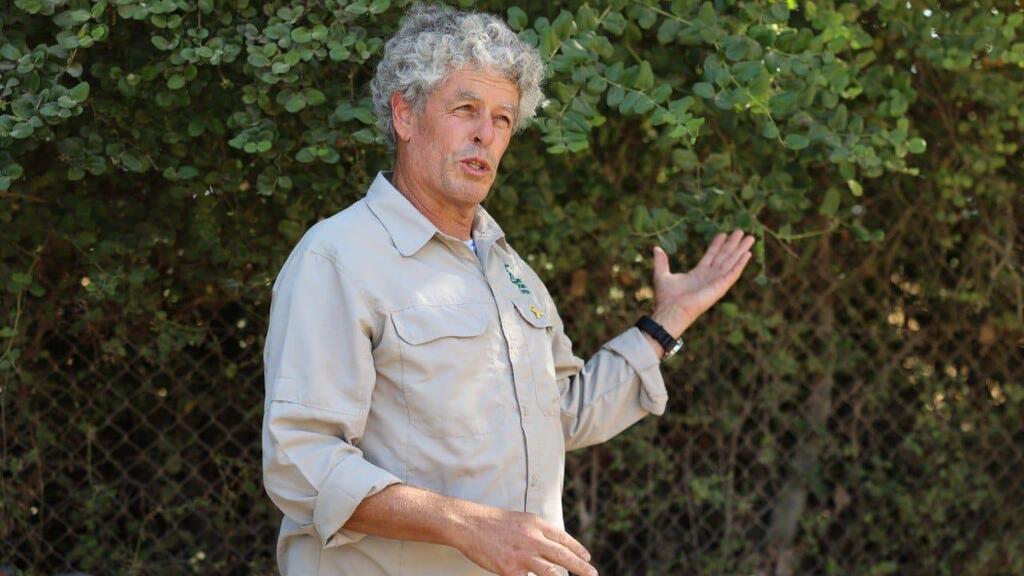
Dr. Amit Dolev
(Photo: Shai Isaacs, Israel Nature and Parks Authority)
How do you study otters, and what have you discovered recently?
“Otter research requires a high level of tracking skill to locate their unique droppings, along with ongoing maintenance of field cameras. We combine this with extensive genetic work based on collecting droppings in order to understand genetic diversity and movement patterns,” Dolev said.
“One of the things we are studying in the Hula Valley is sex hormones in otter feces, in order to assess fertility and reproductive success in the local population. One of the surprising discoveries was finding droppings in unexpected locations, such as the upper Yarmouk River and along the lower Jordan River as far as the Kfar Ruppin area, which indicates movement attempts and searching by otters across the landscape.”
What can the public do to help otters?
“The most important thing is awareness and protecting aquatic habitats. The otter is a symbol of the health of our streams, and preserving water flow and quality is the key to its survival. We hope the genetic information and monitoring from the studies will allow us to improve the living conditions of this special species in Israel,” he said.
The article was prepared by Zavit, Israel's science and environment news agency