


Summer is still firmly in place in Israel, with heat stress expected to intensify again Tuesday. But the Israel Meteorological Service is already looking toward fall and winter — and its latest outlook points to an unusually wet start to the rainy season.
According to recently updated long-range models, Israel and the broader Middle East could see an exceptionally rainy period, with each of the first three months of the season — October, November and December — forecast to receive above-average rainfall.
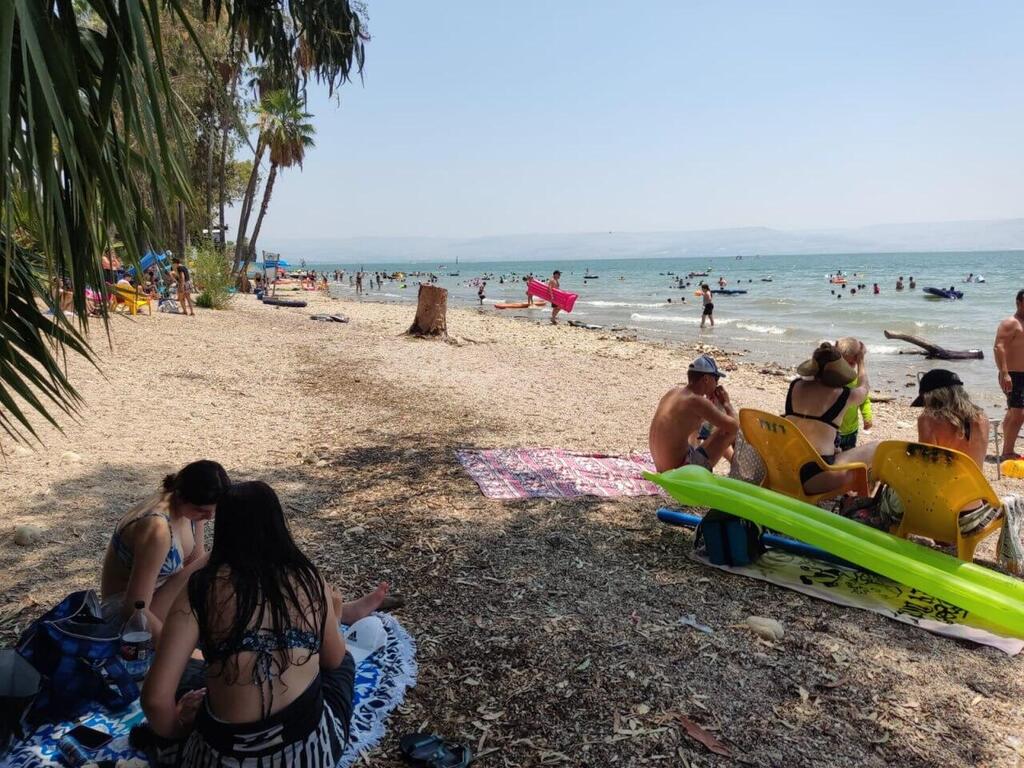
Before any change arrives, Tuesday will be hotter than usual for this time of year. Skies will be partly cloudy in the morning before clearing, with temperatures rising slightly, particularly in the mountains and inland areas.
Heat stress will intensify, reaching heavy to extreme levels across most of the country. Overnight, skies will be clear to partly cloudy, with fog expected in the northern Negev desert.
Temperatures are expected to dip slightly Wednesday, mainly in the mountains and inland areas, but will remain somewhat above seasonal averages. Another slight decline is forecast Thursday, bringing temperatures back to normal for the season across most areas and providing some relief from the heat. A further drop is expected Friday.
Forecast temperatures Tuesday and overnight: Jerusalem 90°F/66°F (32°C/19°C), Tel Aviv 90°F/77°F (32°C/25°C), Haifa 90°F/75°F (32°C/24°C), Safed 90°F/68°F (32°C/20°C), Katzrin 97°F/72°F (36°C/22°C), Tiberias 99°F/75°F (37°C/24°C), Nazareth 95°F/73°F (35°C/23°C), Afula 99°F/73°F (37°C/23°C), Beit Shean 106°F/81°F (41°C/27°C), Lod 91°F/75°F (33°C/24°C), Ashdod 90°F/77°F (32°C/25°C), Ein Gedi 100°F/82°F (38°C/28°C), Be'er Sheva 97°F/72°F (36°C/22°C), Mitzpe Ramon 93°F/70°F (34°C/21°C) and Eilat 104°F/82°F (40°C/28°C).
Unusual outlook: October could bring twice the average rainfall
As fall approaches, long-range precipitation models continue to consistently point toward an unusually wet start to the rainy season in Israel and across the Middle East. The Israel Meteorological Service’s artificial intelligence model also indicates that October, November and December are each likely to be wetter than average.
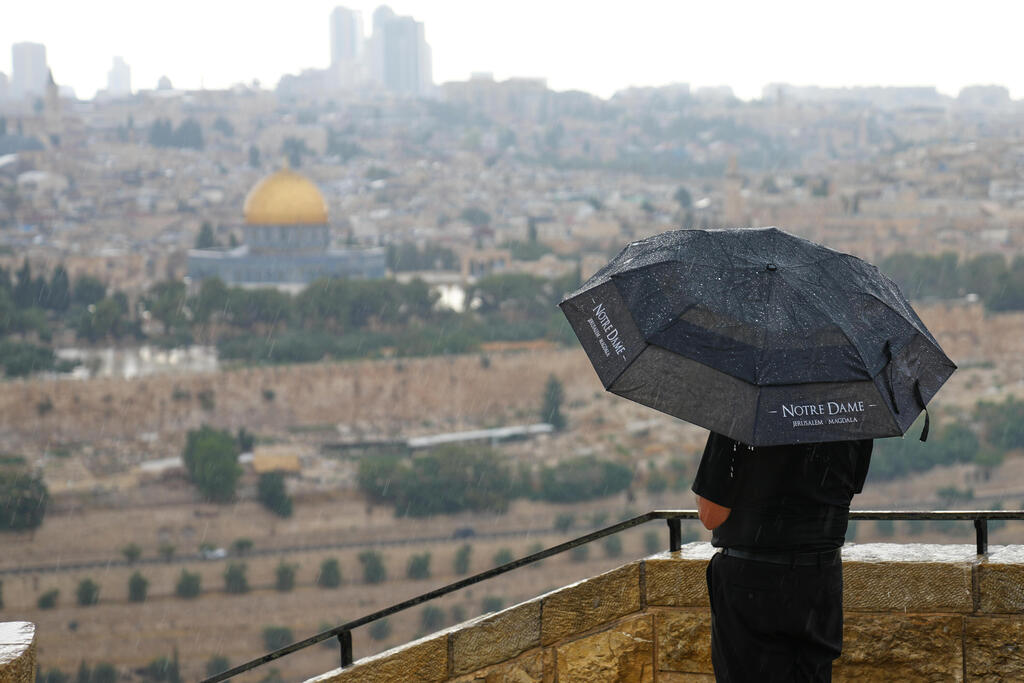
Jerusalem
(Photo: AP Photo/Mahmoud Illean)
October stands out most sharply. Under the current forecast, rainfall totals could reach twice the monthly average.
Because October rainfall can be particularly intense and vary significantly from one area to another, the Meteorological Service said there is a high likelihood of flooding in Israel’s coastal cities and flash floods in southern and eastern parts of the country.
A similarly eventful start to the rainy season occurred in fall 2015, during what the Meteorological Service described as the strongest El Niño year before the current event. However, officials said nationwide rainfall during that period was considerably more moderate than the amounts now projected by models for the coming season.
Against the backdrop of the unusual outlook, the Meteorological Service held an early virtual preparedness meeting Tuesday with agencies and organizations that rely on its forecasts, including government ministries, emergency and rescue organizations and emergency officials from the National Security Ministry.
Officials presented the outlook for the coming rainy season, with particular emphasis on its early months. They also introduced new forecasting and warning tools designed to help authorities prepare for flash floods, urban flooding and snow, along with possible emergency scenarios and measures to improve coordination among agencies during potentially life-threatening weather events.
The Meteorological Service said one of the main weaknesses identified in reviews of past weather disasters in Western countries has been “closing the loop” — ensuring that warnings about dangerous weather translate into coordinated action by the relevant authorities.
The service said it plans to further strengthen coordination with relevant agencies in the coming days, aiming for the highest possible level of preparedness ahead of potentially unusual weather events this fall and winter.