


A first-of-its-kind global study has shown a link between animals and the sounds emitted by plants. As part of the research, a team from Tel Aviv University focused on female moths (a type of lepidopteran insect) and discovered that they make critical decisions about where to lay their eggs based on sounds produced by plants in their surroundings.
The sound a tomato makes


When plants emitted distress sounds, the female moths preferred healthy plants that did not produce such signals. These sounds are in the ultrasonic range—above the range of human hearing—but moths can detect them.
This groundbreaking research was conducted at the Life Sciences Faculty laboratories of Professor Yossi Yovel from the School of Zoology and Professor Lilach Hadany from the School of Plant Sciences and Food Security at Tel Aviv University. The study was led by Dr. Raaya Zaltsman and Guy Zar-Eshhel, in collaboration with researchers from the Volcani Institute’s Plant Protection Department. The findings were published in the journal "eLife."
Tel Aviv University noted that this study builds on a sensational discovery published by the same researchers two years ago, which gained global attention: plants under stress emit sounds at frequencies above human hearing, but detectable by many animals. The researchers stated: “That discovery opened the door to broad research on communication between plants and animals. This study is our first step in exploring the issue.”
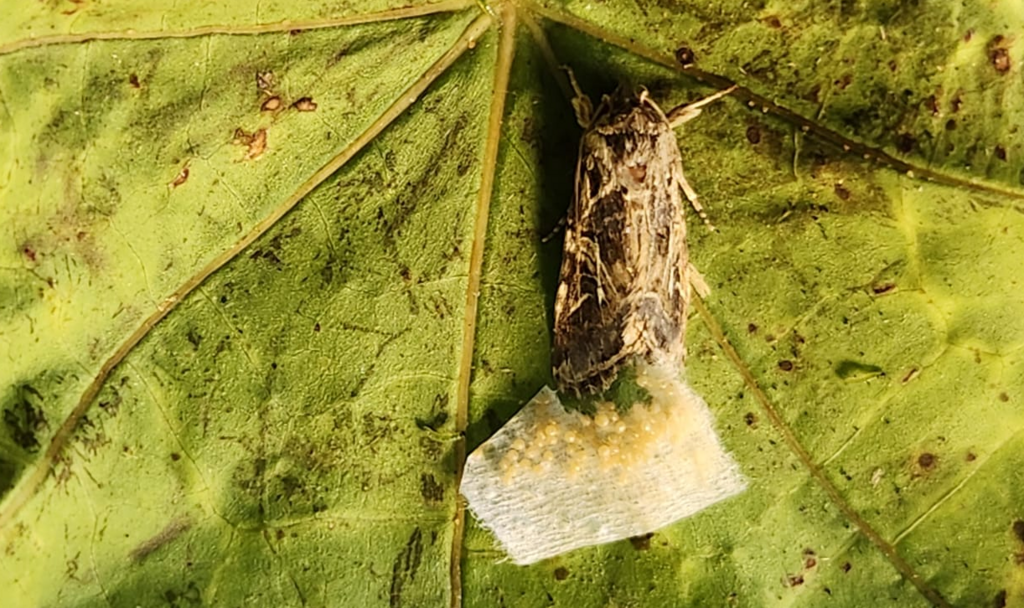
Yovel explained: “After proving in our previous study that plants emit sounds, we hypothesized that animals capable of hearing these high frequencies might respond to them and make behavioral decisions accordingly. Specifically, we know that many insects—who have a wide range of interactions with plants—can detect plant sounds. So we wanted to test if they can distinguish between these sounds and react to them.”
Hadany added: “We chose to focus on female moths, which lay their eggs on plants to provide food for their larvae after hatching. We assumed that the females seek an optimal site on a healthy plant that can nourish the larvae well. So if a plant signals through sound that it’s drying out or stressed—would they heed the warning and avoid it? To test this, we conducted several experiments.”
In the first experiment, the researchers aimed to isolate the auditory component from other plant traits such as color and scent. They presented the moths with two boxes: one contained a speaker playing recordings of tomato plants undergoing drought stress, while the other was silent.
Get the Ynetnews app on your smartphone: Google Play: https://bit.ly/4eJ37pE | Apple App Store: https://bit.ly/3ZL7iNv
The females showed a clear preference for the “noisy” box, which they likely interpreted as a living plant—even if stressed. The conclusion: moths do perceive and respond to sounds emitted by plants.
In a follow-up trial, the researchers disabled the moths’ auditory organs. Once their hearing was impaired, the moths showed no preference and chose both boxes equally—evidence that the response is specifically based on sound, not other cues.
In the second experiment, the moths were presented with two healthy tomato plants—one accompanied by a speaker playing distress sounds, and one silent. Again, the moths showed a clear preference—this time for the quiet plant, which did not emit distress signals and was thus perceived as a better site for egg-laying.
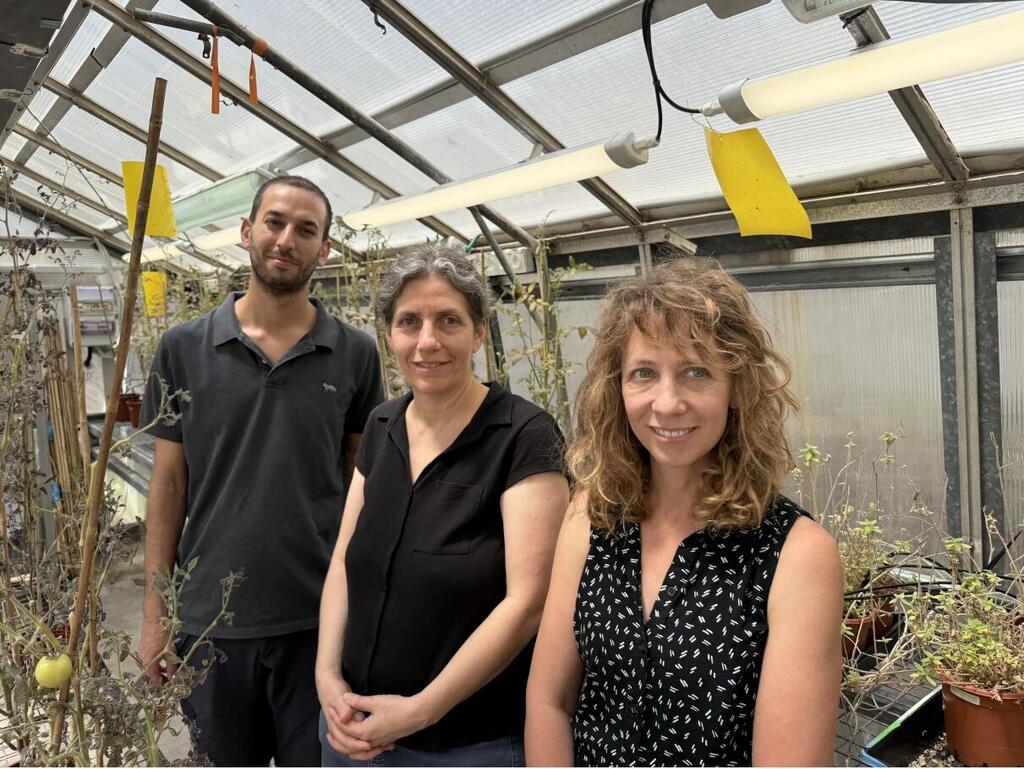
Guy Zar-Eshhel, Prof. Lilach Hadany and Dr. Raaya Zeltzer
(Photo: Tel Aviv University)
In another test, the moths were again presented with two boxes—one silent, and the other containing male moths, which also emit ultrasonic sounds similar to those of plants. This time, the females showed no preference, laying eggs in both boxes equally. From this, the researchers concluded that the moths specifically respond to sounds made by plants—not just to any ultrasonic signals.
"In this study, we present the first evidence of acoustic interaction between a plant and an insect. However, we are convinced this is only the beginning. The acoustic relationship between plants and animals likely has many other forms and a wide range of functions. This is a vast and unexplored field—a whole world waiting to be discovered,” the researchers wrote